
Agencia Peruana de Noticias PRENSAPERU.PE https://www.prensaperu.pe Twitter: @prensaperupe El Partido Demócrata ha logrado una victoria contundente en las elecciones de medio mandato de los Estados Unidos al conquistar la mayoría tanto en la Cámara de Representantes como en el Senado, un resultado calificado por analistas como una pérdida histórica para el Partido Republicano y un claro mensaje de rechazo ciudadano a la administración del presidente Donald Trump. Con proyecciones consolidadas y cifras oficiales en curso de verificación, los demócratas han superado los umbrales decisivos en ambas cámaras legislativas, transformando por completo el panorama político interno y con repercusiones que trascienden las fronteras de ese país.
LOS RESULTADOS: CIFRAS Y DATOS CONCRETOS
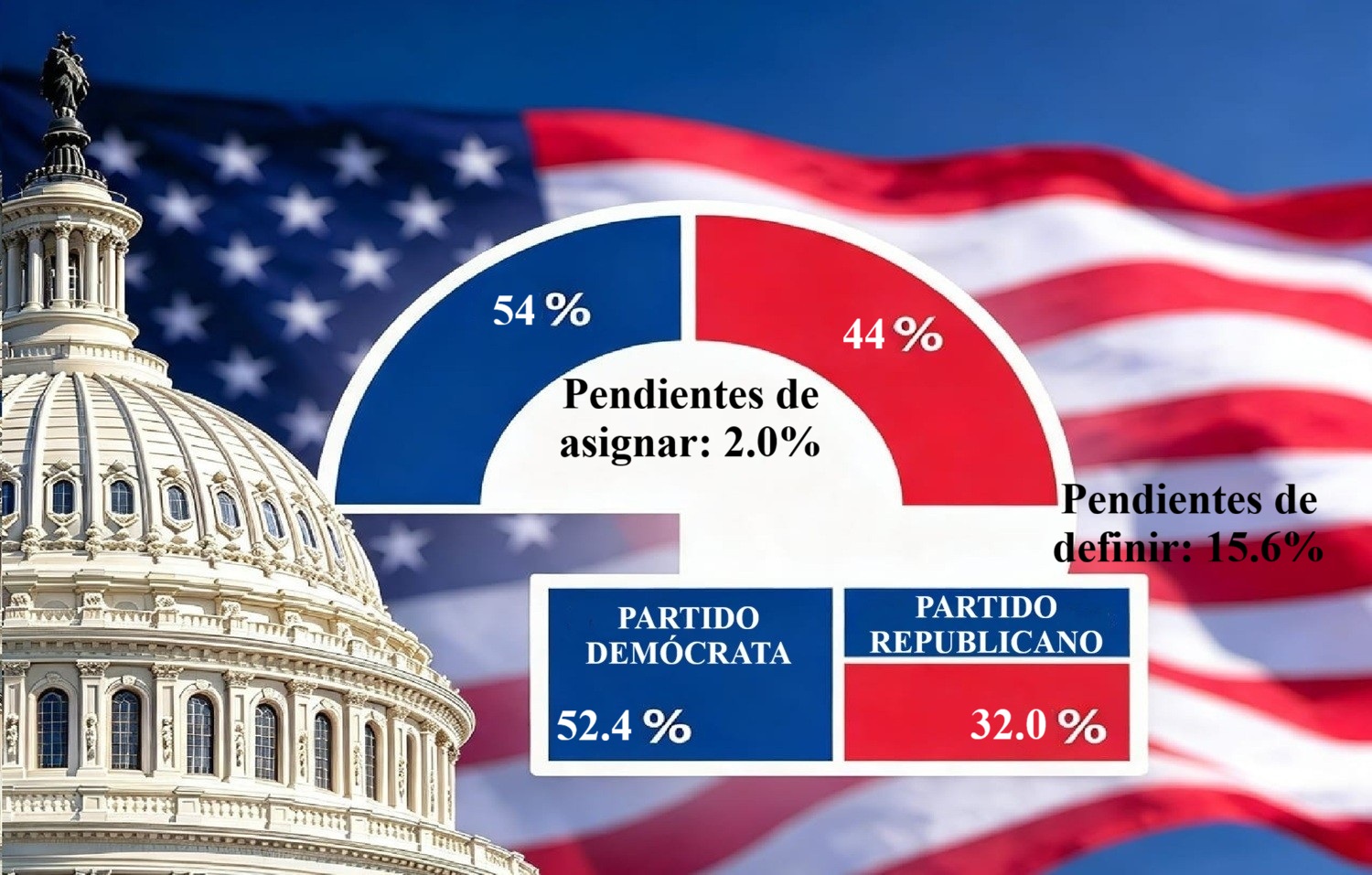
Cámara de Representantes: Los demócratas superaron cómodamente el umbral de los 218 escaños necesarios para la mayoría. De acuerdo con proyecciones consolidadas, el Partido Demócrata asegura al menos 224 escaños frente a los 134 del Partido Republicano. Faltan por definir entre 74 y 76 escaños, y las proyecciones finales apuntan a que la cifra demócrata se ubicaría entre 224 y 225, mientras que los republicanos oscilarían entre 134 y 137. Los distritos pendientes corresponden en su mayoría a zonas sumamente reñidas y a estados de escrutinio lento como California, pero no modifican el resultado final en cuanto al control de la cámara.
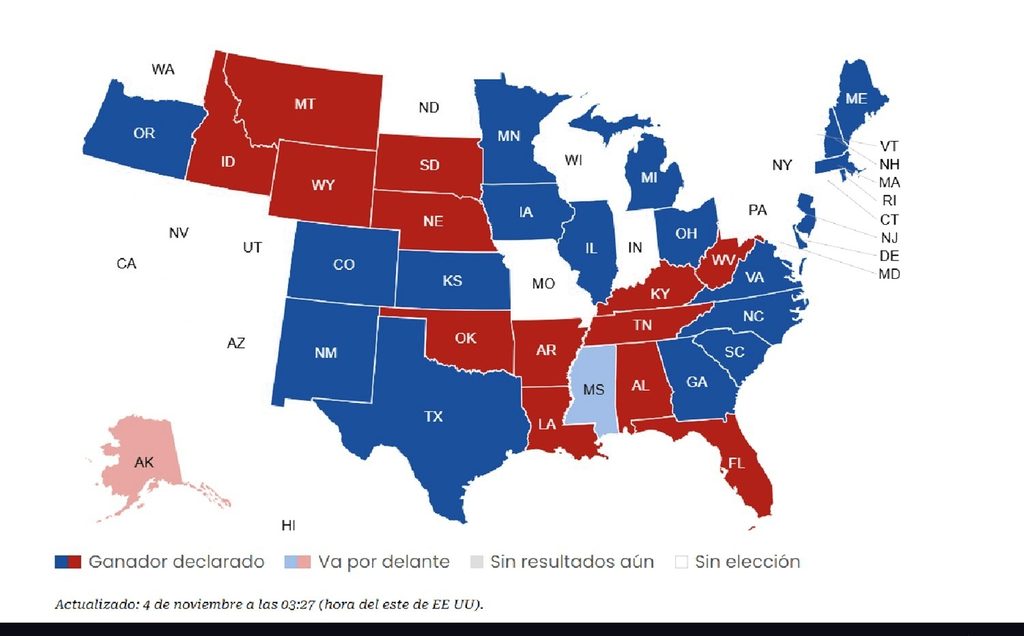
Senado: El Partido Demócrata alcanzó la mayoría al obtener al menos 54 escaños contando con senadores independientes aliados, frente a 44 de los republicanos. De las 35 bancas que estaban en disputa, 33 ya tienen ganador definitivo proclamado. Solo quedan por definir las contiendas de Alaska y Mississippi. Los demócratas lograron arrebatarle el control al Partido Republicano al registrar ganancias netas y voltear escaños clave en estados históricamente considerados bastiones conservadores.
Victorias destacadas en el Senado: Entre los resultados más relevantes figuran los triunfos en Texas, donde James Talarico derrotó al candidato republicano Ken Paxton; así como en Kansas, Iowa, Ohio, Carolina del Norte y Carolina del Sur. Estos resultados confirman el triunfo demócrata matemáticamente alcanzado tras arrebatar estados que tradicionalmente votaban por el partido en gobierno.
Factores que consolidaron la victoria: Los analistas coinciden en señalar cuatro elementos determinantes. Primero, el voto de castigo y descontento hacia la administración Trump. Segundo, las preocupaciones económicas de los electores por el alto costo de vida y el precio de los combustibles. Tercero, las tensiones derivadas de la guerra con Irán. Y cuarto, hitos demográficos simbólicos como la elección en Michigan de Abdul El-Sayed, el primer senador de origen musulmán en la historia de los Estados Unidos.
¿QUÉ SIGNIFICA TENER MAYORÍA? EL UMBRAL DE LOS 218 ESCAÑOS
La Cámara de Representantes tiene un total de 435 miembros. Para aprobar cualquier ley se requiere mayoría simple de los presentes y votantes. La mitad de 435 es 217.5, por lo que el número entero mínimo que garantiza la mayoría es 218. Superar esa cifra otorga dos capacidades fundamentales al partido que la alcanza. Primero, poder de votación autosuficiente: si todos los legisladores del partido contrario votan en contra, sus votos no son suficientes para frenar una iniciativa respaldada por la mayoría. Segundo, control de la agenda legislativa: el partido con mayoría elige al Presidente de la Cámara, quien decide qué proyectos se discuten, cuándo se votan y cuáles no avanzan. Sin embargo, es importante señalar que ninguna ley se convierte en norma nacional si no es aprobada también por el Senado y posteriormente firmada por el Presidente de los Estados Unidos.
UN NUEVO EQUILIBRIO DE PODER: LO QUE CAMBIA Y LO QUE NO
Es fundamental señalar con claridad: Donald Trump seguirá siendo Presidente de los Estados Unidos durante el tiempo que resta de su mandato. Ningún resultado electoral interrumpe el periodo constitucional del Jefe de Estado. Lo que sí ha cambiado de manera sustancial es su margen de maniobra político y legislativo. Durante los primeros años de su administración, el presidente contó con el respaldo y hasta con la complicidad podríamos decir de su partido en ambas cámaras, lo que le permitió avanzar con iniciativas, nombramientos, decisiones y autoritarismo dentro y fuera de su país con menores obstáculos. A partir de enero de 2027 esa situación se invierte. El Presidente conserva la facultad de dirigir la política exterior como Jefe de Estado y de Gobierno, pero ahora toda decisión que requiera presupuesto, aprobación de tratados, confirmación de embajadores o nuevos créditos militares pasará por el filtro de un Congreso que no comparte su visión política. Esto no significa bloqueo automático en todos los temas, pero sí que cada iniciativa deberá negociarse, ceder puntos y buscar consensos que antes no eran necesarios.
REPERCUSIONES PARA EL MUNDO: LO QUE SE VISLUMBRA CON PISAR EN TIERRA
En materia comercial y aranceles: El Congreso tiene facultades constitucionales clave en materia de comercio exterior. Si bien el presidente puede imponer aranceles en el marco de leyes vigentes, el nuevo Legislativo tiene la capacidad de revisar esas facultades, recortar los recursos para su aplicación o proponer legislación que limite esa autoridad. Esto no significa que todos los aranceles desaparecerán de inmediato, pero sí abre la posibilidad de que aquellas medidas más controvertidas encuentren un contrapeso institucional. Los tratados internacionales requieren la ratificación del Senado, por lo que cualquier nuevo acuerdo comercial deberá superar ahora un escrutinio mucho más exigente que antes. No se trata de un cambio brusco, sino de mayor debate, transparencia y exigencia en las decisiones que afectan a terceros países.
En política exterior y seguridad: El Senado confirma nombramientos diplomáticos, ratifica tratados y supervisa el uso de fondos militares. Esto significa que cualquier nueva iniciativa que implique compromisos internacionales, despliegues militares sostenidos o acuerdos de cooperación estratégica contará ahora con un examen más riguroso. El Congreso no puede ordenar la retirada inmediata de tropas, pero sí puede condicionar los fondos, establecer plazos o exigir informes periódicos que obliguen al Ejecutivo a rendir cuentas. Respecto a posiciones que pudieran sugerir cambios en la soberanía de territorios o apropiación de recursos ajenos, el Legislativo ha demostrado históricamente ser celoso del respeto al derecho internacional y la integridad de las naciones. Es poco probable que respalde decisiones unilaterales que generen inestabilidad geopolítica, lo que introduce un freno institucional importante en este terreno.
ESPECIALMENTE PARA AMÉRICA LATINA Y EL PERÚ
Para nuestra región este cambio de equilibrio llega en un momento en que muchos países buscan diversificar sus relaciones comerciales y fortalecer su soberanía de recursos naturales. Lo que se vislumbra no es una transformación inmediata, sino una oportunidad para construir relaciones más predecibles. Es probable que el nuevo Congreso ponga mayor énfasis en cooperación económica, migración ordenada, combate a la corrupción y respeto al Estado de derecho como criterios transversales. Esto puede traducirse en mayor diálogo técnico entre gobiernos, pero también en mayor exigencia recíproca sobre el cumplimiento de acuerdos vigentes.
Para el Perú en particular, que avanza en su agenda de desarrollo, este escenario significa que nuestra diplomacia debe ser más activa e informada. No debemos esperar cambios que dependan exclusivamente de decisiones en Washington, sino fortalecer nuestra propia posición nacional con inversiones, instituciones sólidas y valor agregado a nuestros recursos. La mejor política exterior es aquella que nos hace socios confiables por méritos propios, no por esperar decisiones ajenas.
DATOS CONCEPTUALES
Mayoría absoluta en la Cámara de Representantes: Es alcanzar al menos 218 de los 435 escaños. Con esa cifra el partido define la agenda, preside la cámara y aprueba leyes por sí solo, aunque estas también requieren aprobación del Senado y firma presidencial para convertirse en ley.
Bancas por asignar: Distritos donde el recuento aún no concluye legalmente. Su definición no cambia quién tiene la mayoría final sino solo la magnitud de la ventaja de cada partido.
Ganancia neta de escaños: Diferencia entre lo que un partido gana en territorio contrario y lo que pierde en el suyo. Cambiar el control del Senado requiere arrebatar escaños al oponente, como lograron los demócratas en Texas y otros estados.
División de poderes y gobierno dividido: Cuando el Ejecutivo y el Legislativo son liderados por partidos distintos. No es una anomalía sino un diseño institucional. Exige negociación, moderación y respeto entre ramas del poder del Estado.
Poder de revisión legislativa: El Congreso no puede dictar políticas por sí mismo, pero puede detener, modificar, condicionar presupuesto e investigar las acciones del Ejecutivo. Es su función de control y contrapeso, fortalecida cuando hay mayoría opositora.
DATOS CONTEXTUALES
1.- El Partido Demócrata ha obtenido una victoria legislativa sólida con al menos 224 escaños en la Cámara y 54 en el Senado, superando con margen los umbrales decisivos y volteando estados tradicionalmente republicanos. Es un resultado que refleja el sentir del electorado sobre el costo de vida, la seguridad y la política internacional.
2.- El presidente Trump continúa en funciones con sus atribuciones constitucionales intactas, pero ya no cuenta con mayoría legislativa en ninguna de las dos cámaras. Cada iniciativa requerirá ahora negociación, debate y búsqueda de consensos que antes no eran necesarios.
3.- Para el mundo y América Latina esto significa menos decisiones unilaterales y mayor escrutinio público en política comercial, aranceles y acuerdos internacionales. No se trata de un cambio automático de postura por parte de Estados Unidos, sino de que ahora habrá dos instituciones vigilándose mutuamente, lo que aporta mayor previsibilidad aunque no necesariamente agilidad.
4.- La democracia funciona mediante frenos y contrapesos. Eso es precisamente lo que ha ocurrido: el electorado ha decidido equilibrar el poder en Washington. Que ese equilibrio se traduzca en mayor estabilidad y respeto al derecho internacional dependerá tanto de quienes gobiernan en Estados Unidos como de la capacidad de respuesta y unidad de los demás países del mundo.
Fuente: Agencia Peruana de Noticias PRENSAPERU.PE https://www.prensaperu.pe Twitter: @prensaperupe
Translate
As things stand in the land of ‘Uncle Sam’: A historic victory for the Democratic Party! A new balance of power in Washington and its repercussions for the world and Latin America. How does a midterm election redefine power in the U.S.?
Peruvian News Agency PRENSAPERU.PE https://www.prensaperu.pe Twitter: @prensaperupe The Democratic Party has achieved a resounding victory in the United States midterm elections, winning the majority in both the House of Representatives and the Senate — a result described by analysts as a historic loss for the Republican Party and a clear message of citizen rejection of the administration of President Donald Trump. With consolidated projections and official figures still being verified, the Democrats have surpassed the decisive thresholds in both legislative chambers, completely transforming the domestic political landscape with repercussions that extend far beyond the country’s borders.
THE RESULTS: FIGURES AND CONCRETE DATA
House of Representatives: Democrats comfortably surpassed the threshold of 218 seats needed for a majority. According to consolidated projections, the Democratic Party has secured at least 224 seats compared to the Republicans’ 134. Between 74 and 76 seats remain to be defined, with final projections indicating the Democratic figure will likely range between 224 and 225, while Republicans are projected to hold between 134 and 137. Pending districts correspond mostly to highly competitive races and slow-counting states such as California, but do not alter the final outcome regarding control of the chamber.
Senate: The Democratic Party secured a majority by winning at least 54 seats including allied independent senators, compared to the Republicans’ 44. Of the 35 seats up for election, 33 already have declared winners. Only the races in Alaska and Mississippi remain unresolved. Democrats successfully seized control by flipping key seats in historically conservative strongholds.
Notable Senate victories: Key wins include Texas, where James Talarico defeated Republican candidate Ken Paxton, as well as Kansas, Iowa, Ohio, North Carolina, and South Carolina. These results mathematically confirm the Democratic victory, flipping states that traditionally voted for the party in power.
Factors that consolidated the victory: Analysts identify four determining factors. First, protest voting and widespread dissatisfaction with the Trump administration. Second, economic concerns among voters regarding the cost of living and fuel prices. Third, tensions arising from the war with Iran. Fourth, symbolic demographic milestones, including the election in Michigan of Abdul El-Sayed, the first Muslim-American Senator in United States history.
WHAT DOES HOLDING A MAJORITY MEAN? THE 218-SEAT THRESHOLD
The United States House of Representatives has 435 members. Passing legislation requires a simple majority of those present and voting. Half of 435 is 217.5, making 218 the minimum whole number required for a majority. Surpassing this threshold grants two fundamental capabilities. First, self-sufficient voting power: if all opposing members vote against a measure, their combined votes are insufficient to block it. Second, control of the legislative agenda: the majority party elects the Speaker of the House, who determines which bills are debated, when they come to a vote, and which initiatives are set aside. Importantly, no bill becomes national law without also passing the Senate and being signed by the President of the United States.
A NEW BALANCE OF POWER: WHAT CHANGES AND WHAT DOES NOT
It must be clearly stated: Donald Trump will remain President of the United States for the remainder of his term. No election result interrupts the constitutional mandate of the Head of State. What has changed substantially, however, is his political and legislative maneuverability. During the early years of his administration, the President enjoyed the backing — one might even say the complicity — of his party in both chambers, allowing him to advance initiatives, appointments, decisions, and an increasingly unilateral style of governance both domestically and internationally with minimal obstruction. As of January 2027, that dynamic is reversed. The President retains his authority to conduct foreign policy as Head of State and Government, but every decision requiring budget approval, treaty ratification, ambassadorial confirmation, or new military funding will now pass through a Congress that does not share his political vision. This does not guarantee automatic gridlock on every issue, but it does mean that every major initiative will require negotiation, compromise, and consensus-building where none was previously necessary.
GLOBAL REPERCUSSIONS: A REALISTIC OUTLOOK
Trade policy and tariffs: Congress holds significant constitutional authority over foreign commerce. While the President retains the power to impose tariffs under existing law, the new legislature possesses the means to review those delegated powers, defund their enforcement, or advance legislation restricting executive authority in this area. This does not mean all tariffs will disappear overnight, but it opens the door for the most controversial measures to face meaningful institutional pushback. International treaties require Senate ratification, meaning any future trade agreements will now face far more rigorous scrutiny than before. This represents not an abrupt reversal, but rather the return of greater debate, transparency, and accountability in decisions that directly affect other nations.
Foreign policy and national security: The Senate confirms diplomatic appointments, ratifies treaties, and oversees military appropriations. Consequently, any major new initiative involving international commitments, sustained military deployments, or strategic cooperation agreements will now undergo far more rigorous examination. Congress cannot order the immediate withdrawal of troops, but it can condition funding, set deadlines, and mandate regular reporting that compels the Executive branch to justify its actions publicly. Regarding positions that challenge territorial sovereignty or suggest claims over resources belonging to other nations, the legislative branch has historically been a guardian of international law and territorial integrity. Unilateral actions that risk geopolitical instability are unlikely to receive congressional backing, establishing an important institutional check on such ambitions.
FOR LATIN AMERICA AND PERU SPECIFICALLY
For our region, this shift arrives at a critical moment when many countries are actively diversifying trade partnerships and strengthening sovereignty over their natural resources. What lies ahead is not immediate transformation, but rather an opportunity to build more predictable, balanced relationships. The new Congress is likely to place greater emphasis on economic cooperation, orderly migration, anti-corruption efforts, and the rule of law as consistent principles guiding bilateral engagement. This may translate into more technical dialogue between governments, but also greater mutual accountability for honoring existing agreements.
For Peru, as it advances its national development agenda, this changing landscape underscores the need for proactive, well-informed diplomacy. We should not simply wait for decisions made in Washington to shape our future, but rather strengthen our own national standing through sound investment, robust institutions, and adding value to our natural resources. The most effective foreign policy is one that makes us reliable, respected partners on our own merits, rather than hoping for favorable outcomes determined elsewhere.
CONCEPTUAL DATA
Absolute majority in the House of Representatives: Holding at least 218 of the 435 seats. This allows a party to set the chamber’s agenda, preside over its committees, and pass legislation on its own — though all bills still require Senate approval and presidential signature to become law.
Outstanding races: Districts where final vote counting remains legally incomplete. Their resolution does not change which party holds the majority, only the final margin of control.
Net seat change: The difference between seats gained from the opposition and those lost to them. Taking control of the Senate requires winning seats in traditionally opposing territory, exactly as Democrats achieved in Texas and elsewhere.
Separation of powers and divided government: Occurs when different political parties control the executive and legislative branches. Far from being an anomaly, this is an intentional feature of the constitutional system. It inherently requires negotiation, restraint, and mutual respect between branches of government.
Legislative oversight authority: Congress cannot enact policy unilaterally, but it can block, amend, condition funding for, and investigate executive branch actions. This check-and-balance function operates most effectively when the opposition holds a legislative majority.
CONTEXTUAL FINDINGS
1.- The Democratic Party has secured a substantial legislative majority at least 224 seats in the House and 54 in the Senate — comfortably crossing the decisive thresholds and flipping states historically loyal to the opposition. This outcome clearly reflects the electorate’s priorities regarding cost of living, national security, and foreign policy.
2.- President Trump remains in office with his full constitutional powers intact, but no longer enjoys partisan control of either chamber. Every major policy initiative will now require negotiation, debate, and bipartisan consensus-building that was unnecessary during the first half of his term.
3.- For the world and Latin America, this means fewer unilateral decisions and greater public scrutiny of trade policy, tariffs, and international agreements. This does not guarantee an immediate reversal of United States policy, but rather that two branches of government will now check and balance one another creating greater predictability, even if potentially slowing decision-making.
4.- Democracy operates through checks and balances. That is precisely what has occurred: voters have chosen to restore political balance in Washington. Whether that balance yields greater global stability and respect for international law will depend not only on leaders in Washington, but equally on the capacity for unity and collective action among nations elsewhere in the world.
Source: Peruvian News Agency PRENSAPERU.PE https://www.prensaperu.pe Twitter: @prensaperupe