
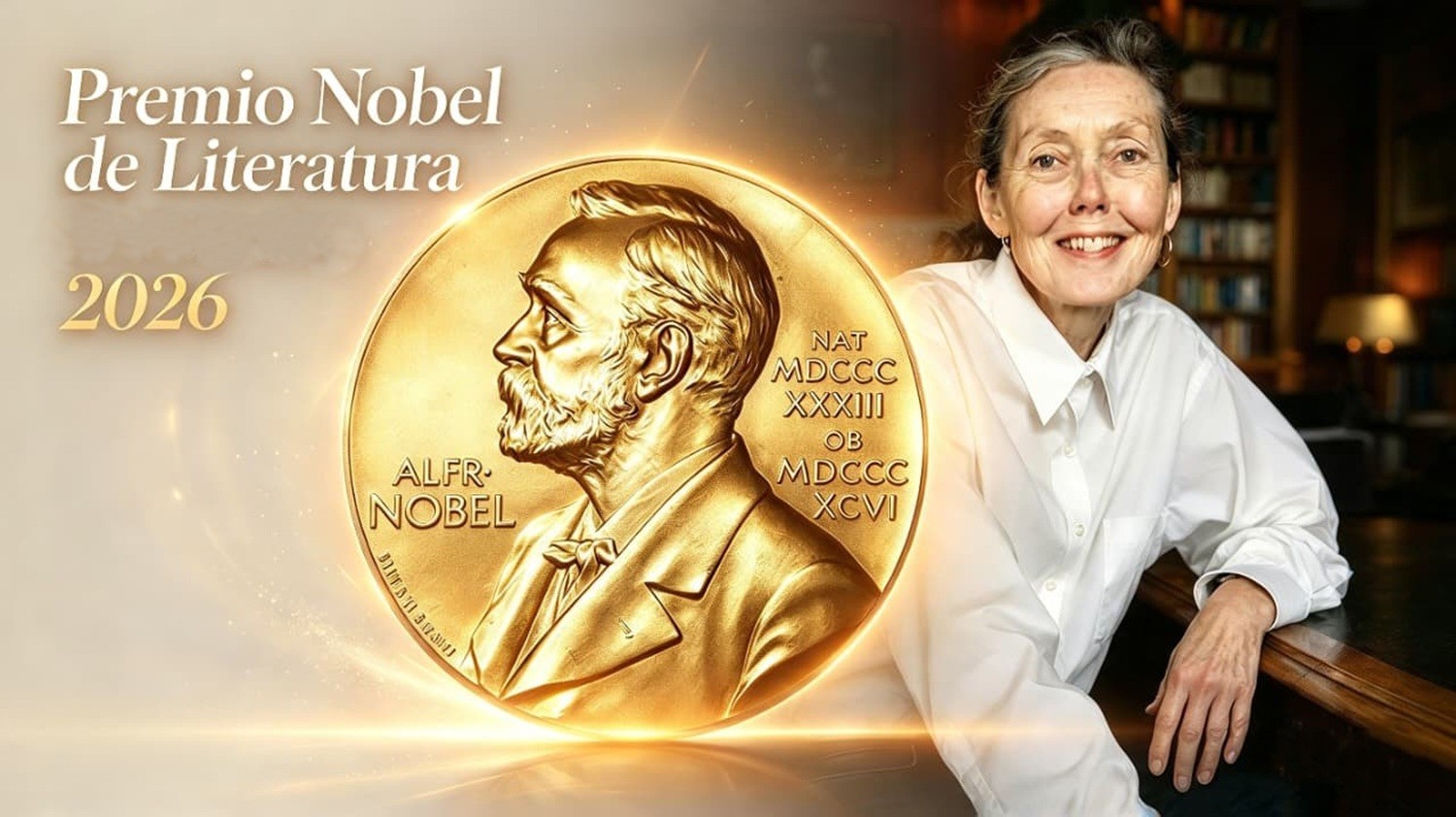
Agencia Peruana de Noticias PRENSAPERU.PE https://www.prensaperu.pe Twitter: @prensaperupe El Premio Nobel de Literatura 2026 ha sido otorgado a la escritora, poeta y ensayista canadiense Anne Carson, anunció la Academia Sueca este 8 de octubre desde Estocolmo . El jurado distinguió su trayectoria con la siguiente motivación: «por su obra audaz e inventiva que, en diálogo lúdico con la tradición clásica, ha creado nuevas formas para la literatura contemporánea» .
Nacida el 21 de junio de 1950 en Toronto, Canadá, Anne Carson es filósofa clásica, traductora y profesora universitaria. Estudió Letras Clásicas en la Universidad de Toronto y se especializó en griego antiguo, formación que ha marcado toda su producción literaria . Su obra desafía las clasificaciones convencionales, mezclando poesía, ensayo, teatro y prosa en una búsqueda constante de nuevos lenguajes. La Academia Sueca destacó que su escritura se construye sobre la intersección entre la precisión del filólogo y la sensibilidad del poeta, utilizando la etimología y los textos antiguos como puentes para hablar de la experiencia humana actual.
Entre sus obras más reconocidas figuran Eros el dulce y amargo (1986), reflexión sobre el deseo en la poesía griega; Autobiografía de Rojo (1998), una novela en verso inspirada en un mito clásico; La belleza del marido (2001), ganadora del Premio T. S. Eliot; y Nox (2010), obra en forma de caja-libro que reúne texto, imágenes y traducciones en memoria de su hermano fallecido . Carson ha recibido también el Premio Princesa de Asturias de las Letras 2020, entre otros reconocimientos internacionales.
Al recibir la noticia en su residencia en Reikiavik, Islandia —donde reside desde hace varios años—, la escritora manifestó su sorpresa. Relató que no reconoció el número de Estocolmo y colgó la llamada; fue su esposo quien insistió para que atendiera. «Creo que están todos locos», fueron sus primeras palabras al enterarse del fallo. El premio está dotado con 12 millones de coronas suecas (aproximadamente 1,1 millones de dólares estadounidenses). La ceremonia oficial de entrega se realizará el 10 de diciembre, aniversario de la muerte de Alfred Nobel, en la sala de conciertos de Estocolmo, en presencia de la familia real sueca y autoridades diplomáticas de todo el mundo .
La elección de Carson rompe con la lógica de géneros literarios tradicionales y reafirma el valor de una escritora que durante décadas ha mantenido una voz independiente, erudita y profundamente humana. Su obra nos recuerda que la literatura no es solo contar historias, sino también preguntar por el origen de las palabras y, a través de ellas, comprender mejor quiénes somos.
DATOS CONCEPTUALES
Diálogo con la tradición clásica: Es el principio creativo central de la obra de Anne Carson. No se trata de reproducir los textos antiguos, sino de entablar con ellos una conversación viva y moderna, donde los mitos, los poetas y los filósofos griegos y romanos iluminan las emociones, las relaciones y las contradicciones de nuestra época.
Fronteras genéricas: La literatura de Carson no cabe en una sola etiqueta. Un mismo libro puede ser a la vez poema, ensayo, narración y reflexión filosófica. Esta libertad formal responde a su convicción de que la experiencia humana no se divide en compartimentos estancos, y el lenguaje tampoco debería hacerlo.
Etimología como método: Para Carson, investigar el origen de una palabra no es un ejercicio académico aislado, sino una forma de recuperar capas de significado olvidadas. Cada término guarda una historia que, al revelarse, transforma lo que podemos decir y comprender sobre nosotros mismos.
Premio Nobel de Literatura: Instituido por el testamento de Alfred Nobel en 1895, reconoce a quien «haya producido en el campo de la literatura la obra más destacada, en una dirección idealista». Es considerado el galardón literario más prestigioso del mundo. La Academia Sueca es la encargada de seleccionar al ganador.
Literatura contemporánea y clásica: La obra de Carson demuestra que lo antiguo y lo moderno no son opuestos. Los mitos y las preguntas de los filósofos griegos sobre el amor, la pérdida, la identidad y el destino siguen siendo preguntas nuestras, y es en ese reconocimiento donde la literatura encuentra su permanencia.
DATOS
1.- El Nobel a Anne Carson reconoce primero que nada la libertad creativa. Su obra nos enseña que no hay que elegir entre rigor intelectual y emoción, entre erudición y belleza; la mayor literatura surge cuando ambas dimensiones se alimentan mutuamente.
2.- La elección confirma que la literatura de calidad no necesita simplificarse para ser universal. Carson es una escritora exigente, pero su audiencia ha crecido de manera sostenida en décadas, demostrando que los lectores están dispuestos a acompañar obras que desafían y elevan.
3.- Su trayectoria nos recuerda que las grandes obras no nacen de la prisa, sino de la persistencia. Carson publicó su primer libro a los 42 años y construyó su reputación paso a paso, sin apresuramientos, manteniendo siempre su voz propia.
4.- El diálogo entre el pasado y el presente no es nostalgia, es herramienta. Carson nos muestra que entender lo que pensaron y sintieron quienes nos precedieron amplía nuestra propia capacidad de comprensión del mundo actual.
5.- La sorpresa de la escritora al recibir la noticia refleja una cualidad esencial de su obra: la modestia frente al lenguaje. Quien dedica su vida a escuchar lo que las palabras llevan dentro, no espera necesariamente que el mundo entero la escuche a ella. Que la escuche, sin embargo, es una excelente noticia para todos.
Fuente: Agencia Peruana de Noticias PRENSAPERU.PE https://www.prensaperu.pe Twitter: @prensaperupe
Translate
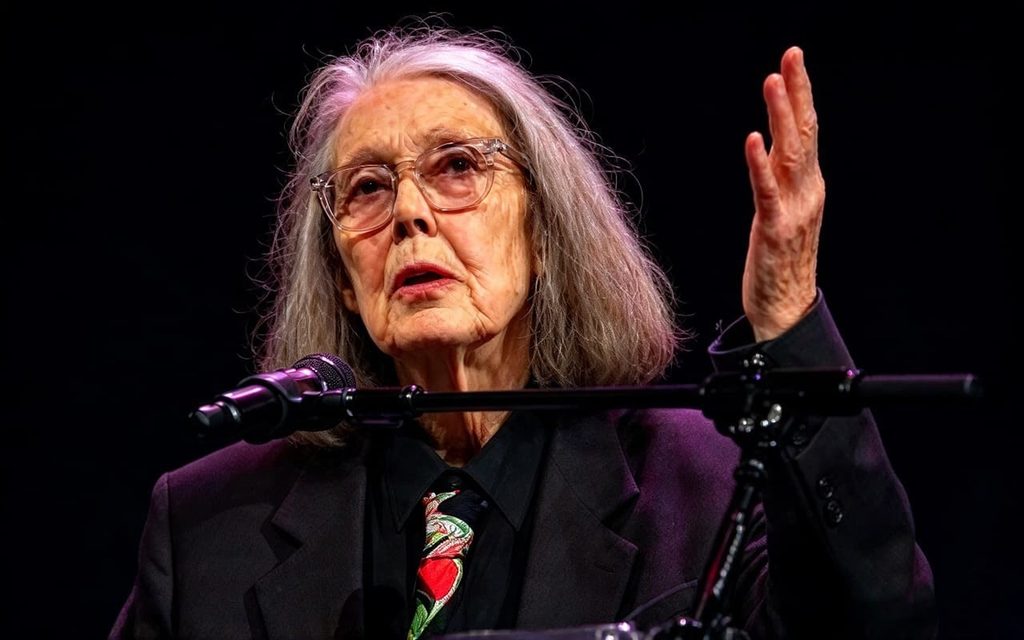
“I think they’re all crazy” were the first words of Anne Carson, the Canadian poet and essayist who won the 2026 Nobel Prize in Literature for a body of work that engages in a dialogue with the classical tradition and invents new narrative forms.
Peruvian News Agency PRENSAPERU.PE https://www.prensaperu.pe Twitter: @prensaperupe The 2026 Nobel Prize in Literature has been awarded to the Canadian writer, poet, and essayist Anne Carson, the Swedish Academy announced this October 8 from Stockholm. The jury recognized her career with the following citation: “for her bold and inventive work that, in playful dialogue with the classical tradition, has created new forms for contemporary literature.”
Born on June 21, 1950 in Toronto, Canada, Anne Carson is a classical scholar, translator, and university professor. She studied Classical Literature at the University of Toronto and specialized in Ancient Greek, a training that has shaped her entire literary output. Her work challenges conventional classifications, blending poetry, essay, theater, and prose in a constant search for new forms of expression. The Swedish Academy emphasized that her writing is built at the intersection of the philologist’s precision and the poet’s sensitivity, using etymology and ancient texts as bridges to speak about the human experience today.
Among her most renowned works are Eros the Bittersweet (1986), a reflection on desire in Greek poetry; Autobiography of Red (1998), a verse novel inspired by a classical myth; The Beauty of the Husband (2001), winner of the T. S. Eliot Prize; and Nox (2010), a book-box work combining text, images, and translations in memory of her late brother. Carson has also received the Princess of Asturias Award for Literature 2020, among other international distinctions.
Upon receiving the news at her home in Reykjavík, Iceland — where she has resided for several years — the writer expressed her surprise. She recalled not recognizing the Stockholm number and hanging up; it was her husband who insisted she answer. “I think they are all crazy,” were her first words upon learning the decision. The prize carries an award of 12 million Swedish kronor (approximately 1.1 million US dollars). The official award ceremony will take place on December 10, the anniversary of Alfred Nobel’s death, at the Stockholm Concert Hall, in the presence of the Swedish royal family and diplomatic authorities from around the world.
Carson’s selection breaks with conventional literary genre categories and reaffirms the value of a writer who has maintained an independent, erudite, and deeply human voice for decades. Her work reminds us that literature is not merely about telling stories, but also about asking where words come from and, through them, understanding better who we are.
CONCEPTUAL DATA
Dialogue with the classical tradition: It is the central creative principle of Anne Carson’s work. It does not mean reproducing ancient texts, but rather establishing a living, modern conversation with them, in which Greek and Roman myths, poets, and philosophers illuminate the emotions, relationships, and contradictions of our own time.
Crossing genre boundaries: Carson’s literature does not fit into a single label. One and the same book can be simultaneously poem, essay, narrative, and philosophical reflection. This formal freedom reflects her conviction that human experience does not exist in separate compartments, and neither should language.
Etymology as method: For Carson, investigating the origin of a word is not an isolated academic exercise, but a way of recovering forgotten layers of meaning. Every term carries a story that, when revealed, transforms what we can say and understand about ourselves.
Nobel Prize in Literature: Established by Alfred Nobel’s will in 1895, it honors those who have produced “the most outstanding work in the field of literature in an idealistic direction.” It is considered the most prestigious literary award in the world. The Swedish Academy is responsible for selecting the laureate.
Contemporary and classical literature: Carson’s work demonstrates that the ancient and the modern are not opposites. The myths and questions of Greek philosophers about love, loss, identity, and destiny remain our questions, and it is in that recognition that literature finds its permanence.
CONTEXTUAL DATA
1.- The Nobel to Anne Carson recognizes first and foremost creative freedom. Her work teaches us that we need not choose between intellectual rigor and emotion, or between erudition and beauty; the greatest literature emerges when both dimensions nourish one another.
2.- Her selection confirms that quality literature does not need to be simplified to be universal. Carson is a demanding writer, yet her readership has grown steadily over decades, proving that readers are willing to engage with works that both challenge and elevate them.
3.- Her career reminds us that great works are born not from haste, but from persistence. Carson published her first book at age 42 and built her reputation step by step, without rushing, always remaining true to her own voice.
4.- The dialogue between past and present is not nostalgia, but a tool. Carson shows us that understanding what those who came before us thought and felt expands our own capacity to understand the world today.
5.- The writer’s surprise at receiving the news reflects an essential quality of her work: humility before language. Someone who has dedicated their life to listening to what words carry within them does not necessarily expect the whole world to listen to them. That it does, however, is excellent news for us all.
Source: Peruvian News Agency PRENSAPERU.PE https://www.prensaperu.pe Twitter: @prensaperupe