
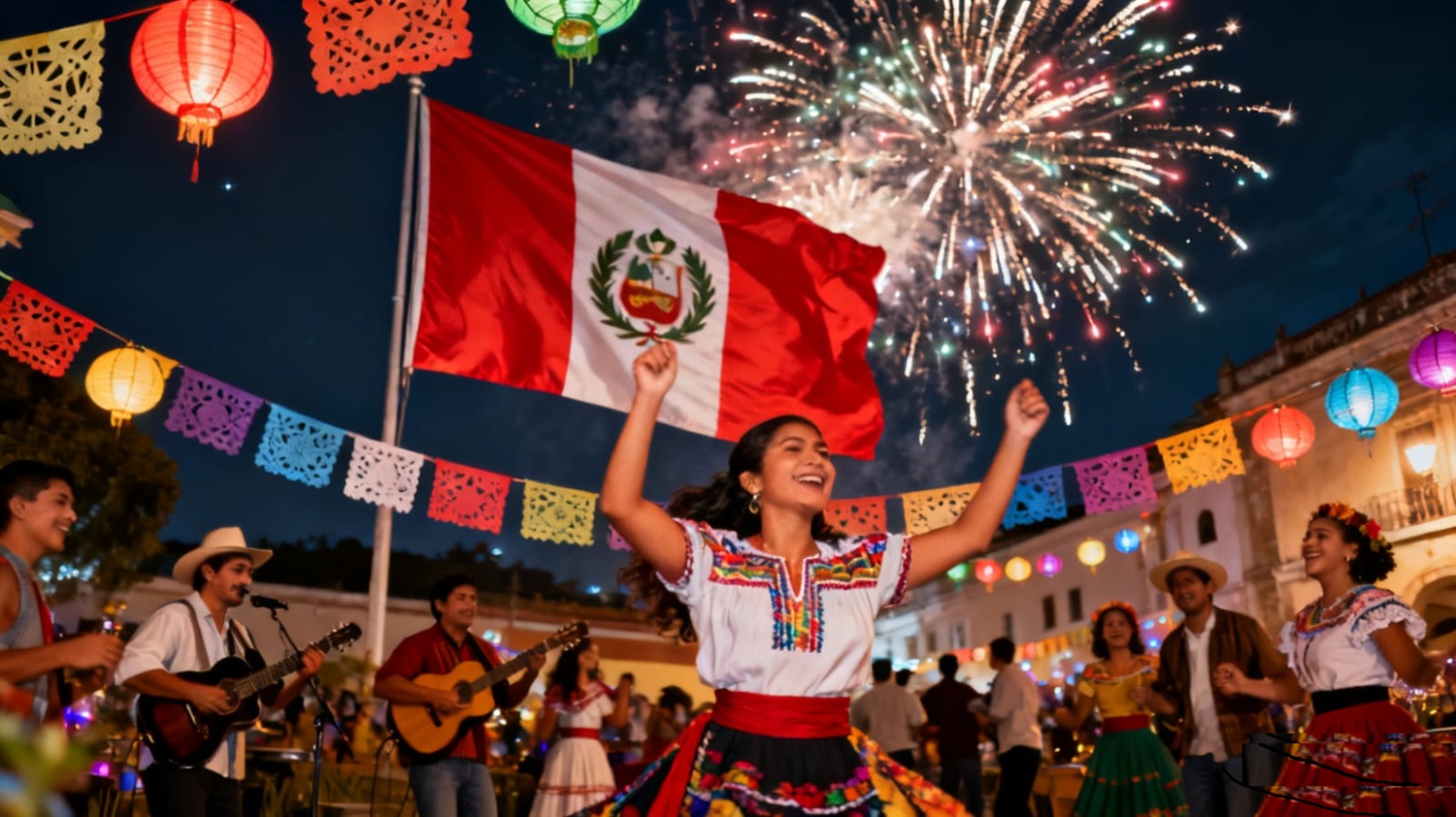
Agencia Peruana de Noticias PRENSAPERU.PE https://www.prensaperu.pe Twitter: @prensaperupe Cuando las campanadas anuncian el fin de un ciclo, millones de personas en todo el planeta se unen en una celebración que, aunque marcada por la diversidad cultural, comparte un hilo conductor universal: la esperanza de un mañana mejor. Desde los muñecos de trapo que arden en las calles de Lima hasta las ofrendas blancas que flotan en las playas brasileñas, cada costumbre guarda historias de tradiciones ancestrales, creencias profundas y la necesidad humana de dar sentido al tiempo que pasa.
PERÚ: QUEMANDO EL PASADO PARA CONSTRUIR EL FUTURO
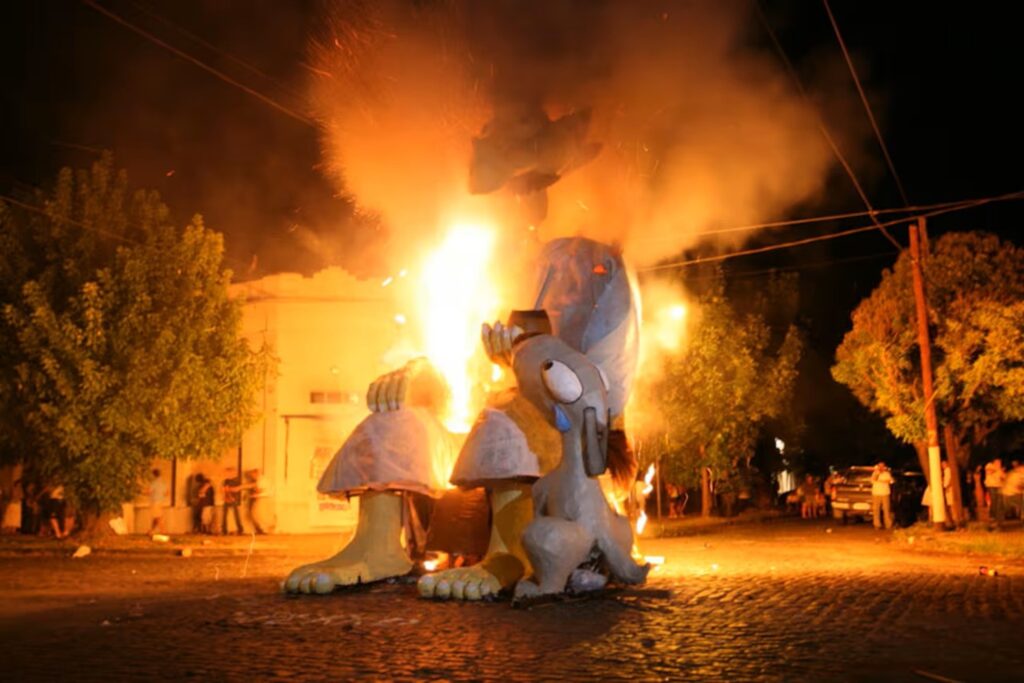
En las calles de Lima, así como en pueblos y ciudades de todo el Perú, las noches del 31 de diciembre se iluminan con las llamas de los famosos “muñecos de Año Viejo”. Estas figuras, confeccionadas con materiales sencillos como cartón, trapo y tela, no son más que representaciones simbólicas de los problemas, preocupaciones y momentos difíciles que se desean dejar atrás. Algunos llevan nombres que hacen alusión a situaciones sociales, económicas o personales, y su quema al compás de las doce campanadas se convierte en un acto colectivo de liberación.
Paralelamente, la tradición de comer doce uvas –una por cada mes del año que comienza– se ha extendido por gran parte de Latinoamérica desde sus orígenes en España. Cada uva se acompaña de un deseo, y el acto de masticarlas mientras suenan las campanadas simboliza la conexión entre el presente y las expectativas para cada etapa del nuevo ciclo. La cena familiar, con platos como el ceviche, el pavo relleno o el tamal, refuerza el valor de la unión como base para enfrentar los retos que vendrán.
“Las costumbres peruanas de Año Nuevo son un reflejo de nuestra identidad mestiza: mezclan elementos indígenas, como la creencia en la purificación por el fuego, con tradiciones europeas que se han adaptado a nuestra realidad”, explica la antropóloga María Flores, especialista en festividades populares de Perú.
JAPÓN: REFLEXIÓN Y RENOVACIÓN EN EL “OSHOGATSU”
Mientras en América Latina la celebración se centra en la alegría colectiva, en Japón el Año Nuevo –conocido como Oshogatsu– es un momento de calma, reflexión y renovación espiritual. La fecha clave es el 1 de enero, aunque las preparaciones comienzan semanas antes con la limpieza profunda de hogares y negocios (osouji), un acto que busca eliminar no solo el polvo, sino también la mala energía acumulada durante el año.
El día primero, miles de personas acuden a templos budistas y shintoístas para realizar el hatsumode, la primera visita religiosa del año, donde oran por la salud, la prosperidad y la armonía familiar. En las mesas, no puede faltar el osechi ryori, un conjunto de platos tradicionales que cada uno tiene un significado específico: los camarones representan la longevidad, las judías rojas simbolizan la felicidad y el pescado seco evoca la tranquilidad. También se consume otoso, una bebida de arroz fermentado que se cree que fortalece el cuerpo para enfrentar los desafíos del nuevo ciclo.
Las decoraciones llamadas kadomatsu, elaboradas con bambú, pino y caña de azúcar, están presentes en las entradas de los hogares como símbolo de resistencia, vitalidad y bienestar. Para los japoneses, el Año Nuevo no es solo un cambio de fecha, sino una oportunidad para reiniciar los lazos con la familia, los amigos y la comunidad.
BRASIL: OFRENDAS AL MAR Y LA FUERZA DE LAS TRADICIONES AFROBRASILEÑAS
En las playas de Río de Janeiro, Salvador y otras ciudades costeras de Brasil, la noche del 31 de diciembre se convierte en un escenario de devoción y alegría. Cientos de personas, vestidas de blanco –color que representa la paz y la pureza–, se reúnen para hacer ofrendas a Iemanjá, la diosa del mar en la tradición yoruba. Flores blancas, velas, perfumes y pequeños regalos son depositados en el agua con la esperanza de que la diosa escuche las peticiones y proteja a los fieles durante el año que comienza.
Esta costumbre, que fusiona creencias africanas con elementos católicos, es un ejemplo claro de cómo las festividades pueden adaptarse y enriquecerse con el paso del tiempo. Paralelamente, las fiestas en las calles, los conciertos y los fuegos artificiales que iluminan el cielo brasileño reflejan la naturaleza alegre y comunitaria del pueblo brasileño, para quien el Año Nuevo es un momento de celebración y renovación colectiva.
Además, la tradición de comer lentijas –que simbolizan la prosperidad económica– y bacalao –vinculado a la buena suerte– es muy extendida en todo el país, un legado de las influencias europeas que se ha mezclado con las raíces africanas e indígenas.
OTRAS TRADICIONES QUE UNEN AL MUNDO
En España, la costumbre de comer doce uvas en las campanadas –origen de la tradición latinoamericana– se remonta al siglo XIX, cuando se buscó una forma de promocionar la producción uvitícola. En Alemania y Austria, las personas bailan alrededor del baumtannenbaum (árbol de Navidad) antes de desmontarlo el 6 de enero, pero el 31 de diciembre se celebra con fiestas en las calles y el consumo de glühwein (vino caliente) para alejar el frío y la mala suerte.
En India, donde el Año Nuevo se celebra en diferentes fechas según la región y la religión, el Diwali (festival de las luces) marca el inicio del año hindú, con fuegos artificiales y luces que simbolizan la victoria del bien sobre el mal. En China, el Año Nuevo Lunar –que puede caer entre enero y febrero– es la festividad más importante del país, con desfiles de dragones, fuegos artificiales y la tradición de dar sobres rojos con dinero (hongbao) a los niños como deseo de prosperidad.
CONCLUSIONES
1.- La esperanza es el hilo conductor universal: Aunque las costumbres varían enormemente de un país a otro, todas las celebraciones de Año Nuevo giran en torno a la idea de un nuevo comienzo, la posibilidad de mejorar y la fe en un mañana más positivo. Esta necesidad humana de esperanza trasciende fronteras, culturas y religiones.
2.- Las tradiciones conectan pasado y presente: Muchos de los rituales que se practican hoy tienen orígenes en creencias ancestrales, adaptándose con el tiempo pero manteniendo su significado profundo. Desde los muñecos peruanos hasta las ofrendas brasileñas, estas costumbres son un puente entre las generaciones y una forma de preservar la identidad cultural.
3.- La celebración fortalece los lazos comunitarios: Ya sea en la reunión familiar peruana, la visita al templo japonés o la ofrenda colectiva brasileña, el Año Nuevo es un momento que invita a la unión, al cuidado mutuo y a la construcción de vínculos que fortalecen la cohesión social en todo el mundo.
DATO
En definitiva, el Año Nuevo es mucho más que un cambio de cifras en el calendario: es una fiesta que habla de la esencia humana, de nuestra capacidad de adaptarnos, de nuestra fe en el futuro y de la importancia de las tradiciones como motor de identidad y unión.
Fuente: Agencia Peruana de Noticias PRENSAPERU.PE https://www.prensaperu.pe Twitter: @prensaperupe
English Translation
From Burned Effigies to Offerings to the Sea: How the world welcomes the new year with rituals that unite past and future.
Peruvian News Agency PRENSAPERU.PE https://www.prensaperu.pe Twitter: @prensaperupe When the bells chime to announce the end of a cycle, millions of people around the world unite in a celebration that, although marked by cultural diversity, shares a universal thread: the hope for a better tomorrow. From the rag dolls that burn in the streets of Lima to the white offerings that float on Brazilian beaches, each custom holds stories of ancestral traditions, deep-rooted beliefs, and the human need to give meaning to the passage of time.
PERU: BURNING THE PAST TO BUILD THE FUTURE
In the streets of Lima, as well as in towns and cities throughout Peru, the nights of December 31st are illuminated by the flames of the famous “Old Year’s effigies.” These figures, made from simple materials like cardboard, rags, and fabric, are nothing more than symbolic representations of the problems, worries, and difficult moments that people wish to leave behind. Some bear names that allude to social, economic, or personal situations, and their burning to the rhythm of the twelve chimes becomes a collective act of liberation.
Meanwhile, the tradition of eating twelve grapes—one for each month of the coming year—has spread throughout much of Latin America since its origins in Spain. Each grape is accompanied by a wish, and the act of chewing them as the chimes ring symbolizes the connection between the present and the expectations for each stage of the new cycle. The family dinner, with dishes like ceviche, stuffed turkey, or tamales, reinforces the value of unity as the foundation for facing the challenges to come.
“Peruvian New Year’s customs reflect our mestizo identity: they blend indigenous elements, such as the belief in purification by fire, with European traditions that have adapted to our reality,” explains anthropologist María Flores, a specialist in popular Peruvian festivities.
JAPAN: REFLECTION AND RENEWAL IN “OSHOGATSU”
While in Latin America the celebration focuses on collective joy, in Japan the New Year—known as Oshogatsu—is a time of calm, reflection, and spiritual renewal. The key date is January 1st, although preparations begin weeks earlier with the deep cleaning of homes and businesses (osouji), an act that seeks to eliminate not only dust but also the negative energy accumulated throughout the year.
On the first day, thousands of people flock to Buddhist and Shinto temples to perform hatsumode, the first religious visit of the year, where they pray for health, prosperity, and family harmony. Osechi ryori, a traditional dish with a specific meaning, is a must on the tables: shrimp represent longevity, red beans symbolize happiness, and dried fish evokes tranquility. Otoso, a fermented rice drink believed to strengthen the body for the challenges of the new year, is also consumed.
Decorations called kadomatsu, made of bamboo, pine, and sugarcane, adorn the entrances of homes as a symbol of resilience, vitality, and well-being. For the Japanese, the New Year is not just a change of date, but an opportunity to renew ties with family, friends, and community.
BRAZIL: OFFERINGS TO THE SEA AND THE STRENGTH OF AFRO-BRAZILIAN TRADITIONS
On the beaches of Rio de Janeiro, Salvador, and other coastal cities in Brazil, the night of December 31st transforms into a scene of devotion and joy. Hundreds of people, dressed in white—a color representing peace and purity—gather to make offerings to Iemanjá, the goddess of the sea in the Yoruba tradition. White flowers, candles, perfumes, and small gifts are placed in the water in the hope that the goddess will hear their petitions and protect the faithful during the coming year.
This custom, which blends African beliefs with Catholic elements, is a clear example of how festivities can adapt and enrich themselves over time. Meanwhile, the street parties, concerts, and fireworks that light up the Brazilian sky reflect the joyful and communal nature of the Brazilian people, for whom the New Year is a time of celebration and collective renewal.
In addition, the tradition of eating lentils – which symbolize economic prosperity – and cod – linked to good luck – is widespread throughout the country, a legacy of European influences that has blended with African and indigenous roots.
OTHER TRADITIONS THAT UNITE THE WORLD
In Spain, the custom of eating twelve grapes at midnight—the origin of the Latin American tradition—dates back to the 19th century, when a way was sought to promote grape production. In Germany and Austria, people dance around the Baumtannenbaum (Christmas tree) before taking it down on January 6th, but on December 31st, the holiday is celebrated with street parties and the consumption of mulled wine to ward off the cold and bad luck.
In India, where the New Year is celebrated on different dates depending on the region and religion, Diwali (the festival of lights) marks the beginning of the Hindu year, with fireworks and lights symbolizing the victory of good over evil. In China, the Lunar New Year—which can fall between January and February—is the country’s most important holiday, featuring dragon parades, fireworks, and the tradition of giving red envelopes containing money (hongbao) to children as a wish for prosperity.
CONCLUSIONS
1.- Hope is the universal thread: Although customs vary greatly from country to country, all New Year’s celebrations revolve around the idea of a new beginning, the possibility of improvement, and faith in a more positive tomorrow. This human need for hope transcends borders, cultures, and religions.
2.- Traditions connect past and present: Many of the rituals practiced today have their origins in ancestral beliefs, adapting over time but maintaining their profound meaning. From Peruvian dolls to Brazilian offerings, these customs are a bridge between generations and a way to preserve cultural identity.
3.- The celebration strengthens community ties: Whether it’s a Peruvian family gathering, a visit to a Japanese temple, or a Brazilian collective offering, the New Year is a time that invites unity, mutual care, and the building of bonds that strengthen social cohesion worldwide.
FACT
Ultimately, the New Year is much more than a change of numbers on the calendar: it’s a celebration that speaks to the essence of humanity, our capacity to adapt, our faith in the future, and the importance of traditions as a driving force for identity and unity.
Source: Peruvian News Agency PRENSAPERU.PE https://www.prensaperu.pe Twitter: @prensaperupe