
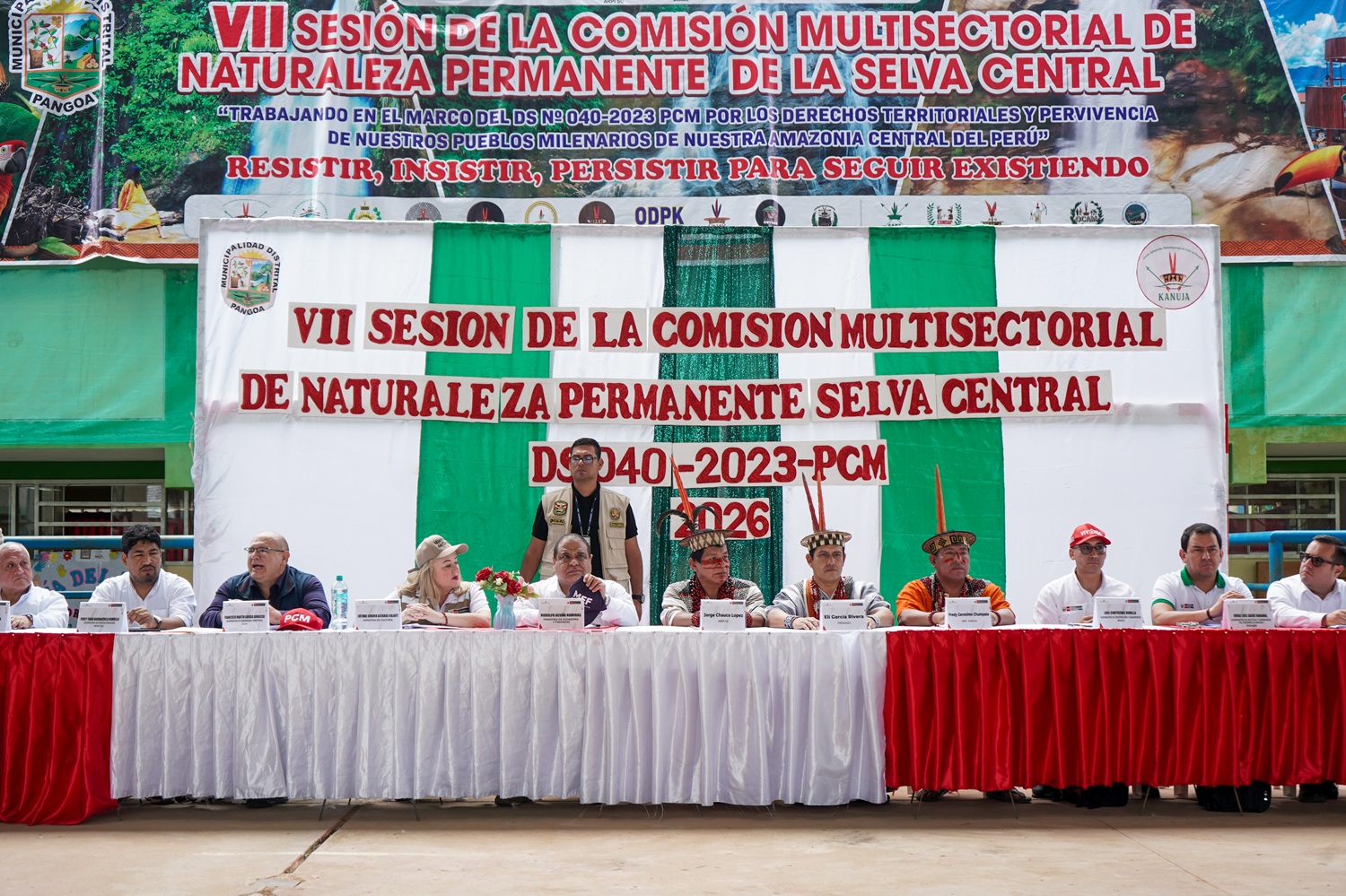
Agencia Peruana de Noticias PRENSAPERU.PE https://www.prensaperu.pe Twitter: @prensaperupe El Gobierno central ha trazado una ruta clara y ambiciosa para cerrar brechas sociales y económicas en la zona de la Selva Central. El viceministro de Gobernanza Territorial, Francisco Gavidia, anunció un plan de trabajo robusto que contempla la ejecución de 110 intervenciones durante el año 2026. De este total, 24 corresponden a proyectos de inversión de gran envergadura y 86 a actividades estratégicas, todas diseñadas para mejorar la calidad de vida de las comunidades nativas de las regiones Junín, Pasco, Huánuco, Cusco y Ayacucho.
Infraestructura y Conectividad como Prioridad
Durante el desarrollo de la VII Sesión Ordinaria de la Comisión Multisectorial de naturaleza permanente para el desarrollo de la Selva Central, realizada en la comunidad nativa de Cubantia, distrito de Pangoa (Satipo, Junín), la autoridad destacó avances concretos. Se informó que, durante el presente año, el Ministerio de Transportes y Comunicaciones (MTC) gestionará la instalación de importantes obras de infraestructura vial, específicamente los puentes modulares Aguachini y Túpac Amaru, ubicados en el distrito de Puerto Bermúdez, región Pasco. Estas obras son fundamentales para mejorar la conectividad y el comercio en zonas de difícil acceso.
Sectores Clave para el Desarrollo
Las inversiones priorizadas para el 2026 abarcan sectores vitales para el progreso sostenible de la región. Se ha puesto especial énfasis en proyectos vinculados a:
Agricultura: Fomento productivo y seguridad alimentaria.
Vivienda y Saneamiento: Mejoramiento de hábitat.
Energía y Minas: Acceso a servicios básicos y desarrollo responsable.
Transporte y Comunicaciones: Integración territorial.
El viceministro Gavidia resaltó la labor de la Comisión Multisectorial como una herramienta eficaz de gestión. “Hasta el último día vamos a trabajar firmes, decididos, con la convicción de que estamos sirviendo a una buena causa, que es la causa de nuestros pueblos”, afirmó, reafirmando el compromiso del Estado con el bienestar de la población.
Trabajo Articulado y Ejes Temáticos
El éxito de estas iniciativas se basa en una planificación rigurosa y participativa. Solo entre enero y abril del presente año, se realizaron 7 reuniones preparatorias que permitieron alinear esfuerzos bajo cinco grandes ejes temáticos:
1.- Acceso a servicios: Salud, educación y electricidad.
2.- Desarrollo económico: Impulso a la producción y comercio local.
3.- Desarrollo humano e inclusión social: Protección social y equidad.
4.- Seguridad y acceso a la justicia: Estado de derecho y paz social.
5.- Seguridad jurídica de las tierras y el ambiente: Reconocimiento territorial y conservación.
Alto Nivel de Representación
La sesión contó con un amplio respaldo interinstitucional, evidenciando la importancia del encuentro. Participaron los ministros de Economía y Finanzas, Rodolfo Acuña, y de Cultura, Fátima Altabás, además de viceministros de Salud, Desarrollo e Inclusión Social, Ambiente, Transportes, Energía, Justicia y Agricultura.
Asimismo, estuvieron presentes autoridades locales como el alcalde de Pangoa, Óscar Villasana, representantes de los gobiernos regionales y dirigentes de organizaciones indígenas representativas como la ARPI SC y la ORNASEC, garantizando así una visión compartida entre el Estado y la sociedad civil.
Acuerdos Estratégicos
Como resultado del trabajo conjunto, se alcanzaron acuerdos fundamentales:
1.- Aprobación oficial del Plan de Trabajo 2026.
2.- Diseño de una agenda de desarrollo inmediata para el año en curso.
3.- Evaluación de mecanismos de financiamiento progresivo para garantizar la viabilidad de los proyectos priorizados.
DEFINICIONES CONCEPTUALES
Para una mejor comprensión del contexto, es importante precisar:
Comisión Multisectorial: Es un espacio de coordinación permanente donde participan distintos ministerios y niveles de gobierno (nacional, regional y local). Su objetivo es planificar, articular y dar seguimiento a políticas públicas que requieren la intervención de varias entidades para ser efectivas.
Proyectos de Inversión: Son iniciativas que buscan crear, ampliar, mejorar o recuperar la capacidad productiva del país o bienes de servicio público, generalmente requieren un presupuesto considerable y tienen un impacto a mediano y largo plazo.
Intervenciones: Acciones concretas que ejecuta el Estado (pueden ser obras, servicios, actividades, campañas, etc.) destinadas a resolver un problema o mejorar una condición específica de la población.
DATOS
1.- Compromiso concreto y medible: El anuncio de 110 intervenciones demuestra que existe una hoja de ruta clara para el desarrollo de la Selva Central. La distinción entre proyectos de inversión y actividades operativas permite visualizar que se trabajará tanto en obras estructurales como en acciones inmediatas de impacto social.
2.- La articulación interinstitucional es la clave del éxito: La presencia de ministros, viceministros, autoridades locales y organizaciones indígenas confirma que el enfoque ya no es aislado, sino integral. La validación del Plan de Trabajo 2026 y la búsqueda de financiamiento aseguran que los acuerdos se traduzcan en hechos reales.
3.- Enfoque en el bienestar integral de las comunidades: Los cinco ejes temáticos abordados cubren desde la infraestructura física hasta la seguridad jurídica y el cuidado del ambiente. Esto refleja una visión moderna de desarrollo que no solo busca el crecimiento económico, sino también la inclusión social, el respeto a la cultura y la protección del territorio.
Fuente: Agencia Peruana de Noticias PRENSAPERU.PE https://www.prensaperu.pe Twitter: @prensaperupe

Translate
Central Jungle project underway! The government will implement 110 interventions and 24 major investment projects in 2026.
Peruvian News Agency PRENSAPERU.PE https://www.prensaperu.pe Twitter: @prensaperupe The Central Government has outlined a clear and ambitious roadmap to close social and economic gaps in the Central Jungle region. The Vice Minister of Territorial Governance, Francisco Gavidia, announced a robust work plan that includes the execution of 110 interventions during the year 2026. Of this total, 24 correspond to large-scale investment projects and 86 to strategic activities, all designed to improve the quality of life for native communities in the regions of Junín, Pasco, Huánuco, Cusco, and Ayacucho.
Infrastructure and Connectivity as a Priority
During the VII Ordinary Session of the Permanent Multisectoral Commission for the Development of the Central Jungle, held in the native community of Cubantia, district of Pangoa (Satipo, Junín), the authority highlighted concrete progress. It was reported that, during the current year, the Ministry of Transport and Communications (MTC) will manage the installation of important road infrastructure works, specifically the Aguachini and Túpac Amaru modular bridges, located in the district of Puerto Bermúdez, Pasco region. These works are fundamental for improving connectivity and trade in areas of difficult access.
Key Sectors for Development
Investments prioritized for 2026 cover vital sectors for the region’s sustainable progress. Special emphasis has been placed on projects linked to:
Agriculture: Productive promotion and food security.
Housing and Sanitation: Improvement of living conditions.
Energy and Mines: Access to basic services and responsible development.
Transport and Communications: Territorial integration.
Vice Minister Gavidia highlighted the work of the Multisectoral Commission as an effective management tool. “We will work firmly and decisively until the very last day, convinced that we are serving a good cause, which is the cause of our peoples,” he stated, reaffirming the State’s commitment to the population’s well-being.
Coordinated Work and Thematic Axes
The success of these initiatives is based on rigorous and participatory planning. Between January and April of this year alone, 7 preparatory meetings were held, allowing efforts to be aligned under five major thematic axes:
1.- Access to services: Health, education, and electricity.
2.- Economic development: Boosting production and local trade.
3.- Human development and social inclusion: Social protection and equity.
4.- Security and access to justice: Rule of law and social peace.
5.- Legal security of land and the environment: Territorial recognition and conservation.
High-Level Representation
The session enjoyed broad inter-institutional support, demonstrating the importance of the meeting. Participating were the Ministers of Economy and Finance, Rodolfo Acuña, and of Culture, Fátima Altabás, as well as Vice Ministers of Health, Development and Social Inclusion, Environment, Transport, Energy, Justice, and Agriculture.
Likewise, local authorities such as the Mayor of Pangoa, Óscar Villasana, representatives of regional governments, and leaders of representative indigenous organizations such as ARPI SC and ORNASEC were present, thus ensuring a shared vision between the State and civil society.
Strategic Agreements
As a result of the joint work, fundamental agreements were reached:
1.- Official approval of the 2026 Work Plan.
2.- Design of an immediate development agenda for the current year.
3.- Evaluation of progressive financing mechanisms to guarantee the viability of prioritized projects.
CONCEPTUAL DEFINITIONS
For a better understanding of the context, it is important to clarify:
Multisectoral Commission: It is a permanent coordination space where different ministries and levels of government (national, regional, and local) participate. Its objective is to plan, articulate, and monitor public policies that require the intervention of several entities to be effective.
Investment Projects: These are initiatives aimed at creating, expanding, improving, or recovering the country’s productive capacity or public service assets. They generally require a considerable budget and have a medium- and long-term impact.
Interventions: Specific actions executed by the State (which can be works, services, activities, campaigns, etc.) aimed at solving a problem or improving a specific condition of the population.
DATA
1.- Concrete and measurable commitment: The announcement of 110 interventions demonstrates that there is a clear roadmap for the development of the Central Jungle. The distinction between investment projects and operational activities makes it possible to visualize that work will be carried out both on structural works and immediate actions with social impact.
2.- Inter-institutional coordination is the key to success: The presence of ministers, vice ministers, local authorities, and indigenous organizations confirms that the approach is no longer isolated, but rather comprehensive. The validation of the 2026 Work Plan and the search for financing ensure that agreements are translated into real facts.
3.- Focus on the comprehensive well-being of communities: The five thematic axes covered range from physical infrastructure to legal security and environmental care. This reflects a modern vision of development that seeks not only economic growth but also social inclusion, respect for culture, and protection of territory.
Source: Peruvian News Agency PRENSAPERU.PE https://www.prensaperu.pe Twitter: @prensaperupe