
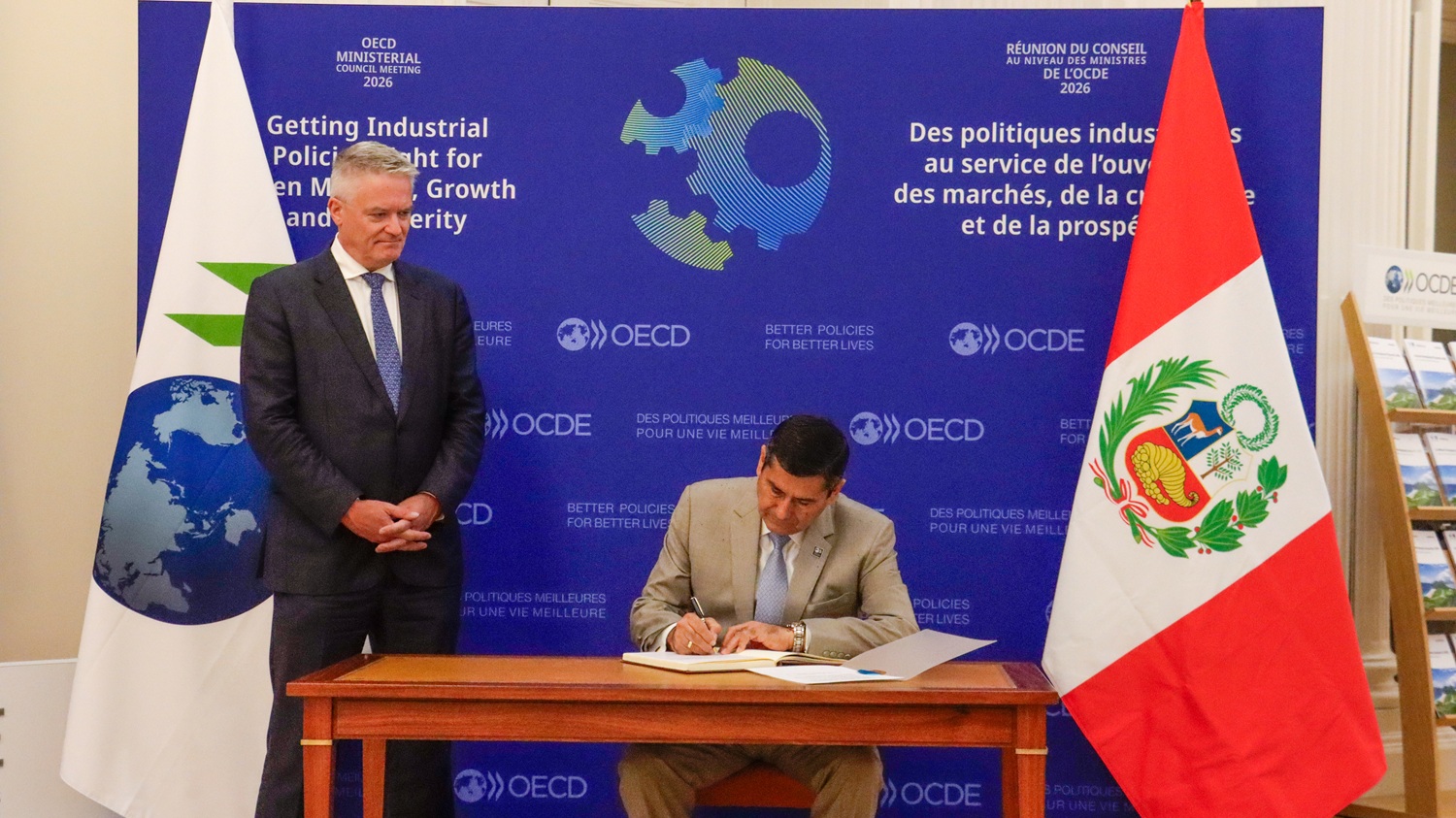
Agencia Peruana de Noticias PRENSAPERU.PE https://www.prensaperu.pe Twitter: @prensaperupe El Perú ha sido reconocido oficialmente por los representantes de la Organización para la Cooperación y el Desarrollo Económicos (OCDE) como el país candidato de América Latina con mayor progreso, destacándose entre las ocho naciones que actualmente se encuentran en proceso de adhesión. Este importante logro fue confirmado tras la participación del presidente del Consejo de Ministros, Luis Arroyo Sánchez, en las reuniones realizadas en París los días 2 y 3 de junio. A dos días de este encuentro, el reconocimiento y los compromisos asumidos mantienen total vigencia, marcando un hito en la proyección internacional del país.
Organización para la Cooperación y el Desarrollo Económicos (OCDE): Es un organismo internacional compuesto por países comprometidos con la democracia, el Estado de derecho y la economía de mercado. Su objetivo principal es promover políticas públicas que mejoren el bienestar de la población, generen crecimiento sostenible y fomenten la cooperación global. Ingresar a este organismo implica adoptar estándares internacionales de transparencia, eficiencia y buen gobierno.
Así lo informó el propio premier: “Este reconocimiento es posible gracias al trabajo conjunto de diversas instituciones y al compromiso de los diferentes gobiernos que han contribuido a avanzar con celeridad en este camino”, subrayó la autoridad. En ese sentido, precisó que el país registra actualmente una perspectiva de 40% de avance hacia su inserción definitiva, un resultado que no es casualidad, sino fruto del esfuerzo continuo y coordinado de la Comisión Multisectorial para la Adhesión a la OCDE.
Comisión Multisectorial: Es un equipo de trabajo conformado por representantes de distintas áreas del Estado, diseñado para abordar temas complejos que requieren la participación de varias instituciones. En este caso, está liderada por la Presidencia del Consejo de Ministros e integrada por los ministerios de Relaciones Exteriores y de Economía y Finanzas, garantizando una visión integral del proceso.
Para garantizar que este progreso no se detenga, el Perú cuenta con una Representación Permanente ante la OCDE, la cual, junto con la Secretaría Técnica de la comisión, cumple un rol fundamental como puente de comunicación y coordinación entre todos los sectores del Estado involucrados. Esta estructura permite dar seguimiento detallado a cada requisito y asegurar que se cumplan los plazos establecidos.
El premier enfatizó además que el país viene cumpliendo con rigurosidad la Hoja de Ruta —el documento técnico que detalla los pasos y reformas necesarias para el ingreso— y remarcó que este es un compromiso que trasciende gestiones: “Es indispensable que la próxima administración de Estado priorice este proceso, para mantener el ritmo y continuar por la senda que hemos trazado”.
Hoja de Ruta: Es el plan estratégico y cronograma oficial que define las reformas legales, institucionales y administrativas que debe implementar el país para alinearse con los estándares de la OCDE. Funciona como una guía que permite medir el avance real del proceso.
Durante su agenda en París, el jefe del gabinete sostuvo una reunión bilateral clave con el secretario general de la organización, Mathias Cormann, quien ratificó el reconocimiento: “El Perú es, sin duda, el país candidato de la región con mayores avances en su proceso de adhesión”, afirmó la autoridad internacional. Por su parte, Arroyo destacó que este trabajo se viene consolidando desde hace casi tres años y resaltó que su presencia en la Reunión del Consejo a Nivel Ministerial del 3 de junio demuestra la voluntad nacional de alcanzar este objetivo. Asimismo, hizo un llamado explícito para que la continuidad de estas acciones sea garantizada por las próximas autoridades.
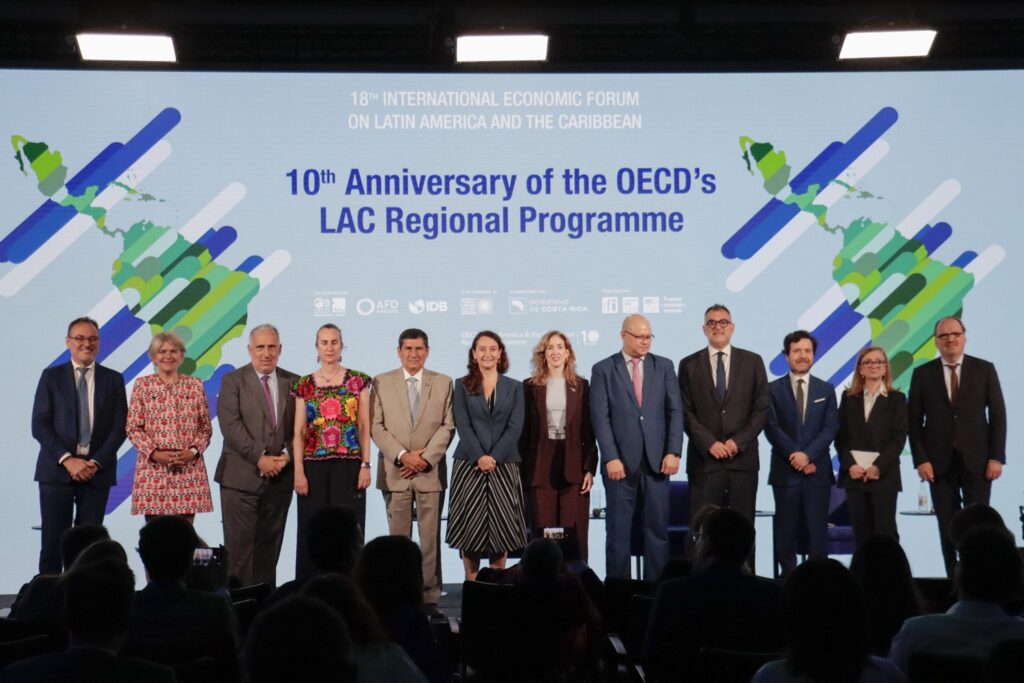
Posteriormente, participó en el panel titulado “El impacto transformador de la adhesión a la OCDE”, donde explicó que este proceso genera interés y respaldo no solo en el sector público, sino también en el sector privado, gremios y la sociedad civil en general. Finalmente, cerró su intervención en la clausura de la 18.ª edición del Foro sobre América Latina y el Caribe (Foro LAC), espacio donde resaltó el papel fundamental de las instituciones financieras multilaterales y los bancos de desarrollo para movilizar recursos y convertir el potencial de la región en obras concretas que mejoren la calidad de vida de sus habitantes.
DATOS
1.- El Perú lidera el proceso de adhesión en la región: El reconocimiento oficial de la OCDE sitúa al país en una posición privilegiada frente a otras naciones candidatas, demostrando que el esfuerzo sostenido y la coordinación entre instituciones dan resultados tangibles. Este avance fortalece la reputación del país como un socio serio y comprometido con la modernización.
2.- Se trata de una política de Estado que requiere continuidad: El proceso de adhesión no depende de una sola gestión, sino de compromisos a largo plazo. El llamado del premier a la próxima administración confirma que la incorporación a la OCDE es una meta nacional que busca transformar la estructura del Estado para beneficio de las futuras generaciones.
3.- La adhesión abre puertas a desarrollo y cooperación: Más allá del reconocimiento simbólico, avanzar en este camino significa adoptar reglas que atraen inversión, mejoran la gestión pública y facilitan el acceso a financiamiento internacional. Esto permitirá traducir el potencial del país en obras, servicios de calidad y mayor bienestar para toda la población.
Fuente: Agencia Peruana de Noticias PRENSAPERU.PE https://www.prensaperu.pe Twitter: @prensaperupe
Translate
Global Recognition! The ‘Organization for Economic Cooperation and Development’ highlights Peru as the model to follow in Latin America, with 40% progress towards joining the OECD.
Peruvian News Agency PRENSAPERU.PE https://www.prensaperu.pe Twitter: @prensaperupe Peru has been officially recognized by representatives of the Organisation for Economic Co-operation and Development (OECD) as the Latin American candidate country with the greatest progress, standing out among the eight nations currently in the accession process. This important achievement was confirmed following the participation of the President of the Council of Ministers, Luis Arroyo Sánchez, in the meetings held in Paris on June 2 and 3. Two days after this gathering, the recognition and commitments undertaken remain fully valid, marking a milestone in the country’s international projection.
Organisation for Economic Co-operation and Development (OECD): An international body composed of countries committed to democracy, the rule of law, and the market economy. Its main objective is to promote public policies that improve the well-being of the population, generate sustainable growth, and foster global cooperation. Joining this organization implies adopting international standards of transparency, efficiency, and good governance.
This was reported by the Prime Minister himself: “This recognition is possible thanks to the joint work of various institutions and the commitment of successive governments that have contributed to advancing rapidly along this path,” the official emphasized. In this regard, he specified that the country currently records an estimated 40% progress toward full accession — a result that is not accidental, but rather the outcome of continuous and coordinated efforts by the Multisectoral Commission for Peru’s Accession to the OECD.
Multisectoral Commission: A working group made up of representatives from different areas of the State, designed to address complex issues requiring the participation of multiple institutions. In this case, it is led by the Presidency of the Council of Ministers and includes the Ministry of Foreign Affairs and the Ministry of Economy and Finance, ensuring a comprehensive vision of the process.
To ensure this progress is not interrupted, Peru maintains a Permanent Representation to the OECD, which, together with the Commission’s Technical Secretariat, plays a fundamental role as a bridge for communication and coordination among all State sectors involved. This structure enables detailed monitoring of each requirement and ensures compliance with established timelines.
The Prime Minister further emphasized that the country has been rigorously fulfilling the Roadmap — the technical document outlining the steps and reforms required for accession — and stressed that this is a commitment that transcends individual administrations: “It is essential that the next State administration prioritizes this process in order to maintain momentum and continue along the path we have set.”
Roadmap: The official strategic plan and timeline that defines the legal, institutional, and administrative reforms the country must implement to align with OECD standards. It serves as a guide for measuring real progress throughout the process.
During his agenda in Paris, the Head of the Cabinet held a key bilateral meeting with the organization’s Secretary-General, Mathias Cormann, who confirmed the recognition: “Peru is undoubtedly the candidate country in the region with the most significant progress in its accession process,” the international authority stated. For his part, Arroyo highlighted that this work has been consolidated over nearly three years and emphasized that his presence at the Ministerial Council Meeting on June 3 demonstrates the national will to achieve this goal. He also issued an explicit call for the continuity of these actions to be guaranteed by future authorities.
Subsequently, he took part in the panel titled “The Transformative Impact of OECD Accession,” where he explained that the process generates interest and support not only from the public sector but also from the private sector, business associations, and civil society at large. Finally, he concluded his participation at the closing of the 18th edition of the Latin America and the Caribbean Forum (LAC Forum), where he highlighted the essential role of multilateral financial institutions and development banks in mobilizing resources and translating the region’s potential into concrete projects that improve the quality of life of its inhabitants.
KEY FACTS
1.- Peru leads the accession process in the region: Official recognition from the OECD places the country in a privileged position compared to other candidate nations, demonstrating that sustained effort and coordination among institutions produce tangible results. This progress strengthens the country’s reputation as a serious partner committed to modernization.
2.- It is a State policy requiring continuity: The accession process does not depend on a single administration, but rather on long-term commitments. The Prime Minister’s call to the next administration confirms that OECD membership is a national goal aimed at transforming the structure of the State for the benefit of future generations.
3.- Accession opens doors to development and cooperation: Beyond symbolic recognition, moving forward along this path means adopting rules that attract investment, improve public management, and facilitate access to international financing. This will enable the country’s potential to be translated into infrastructure, quality services, and greater well-being for the entire population.
Source: Peruvian News Agency PRENSAPERU.PE https://www.prensaperu.pe Twitter: @prensaperupe