
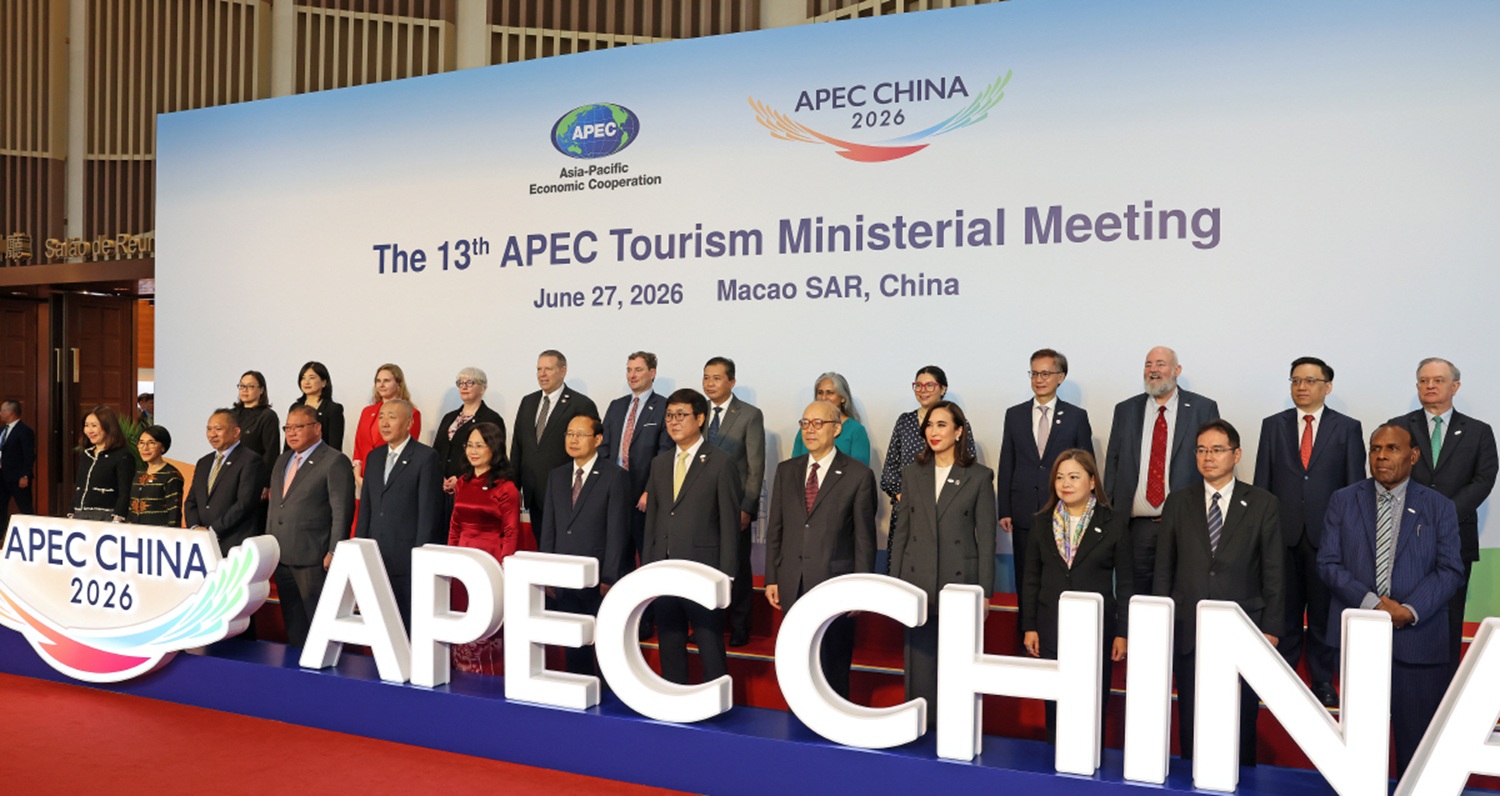
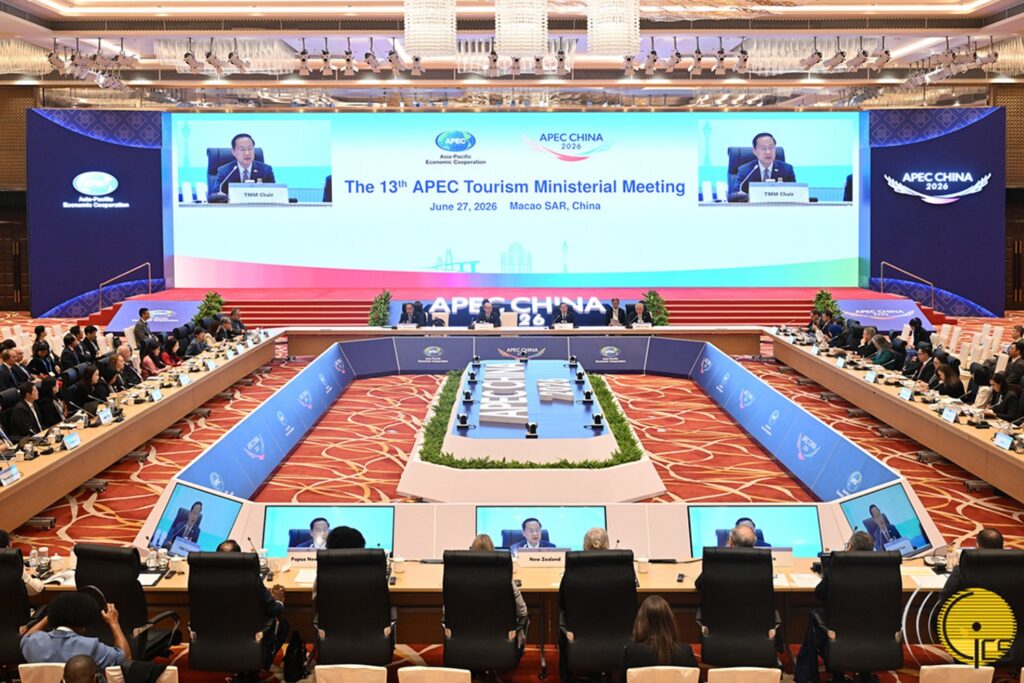
Agencia Peruana de Noticias PRENSAPERU.PE https://www.prensaperu.pe Twitter: @prensaperupe La innovación digital, los viajes sin contratiempos y el fortalecimiento de la cooperación regional fueron los ejes centrales de la Reunión de Ministros de Turismo de APEC celebrada en Macao, China. En este encuentro se definió la hoja de ruta para la siguiente etapa de desarrollo y expansión del turismo en toda la zona Asia‑Pacífico.
APEC
Foro de Cooperación Económica Asia‑Pacífico, integrado por 21 economías. Su objetivo es fomentar el crecimiento sostenible, el comercio abierto y la cooperación que beneficie a todos los sectores, incluido el turismo.
EL TURISMO: MOTOR ECONÓMICO FUNDAMENTAL
El sector sigue siendo uno de los pilares más fuertes de la actividad económica regional. Según los datos disponibles:
1.- En 2024, las economías miembro recibieron 439 millones de visitantes internacionales, de los cuales 359 millones provenían de países integrantes —lo que muestra la gran fuerza del intercambio intrarregional.
2.- Antes de la pandemia, aportaba el 10,4 % del Producto Interno Bruto — PIB y generaba y sostenía 334 millones de empleos directos e indirectos.
PRODUCTO INTERNO BRUTO (PIB)
Valor total de bienes y servicios producidos en un territorio; indica la magnitud y dinamismo de su economía.
EMPLEO TURÍSTICO
Comprende puestos en hotelería, transporte, agencias, restaurantes, guías y actividades complementarias que funcionan gracias al flujo de visitantes.
“El turismo ayuda a cumplir las aspiraciones de las personas por una vida mejor, impulsa el crecimiento económico y fomenta el intercambio cultural. Desempeña un papel único para avanzar hacia una comunidad integrada de Asia‑Pacífico”, afirmó Sun Yeli, Ministro de Cultura y Turismo de China, al inaugurar el encuentro.
TRES PRIORIDADES PRINCIPALES DE COOPERACIÓN
El ministro expuso las líneas esenciales para profundizar el trabajo conjunto:
I.- Acelerar la innovación digital.
Busca transformar y mejorar toda la experiencia del visitante mediante nuevas tecnologías:
1.- Traducción en tiempo real
2.- Realidad virtual y aumentada
3.- Dispositivos inteligentes y asistencia técnica
4.- Aplicaciones integradas
Innovación digital turística: Uso de tecnologías para eliminar barreras —como el idioma—, ofrecer información más completa, facilitar desplazamientos y fortalecer la comprensión cultural entre visitantes y comunidades.
II.- Facilitar los viajes y mejorar la conectividad.
Se promueve:
1.- Creación conjunta de productos y rutas turísticas transfronterizas
2.- Aumento de vuelos directos y conexiones marítimas
3.- Simplificación de trámites fronterizos
Un estudio de la Unidad de Apoyo a Políticas de APEC confirma que reemplazar visas tradicionales por visas electrónicas puede aumentar el flujo bilateral hasta un 15 % más.
Facilitación de viajes: Conjunto de medidas normativas, administrativas y tecnológicas destinadas a reducir requisitos, tiempos y costos para cruzar fronteras de forma segura y ágil.
III.- Distribución más amplia de los beneficios.
El crecimiento debe llegar no solo a grandes empresas o ciudades principales, sino también a comunidades locales, zonas rurales y regiones menos conocidas. Así se reduce la desigualdad y se favorece el desarrollo equilibrado.
Turismo inclusivo: Modelo en el cual las poblaciones locales participan activamente y reciben parte justa de los ingresos, además de proteger su patrimonio cultural y natural.
Tecnología al servicio de la recuperación y sostenibilidad.
Los ministros analizaron cómo la innovación digital acelera la recuperación posterior a crisis y sostiene el crecimiento. Las iniciativas se enmarcan en el trabajo del Grupo de Trabajo de Turismo de APEC, que avanza en:
1.- Soluciones basadas en inteligencia artificial para alojamiento y servicios
2.- Modernización de procedimientos fronterizos
3.- Herramientas digitales para gestión inteligente de destinos
4.- Promoción del turismo sostenible
Turismo sostenible: Tipo de actividad que cubre las necesidades actuales sin dañar los recursos naturales ni culturales, garantizando que sigan disponibles también para futuras generaciones.
“La cooperación recíproca sigue siendo el camino adecuado”, señaló el ministro Sun. “Esperamos que esta reunión sirva para elevar el nivel y alcance de la cooperación, acercar más a nuestros pueblos y contribuir al éxito de la próxima Reunión de Líderes Económicos de APEC”.
DATOS CONTEXTUALES
1.- El turismo constituye uno de los principales motores económicos de Asia‑Pacífico, capaz de generar riqueza y millones de empleos, además de fomentar la integración cultural.
2.- La innovación digital —como visas electrónicas y aplicaciones inteligentes— es una herramienta eficaz para ampliar flujos, reducir barreras y mejorar la experiencia de viaje.
3.- La cooperación práctica incluye rutas conjuntas, mayor conectividad y simplificación administrativa, lo que favorece tanto a empresas como a visitantes.
4.- El nuevo modelo busca que los beneficios lleguen a todas las comunidades, orientándose hacia un turismo más inclusivo y sostenible en toda la región.
Fuente: Agencia Peruana de Noticias PRENSAPERU.PE https://www.prensaperu.pe Twitter: @prensaperupe
Translate
APEC Defines Its Roadmap! The APEC Tourism Ministers’ Meeting in Macao, China, identifies innovation and cooperation as the driving force and regional integration link for Asia-Pacific tourism.
Peruvian News Agency PRENSAPERU.PE https://www.prensaperu.pe Twitter: @prensaperupe Digital innovation, seamless travel and strengthened regional cooperation were the central themes of the APEC Tourism Ministers’ Meeting held in Macao, China. This gathering defined the roadmap for the next stage of tourism development and expansion throughout the entire Asia‑Pacific area.
APEC
Asia‑Pacific Economic Cooperation forum, made up of 21 economies. Its purpose is to foster sustainable growth, open trade and cooperation that benefits all sectors, including tourism.
TOURISM: A KEY ECONOMIC DRIVER
The sector remains one of the strongest pillars of regional economic activity. According to available data:
1.- In 2024, member economies received 439 million international visitors, of whom 359 million came from member countries — reflecting the great strength of intra‑regional exchange.
2.- Before the pandemic, it contributed 10.4 % to Gross Domestic Product — GDP and generated and sustained 334 million direct and indirect jobs.
GROSS DOMESTIC PRODUCT (GDP)
Total value of goods and services produced within a territory; it indicates the size and dynamism of its economy.
TOURISM EMPLOYMENT
It covers positions in accommodation, transport, agencies, restaurants, guiding and complementary activities that operate thanks to visitor flows.
“Tourism helps fulfil people’s aspirations for a better life, drives economic growth and fosters cultural exchange. It plays a unique role in advancing towards an integrated Asia‑Pacific community”, stated Sun Yeli, Minister of Culture and Tourism of China, while opening the meeting.
THREE MAIN COOPERATION PRIORITIES
The Minister outlined the essential lines for deepening joint work:
I.- Accelerate digital innovation.
It aims to transform and improve the whole visitor experience through new technologies:
1.- Real‑time translation
2.- Virtual and augmented reality
3.- Smart devices and technical assistance
4.- Integrated applications
Digital innovation in tourism: The use of technologies to remove barriers — such as language —, provide fuller information, facilitate travel and strengthen cultural understanding between visitors and communities.
II.- Facilitate travel and improve connectivity.
Efforts are promoted towards:
1.- Joint creation of cross‑border tourism products and routes
2.- Increase in direct flights and maritime connections
3.- Simplification of border procedures
A study by the APEC Policy Support Unit confirms that replacing traditional visas with electronic visas can raise bilateral travel flows by up to 15 %.
Travel facilitation: Set of regulatory, administrative and technological measures intended to reduce requirements, time and costs so borders may be crossed safely and smoothly.
III.- Broader distribution of benefits.
Growth should reach not only large companies or main cities, but also local communities, rural areas and less‑known regions. This reduces inequality and fosters balanced development.
Inclusive tourism: Model whereby local populations participate actively and receive a fair share of revenues, while also protecting their cultural and natural heritage.
Technology for recovery and sustainability.
Ministers analysed how digital innovation accelerates post‑crisis recovery and sustains growth. Initiatives fall within the work carried out by the APEC Tourism Working Group, which advances:
1.- Artificial‑intelligence‑based solutions for accommodation and services
2.- Modernisation of border procedures
3.- Digital tools for smart destination management
4.- Promotion of sustainable tourism
Sustainable tourism: Type of activity that meets present needs without harming natural or cultural resources, ensuring they remain available also for future generations.
“Mutually beneficial cooperation proves to be the right path forward”, said Minister Sun. “I sincerely hope all economies will use this meeting as an opportunity to take APEC tourism cooperation to higher levels and broader areas, bring our peoples even closer and contribute to the success of the upcoming APEC Economic Leaders’ Meeting”.
CONTEXTUAL DATA
1.- Tourism constitutes one of the main economic engines of Asia‑Pacific, capable of generating wealth and millions of jobs as well as fostering cultural integration.
2.- Digital innovation — such as electronic visas and smart applications — serves as an effective instrument to expand flows, reduce barriers and improve travel experience.
3.- Practical cooperation includes joint routes, enhanced connectivity and administrative simplification, benefiting both businesses and visitors.
4.- The new model aims to extend benefits to all communities, moving towards more inclusive and sustainable tourism throughout the region.
Source: Peruvian News Agency PRENSAPERU.PE https://www.prensaperu.pe Twitter: @prensaperupe