
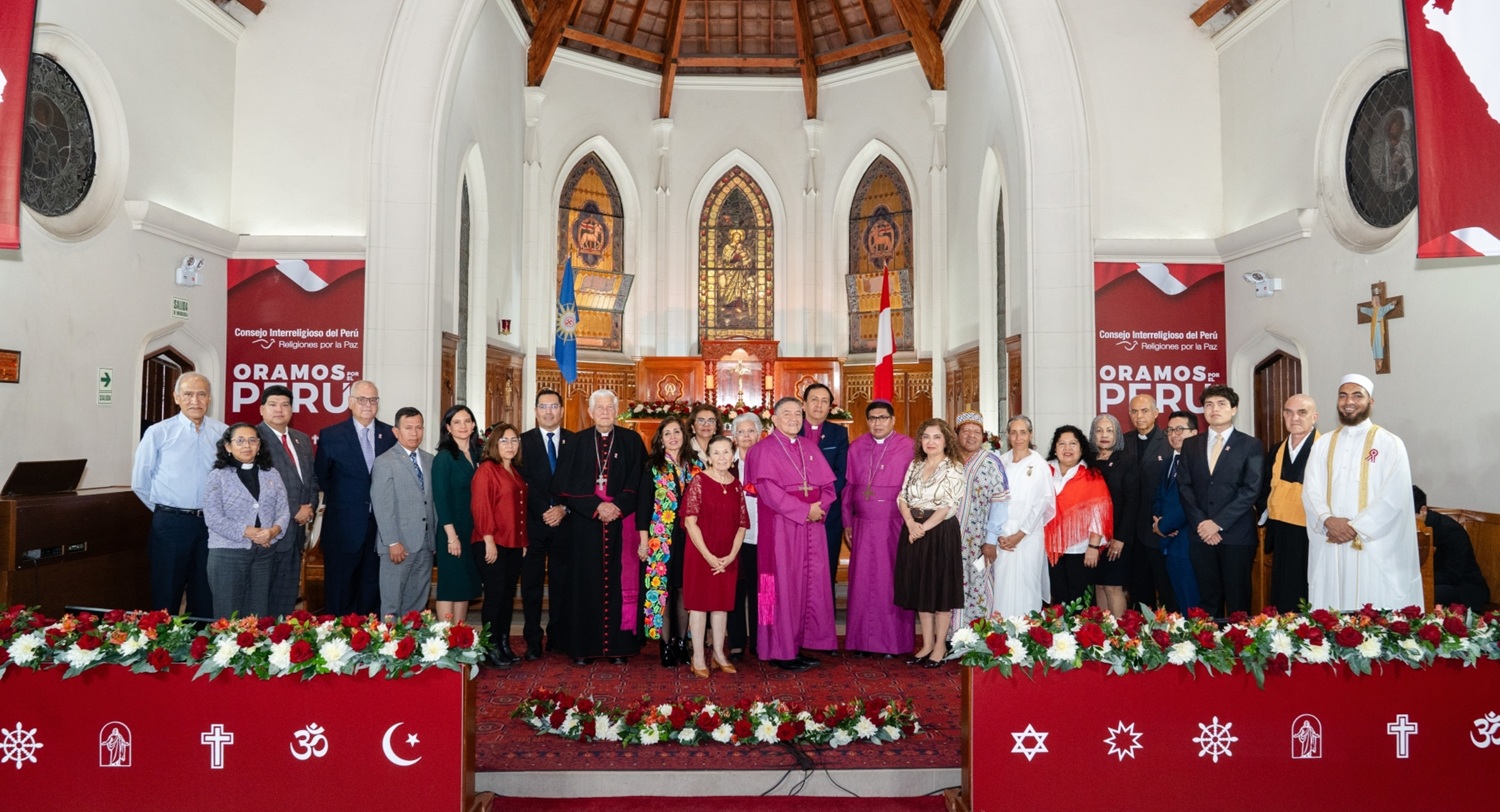
Agencia Peruana de Noticias PRENSAPERU.PE https://www.prensaperu.pe Twitter: @prensaperupe Organizaciones y comunidades de fe se unieron para enviar un mensaje de unidad al país durante la sexta edición de “Oramos por el Perú”, la ceremonia interreligiosa organizada por el Consejo Interreligioso del Perú – Religiones por la Paz como parte de las celebraciones oficiales por Fiestas Patrias.
El encuentro se realizó el martes 21 de julio, a las 7:00 p. m., en la Catedral Anglicana del Buen Pastor ubicada en la Av. Santa Cruz 491, Miraflores, y congregó a líderes de las principales tradiciones de fe presentes en el país, además de autoridades del Estado, miembros del cuerpo diplomático y distinguidas personalidades.
Con el lema “Un país unido en la fe y la esperanza”, esta sexta edición reafirmó que, más allá de las diferencias de credo, existen valores compartidos capaces de fortalecer la convivencia, promover el diálogo y renovar el compromiso con el bienestar de todos los peruanos.
La ceremonia se inició con la participación del Obispo Jorge Aguilar de la Iglesia Anglicana y una reflexión de Monseñor Salvador Piñeiro, arzobispo de Ayacucho y presidente del Consejo Interreligioso del Perú, para luego dar paso a dos momentos centrales de oración dedicados a la unidad y la esperanza. Durante la jornada, representantes de las distintas organizaciones religiosas elevaron plegarias por la familia, la nación, la democracia, la justicia, la protección de la infancia, los pueblos indígenas, la seguridad, entre otras intenciones que reflejan las principales preocupaciones de la sociedad peruana.
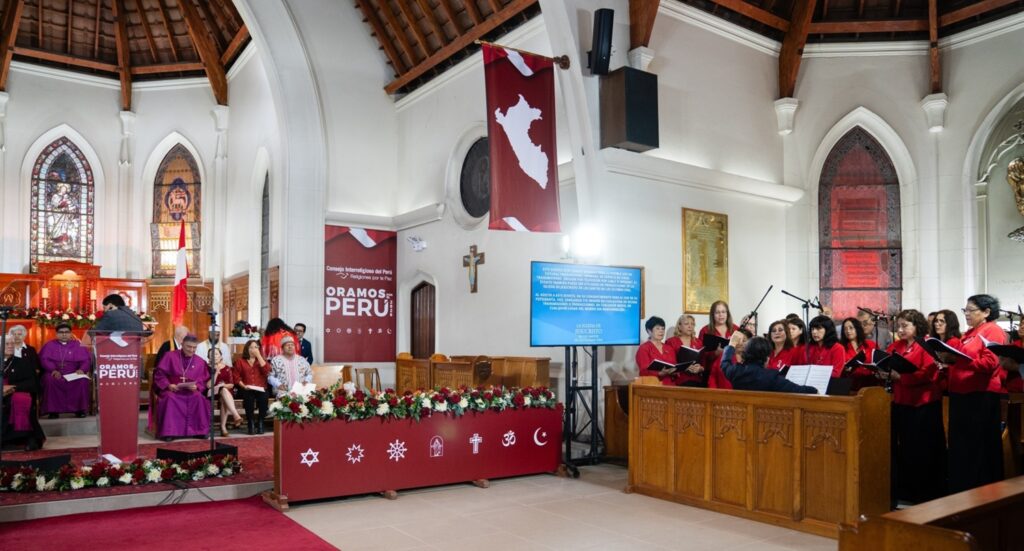
El evento contó con la participación de la Coral Interreligiosa del Perú, integrada por miembros de diversas comunidades de fe, cuyas interpretaciones acompañaron los distintos momentos del encuentro como símbolo de fraternidad, diálogo y esperanza.
Participaron representantes de la Iglesia Católica, la Iglesia Anglicana, La Iglesia de Jesucristo de los Santos de los Últimos Días, la Comunidad Judía del Perú, la Asociación Islámica del Perú, la Comunidad Bahá’í, la Comunidad Budista Soto Zen, la iglesia Adventista del Séptimo Día, Luterana, Metodista, Presbiteriana y Ortodoxa Griega, así como organizaciones interreligiosas, comunidades indígenas, redes juveniles y otras congregaciones de fe y espiritualidad comprometidas con la construcción de una cultura de paz.
Desde su primera edición, “Oramos por el Perú” se ha consolidado como el principal encuentro interreligioso del país, demostrando que el diálogo entre las distintas expresiones de fe puede convertirse en un puente para promover la paz, la reconciliación y la esperanza en beneficio de todos los peruanos.
Leyenda de fotos: Organizaciones y comunidades de fe enviaron un mensaje de unidad al país durante la sexta edición de “Oramos por el Perú”, la ceremonia interreligiosa organizada por el Consejo Interreligioso del Perú – Religiones por la Paz como parte de las celebraciones oficiales por Fiestas Patrias.
Monseñor Salvador Piñeiro, Arzobispo de Ayacucho y presidente del Consejo Interreligioso del Peru y Elder Roberto Pacheco, Setenta de Area de La Iglesia de Jesucristo de los Santos de los Últimos Días
DATOS CONCEPTUALES
Encuentro interreligioso: Reunión que convoca a distintas tradiciones y credos religiosos con el fin de dialogar, compartir valores comunes y trabajar por objetivos colectivos, sin perder la identidad propia de cada fe.
Consejo Interreligioso: Organismo que agrupa a las principales confesiones de un país, orientado a fomentar la fraternidad, la paz social y la colaboración en temas de interés nacional.
Valores compartidos: Principios éticos y morales (como la justicia, la solidaridad y la paz) que están presentes en diversas doctrinas religiosas y sirven de base para la convivencia armónica.
Cultura de paz: Conjunto de valores, actitudes y acciones que rechazan la violencia y previenen conflictos, promoviendo el entendimiento mutuo y la resolución pacífica de diferencias.
DATOS
1.- Pluralismo como fortaleza: El evento demuestra que la diversidad de creencias enriquece al país y no es un obstáculo para la unidad, siempre que se sustente en el respeto y el diálogo sincero.
2.- Compromiso por el bien común: Las comunidades religiosas asumen un rol activo al elevar plegarias y reflexiones sobre temas centrales como la democracia, la justicia y la protección de los más vulnerables.
3.- Institucionalidad y tradición: “Oramos por el Perú” se ha consolidado en el calendario cívico nacional, convirtiéndose en un referente anual de fraternidad y esperanza en el marco de las Fiestas Patrias.
4.- Puente hacia la reconciliación: La participación transversal de credos, autoridades y sociedad civil proyecta un mensaje potente: la espiritualidad y la ética compartida son herramientas fundamentales para sanar y unir al Perú.
Fuente: Agencia Peruana de Noticias PRENSAPERU.PE https://www.prensaperu.pe Twitter: @prensaperupe
Translate
Religious organizations prayed for Peru in honor of the national holidays during the sixth edition of “We Pray for Peru,” organized by the Interreligious Council of Peru – Religions for Peace.
Peruvian News Agency PRENSAPERU.PE https://www.prensaperu.pe Twitter: @prensaperupe Organizations and faith communities joined forces to send a message of unity to the nation during the sixth edition of “We Pray for Peru,” the interfaith ceremony organized by the Interreligious Council of Peru – Religions for Peace as part of the official Independence Day celebrations.
The gathering was held on Tuesday, July 21, at 7:00 p.m., at the Anglican Cathedral of the Good Shepherd, located at Av. Santa Cruz 491, Miraflores, bringing together leaders from the main faith traditions present in the country, as well as State authorities, members of the diplomatic corps, and distinguished guests.
Under the motto “A country united in faith and hope,” this sixth edition reaffirmed that, beyond creedal differences, shared values exist capable of strengthening coexistence, promoting dialogue, and renewing commitment to the well-being of all Peruvians.
The ceremony began with the participation of Bishop Jorge Aguilar of the Anglican Church and a reflection by Monsignor Salvador Piñeiro, Archbishop of Ayacucho and president of the Interreligious Council of Peru, followed by two central moments of prayer dedicated to unity and hope. Throughout the day, representatives of the various religious organizations offered prayers for the family, the nation, democracy, justice, the protection of children, indigenous peoples, security, and other intentions reflecting the main concerns of Peruvian society.
The event featured the participation of the Interreligious Choir of Peru, composed of members from diverse faith communities, whose performances accompanied the different moments of the gathering as a symbol of fraternity, dialogue, and hope.
Representatives from the Catholic Church, the Anglican Church, The Church of Jesus Christ of Latter‑day Saints, the Jewish Community of Peru, the Islamic Association of Peru, the Bahá’í Community, the Soto Zen Buddhist Community, the Seventh‑day Adventist Church, Lutheran, Methodist, Presbyterian, and Greek Orthodox Churches participated, as well as interfaith organizations, indigenous communities, youth networks, and other faith and spiritual congregations committed to building a culture of peace.
Since its first edition, “We Pray for Peru” has established itself as the main interreligious gathering in the country, demonstrating that dialogue among the different expressions of faith can become a bridge to promote peace, reconciliation, and hope for the benefit of all Peruvians.
Photo captions: Organizations and faith communities sent a message of unity to the nation during the sixth edition of “We Pray for Peru,” the interfaith ceremony organized by the Interreligious Council of Peru – Religions for Peace as part of the official Independence Day celebrations.
Monsignor Salvador Piñeiro, Archbishop of Ayacucho and president of the Interreligious Council of Peru, and Elder Roberto Pacheco, Area Seventy of The Church of Jesus Christ of Latter‑day Saints.
CONCEPTUAL DATA
Interfaith gathering: A meeting bringing together different religious traditions and creeds for the purpose of dialogue, sharing common values, and working toward collective objectives, without losing the unique identity of each faith.
Interreligious Council: An entity grouping the main confessions of a country, oriented toward fostering fraternity, social peace, and collaboration on matters of national interest.
Shared values: Ethical and moral principles (such as justice, solidarity, and peace) that are present in diverse religious doctrines and serve as the foundation for harmonious coexistence.
Culture of peace: A set of values, attitudes, and actions that reject violence and prevent conflicts, promoting mutual understanding and the peaceful resolution of differences.
DATA
1.- Pluralism as a strength: The event demonstrates that diversity of beliefs enriches the country and is not an obstacle to unity, provided it is grounded in respect and sincere dialogue.
2.- Commitment to the common good: Faith communities assume an active role by offering prayers and reflections on central issues such as democracy, justice, and the protection of the most vulnerable.
3.- Institutional standing and tradition: “We Pray for Peru” has consolidated its place on the national civic calendar, becoming an annual benchmark of fraternity and hope within the framework of Independence Day.
4.- Bridge toward reconciliation: Cross‑cutting participation by creeds, authorities, and civil society projects a powerful message: shared spirituality and ethics are fundamental tools for healing and uniting Peru.
Source: Peruvian News Agency PRENSAPERU.PE https://www.prensaperu.pe Twitter: @prensaperupe