
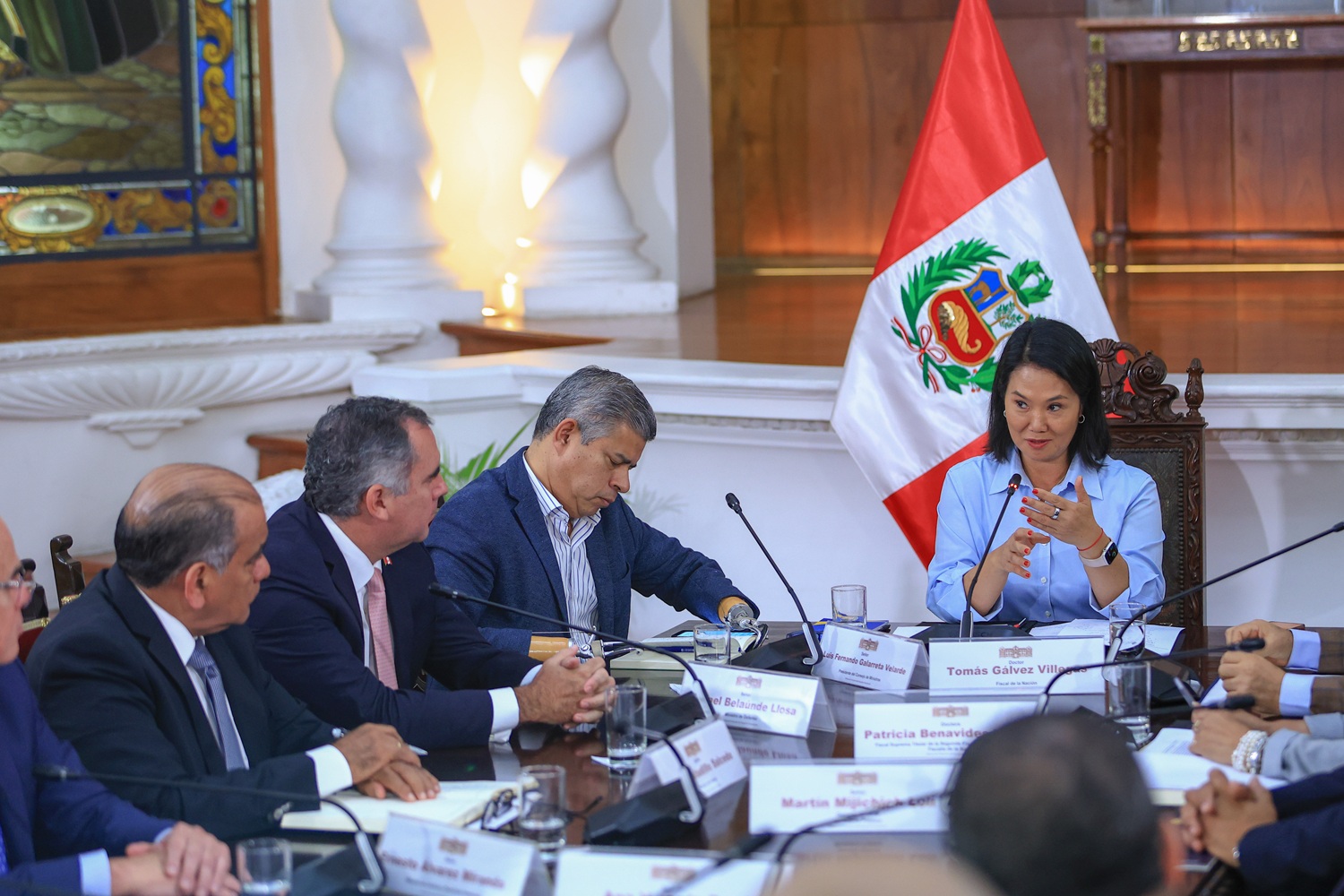
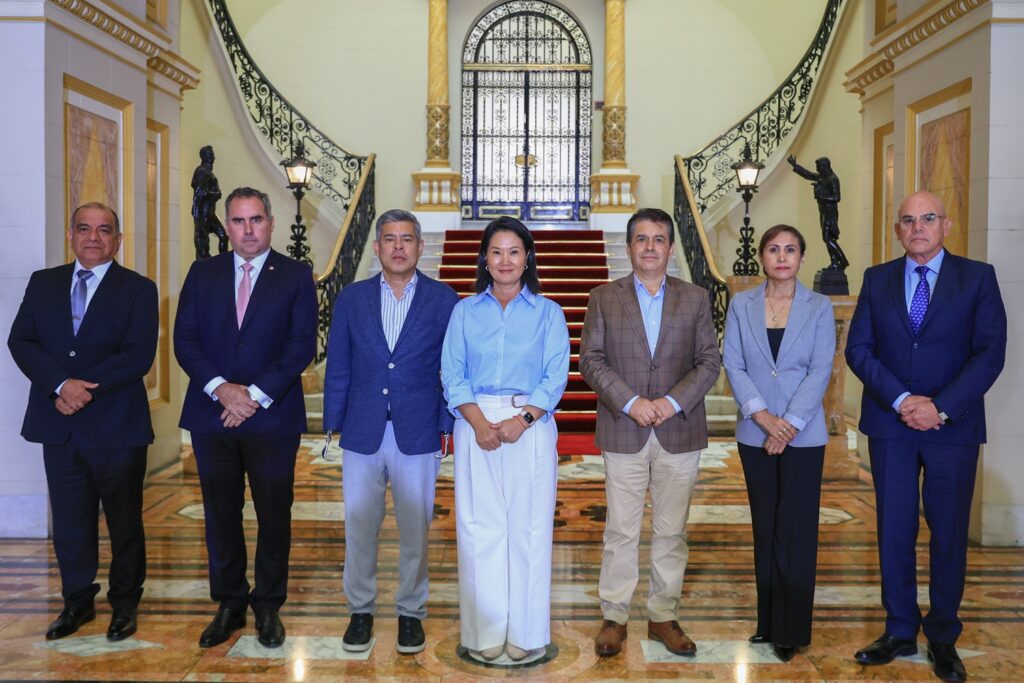
Agencia Peruana de Noticias PRENSAPERU.PE https://www.prensaperu.pe Twitter: @prensaperupe La presidenta de la República, Keiko Sofía Fujimori Higuchi, sostuvo una reunión de trabajo en Palacio de Gobierno con el fiscal de la Nación, Tomás Gálvez, en la que también participaron el presidente del Consejo de Ministros Luis Galarreta; los ministros del Interior César Astudillo, de Defensa Rafael Belaúnde y de Justicia Ernesto Álvarez; así como la fiscal suprema Patricia Benavides y otras altas autoridades del sistema de justicia y seguridad.
El encuentro marca el inicio de una estrategia articulada que busca responder con celeridad y firmeza a tres grandes desafíos nacionales: la lucha contra la criminalidad, la preparación y mitigación de efectos del fenómeno El Niño y la modernización de las instituciones públicas.
DESARROLLO Y DATOS CONCEPTUALES
I.- Delegación de facultades legislativas: herramienta constitucional para la urgencia.
Según el artículo 104 de la Constitución Política, la delegación de facultades es una autorización excepcional que otorga el Congreso al Poder Ejecutivo para legislar mediante decretos con rango de ley, sobre materias específicas y por plazo determinado . No supone renuncia al poder legislativo ni supresión de controles: quedan excluidas la reforma constitucional, tratados internacionales, presupuesto y leyes orgánicas; y toda norma emitida debe ser informada y revisada por el Legislativo.
En este caso, la solicitud se centra en tres ejes prioritarios:
1.- Seguridad ciudadana: Actualizar normas que permitan perseguir con mayor eficacia la extorsión, sicariato y delincuencia organizada, respondiendo a indicadores oficiales que muestran que la inseguridad sigue siendo una de las principales preocupaciones de la población .
2.- Fenómeno El Niño: Agilizar la ejecución de obras preventivas, descolmatación de ríos, instalación de defensas ribereñas y atención inmediata a zonas vulnerables, ante la previsión de eventos climáticos intensos en los próximos meses .
3.- Fortalecimiento institucional: Dotar a organismos como el Ministerio Público, Policía Nacional y Poder Judicial de marcos normativos modernos que mejoren su capacidad de respuesta sin afectar su autonomía.
II.- Coordinación interinstitucional: respeto y sinergia entre poderes.
El Estado peruano se organiza bajo el principio de separación y autonomía de poderes —Ejecutivo, Legislativo y Judicial— y organismos constitucionales autónomos como el Ministerio Público . Esta independencia no significa aislamiento: la Constitución también exige que actúen de manera coordinada para garantizar el bien común.
La mandataria enfatizó que el Gobierno será un aliado del sistema de justicia: “darles recursos, empoderarlos, pero siempre respetando su autonomía”. Anunció además que en los próximos días sostendrá una reunión con la presidenta del Poder Judicial, reafirmando que la justicia debe ser visible, ágil y accesible para todos.
III.- Diagnóstico y compromiso del Ministerio Público.
El fiscal de la Nación, Tomás Gálvez, presentó un diagnóstico detallado sobre la situación del organismo que representa: señaló la importancia de fortalecer su capacidad operativa, tecnológica y de recursos humanos para acompañar el trabajo de la Policía Nacional y garantizar que toda acción delictiva tenga respuesta penal oportuna. Agradeció la convocatoria y calificó la gestión como “esperanzadora”, comprometiéndose a avanzar en un trabajo conjunto, técnico y permanente.
IV.- Objetivo central: que la justicia y la seguridad se sientan.
La presidenta resumió el sentido de la reunión: “Lo más importante es que todos podamos escucharnos. Quiero que los ciudadanos sepan que iremos con mucha fuerza para que los delincuentes terminen en prisión”. Destacó que la seguridad no es tarea de un solo sector: requiere articulación constante, mesas de diálogo y decisiones que permitan agilizar procesos sin perder el respeto al ordenamiento jurídico.
DATOS CONTEXTUALES
1.- Herramienta con límites y fines claros: La solicitud de facultades legislativas no es una medida arbitraria, sino un mecanismo constitucional diseñado para atender emergencias concretas, bajo estricto control del Congreso y respeto a la ley .
2.- Seguridad como prioridad compartida: La lucha contra la delincuencia requiere normas renovadas, mayor coordinación y recursos suficientes, manteniendo siempre la independencia de quienes administran justicia.
3.- Prevención ante El Niño: La agilidad normativa permitirá adelantar obras y acciones que salven vidas y protejan la infraestructura nacional, evitando demoras que agraven los efectos del fenómeno climático .
4.- Instituciones fuertes para un país ordenado: El fortalecimiento del Ministerio Público, la Policía y el Poder Judicial es la base para que el Estado cumpla su fin esencial: garantizar la convivencia pacífica y los derechos de todos los peruanos.
Fuente: Agencia Peruana de Noticias PRENSAPERU.PE https://www.prensaperu.pe Twitter: @prensaperupe
Translate
Keiko Fujimori Chairs Historic Meeting Where “Executive Branch, Public Prosecutor’s Office, and Security Forces” Outline a Common Roadmap. The President Sent a Clear Message: Criminals Must Know They Will End Up in Prison.
Peruvian News Agency PRENSAPERU.PE https://www.prensaperu.pe Twitter: @prensaperupe President of the Republic Keiko Sofía Fujimori Higuchi held a working meeting at the Government Palace with the Attorney General of the Nation Tomás Gálvez. Also participating were the President of the Council of Ministers Luis Galarreta; the Ministers of the Interior César Astudillo, Defense Rafael Belaúnde, and Justice Ernesto Álvarez; as well as Supreme Prosecutor Patricia Benavides and other high‑ranking authorities from the justice and security system.
This meeting marks the start of a coordinated strategy aimed at responding swiftly and firmly to three major national challenges: combating crime, preparing for and mitigating the effects of El Niño, and modernizing public institutions.
DEVELOPMENT AND CONCEPTUAL DATA
I. Delegation of legislative powers: a constitutional tool for urgency.
Under Article 104 of the Political Constitution, the delegation of powers is an exceptional authorization granted by Congress to the Executive Branch to legislate through decrees having the force of law, on specific matters and for a set period. It does not imply a surrender of legislative authority or the removal of oversight: constitutional reform, international treaties, the budget, and organic laws are excluded; every measure issued must be reported and reviewed by the Legislature.
In this instance, the request focuses on three priority areas:
1.- Citizen security: Updating regulations to pursue extortion, contract killing, and organized crime more effectively, responding to official indicators showing that insecurity remains one of the population’s main concerns.
2.- El Niño Phenomenon: Accelerating the execution of preventive works, river dredging, installation of river defenses, and immediate assistance to vulnerable areas, in view of forecasts of intense climatic events in the coming months.
3.- Institutional strengthening: Equipping bodies such as the Public Prosecutor’s Office, the National Police, and the Judiciary with modern regulatory frameworks that improve their response capacity without undermining their autonomy.
II. Inter‑institutional coordination: respect and synergy among branches of State.
The Peruvian State is organized under the principle of separation and autonomy of powers —Executive, Legislative, and Judicial— and autonomous constitutional bodies such as the Public Prosecutor’s Office. This independence does not mean isolation: the Constitution also requires them to act in a coordinated manner to guarantee the common good.
The President emphasized that the Government will be an ally of the justice system: “to provide resources, empower them, but always respecting their autonomy.” She also announced that in the coming days she will hold a meeting with the President of the Judiciary, reaffirming that justice must be visible, agile, and accessible to all.
III. Diagnosis and commitment of the Public Prosecutor’s Office.
Attorney General Tomás Gálvez presented a detailed diagnosis of the body he represents: he highlighted the importance of strengthening its operational, technological, and human‑resource capacity to support the work of the National Police and ensure that every criminal act receives a timely legal response. He thanked the President for convening the meeting, described the administration as “hopeful”, and pledged to move forward with joint, technical, and permanent cooperation.
IV. Central objective: justice and security that are felt.
The President summarized the purpose of the meeting: “The most important thing is that we can all listen to one another. I want citizens to know that we will act with great resolve so that criminals end up in prison.” She stressed that security is not the task of a single sector: it requires constant coordination, dialogue tables, and decisions that streamline processes while upholding the rule of law.
CONTEXTUAL DATA
1.- A tool with defined limits and purposes: The request for legislative powers is not an arbitrary measure, but a constitutional mechanism designed to address specific emergencies, under strict congressional oversight and respect for the law.
2.- Security as a shared priority: Combating crime requires updated regulations, greater coordination, and adequate resources, while preserving the independence of those who administer justice.
3.- Prevention ahead of El Niño: Regulatory agility will allow works and actions to be advanced that save lives and protect national infrastructure, avoiding delays that would worsen the phenomenon’s effects.
4.- Strong institutions for an orderly country: Strengthening the Public Prosecutor’s Office, the Police, and the Judiciary is the foundation for the State to fulfill its essential purpose: guaranteeing peaceful coexistence and the rights of all Peruvians.
Source: Peruvian News Agency PRENSAPERU.PE https://www.prensaperu.pe Twitter: @prensaperupe