
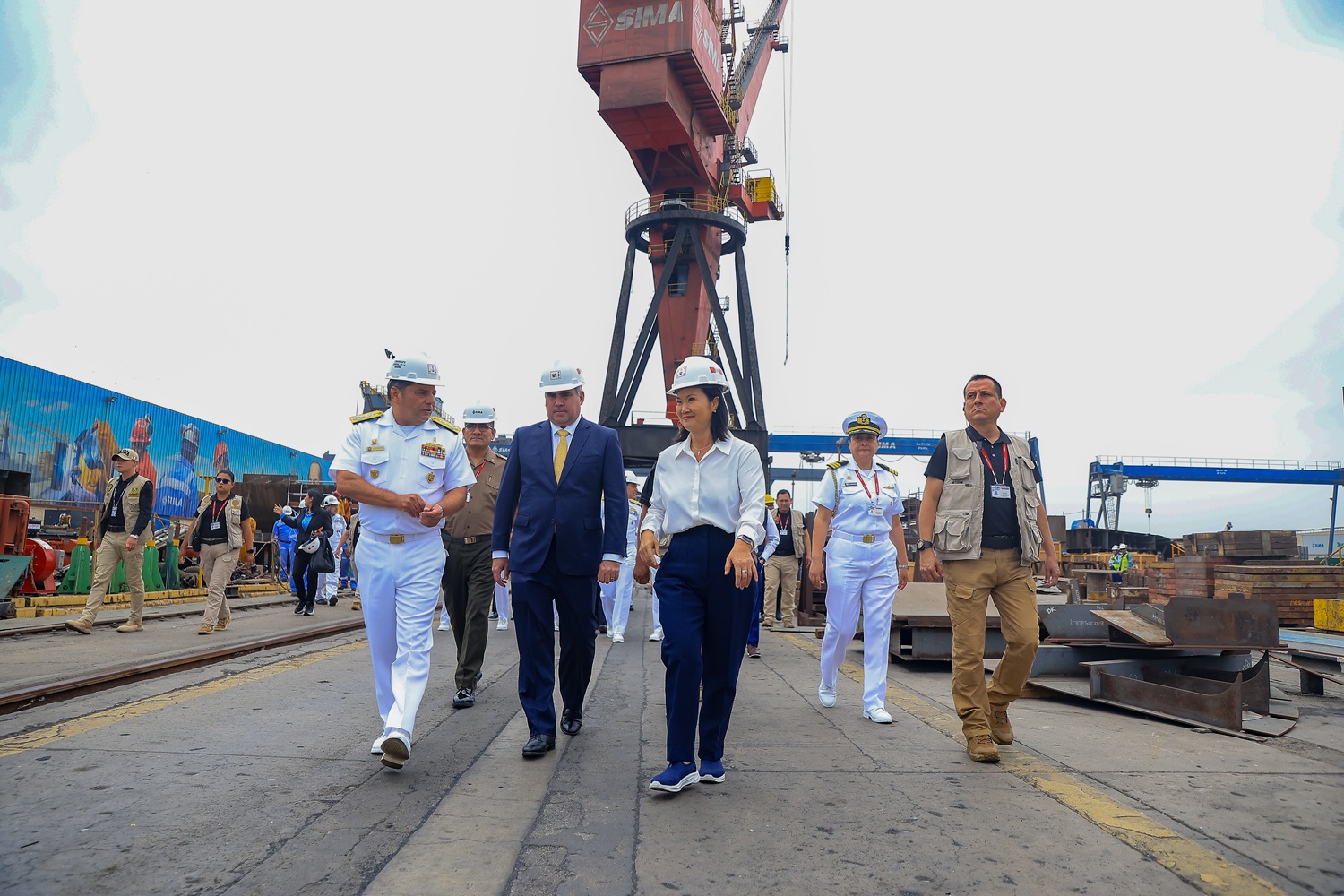
Agencia Peruana de Noticias PRENSAPERU.PE https://www.prensaperu.pe Twitter: @prensaperupe La Presidenta de la República, Keiko Fujimori Higuchi, efectuó hoy una visita oficial a la Base Naval del Callao y a los Servicios Industriales de la Marina (SIMA), con el propósito de inspeccionar las capacidades operativas, logísticas e industriales de la Marina de Guerra del Perú, en el marco de la preparación institucional para responder a los efectos del Fenómeno El Niño. La inspección abarcó recursos navales, infraestructura de vigilancia y capacidad de mantenimiento y construcción naval, constituyendo un acto de relevancia estratégica en la gestión integral del riesgo de desastres.
ANÁLISIS DE LA VISITA Y MEDIDAS ANUNCIADAS
I.- INSPECCIÓN DE CAPACIDADES DE RESPUESTA ANTE FENÓMENO EL NIÑO
A bordo del Buque de la Armada Peruana (B.A.P.) “Paita”, la Jefa de Estado recibió del Comandante General de la Marina de Guerra del Perú, Almirante Javier Bravo de Rueda, una exposición técnica detallada sobre el rol institucional de la fuerza naval frente a precipitaciones extremas y desastres naturales. La autoridad naval precisó que la institución se constituye en un componente esencial de la primera respuesta, dada su capacidad de movilidad, transporte de carga y personal, y acceso a zonas costeras y ribereñas que podrían quedar aisladas.
La Presidenta estableció como referencia operativa el escenario climático proyectado por la institución armada: a partir de la segunda quincena de noviembre se incrementa el riesgo de precipitaciones de gran intensidad. En correspondencia con este cronograma, las unidades navales serán desplegadas progresivamente a lo largo del litoral peruano, en posición de alerta y pronta disponibilidad para actuar ante eventuales afectaciones.
II.- DESPLIEGUE DE UNIDADES NAVALES: PRIMERA LÍNEA DE RESPUESTA
El Almirante Bravo de Rueda detalló la composición del dispositivo naval inicial:
1.- B.A.P. “Pisco”, B.A.P. “Paita” y B.A.P. “Tacna” —este último buque de transporte logístico con capacidad de carga significativa— constituyen el núcleo principal de respuesta inmediata.
2.- Se sumarán además dos buques logísticos medianos, incorporándose de manera progresiva durante los meses siguientes.
Estas unidades permiten el traslado de suministros, equipos, personal de ayuda humanitaria y la evacuación de personas en zonas afectadas, cumpliendo una función de enlace vital entre las zonas de emergencia y los centros de abastecimiento y asistencia.
III.- COORDINACIÓN INTERINSTITUCIONAL COMO FACTOR DETERMINANTE
La mandataria destacó que la eficacia de la preparación depende de la articulación fluida entre los sectores competentes. En ese sentido, valoró la coordinación sostenida con el mando naval y señaló que los detalles operativos serán complementados por la comisión encargada de enfrentar el Fenómeno El Niño, presidida por el Ministro de Desarrollo Agrario y Riego, Marco Vinelli. Estuvieron presentes en la visita el Presidente del Consejo de Ministros, Luis Galarreta, y el Ministro de Defensa, Rafael Belaunde, lo que evidencia el carácter prioritario y multisectorial de la medida.
IV.- SEGURIDAD MARÍTIMA, VIGILANCIA Y DESARROLLO INDUSTRIAL NAVAL
La jornada incluyó también el recorrido por el Centro de Tráfico Marítimo, donde se evaluaron los sistemas de vigilancia, control y monitoreo de las actividades en el mar, fundamentales para garantizar la seguridad de la navegación y la protección del dominio marítimo.
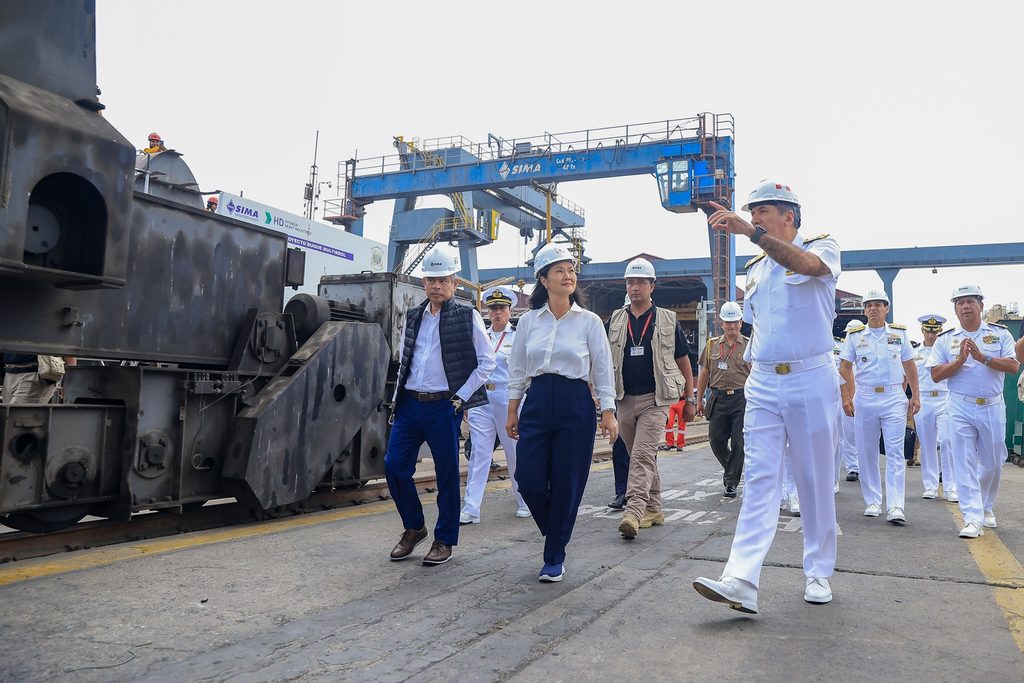
Posteriormente, en las instalaciones de SIMA Callao, la Presidenta inspeccionó los talleres de mantenimiento y construcción naval, conociendo el estado de los trabajos en los buques “Talara” y “Chimbote”. El fortalecimiento de esta industria persigue el objetivo estratégico de ampliar las capacidades nacionales de reparación, modernización y construcción de embarcaciones, permitiendo al Perú consolidarse como referente industrial y tecnológico en el ámbito naval del Pacífico Sur. Esta capacidad no solo fortalece la defensa nacional, sino que asegura la disponibilidad operativa de las unidades de apoyo en situaciones de emergencia.
DATOS CONCEPTUALES – DEFINICIONES PRECISAS
Gestión logística de emergencia: Conjunto de procesos, recursos y procedimientos orientados a garantizar el despliegue, abastecimiento y movilización de medios humanos y materiales ante situaciones de crisis. En el ámbito marítimo, comprende la disponibilidad de unidades navales con capacidad de transporte, evacuación, suministro y apoyo a zonas aisladas o afectadas por fenómenos naturales.
Capacidad operativa institucional: Disponibilidad real y efectiva de recursos humanos, materiales y tecnológicos que posee una entidad para cumplir sus funciones en condiciones ordinarias o de emergencia. No se limita a la existencia de equipos, sino a su estado de operatividad, su dotación de personal y la doctrina de empleo establecida.
Fenómeno El Niño: Evento climático caracterizado por el calentamiento anómalo de las aguas superficiales del Océano Pacífico ecuatorial, que altera los patrones de lluvia y temperatura atmosférica, generando precipitaciones intensas, inundaciones, deslizamientos y afectación de infraestructura y medios de vida en amplias zonas del territorio nacional. Su previsión y preparación constituyen un componente central de la política de reducción de riesgo de desastres.
Coordinación intersectorial: Mecanismo de articulación entre distintas entidades del Estado con competencias complementarias, orientado a evitar duplicidades, optimizar recursos y garantizar la continuidad y coherencia de las acciones de prevención, mitigación y respuesta ante eventos adversos. Es esencial para que la preparación no sea responsabilidad de un solo sector, sino del conjunto del aparato público.
Industria naval y soberanía tecnológica: Capacidad nacional de diseño, construcción, reparación y mantenimiento de unidades navales e infraestructura portuaria. Su fortalecimiento no solo reduce la dependencia externa, sino que incrementa la disponibilidad operativa de las flotas y constituye un factor de desarrollo productivo y de proyección estratégica del Estado en el ámbito marítimo.
CONCLUSIONES
1.- La visita de la Presidenta de la República a la Base Naval y SIMA constituye un acto de reafirmación institucional frente a la amenaza climática del Fenómeno El Niño, estableciendo un cronograma de despliegue naval a partir de la segunda quincena de noviembre. La definición de un escenario temporal y la disposición de recursos navales expresan la voluntad de transitar de la respuesta reactiva a la preparación proactiva.
2.- El dispositivo naval integrado por cinco unidades de transporte y apoyo logístico configura una capacidad de respuesta inmediata de gran valor estratégico, especialmente para el litoral y zonas ribereñas vulnerables al aislamiento por inundaciones o desbordamientos. Su efectividad dependerá de la disponibilidad operativa, el abastecimiento previo y la coordinación con los gobiernos regionales y locales.
3.- El fortalecimiento de la industria naval nacional, representada por SIMA, no solo persigue fines de soberanía tecnológica y desarrollo productivo, sino que incide directamente en la resiliencia del sistema de respuesta ante desastres: la capacidad de reparar y mantener las embarcaciones dentro del país garantiza su operatividad continua y reduce los tiempos de inactividad ante eventuales daños.
Fuente: Agencia Peruana de Noticias PRENSAPERU.PE https://www.prensaperu.pe Twitter: @prensaperupe
Translate
Peruvian Navy: Five Vessels on the Front Line Against El Niño Phenomenon. Intersectoral Coordination is the Key to Effective Action. Do You Know the Naval Deployment That Will Protect the Peruvian Coastline?
Peruvian News Agency PRENSAPERU.PE https://www.prensaperu.pe Twitter: @prensaperupe The President of the Republic, Keiko Fujimori Higuchi, conducted an official visit today to the Callao Naval Base and the Naval Industrial Services (SIMA), for the purpose of inspecting the operational, logistical, and industrial capabilities of the Peruvian Navy, within the framework of institutional preparation to respond to the effects of the El Niño Phenomenon. The inspection covered naval assets, surveillance infrastructure, and shipbuilding and maintenance capacity, constituting an act of strategic relevance in the comprehensive management of disaster risk.
ANALYSIS OF THE VISIT AND ANNOUNCED MEASURES
I.- INSPECTION OF RESPONSE CAPABILITIES BEFORE THE EL NIÑO PHENOMENON
Aboard the Peruvian Navy Ship (B.A.P.) “Paita”, the Head of State received from the General Commander of the Peruvian Navy, Admiral Javier Bravo de Rueda, a detailed technical briefing on the institutional role of the naval force in the face of extreme rainfall and natural disasters. The naval authority specified that the institution constitutes an essential component of the first response, given its mobility, cargo and personnel transport capacity, and access to coastal and riverside areas that could become isolated.
The President established as an operational reference the climate scenario projected by the armed institution: as of the second half of November, the risk of intense precipitation increases. In correspondence with this schedule, naval units will be progressively deployed along the Peruvian coastline, in a state of alert and immediate readiness to act in the event of potential impacts.
II.- DEPLOYMENT OF NAVAL UNITS: FIRST LINE OF RESPONSE
Admiral Bravo de Rueda detailed the composition of the initial naval force:
1.- B.A.P. “Pisco”, B.A.P. “Paita”, and B.A.P. “Tacna” —the latter a logistics transport ship with significant cargo capacity— constitute the main core of immediate response.
2.- Two medium logistics ships will also be added, progressively incorporated during the following months.
These units enable the transport of supplies, equipment, humanitarian aid personnel, and the evacuation of people in affected areas, fulfilling a vital liaison function between emergency zones and supply and assistance centers.
III.- INTERINSTITUTIONAL COORDINATION AS A DETERMINING FACTOR
The President emphasized that the effectiveness of preparedness depends on fluid coordination among the competent sectors. In that regard, she valued sustained coordination with the naval command and noted that operational details will be complemented by the commission in charge of addressing the El Niño Phenomenon, chaired by the Minister of Agrarian Development and Irrigation, Marco Vinelli. Also present at the visit were the President of the Council of Ministers, Luis Galarreta, and the Minister of Defense, Rafael Belaunde, which evidences the priority and multisectoral nature of the measure.
IV.- MARITIME SECURITY, SURVEILLANCE, AND NAVAL INDUSTRIAL DEVELOPMENT
The day also included a tour of the Maritime Traffic Control Center, where surveillance, control, and monitoring systems for maritime activities were evaluated —fundamental to ensuring navigation safety and the protection of maritime sovereignty.
Subsequently, at the SIMA Callao facilities, the President inspected ship maintenance and construction workshops, reviewing progress on work being carried out on the ships “Talara” and “Chimbote”. The strengthening of this industry pursues the strategic objective of expanding national ship repair, modernization, and construction capabilities, enabling Peru to consolidate as an industrial and technological reference in the South American Pacific. This capacity not only strengthens national defense, but also ensures the operational availability of support units during emergency situations.
CONCEPTUAL DATA – PRECISE DEFINITIONS
Emergency logistics management: The set of processes, resources, and procedures designed to guarantee the deployment, supply, and mobilization of human and material resources during crisis situations. In the maritime domain, this includes the availability of naval units capable of transport, evacuation, supply, and support to isolated or disaster-affected areas.
Institutional operational capacity: The real and effective availability of human, material, and technological resources that an entity possesses to fulfill its functions under normal or emergency conditions. It is not limited to the existence of equipment, but includes its operational status, staffing, and established employment doctrine.
El Niño Phenomenon: A climatic event characterized by anomalous warming of the surface waters of the equatorial Pacific Ocean, which alters rainfall patterns and atmospheric temperatures, generating intense precipitation, flooding, landslides, and damage to infrastructure and livelihoods across large areas of the national territory. Its forecasting and preparedness constitute a central component of disaster risk reduction policy.
Intersectoral coordination: A mechanism for articulation among different State entities with complementary competencies, designed to avoid duplication, optimize resources, and guarantee continuity and coherence in prevention, mitigation, and response actions against adverse events. It is essential so that preparedness is not the responsibility of a single sector, but of the entire public apparatus.
Naval industry and technological sovereignty: National capacity for the design, construction, repair, and maintenance of naval units and port infrastructure. Its strengthening not only reduces external dependence, but also increases the operational availability of fleets and constitutes a factor in productive development and strategic projection of the State in the maritime domain.
CONCLUSIONS
1.- The President of the Republic’s visit to the Naval Base and SIMA constitutes an act of institutional reaffirmation in the face of the climatic threat of the El Niño Phenomenon, establishing a naval deployment schedule beginning in the second half of November. The definition of a timeframe and the deployment of naval assets express the will to transition from reactive response to proactive preparedness.
2.- The naval force comprising five transport and logistics support units forms an immediate response capacity of great strategic value, particularly for the coastline and riverside areas vulnerable to isolation caused by flooding and overflowing rivers. Its effectiveness will depend on operational readiness, pre-positioned supplies, and coordination with regional and local governments.
3.- The strengthening of the national naval industry, represented by SIMA, pursues not only objectives of technological sovereignty and productive development, but also directly impacts the resilience of the disaster response system: the capacity to repair and maintain vessels within the country guarantees continuous operability and reduces downtime in the event of potential damage.
Source: Peruvian News Agency PRENSAPERU.PE https://www.prensaperu.pe Twitter: @prensaperupe