
Agencia Peruana de Noticias PRENSAPERU.PE https://www.prensaperu.pe Twitter: @prensaperupe El Ministerio de Desarrollo Agrario y Riego (MIDAGRI), mediante el Programa Subsectorial de Irrigaciones (PSI), avanza decididamente en la ejecución de obras de infraestructura hidráulica y de mitigación en el valle de Chincha, región Ica, con una inversión total de S/ 136 millones, destinadas a reducir drásticamente la vulnerabilidad territorial frente a desbordes, inundaciones y avenidas extraordinarias asociadas al Fenómeno El Niño.
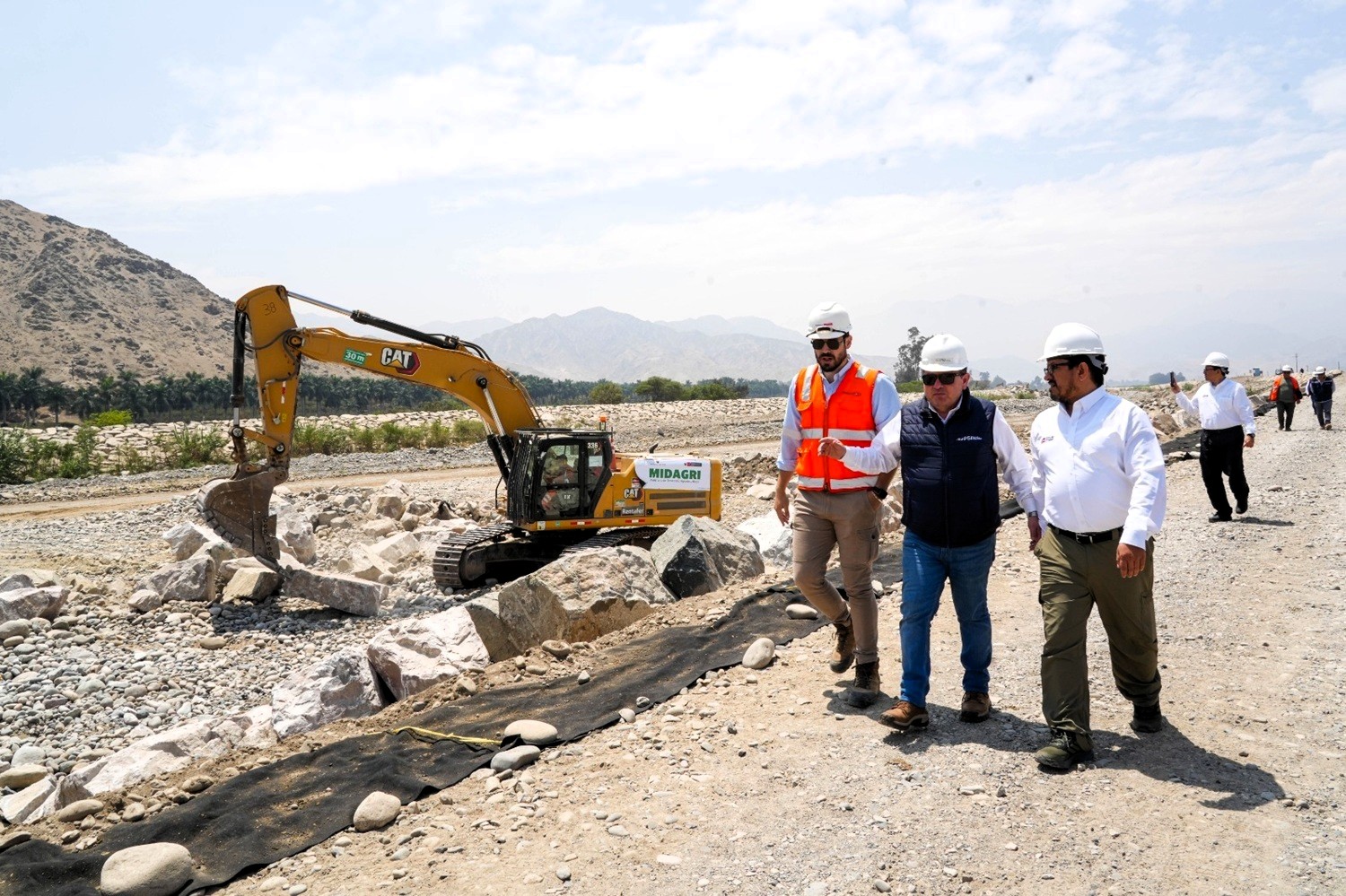
El viceministro de Desarrollo Agrario y Riego, José Angello Tangherlini Casal, encabezó la supervisión in situ de los frentes de trabajo, constatando un avance global del 95 % del proyecto. Una vez concluido, permitirá reforzar la protección de 6,600 hectáreas agrícolas —una de las zonas de mayor productividad agroexportadora del país— y brindará seguridad a más de 4,200 familias, en su mayoría dedicadas a la actividad agrícola, en el ámbito de influencia de los ríos Chico y Matagente.
Las intervenciones comprenden la construcción y reforzamiento de 11 kilómetros de diques enrocados en los tramos Chico 1, Matagente 1 y Matagente 2, obras que ya han sido culminadas y constituyen la barrera principal contra el embate de las aguas. Asimismo, la remodelación del Partidor CONTA, estructura clave para el manejo y distribución hídrica, registra un avance del 99 %, mientras que los trabajos en el tramo Chico 2 alcanzan el 75 %. Las acciones están focalizadas en cinco puntos críticos identificados técnicamente a lo largo de ambos cauces, históricamente propensos a desbordarse ante precipitaciones intensas.
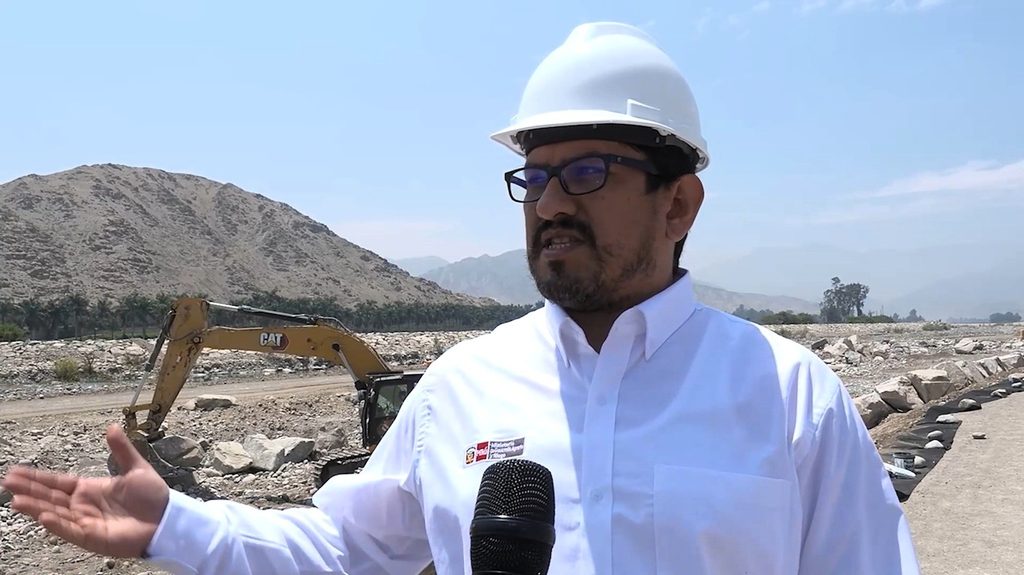
El proyecto, denominado «Instalación – Implementación de medidas de prevención para el control de desbordes e inundaciones del río Chincha, provincia de Chincha, departamento de Ica», no se limita a obras de contención: responde a una estrategia integral de gestión de riesgos, orientada a reducir la exposición de la población, salvaguardar la infraestructura productiva y garantizar la continuidad de las actividades económicas ante eventos climáticos extremos. En la diligencia también participaron el coordinador del PSI, Antonio Flores, y el administrador de Contratos de Obra, Rodolfo Mamani, quienes detallaron los alcances técnicos y el cronograma de culminación de cada componente.
Con estas acciones, el MIDAGRI reafirma su rol protagónico en la construcción de infraestructura resiliente, articulando inversión pública, conocimiento técnico y prevención, como pilares para proteger el campo peruano y garantizar la seguridad hídrica y productiva de una de las zonas más importantes de la agricultura nacional.
DATOS CONCEPTUALES
1.- Fenómeno El Niño: Evento climático océano-atmosférico caracterizado por el calentamiento anómalo de las aguas del Pacífico ecuatorial, que altera los patrones de lluvia en el mundo. En el caso peruano, suele generar precipitaciones extremas en la costa, provocando avenidas, desbordes e inundaciones, con grave impacto sobre zonas agrícolas y poblaciones cercanas a cauces de ríos.
2.- Diques enrocados: Estructuras de contención construidas con piedra, roca y materiales compactados, diseñadas para resistir la fuerza hidráulica de las corrientes, proteger las riberas y evitar que el agua invada zonas aledañas. Son una de las obras de mitigación fluvial más efectivas en cauces de alta pendiente y caudal variable.
3.- Puntos críticos: Tramos de un río o quebrada donde la geomorfología, la estrechez del cauce, la erosión de riberas o la acumulación de sedimentos generan una alta probabilidad de desborde o daño estructural ante crecidas. Su identificación previa permite focalizar las inversiones de protección.
4.- Partidor hidráulico: Estructura civil que regula y distribuye el caudal de un río o canal hacia distintos ramales o zonas de riego. Su correcto funcionamiento es esencial para el uso eficiente del agua y para evitar acumulaciones o desvíos incontrolados que puedan derivar en inundaciones.
5.- Gestión prospectiva del riesgo de desastres: Conjunto de acciones orientadas a evitar o reducir la exposición y la vulnerabilidad ante amenazas, antes de que ocurra el evento. A diferencia de la atención de emergencias ya producidas, busca anticiparse mediante obras, planificación y conocimiento científico, transformando la vulnerabilidad en resiliencia.
DATOS
1.- La inversión de S/ 136 millones representa una apuesta decidida por la prevención: Al ejecutarse antes de la ocurrencia de eventos extremos, permite evitar pérdidas económicas y humanas muy superiores al monto invertido, demostrando que la gestión de riesgos es una inversión rentable y necesaria.
2.- Las obras en el valle de Chincha protegen un activo estratégico de la agricultura nacional: Las 6,600 hectáreas resguardadas corresponden a una zona de alta productividad, fundamental para la agroexportación peruana; su protección garantiza continuidad en la cadena productiva y en los ingresos de miles de familias agricultoras.
3.- El avance del 95 % asegura que la infraestructura estará operativa ante la temporada de lluvias: La cercanía a su culminación a tiempo refuerza la capacidad de respuesta del Estado y reduce significativamente la incertidumbre de la población ante la llegada de un posible Fenómeno El Niño.
4.- La intervención combina obras estructurales con identificación técnica de puntos críticos: No se trata de acciones aisladas, sino de una planificación basada en evidencia técnica que prioriza los sectores de mayor riesgo, maximizando el impacto de cada recurso invertido.
5.- El rol articulador de MIDAGRI y el PSI evidencia la importancia de la coordinación interinstitucional: La presencia de autoridades ministeriales, coordinadores del programa y equipos técnicos en terreno demuestra que la protección del campo requiere presencia, monitoreo constante y diálogo directo con la realidad del territorio.
Fuente: Agencia Peruana de Noticias PRENSAPERU.PE https://www.prensaperu.pe Twitter: @prensaperupe
Translate
MIDAGRI closes risk gaps: 95% completion on works protecting 6,600 hectares of farmland. An investment of S/ 136 million protects the Chincha Valley through riprap embankments and hydraulic upgrades; the barrier against El Niño is nearly complete.
Peruvian News Agency PRENSAPERU.PE https://www.prensaperu.pe Twitter: @prensaperupe The Ministry of Agrarian Development and Irrigation (MIDAGRI), through the Subsectoral Irrigation Program (PSI), is making steady progress in the execution of hydraulic infrastructure and mitigation works in the Chincha Valley, Ica region, with a total investment of S/ 136 million, aimed at drastically reducing territorial vulnerability against overflows, floods, and extraordinary river flows associated with El Niño.
The Vice Minister of Agrarian Development and Irrigation, José Angello Tangherlini Casal, led the on‑site supervision of the work fronts, confirming an overall project progress rate of 95 %. Once completed, the project will strengthen the protection of 6,600 hectares of agricultural land —one of the country’s most productive agro‑export zones— and provide safety for over 4,200 families, mostly dedicated to farming, within the influence area of the Chico and Matagente rivers.
Interventions include the construction and reinforcement of 11 kilometres of rock‑fill dykes in the Chico 1, Matagente 1, and Matagente 2 sections, works already completed and forming the main barrier against floodwaters. Meanwhile, the remodeling of the CONTA Diversion Structure, a key facility for water management and distribution, stands at 99 % progress, while works in the Chico 2 section have reached 75 %. Actions are focused on five technically identified critical points along both river channels, historically prone to overflow during heavy rainfall.
The project, entitled «Installation – Implementation of prevention measures for the control of overflows and floods in the Chincha River, Chincha Province, Ica Department», goes beyond containment works: it represents a comprehensive risk‑management strategy designed to reduce population exposure, safeguard productive infrastructure, and ensure continuity of economic activities in the face of extreme climate events. Also attending the inspection were PSI Coordinator Antonio Flores and Works Contract Administrator Rodolfo Mamani, who detailed the technical scope and completion schedule for each component.
Through these actions, MIDAGRI reaffirms its leading role in building resilient infrastructure, integrating public investment, technical expertise, and prevention as core pillars for protecting Peru’s rural sector and guaranteeing water and productive security in one of the nation’s most important agricultural zones.
CONCEPTUAL DATA
1.- El Niño Phenomenon: An ocean‑atmosphere climate event characterised by anomalous warming of the equatorial Pacific waters, altering global rainfall patterns. In Peru, it typically brings extreme precipitation to the coast, triggering river flooding, overflows, and inundation, with severe impacts on agricultural areas and communities near river channels.
2.- Rock‑fill dykes: Containment structures built with stone, rock, and compacted materials, engineered to withstand the hydraulic force of currents, protect riverbanks, and prevent water from invading surrounding areas. They rank among the most effective flood‑mitigation works for rivers with steep gradients and variable flow volumes.
3.- Critical points: River or stream sections where geomorphology, channel narrowing, bank erosion, or sediment accumulation create a high probability of overflow or structural failure during high‑flow events. Their early identification enables targeted protection investments.
4.- Hydraulic diversion structure: Civil infrastructure that regulates and distributes river or canal flow toward different branches or irrigation zones. Its proper operation is essential for efficient water use and for preventing uncontrolled accumulation or diversion of water that could lead to flooding.
5.- Prospective disaster risk management: A set of actions designed to avoid or reduce exposure and vulnerability to hazards before an event occurs. Unlike post‑emergency response, it seeks to anticipate risks through infrastructure, planning, and scientific knowledge, thereby transforming vulnerability into resilience.
KEY FINDINGS
1.- The S/ 136 million investment represents a firm commitment to prevention: Implemented before extreme events strike, it prevents human and economic losses vastly exceeding the amount invested, proving that risk management is a cost‑effective and essential investment.
2.- Works in the Chincha Valley protect a strategic asset of national agriculture: The 6,600 hectares under protection correspond to a highly productive zone vital to Peru’s agro‑export sector; safeguarding it ensures continuity in the production chain and sustains the livelihoods of thousands of farming families.
3.- The 95 % progress rate ensures infrastructure will be operational before the rainy season: Near completion well in advance strengthens the State’s response capacity and significantly reduces uncertainty for local communities ahead of a potential El Niño event.
4.- The intervention combines structural works with technical identification of critical points: These are not isolated measures, but a technically grounded plan targeting the highest‑risk sections, maximising the impact of every resource invested.
5.- The coordinating role of MIDAGRI and PSI highlights the importance of inter‑institutional cooperation: The presence of ministerial authorities, programme coordinators, and technical teams in the field demonstrates that rural protection requires on‑the‑ground presence, ongoing monitoring, and direct engagement with territorial realities.
Source: Peruvian News Agency PRENSAPERU.PE https://www.prensaperu.pe Twitter: @prensaperupe