
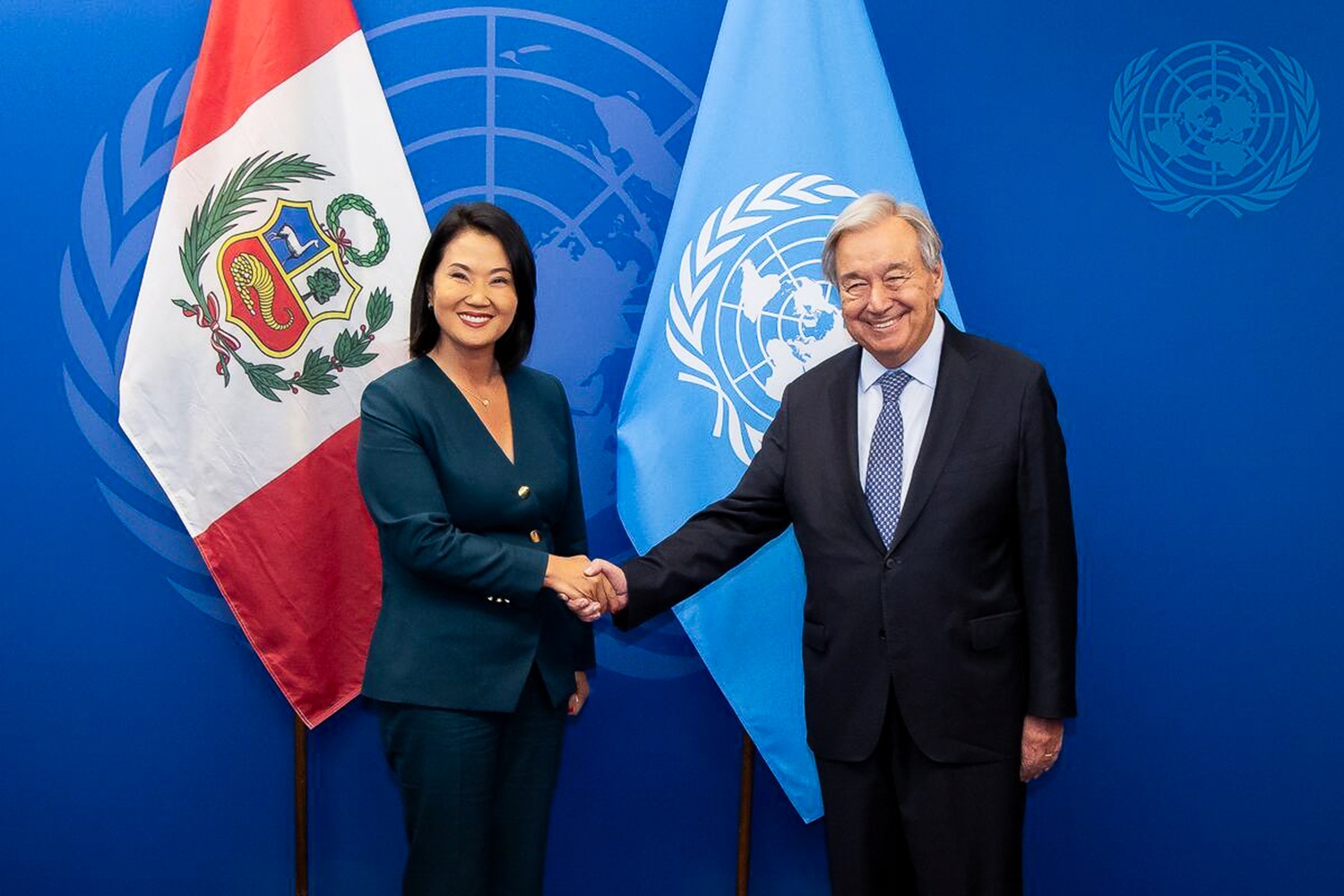
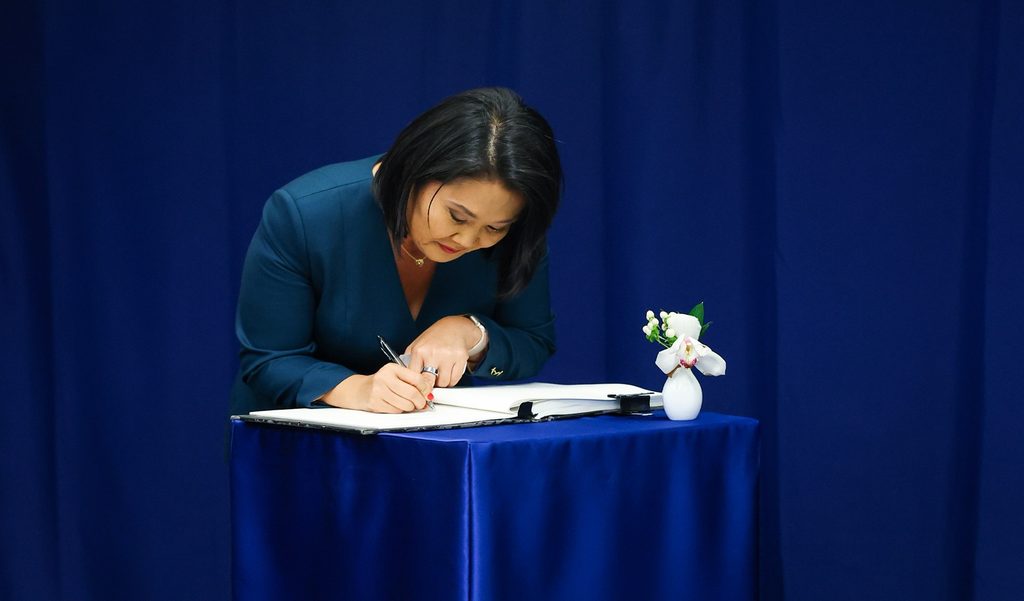
Agencia Peruana de Noticias PRENSAPERU.PE https://www.prensaperu.pe Twitter: @prensaperupe En el marco de la Semana de Alto Nivel del 81.º Período de Sesiones de la Asamblea General de las Naciones Unidas, la presidenta de la República, Keiko Fujimori, sostuvo una audiencia oficial con el secretario general de la organización, António Guterres, en la sede mundial de Nueva York. Previo al inicio de las conversaciones, la mandataria firmó el libro de visitas de las Naciones Unidas, gesto protocolar que simboliza el reconocimiento del Perú como Estado miembro fundador y su respaldo permanente a los principios y propósitos de la Carta de las Naciones Unidas.
Durante el encuentro, la jefa de Estado expuso con claridad la posición del Gobierno peruano ante los desafíos más urgentes que enfrenta el país y la región. En primer lugar, afirmó que la lucha contra la delincuencia organizada transnacional constituye una prioridad nacional, debido al profundo impacto que este fenómeno genera sobre la seguridad ciudadana, la gobernabilidad democrática y el desarrollo sostenible. Destacó que delitos como la extorsión, el sicariato, el narcotráfico, la minería ilegal, la corrupción, la trata de personas y el tráfico ilícito de armas no conocen fronteras; por consiguiente, subrayó la imperiosa necesidad de fortalecer el intercambio de información, elevar las capacidades institucionales y profundizar la cooperación internacional para enfrentarlos de manera conjunta.
En materia migratoria, la presidenta planteó la importancia de promover una migración ordenada, regular y segura. Explicó que los países de origen, tránsito y destino deben trabajar en estrecha colaboración para mejorar los sistemas de identificación y documentación de las personas migrantes, herramientas indispensables para prevenir eficazmente la trata y el tráfico ilícito, protegiendo así la dignidad y los derechos de quienes se desplazan.
Asimismo, la jefa de Estado expresó su reconocimiento y gratitud formal al Sistema de las Naciones Unidas en el Perú —integrado por nueve agencias— por el trabajo de prevención, preparación y respuesta anticipatoria que vienen desplegando frente al Fenómeno El Niño 2026–2027, con especial énfasis en las regiones de Tumbes, Piura, Lambayeque y La Libertad, territorios altamente vulnerables y de gran relevancia productiva en el norte del país.
Sobre lo expresado por el secretario general António Guterres en esta reunión, se ha conocido su postura institucional: el máximo representante de la ONU reconoció y valoró el papel del Perú en la defensa del multilateralismo, así como su histórica contribución a las operaciones de paz de la organización, destacando al país como un miembro activo, comprometido y valioso para el sistema internacional. Manifestó también su respaldo e interés en profundizar la cooperación para enfrentar la delincuencia organizada transnacional en la región y reafirmó el acompañamiento técnico del Sistema de Naciones Unidas al Perú en la preparación y respuesta ante el Fenómeno El Niño.
Hasta el cierre del presente despacho, no se ha difundido el contenido textual detallado ni las palabras exactas que el secretario general transmitió en respuesta a cada uno de los planteamientos de la jefa de Estado. Lo que se ha dado a conocer oficialmente son los temas abordados, la postura expuesta por la presidenta y la declaración general de respaldo y reconocimiento del Sistema de Naciones Unidas al Perú.
DATOS CONCEPTUALES
Delincuencia organizada transnacional: Conjunto de grupos estructurados que operan con permanencia y coordinación en más de un Estado, cometiendo delitos graves para obtener beneficios económicos o de poder. Al no respetar fronteras nacionales, solo puede combatirse con acción conjunta entre países.
Multilateralismo: Principio y práctica de cooperación entre múltiples naciones mediante organismos internacionales, para resolver problemas comunes por vía del diálogo, el consenso y la acción colectiva, en lugar de decisiones unilaterales.
Cooperación internacional: Esfuerzo compartido entre Estados y organismos para intercambiar conocimientos, recursos, asistencia técnica y legal, con el fin de enfrentar desafíos que trascienden capacidades individuales.
Migración ordenada, regular y segura: Modelo de gestión de la movilidad humana que garantiza vías formales de ingreso y estancia, sistemas confiables de identificación y documentación, y protección efectiva contra la trata y el tráfico ilícito de personas.
Fenómeno El Niño: Fenómeno climático natural caracterizado por el calentamiento anómalo de las aguas del Pacífico ecuatorial, que altera los patrones de lluvia y temperatura. En el Perú puede generar lluvias intensas, inundaciones y desastres, requiriendo preparación temprana y respuesta coordinada.
CONCLUSIONES
1.- La reunión entre la presidenta Keiko Fujimori y el secretario general António Guterres reafirma la vocación del Perú de fortalecer sus lazos con el Sistema de Naciones Unidas, planteando los grandes retos nacionales como desafíos que requieren respuesta colectiva.
2.- La lucha contra la delincuencia organizada transnacional ha sido establecida como prioridad de Estado, por su impacto directo en la seguridad de las personas, la solidez de las instituciones democráticas y el desarrollo sostenible del país.
3.- El secretario general ha reconocido formalmente al Perú como un aliado valioso del multilateralismo y ha reafirmado el apoyo técnico de la ONU ante el Fenómeno El Niño 2026–2027; sin embargo, hasta la fecha no se ha difundido el contenido detallado de su respuesta a cada planteamiento de la mandataria.
4.- La migración es abordada como responsabilidad compartida: solo con sistemas confiables de identificación y documentación, y con cooperación entre naciones de origen, tránsito y destino, podrá protegerse a las personas y combatirse las redes de trata y tráfico ilícito.
5.- El respaldo del Sistema de Naciones Unidas ante el Fenómeno El Niño confirma la importancia de la ayuda internacional oportuna, especialmente en las regiones del norte del país, donde la prevención y la preparación son fundamentales para proteger vidas y medios de sustento.
Fuente: Agencia Peruana de Noticias PRENSAPERU.PE https://www.prensaperu.pe Twitter: @prensaperupe
Translate
Keiko Fujimori outlines Peru’s priorities to the UN Secretary-General. The United Nations hails Peru as a bastion of multilateralism. The full content of Guterres’s response has not yet been disclosed.
Peruvian News Agency PRENSAPERU.PE https://www.prensaperu.pe Twitter: @prensaperupe Within the framework of the High-Level Week of the 81st Session of the United Nations General Assembly, the President of the Republic of Peru, Keiko Fujimori, held an official audience with the Secretary-General of the Organization, António Guterres, at the United Nations Headquarters in New York. Prior to the start of the discussions, the Head of State signed the United Nations visitors’ book, a protocol gesture symbolizing Peru’s recognition as a founding Member State and its enduring commitment to the principles and purposes of the Charter of the United Nations.
During the meeting, the Head of State clearly set forth the Peruvian Government’s position regarding the most pressing challenges facing the country and the region. First, she affirmed that combating transnational organized crime constitutes a national priority, given the profound impact this phenomenon has on citizen security, democratic governance, and sustainable development. She emphasized that crimes such as extortion, contract killing, drug trafficking, illegal mining, corruption, human trafficking, and illicit arms trafficking know no borders; accordingly, she underscored the urgent need to strengthen information sharing, build institutional capacity, and deepen international cooperation to address these challenges collectively.
On migration, the President highlighted the importance of fostering orderly, regular, and safe migration. She explained that countries of origin, transit, and destination must work in close collaboration to improve identification and documentation systems for migrants — essential tools for effectively preventing trafficking in persons and smuggling of migrants, thereby protecting the dignity and rights of those on the move.
Furthermore, the Head of State expressed formal recognition and gratitude to the United Nations System in Peru — comprising nine agencies — for the prevention, preparedness, and early response work they have been carrying out in the face of the 2026–2027 El Niño Event, with special emphasis on the regions of Tumbes, Piura, Lambayeque, and La Libertad: highly vulnerable territories of great productive relevance in the northern part of the country.
Regarding the statements made by Secretary-General António Guterres during this meeting, his institutional position has been made public: the highest representative of the United Nations recognized and valued Peru’s role in upholding multilateralism, as well as its historic contribution to the Organization’s peacekeeping operations, highlighting the country as an active, committed, and valuable member of the international system. He also expressed support for and interest in deepening cooperation to tackle transnational organized crime in the region and reaffirmed the United Nations System’s technical accompaniment to Peru in preparedness and response to the El Niño Event.
As of the close of this dispatch, the detailed textual content and the exact words conveyed by the Secretary-General in response to each of the Head of State’s submissions have not been released. What has been officially made public are the topics discussed, the position stated by the President, and the general statement of support and recognition extended to Peru by the United Nations System.
CONCEPTUAL NOTES
Transnational organized crime: Structured groups operating continuously and in coordination across more than one State, committing serious offenses to obtain financial or power-related benefits. As it disregards national borders, it can only be countered through joint action among nations.
Multilateralism: The principle and practice of cooperation among multiple nations through international bodies, aimed at solving shared challenges through dialogue, consensus, and collective action rather than unilateral decisions.
International cooperation: Shared effort among States and organizations to exchange knowledge, resources, technical and legal assistance, to address challenges that go beyond individual national capacities.
Orderly, regular, and safe migration: A model for managing human mobility that ensures formal channels for entry and stay, reliable identification and documentation systems, and effective protection against human trafficking and smuggling.
El Niño Event: A natural climatic phenomenon characterized by anomalous warming of the equatorial Pacific Ocean, altering rainfall and temperature patterns. In Peru, it can trigger heavy rains, flooding, and disasters, requiring early preparedness and coordinated response.
CONCLUSIONS
1.- The meeting between President Keiko Fujimori and Secretary-General António Guterres reaffirms Peru’s commitment to strengthening its ties with the United Nations System, framing major national challenges as issues requiring collective response.
2.- Combating transnational organized crime has been established as a State priority, given its direct impact on public safety, the strength of democratic institutions, and the country’s sustainable development.
3.- The Secretary-General has formally recognized Peru as a valuable ally in multilateralism and reaffirmed United Nations technical support for the 2026–2027 El Niño Event; however, to date, the detailed content of his response to each of the President’s submissions has not been released.
4.- Migration is addressed as a shared responsibility: only through reliable identification and documentation systems, and cooperation among countries of origin, transit, and destination, can people be protected and trafficking networks dismantled.
5.- The United Nations System’s backing in the face of El Niño underscores the importance of timely international assistance, particularly in the country’s northern regions, where preparedness and planning are essential to protect lives and livelihoods.
Source: Peruvian News Agency PRENSAPERU.PE https://www.prensaperu.pe Twitter: @prensaperupe