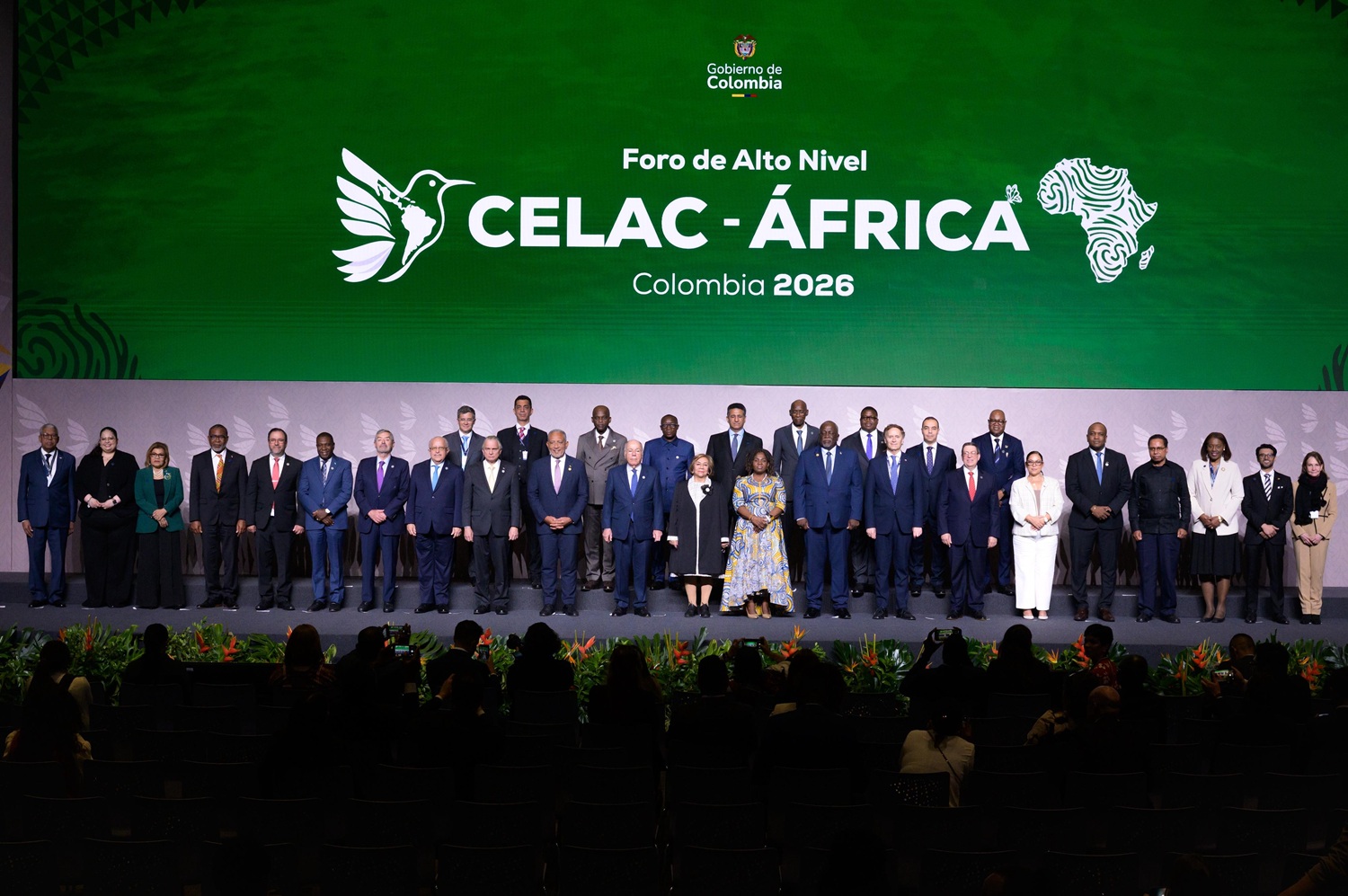
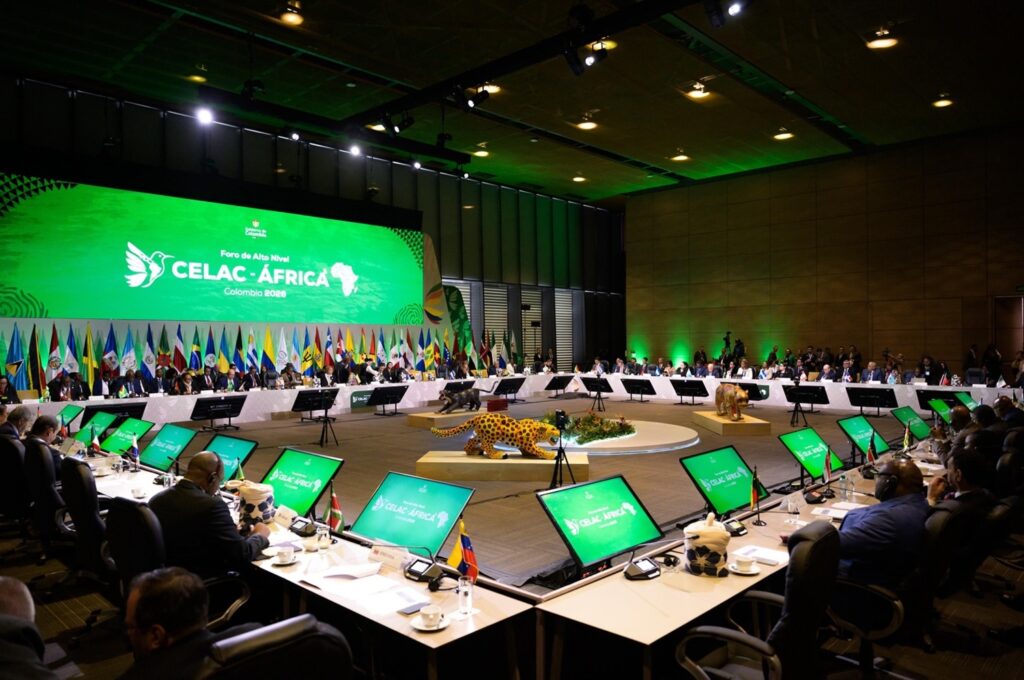
Agencia Peruana de Noticias PRENSAPERU.PE https://www.prensaperu.pe Twitter: @prensaperupe Del 18 al 21 de marzo, Bogotá acogió el primer Foro de Alto Nivel CELAC-África, organizado bajo la presidencia pro tempore de Colombia en la CELAC. Más allá de una reunión diplomática, representó un intento por recomponer el diálogo entre dos regiones con lazos históricos profundos y desafíos compartidos. Sus trabajos se centraron en tres pilares: comercio e inversión, cooperación para el desarrollo sostenible, y memoria y justicia reparadora. Durante el encuentro se concretaron acuerdos comerciales por US$16 millones, se anunció una ruta marítima entre Colombia y Ghana y se proyecta una conexión aérea en los próximos años. El foro culminó con la adopción de la Declaración de Bogotá y la entrega de la presidencia pro tempore de la CELAC a Uruguay.
Comunicado Conjunto de los Copresidentes del Primer Foro de Alto Nivel CELAC–ÁFRICA
Bogotá, 21 de marzo de 2026.
1.- Las Jefas y los Jefes de Estado y de Gobierno de la Comunidad de Estados Latinoamericanos y Caribeños (CELAC) y de África se reunieron en Bogotá el 21 de marzo de 2026, para el Primer Foro de Alto Nivel CELAC–África, en el marco de la presidencia pro tempore de Colombia de la CELAC y de la Presidencia de Burundi de la Unión Africana (UA), con la participación de especialistas de ambas regiones invitados por los Copresidentes, en el marco del derecho internacional y de la Carta de las Naciones Unidas. El Foro propició un diálogo fructífero orientado a fortalecer los vínculos entre América Latina y el Caribe y África, sobre la base del respeto mutuo, la igualdad soberana de los Estados, la solidaridad, el beneficio compartido y el reconocimiento de los vínculos históricos y culturales que unen a ambas regiones.
2.- Los Copresidentes destacan que, durante los días 18, 19 y 20 de marzo de 2026, el Foro desarrolló una agenda sustantiva que abordó diversos temas de interés de los países de las dos regiones, los cuales permitieron intercambios de perspectivas, experiencias y buenas prácticas entre representantes gubernamentales, instituciones financieras, academia, sociedad civil y otros actores relevantes.
3.- En relación al tema de cooperación Sur-Sur, el 18 de marzo de 2026 los participantes intercambiaron experiencias sobre iniciativas orientadas al fortalecimiento de los sistemas de cuidados, la biodiversidad, la acción climática, la transición energética, la soberanía sanitaria, la seguridad alimentaria, el desarrollo rural, la equidad digital, el hábitat sostenible y las experiencias regionales en materia de paz y seguridad.
4.- En relación con el tema de reparación histórica y justicia étnico-racial, el día 19 de marzo de 2026 nos reunimos representantes de países de América Latina, el Caribe y África para dialogar en torno a las reparaciones históricas, a partir de cuatro paneles de intercambio y reflexión. El primero, “Reparaciones Históricas: Perspectivas desde África, América Latina y el Caribe”, abordó las distintas aproximaciones regionales y estatales a las agendas de reparación. El segundo, “Diálogo político para reflexionar sobre la memoria, la justicia y las reparaciones históricas a partir de las experiencias de los Pueblos Afrodescendientes y Pueblos Indígenas”, permitió compartir reflexiones sobre memoria, justicia y reconocimiento desde las experiencias de los pueblos africanos, afrodescendientes e indignas.
El tercer panel, “Espiritualidades en Diálogo: Memoria y Reconocimiento”, destacó la dimensión cultural y espiritual de los procesos de memoria y dignificación, mientras que el cuarto, “De la Memoria al Compromiso: Acciones Conjuntas para la Reparación y la Restauración de la Dignidad”, se orientó a identificar acciones de cooperación y compromisos compartidos. Este encuentro tuvo como propósito reconocer y poner en diálogo las distintas experiencias estatales y sociales en materia de reparación histórica, con el fin de fortalecer una agenda común orientada a la justicia histórica y a la restauración plena de la dignidad de los pueblos afectados por los legados del colonialismo, la esclavización y el racismo estructural.
5.- En relación con el tema comercio e inversión, los debates resaltaron el potencial para ampliar la cooperación económica birregional mediante la facilitación del comercio, la promoción de inversiones, el fortalecimiento de la conectividad, el intercambio de experiencias entre bancos nacionales de desarrollo y el desarrollo de capacidades en educación, innovación y formación técnica.
6.- Los participantes de América Latina y el Caribe y de África destacaron el valor del intercambio cultural que ha acompañado este encuentro, reflejado en los diversos actos culturales realizados durante la jornada, los cuales ponen de relieve la riqueza, diversidad y profundas raíces históricas que comparten ambas regiones. Estas expresiones culturales, que evocan la herencia común y los múltiples vínculos entre nuestros pueblos, llenan de esperanza y refuerzan los lazos de amistad y entendimiento mutuo. Asimismo, se resaltaron las discusiones sostenidas en el Foro Económico, donde se identificaron amplias oportunidades para fortalecer las relaciones económicas birregionales, particularmente mediante el desarrollo de rutas marítimas y aéreas que mejoren la conectividad logística, faciliten el comercio y potencien el intercambio productivo entre África y América Latina y el Caribe.
7.- Los Copresidentes coinciden que el Foro aporta insumos importantes para el fortalecimiento, de la Primera Cumbre CELAC–Unión Africana, como un paso orientado a fortalecer el diálogo birregional y promover iniciativas de cooperación de interés mutuo entre ambas regiones.
8.- Los Copresidentes acordaron asimismo que los resultados de los paneles serán transmitidos a las Presidencias pro tempore de la CELlAC y de la Unión Africana como insumo para las reflexiones en curso para la construcción de una agenda común.
9.- Los Copresidentes expresan su reconocimiento al Gobierno de Colombia por la organización del Foro y por su liderazgo en la promoción del diálogo entre América Latina, el Caribe y África durante su Presidencia pro tempore de la CELAC.
10.- Los Copresidentes toman nota de que el Gobierno de la República Oriental del Uruguay, en su calidad de Presidencia pro tempore entrante de la CELAC para el periodo 2026-2027, ha manifestado su disposición de dar continuidad a los esfuerzos encaminados al fortalecimiento del diálogo CELAC–África y a la preparación de la futura Cumbre CELAC–Unión Africana.
11.- Los Copresidentes reiteran su convicción de que el fortalecimiento del diálogo entre África y América Latina y el Caribe contribuirá a ampliar los espacios de concertación política, promover iniciativas de cooperación birregional y generar oportunidades para el desarrollo sostenible y el bienestar de los pueblos de ambas regiones.
Fuente: Agencia Peruana de Noticias PRENSAPERU.PE https://www.prensaperu.pe Twitter: @prensaperupe
Translate
Heads of State and Government of CELAC-Africa conclude the first High-Level Forum in Bogotá, under principles of respect and solidarity summarized in 11 agreements.
Peruvian News Agency PRENSAPERU.PE https://www.prensaperu.pe Twitter: @prensaperupe From March 18 to 21, Bogotá hosted the first CELAC-Africa High-Level Forum, organized under Colombia’s pro tempore presidency of CELAC. Beyond a diplomatic meeting, it represented an effort to rebuild dialogue between two regions with deep historical ties and shared challenges. Its work focused on three pillars: trade and investment, cooperation for sustainable development, and memory and reparative justice. During the event, trade agreements worth US$16 million were finalized, a maritime route between Colombia and Ghana was announced, and an air connection is planned for the coming years. The forum concluded with the adoption of the Bogotá Declaration and the handover of CELAC’s pro tempore presidency to Uruguay.
Joint Communiqué of the Co-Chairs of the First CELAC–AFRICA High-Level Forum
Bogotá, March 21, 2026.
1. – The Heads of State and Government of the Community of Latin American and Caribbean States (CELAC) and of Africa met in Bogotá on March 21, 2026, for the First CELAC–Africa High-Level Forum, within the framework of Colombia’s pro tempore presidency of CELAC and Burundi’s presidency of the African Union (AU). The meeting included specialists from both regions invited by the Co-Chairs, in accordance with international law and the Charter of the United Nations. The Forum fostered fruitful dialogue aimed at strengthening ties between Latin America and the Caribbean and Africa, based on mutual respect, sovereign equality of States, solidarity, shared benefit, and recognition of the historical and cultural links that unite both regions.
2. – The Co-Chairs emphasize that on March 18, 19, and 20, 2026, the Forum developed a substantive agenda addressing various issues of interest to the countries of the two regions. These allowed for exchanges of perspectives, experiences, and good practices among government representatives, financial institutions, academia, civil society, and other relevant stakeholders.
3. – Regarding South-South cooperation, on March 18, 2026, participants shared experiences on initiatives aimed at strengthening care systems, biodiversity, climate action, energy transition, health sovereignty, food security, rural development, digital equity, sustainable habitat, and regional experiences in peace and security.
4. Regarding historical redress and ethno-racial justice, on March 19, 2026, representatives from countries of Latin America, the Caribbean, and Africa met to discuss historical reparations through four panels for exchange and reflection. The first, “Historical Reparations: Perspectives from Africa, Latin America, and the Caribbean,” addressed the different regional and national approaches to reparation agendas. The second, “Political Dialogue to Reflect on Memory, Justice, and Historical Reparations Based on the Experiences of Afro-descendant Peoples and Indigenous Peoples,” allowed for sharing reflections on memory, justice, and recognition from the experiences of African, Afro-descendant, and Indigenous peoples.
The third panel, “Spiritualities in Dialogue: Memory and Recognition,” highlighted the cultural and spiritual dimension of memory and dignification processes, while the fourth, “From Memory to Commitment: Joint Actions for Reparation and the Restoration of Dignity,” focused on identifying cooperation actions and shared commitments. This meeting aimed to recognize and bring into dialogue the different state and social experiences in historical reparation, with the goal of strengthening a common agenda focused on historical justice and the full restoration of dignity for peoples affected by the legacies of colonialism, enslavement, and structural racism.
5. – Regarding trade and investment, the discussions highlighted the potential to expand bi-regional economic cooperation through trade facilitation, investment promotion, connectivity strengthening, experience sharing between national development banks, and capacity building in education, innovation, and technical training.
6. – Participants from Latin America and the Caribbean and Africa emphasized the value of the cultural exchange accompanying this event, reflected in the various cultural activities held during the meeting, which highlight the richness, diversity, and deep historical roots shared by both regions. These cultural expressions, which evoke our common heritage and the multiple ties between our peoples, inspire hope and strengthen bonds of friendship and mutual understanding. Likewise, discussions held at the Economic Forum were highlighted, where broad opportunities were identified to strengthen bi-regional economic relations, particularly through the development of maritime and air routes that improve logistical connectivity, facilitate trade, and enhance productive exchange between Africa and Latin America and the Caribbean.
7. – The Co-Chairs agree that the Forum provides important inputs for strengthening the First CELAC–African Union Summit, as a step toward enhancing bi-regional dialogue and promoting cooperation initiatives of mutual interest between both regions.
8. – The Co-Chairs also agreed that the outcomes of the panels will be transmitted to the pro tempore presidencies of CELAC and the African Union as input for ongoing reflections on building a common agenda.
9. – The Co-Chairs express their recognition to the Government of Colombia for organizing the Forum and for its leadership in promoting dialogue between Latin America, the Caribbean, and Africa during its pro tempore presidency of CELAC.
10. – The Co-Chairs take note that the Government of the Eastern Republic of Uruguay, in its capacity as incoming pro tempore president of CELAC for the 2026-2027 period, has expressed its willingness to continue efforts aimed at strengthening CELAC–Africa dialogue and preparing for the future CELAC–African Union Summit.
11. – The Co-Chairs reiterate their conviction that strengthening dialogue between Africa and Latin America and the Caribbean will contribute to expanding spaces for political coordination, promoting bi-regional cooperation initiatives, and generating opportunities for sustainable development and the well-being of the peoples of both regions.
Source: Peruvian News Agency PRENSAPERU.PE https://www.prensaperu.pe Twitter: @prensaperupe