
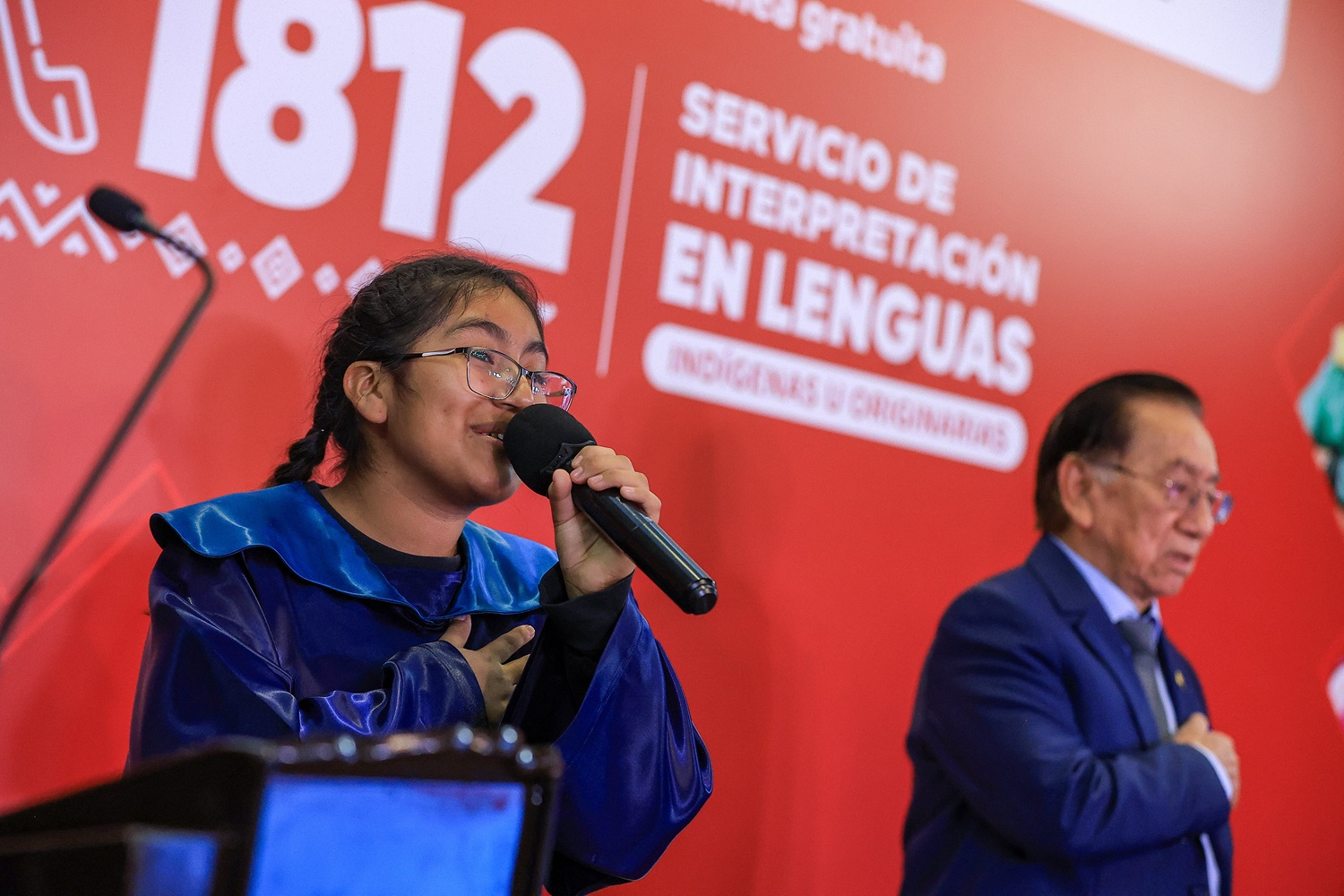
Agencia Peruana de Noticias PRENSAPERU.PE https://www.prensaperu.pe Twitter: @prensaperupe En un acto oficial cargado de simbolismo y relevancia cultural, el presidente de la República, José María Balcázar, encabezó esta tarde la ceremonia de presentación y lanzamiento de las nuevas Herramientas de Acceso y Atención en Lenguas Indígenas u Originarias del Estado peruano, un conjunto de iniciativas diseñadas para romper barreras de comunicación, fortalecer la identidad nacional y garantizar los derechos lingüísticos de miles de ciudadanos en todo el territorio nacional. Esta acción representa uno de los pasos más importantes dados por el Gobierno en materia de inclusión, reconocimiento y protección del patrimonio cultural inmaterial que nos define como nación.
Durante su discurso ante las autoridades presentes, representantes de pueblos originarios y sociedad civil, el jefe del Estado resaltó que esta medida forma parte de una política de Estado decidida a poner en valor la inmensa riqueza lingüística del Perú, considerándola no solo un legado del pasado, sino una herramienta viva, dinámica y fundamental para construir una sociedad más unida, justa y respetuosa con su diversidad.
EDUCACIÓN: PILAR FUNDAMENTAL PARA LA PERMANENCIA DE NUESTRAS LENGUAS
El presidente Balcázar fue muy claro al señalar que el uso y la protección de las lenguas originarias dependen en gran medida de su transmisión y enseñanza, por lo que el sistema educativo es el espacio clave para su preservación y proyección hacia el futuro.
“Es necesario promover de manera decidida la enseñanza de nuestras lenguas en todos los niveles: desde los colegios y escuelas públicas, hasta las universidades e institutos superiores”, afirmó el mandatario. Y añadió con énfasis: “El objetivo principal es que las nuevas generaciones, al aprenderlas y practicarlas, se sientan profundamente orgullosas de sus raíces, de nuestras tradiciones y de esa sabiduría ancestral que forma parte de lo más profundo de nuestro ser peruanidad”.
DERECHOS LINGÜÍSTICOS
Se trata de los derechos humanos fundamentales que tienen todas las personas a usar su propia lengua, tanto en la vida privada como en la pública, así como a recibir educación, información y atención en el idioma que dominan y comprenden mejor. Para el Estado peruano, reconocer estos derechos es cumplir con la Constitución y con tratados internacionales, entendiendo que una lengua no es solo un medio para hablar, sino el vehículo que transporta la cultura, la historia, la cosmovisión y la forma de ver el mundo de cada pueblo.
En este sentido, el jefe de Estado destacó que las herramientas que hoy se presentan sitúan al país “en la línea correcta y precisa” para lograr una verdadera integración nacional. Ya no se trata solo de tolerar la existencia de estas lenguas, sino de usarlas activamente para conectar a los diversos pueblos que habitan el Perú, eliminando la brecha que muchas veces ha dejado a comunidades enteras al margen de los servicios y la información por el simple hecho de no hablar el castellano.
“Con este programa que estamos lanzando, vamos a lograr algo mucho más grande que solo mantener vivas las lenguas originarias: vamos a crear un sentimiento fuerte de pertenencia, vamos a lograr que todos nos sintamos parte de una sola gran nación, integrada y respetuosa de sus diferencias”, subrayó el presidente Balcázar.
Además, reflexionó sobre la importancia de seguir profundizando en el estudio y la comprensión de nuestra identidad nacional. “Construir una patria fuerte no significa borrar nuestras diferencias, sino sumarlas y fortalecerlas. Y hoy lo hacemos también de la mano de la tecnología, porque el progreso y la modernidad deben servir para conservar lo que nos hace únicos como país”, explicó.
HERRAMIENTAS DE ACCESO Y ATENCIÓN: TECNOLOGÍA AL SERVICIO DE LA INCLUSIÓN
El corazón de esta iniciativa está conformado por dos herramientas concretas, funcionales y de alcance nacional, diseñadas para cubrir necesidades distintas pero complementarias: el portal web de lenguas originarias, desarrollado por el Instituto Nacional de Radio y Televisión del Perú (IRTP), y la línea gratuita de atención telefónica 1812, un servicio de interpretación profesional especializada. Ambas responden a una demanda histórica de los pueblos indígenas: ser escuchados, comprendidos y atendidos en su propia lengua.
PORTAL WEB DE LENGUAS ORIGINARIAS DEL IRTP
Esta plataforma digital representa un hito en la difusión cultural y educativa. Se trata de un espacio virtual moderno, accesible y organizado, que pone a disposición de toda la ciudadanía una gran variedad de contenidos informativos, audiovisuales, educativos y culturales producidos íntegramente en quechua y aimara, las lenguas indígenas con mayor cantidad de hablantes en el país, con miras a ir incorporando progresivamente otras lenguas del territorio nacional.
¿QUÉ OFRECE Y PARA QUIÉN ESTÁ PENSADO?
El diseño y la navegación del portal han sido cuidadosamente pensados para llegar a tres grupos principales:
1.- Hablantes nativos: Encontrarán noticias, programas, historias y servicios en su propia lengua, garantizando su derecho a la información y al entretenimiento sin barreras idiomáticas.
2.- Conocedores y estudiosos: Contará con materiales de consulta, diccionarios, gramáticas y registros que servirán para investigar, preservar y profundizar en el conocimiento de estas lenguas.
3.- Personas interesadas en aprender: Funciona también como una escuela abierta, ofreciendo recursos didácticos para que cualquier ciudadano, sea hablante o no, pueda aprender, practicar y valorar estas lenguas como parte de nuestra herencia común.
El IRTP, como entidad del Estado encargada de la comunicación pública, cumple aquí una función esencial: usar su alcance y capacidad técnica para que la riqueza cultural deje de estar oculta y se proyecte con fuerza en el mundo digital.
LÍNEA GRATUITA 1812: SERVICIO DE INTERPRETACIÓN EN LENGUAS INDÍGENAS U ORIGINARIAS
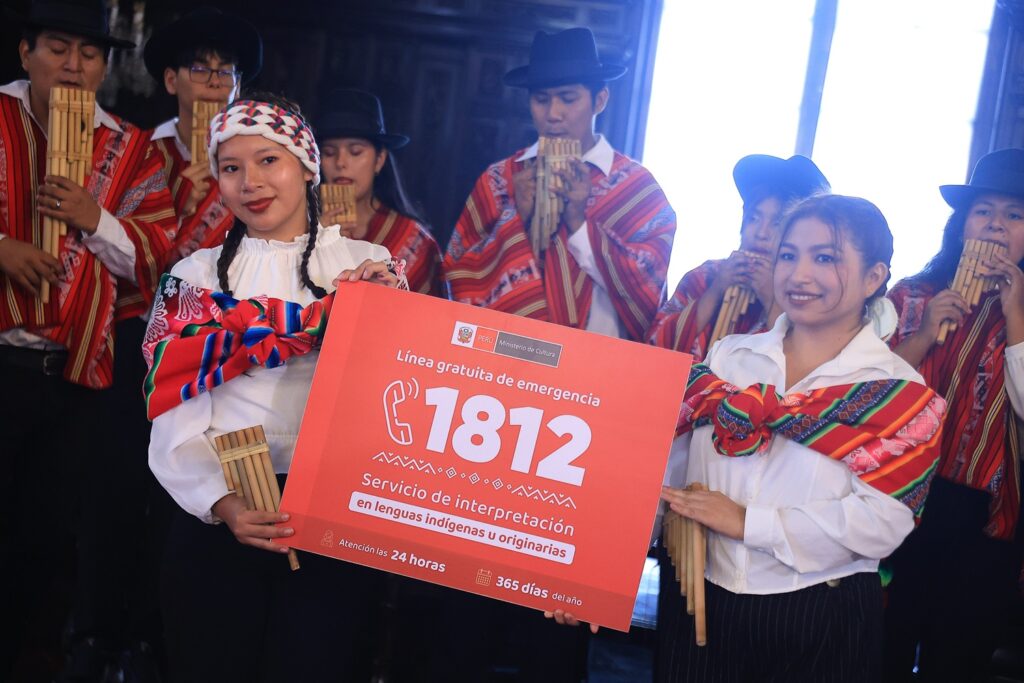
Si el portal se enfoca en la difusión y la cultura, la línea 1812 está diseñada para la atención ciudadana directa y urgente. Se trata de un canal telefónico gratuito, operativo las 24 horas del día, todos los días del año, que pone en contacto a las instituciones públicas con una red de intérpretes profesionales, certificados y capacitados.
¿CÓMO FUNCIONA Y POR QUÉ ES VITAL?
Muchas veces, una persona hablante de lengua originaria que acude a un centro de salud, una comisaría, el juzgado o una municipalidad se enfrenta a una dificultad enorme: no puede explicar bien lo que le pasa, o no entiende lo que le están diciendo los funcionarios, porque no dominan el castellano o este no es su idioma principal. Esta barrera ha generado históricamente desatención, discriminación y vulneración de derechos fundamentales.
Con la línea 1812, cualquier entidad pública que lo requiera puede llamar y solicitar el apoyo de un intérprete para establecer una comunicación fluida, precisa y respetuosa. El servicio prioriza los sectores más sensibles y esenciales para la vida y el bienestar de las personas:
Salud: Para que el paciente explique sus síntomas y el médico explique el tratamiento con total claridad.
Justicia: Para que ciudadanos, testigos o víctimas puedan ejercer su derecho a la defensa y entender los procesos legales.
Seguridad ciudadana: Para atender denuncias, emergencias y situaciones de riesgo con rapidez y comprensión.
Atención ciudadana: Para trámites, consultas y acceso a programas y servicios sociales del Estado.
Esta herramienta es, en la práctica, la garantía de que ser hablante de una lengua originaria no sea un obstáculo para ser atendido con dignidad y calidad.
AUTORIDADES Y COMPROMISO INSTITUCIONAL
La ceremonia de lanzamiento contó con la presencia de importantes autoridades, lo que demuestra el carácter prioritario y transversal de esta política pública. Participó la ministra de Cultura, Fátima Altabás, quien ha liderado gran parte del diseño de estas iniciativas desde su sector, reafirmando que el Ministerio de Cultura seguirá siendo el ente rector en la defensa y promoción de nuestro patrimonio inmaterial. Asimismo, asistió la presidenta del Directorio del Instituto Nacional de Radio y Televisión del Perú, destacando el rol de la radiodifusión pública como vehículo de integración nacional.
En sus intervenciones, las autoridades coincidieron en señalar que estas herramientas no son un punto final, sino el inicio de una etapa nueva, donde la diversidad lingüística deja de ser vista como una dificultad o algo a corregir, para ser entendida y tratada como uno de los mayores tesoros y fortalezas de la nación peruana.
CONCLUSIONES FUNDAMENTADAS
1.- Las lenguas originarias son pilares de la identidad nacional: El lanzamiento de estas herramientas confirma que para construir país no es necesario homogenizar ni borrar nuestras diferencias. Al contrario, integrar, enseñar y usar nuestras lenguas es la forma más sólida de fortalecer el sentimiento de pertenencia y la unidad nacional sobre bases reales y respetuosas.
2.- Tecnología y modernidad al servicio de la inclusión: Iniciativas como el portal web y la línea 1812 demuestran que el progreso tecnológico y la innovación del Estado tienen como objetivo principal llegar a todos los rincones del país. La modernización no deja atrás a los pueblos indígenas, sino que crea nuevos puentes para que estén más conectados y mejor atendidos.
3.- Garantía efectiva de derechos fundamentales: Estas medidas pasan del reconocimiento teórico a la acción práctica. Contar con servicios de interpretación y acceso a información en la propia lengua asegura que derechos tan importantes como la salud, la justicia, la educación y la seguridad sean iguales para todos, sin importar qué idioma se hable o de qué región provenga la persona.
4.- Un compromiso de Estado con visión de futuro: Al involucrar a sectores como Cultura, Educación, Salud, Justicia y Comunicaciones, el Gobierno deja claro que la protección lingüística es una política de Estado que debe mantenerse y ampliarse. Se busca que las generaciones futuras no solo hereden estas lenguas, sino que las vivan y usen con orgullo, asegurando su permanencia en el tiempo.
Fuente: Agencia Peruana de Noticias PRENSAPERU.PE https://www.prensaperu.pe Twitter: @prensaperupe
Translate
Historic: Website and 1812 hotline! “President Balcázar’s administration launches digital and telephone tools to protect and use our native languages.”
Peruvian News Agency PRENSAPERU.PE https://www.prensaperu.pe Twitter: @prensaperupe In an official ceremony filled with symbolism and cultural significance, the President of the Republic, José María Balcázar, led this afternoon’s presentation and launch of the new Access and Service Tools in Indigenous or Native Languages of the Peruvian State — a set of initiatives designed to break down communication barriers, strengthen national identity, and guarantee the linguistic rights of thousands of citizens across the national territory. This action represents one of the most important steps taken by the Government in terms of inclusion, recognition, and protection of the intangible cultural heritage that defines us as a nation.
During his address before the authorities in attendance, representatives of indigenous peoples, and civil society, the Head of State emphasized that this measure forms part of a State policy firmly committed to valuing Peru’s immense linguistic wealth, viewing it not only as a legacy from the past but also as a living, dynamic, and fundamental tool for building a society that is more united, fair, and respectful of its diversity.
EDUCATION: A FUNDAMENTAL PILLAR FOR THE SURVIVAL OF OUR LANGUAGES
President Balcázar made it very clear that the use and protection of native languages depend to a great extent on their transmission and teaching; therefore, the education system is the key space for their preservation and future development.
“It is necessary to decisively promote the teaching of our languages at all levels: from schools and public educational institutions to universities and higher education institutes,” the President affirmed. And he added emphatically: “The main objective is for new generations, by learning and practicing them, to feel deeply proud of their roots, our traditions, and that ancestral wisdom which forms part of the very core of our Peruvian identity.”
LINGUISTIC RIGHTS
These are fundamental human rights that all people hold: the right to use their own language, both in private and public life, as well as the right to receive education, information, and services in the language they dominate and understand best. For the Peruvian State, recognizing these rights means complying with the Constitution and with international treaties, while understanding that a language is not merely a means of communication, but the vehicle that carries the culture, history, worldview, and way of understanding the world of each people.
In this regard, the Head of State highlighted that the tools being presented today place the country “on the correct and precise path” toward achieving true national integration. It is no longer simply a matter of tolerating the existence of these languages, but of actively using them to connect the various peoples that inhabit Peru, bridging the gap that has often left entire communities excluded from services and information simply because they do not speak Spanish.
“With this program we are launching, we are going to achieve something much greater than just keeping native languages alive: we are going to create a strong sense of belonging; we are going to ensure that we all feel part of one great nation, integrated and respectful of its differences,” President Balcázar stressed.
Furthermore, he reflected on the importance of continuing to deepen the study and understanding of our national identity. “Building a strong homeland does not mean erasing our differences, but rather adding them together and strengthening them. And today we are doing so hand-in-hand with technology, because progress and modernity must serve to preserve what makes us unique as a country,” he explained.
ACCESS AND SERVICE TOOLS: TECHNOLOGY AT THE SERVICE OF INCLUSION
The core of this initiative consists of two concrete, functional, nationwide tools, designed to meet distinct yet complementary needs: the native languages website, developed by the National Institute of Radio and Television of Peru (IRTP), and the toll-free telephone service 1812 — a specialized professional interpretation service. Both respond to a historic demand from indigenous peoples: to be heard, understood, and served in their own language.
IRTP NATIVE LANGUAGES WEBSITE
This digital platform represents a milestone in cultural and educational dissemination. It is a modern, accessible, and organized virtual space that makes available to all citizens a wide variety of informational, audiovisual, educational, and cultural content produced entirely in Quechua and Aymara — the indigenous languages with the largest number of speakers in the country — with the aim of progressively incorporating other languages spoken across the national territory.
WHAT IT OFFERS AND WHO IT IS DESIGNED FOR
The portal’s design and navigation have been carefully conceived to reach three main groups:
1.- Native speakers: They will find news, programs, stories, and services in their own language, guaranteeing their right to information and entertainment without language barriers.
2.- Experts and scholars: It will feature reference materials, dictionaries, grammars, and records that will serve to research, preserve, and deepen knowledge of these languages.
3.- People interested in learning: It also functions as an open school, offering educational resources so that any citizen — whether a speaker or not — can learn, practice, and value these languages as part of our common heritage.
IRTP, as the State entity in charge of public communication, fulfills here an essential function: using its reach and technical capacity to ensure that cultural wealth ceases to be hidden and projects itself strongly into the digital world.
TOLL-FREE LINE 1812: INTERPRETATION SERVICE IN INDIGENOUS OR NATIVE LANGUAGES
While the portal focuses on dissemination and culture, line 1812 is designed for direct and urgent citizen service. It is a toll-free telephone channel, operating 24 hours a day, every day of the year, which connects public institutions with a network of professional, certified, and trained interpreters.
HOW IT WORKS AND WHY IT IS VITAL
Often, a native language speaker who visits a health center, police station, courthouse, or municipality faces an enormous difficulty: they cannot explain their situation clearly, or they do not understand what officials are telling them, because they do not speak Spanish fluently or it is not their main language. Historically, this barrier has led to lack of care, discrimination, and violation of fundamental rights.
With line 1812, any public entity that requires it may call and request the support of an interpreter to establish fluid, accurate, and respectful communication. The service prioritizes the most sensitive sectors essential to people’s lives and well-being:
Health: So that patients can explain their symptoms and doctors can explain treatments with total clarity.
Justice: So that citizens, witnesses, or victims can exercise their right to a defense and understand legal processes.
Citizen security: To attend to reports, emergencies, and risk situations with speed and understanding.
Citizen service: For procedures, inquiries, and access to State social programs and services.
In practice, this tool is the guarantee that being a speaker of a native language is not an obstacle to being treated with dignity and quality.
AUTHORITIES AND INSTITUTIONAL COMMITMENT
The launch ceremony was attended by important authorities, demonstrating the priority and cross-cutting nature of this public policy. The Minister of Culture, Fátima Altabás, participated; she has led much of the design of these initiatives from her sector, reaffirming that the Ministry of Culture will continue to be the governing body in the defense and promotion of our intangible heritage. Also in attendance was the Chairwoman of the Board of the National Institute of Radio and Television of Peru, highlighting the role of public broadcasting as a vehicle for national integration.
In their speeches, authorities agreed that these tools are not an end point, but rather the beginning of a new stage — one where linguistic diversity ceases to be seen as a difficulty or something to be corrected, and is instead understood and treated as one of the greatest treasures and strengths of the Peruvian nation.
SUBSTANTIATED CONCLUSIONS
1.- Native languages are pillars of national identity: The launch of these tools confirms that building a nation does not require homogenizing or erasing our differences. On the contrary, integrating, teaching, and using our languages is the strongest way to strengthen the sense of belonging and national unity on real and respectful foundations.
2.- Technology and modernity at the service of inclusion: Initiatives such as the website and line 1812 demonstrate that technological progress and State innovation have as their main objective reaching every corner of the country. Modernization does not leave indigenous peoples behind, but rather creates new bridges so that they are more connected and better served.
3.- Effective guarantee of fundamental rights: These measures move from theoretical recognition to practical action. Having interpretation services and access to information in one’s own language ensures that rights as important as health, justice, education, and security are equal for all — regardless of which language is spoken or which region a person comes from.
4.- A State commitment with a vision for the future: By involving sectors such as Culture, Education, Health, Justice, and Communications, the Government makes it clear that linguistic protection is a State policy that must be maintained and expanded. The goal is for future generations not only to inherit these languages, but to live and use them with pride, ensuring their survival over time.
Source: Peruvian News Agency PRENSAPERU.PE https://www.prensaperu.pe Twitter: @prensaperupe