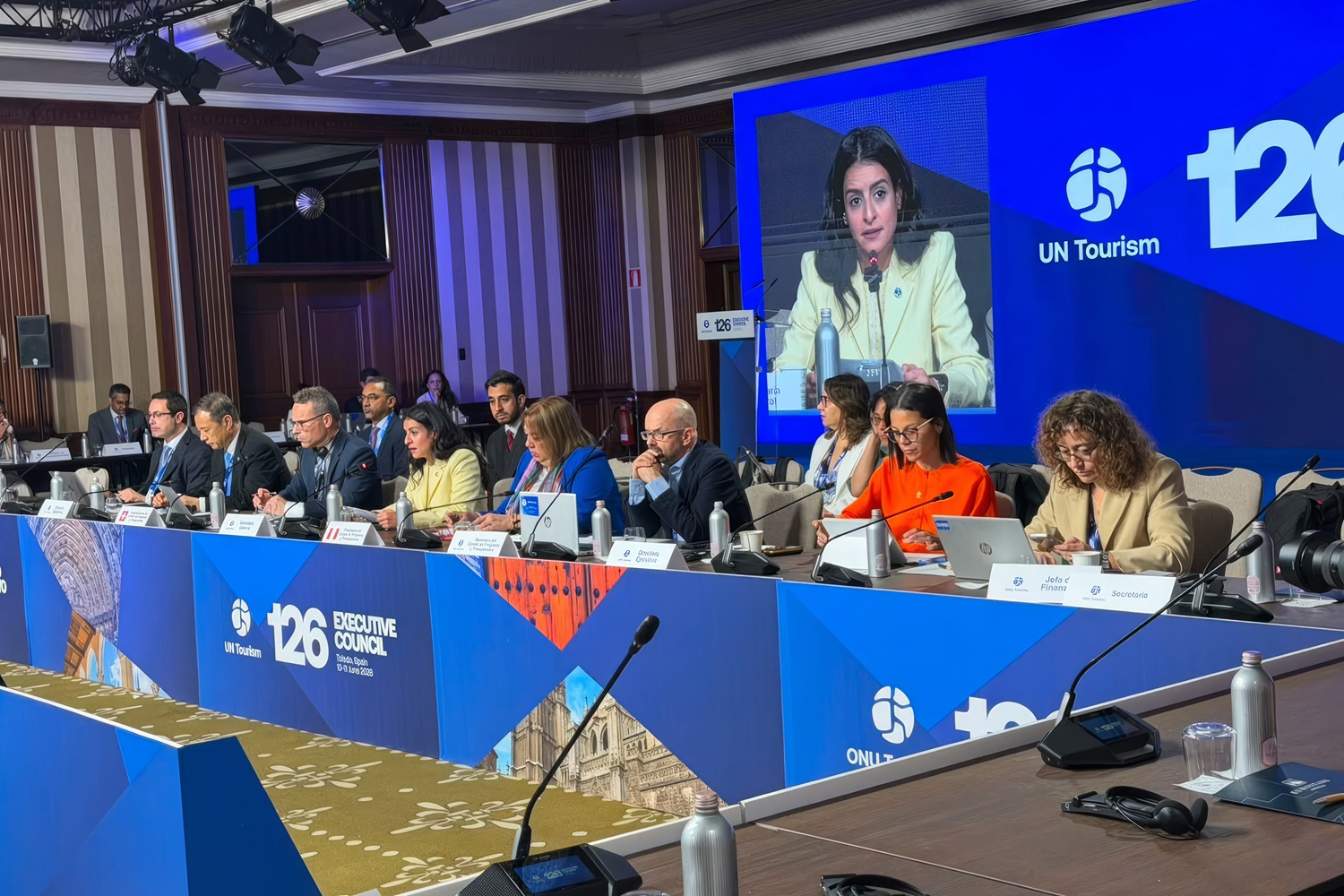
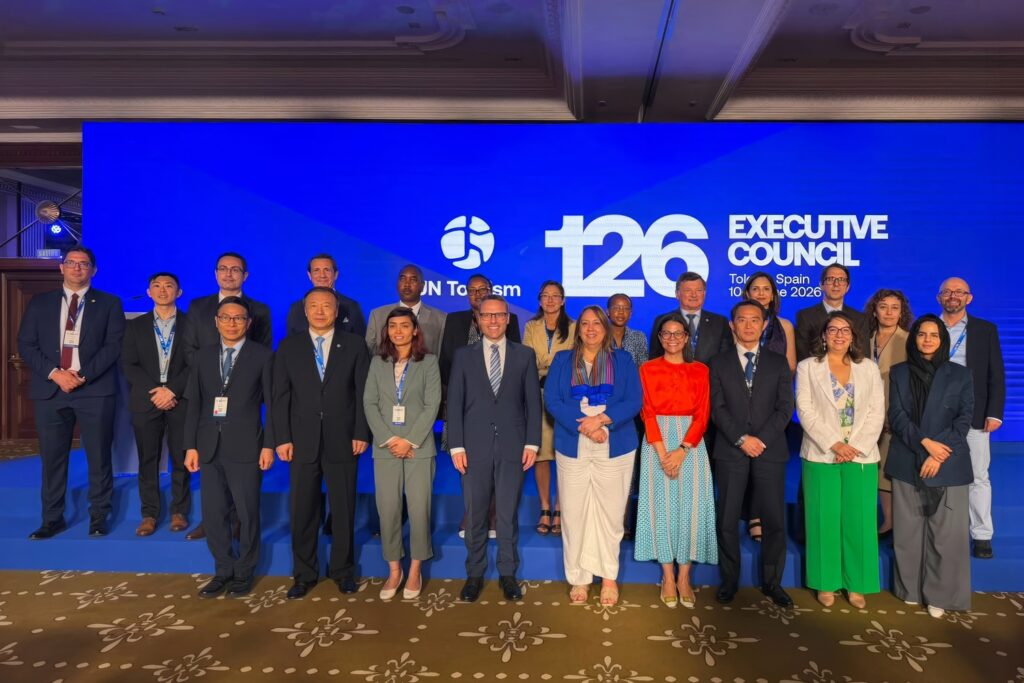
Agencia Peruana de Noticias PRENSAPERU.PE https://www.prensaperu.pe Twitter: @prensaperupe El Perú marcó una presencia destacada durante la primera jornada de la 126.ª reunión del Consejo Ejecutivo de ONU Turismo, evento que se desarrolla los días 10 y 11 de junio en la ciudad de Toledo, España. Más allá de participar como observador, el país asumió roles protagónicos en espacios de definición de políticas globales, liderando debates sobre el rumbo de la organización y consolidando alianzas que permitirán impulsar la competitividad y sostenibilidad del sector turístico nacional.
En representación del Ministerio de Comercio Exterior y Turismo (Mincetur), la viceministra de Turismo, Aracelly Laca, presidió la 31.ª reunión del Comité de Programa y Presupuesto (PBC) —uno de los órganos técnicos más importantes de la organización— encargado de supervisar la planificación estratégica, la gestión financiera transparente y la ejecución de las acciones prioritarias de ONU Turismo a nivel mundial.
La delegación peruana estuvo integrada además por representantes de la Dirección de Promoción del Turismo y Gastronomía del Ministerio de Relaciones Exteriores y funcionarios de la Embajada del Perú en España, lo que demuestra el trabajo coordinado entre sectores para posicionar al país como un actor relevante en la agenda turística internacional.
TEMAS CLAVE DE LA AGENDA GLOBAL
Durante la sesión, los estados miembros analizaron y coordinaron aspectos fundamentales para el futuro del turismo:
1.- La implementación del programa general de trabajo de la organización.
2.- Los preparativos para el Año Internacional del Turismo Sostenible y Resiliente 2027, una iniciativa que busca redefinir la actividad turística como motor de desarrollo inclusivo y respetuoso con el medio ambiente.
3.- La situación financiera proyectada para el año 2026 y la revisión de los estados financieros auditados del ejercicio 2025.
4.- Aspectos relacionados con la modernización de la gestión institucional y el fortalecimiento de los recursos humanos especializados.
Posteriormente, la viceministra Laca participó en la primera sesión plenaria del Consejo Ejecutivo, espacio donde los países comparten experiencias, analizan los desafíos globales —como el cambio climático, la estacionalidad o la digitalización— y acuerdan lineamientos comunes para enfrentarlos.
CONCEPTOS CLAVE PARA MEJOR ENTENDIMIENTO
ONU Turismo: Organismo especializado de las Naciones Unidas encargado de promover un turismo responsable, sostenible y accesible para todos. Actúa como foro global para la formulación de políticas y brinda asistencia técnica a los países miembros.
Consejo Ejecutivo: Órgano rector de la organización que se reúne dos veces al año para tomar decisiones sobre la dirección estratégica, aprobar presupuestos y supervisar el cumplimiento de los objetivos establecidos por la Asamblea General.
Comité de Programa y Presupuesto (PBC): Instancia técnica que evalúa la viabilidad de los proyectos, asegura el uso eficiente de los recursos y garantiza que las acciones de la organización respondan a las necesidades reales de los países miembros.
Memorando de Entendimiento: Acuerdo formal entre dos o más países que establece los lineamientos generales para la cooperación mutua, sin carácter vinculante legalmente, pero que sienta las bases para desarrollar proyectos conjuntos.
Turismo sostenible: Modelo que busca satisfacer las necesidades de los visitantes y las comunidades anfitrionas, al mismo tiempo que protege y mejora las oportunidades para el futuro, respetando el equilibrio económico, social y ambiental.
ALIANZA CON COREA DEL SUR PARA LA INNOVACIÓN
Dentro de su agenda bilateral, la viceministra Aracelly Laca sostuvo un encuentro estratégico con Daehyun Kim, viceministro del Ministerio de Cultura, Deportes y Turismo de la República de Corea. El objetivo principal fue dar seguimiento al Memorando de Entendimiento firmado en noviembre de 2024 y avanzar en la cooperación técnica.
Ambas autoridades acordaron crear un grupo de trabajo técnico conjunto que se encargará de diseñar y ejecutar actividades en cuatro ejes prioritarios:
1. Innovación y nuevas tecnologías: Aplicación de herramientas digitales para mejorar la experiencia del viajero y la gestión de destinos.
2. Digitalización: Uso de plataformas en línea para la promoción, la comercialización y la gestión de servicios turísticos.
3. Sostenibilidad: Implementación de buenas prácticas para reducir el impacto ambiental y generar beneficios duraderos para las comunidades locales.
4. Fortalecimiento institucional: Capacitación de funcionarios y mejora de los marcos normativos para hacer del turismo un sector más competitivo.
Corea del Sur es reconocido mundialmente por su capacidad para integrar tecnología y desarrollo turístico, por lo que este intercambio de conocimientos representa una oportunidad valiosa para modernizar el sector en el Perú.
CONTINUIDAD DE LA AGENDA
La participación del Perú en la 126.ª reunión del Consejo Ejecutivo continuará el 11 de junio, durante la segunda jornada de trabajo. En esta etapa se prevé la adopción de acuerdos finales que definirán acciones concretas para el impulso del turismo internacional, con el objetivo último de que estas decisiones se traduzcan en mayor inversión, generación de empleo y desarrollo económico en las regiones del país.
DATOS CONTEXTUALES
1.- Posicionamiento internacional: El hecho de que el Perú presida un comité técnico clave como el de Programa y Presupuesto demuestra el creciente reconocimiento del país como un interlocutor válido y responsable en la definición de las reglas del turismo mundial.
2.- Cooperación como herramienta de progreso: El acuerdo con Corea del Sur abre la puerta a acceder a experiencias exitosas en innovación y gestión, elementos fundamentales para elevar la calidad y competitividad de la oferta turística peruana.
3.- Visión a largo plazo: La participación activa en la preparación del Año Internacional del Turismo Sostenible y Resiliente 2027 permite al país anticiparse a las tendencias globales y alinear su desarrollo con los criterios de sostenibilidad que exigen los viajeros actuales.
4.- Trabajo coordinado: La presencia conjunta de Mincetur, Relaciones Exteriores y la embajada en España evidencia que el impulso al turismo requiere una acción conjunta del Estado, donde la promoción y la cooperación internacional se complementan para generar beneficios reales para la población.
Fuente: Agencia Peruana de Noticias PRENSAPERU.PE https://www.prensaperu.pe Twitter: @prensaperupe
Translate
Peru assumes leadership in UN Tourism and chairs a key committee for the global management of the sector with a view to the ‘International Year of Sustainable and Resilient Tourism 2027’.
Peruvian News Agency PRENSAPERU.PE https://www.prensaperu.pe Twitter: @prensaperupe Peru made a notable showing during the first day of the 126th session of the UN Tourism Executive Council, an event taking place on 10 and 11 June in the city of Toledo, Spain. Beyond participating as an observer, the country took on leading roles in global policy‑setting forums, spearheading debates on the organization’s direction and consolidating partnerships that will help boost the competitiveness and sustainability of the national tourism sector.
Representing the Ministry of Foreign Trade and Tourism (Mincetur), Deputy Minister of Tourism Aracelly Laca chaired the 31st meeting of the Programme and Budget Committee (PBC) —one of the organization’s most important technical bodies— responsible for overseeing strategic planning, transparent financial management, and the implementation of UN Tourism’s priority actions worldwide.
The Peruvian delegation also included representatives from the Directorate for Tourism and Gastronomy Promotion of the Ministry of Foreign Affairs and officials from the Embassy of Peru in Spain, demonstrating coordinated work across sectors to position the country as a relevant player in the international tourism agenda.
KEY ISSUES ON THE GLOBAL AGENDA
During the session, member States discussed and coordinated fundamental aspects for the future of tourism:
1.- The implementation of the organization’s general programme of work.
2.- Preparations for the International Year of Sustainable and Resilient Tourism 2027, an initiative aimed at redefining tourism as a driver of inclusive development that respects the environment.
3.- The projected financial situation for 2026 and the review of audited financial statements for the 2025 fiscal year.
4.- Matters related to the modernization of institutional management and the strengthening of specialized human resources.
Subsequently, Deputy Minister Laca took part in the first plenary session of the Executive Council, a forum where countries share experiences, analyse global challenges —such as climate change, seasonality, and digitalization— and agree on common guidelines to address them.
KEY CONCEPTS FOR BETTER UNDERSTANDING
UN Tourism: A specialized agency of the United Nations responsible for promoting responsible, sustainable, and accessible tourism for all. It serves as a global forum for policy formulation and provides technical assistance to member States.
Executive Council: The governing body of the organization, which meets twice a year to make decisions on strategic direction, approve budgets, and monitor compliance with the objectives set by the General Assembly.
Programme and Budget Committee (PBC): A technical body that assesses the feasibility of projects, ensures the efficient use of resources, and guarantees that the organization’s actions respond to the actual needs of member States.
Memorandum of Understanding: A formal agreement between two or more countries that establishes general guidelines for mutual cooperation; while not legally binding, it lays the groundwork for developing joint projects.
Sustainable tourism: A model that seeks to meet the needs of visitors and host communities while protecting and enhancing opportunities for the future, respecting economic, social, and environmental balance.
PARTNERSHIP WITH SOUTH KOREA FOR INNOVATION
As part of her official agenda, Deputy Minister Aracelly Laca held a strategic meeting with Daehyun Kim, Deputy Minister of the Ministry of Culture, Sports and Tourism of the Republic of Korea. The main objective was to follow up on the Memorandum of Understanding signed in November 2024 and advance technical cooperation.
Both authorities agreed to establish a joint technical working group responsible for designing and carrying out activities in four priority areas:
1.- Innovation and new technologies: The application of digital tools to improve the traveller experience and destination management.
2.- Digitalization: The use of online platforms for the promotion, marketing, and management of tourism services.
3.- Sustainability: The implementation of good practices to reduce environmental impact and generate lasting benefits for local communities.
4.- Institutional strengthening: The training of officials and the improvement of regulatory frameworks to make tourism a more competitive sector.
South Korea is globally recognized for its ability to integrate technology and tourism development, making this exchange of knowledge a valuable opportunity to modernize the sector in Peru.
CONTINUATION OF THE AGENDA
Peru’s participation in the 126th session of the UN Tourism Executive Council will continue on 11 June with the second day of work. This stage is expected to see the adoption of final agreements defining concrete actions to promote international tourism, with the ultimate goal of translating these decisions into increased investment, job creation, and economic development across the country’s regions.
CONTEXTUAL DATA
1.- International positioning: The fact that Peru chairs a key technical committee such as the Programme and Budget Committee demonstrates the country’s growing recognition as a valid and responsible interlocutor in shaping the rules of global tourism.
2.- Cooperation as a tool for progress: The agreement with South Korea opens the door to successful experiences in innovation and management —fundamental elements for raising the quality and competitiveness of Peru’s tourism offering.
3.- Long‑term vision: Active participation in the preparations for the International Year of Sustainable and Resilient Tourism 2027 allows the country to anticipate global trends and align its development with the sustainability criteria demanded by today’s travellers.
4.- Coordinated work: The joint presence of Mincetur, the Ministry of Foreign Affairs, and the Embassy in Spain shows that boosting tourism requires coordinated State action, where promotion and international cooperation complement each other to generate real benefits for the population.
Source: Peruvian News Agency PRENSAPERU.PE https://www.prensaperu.pe Twitter: @prensaperupe