
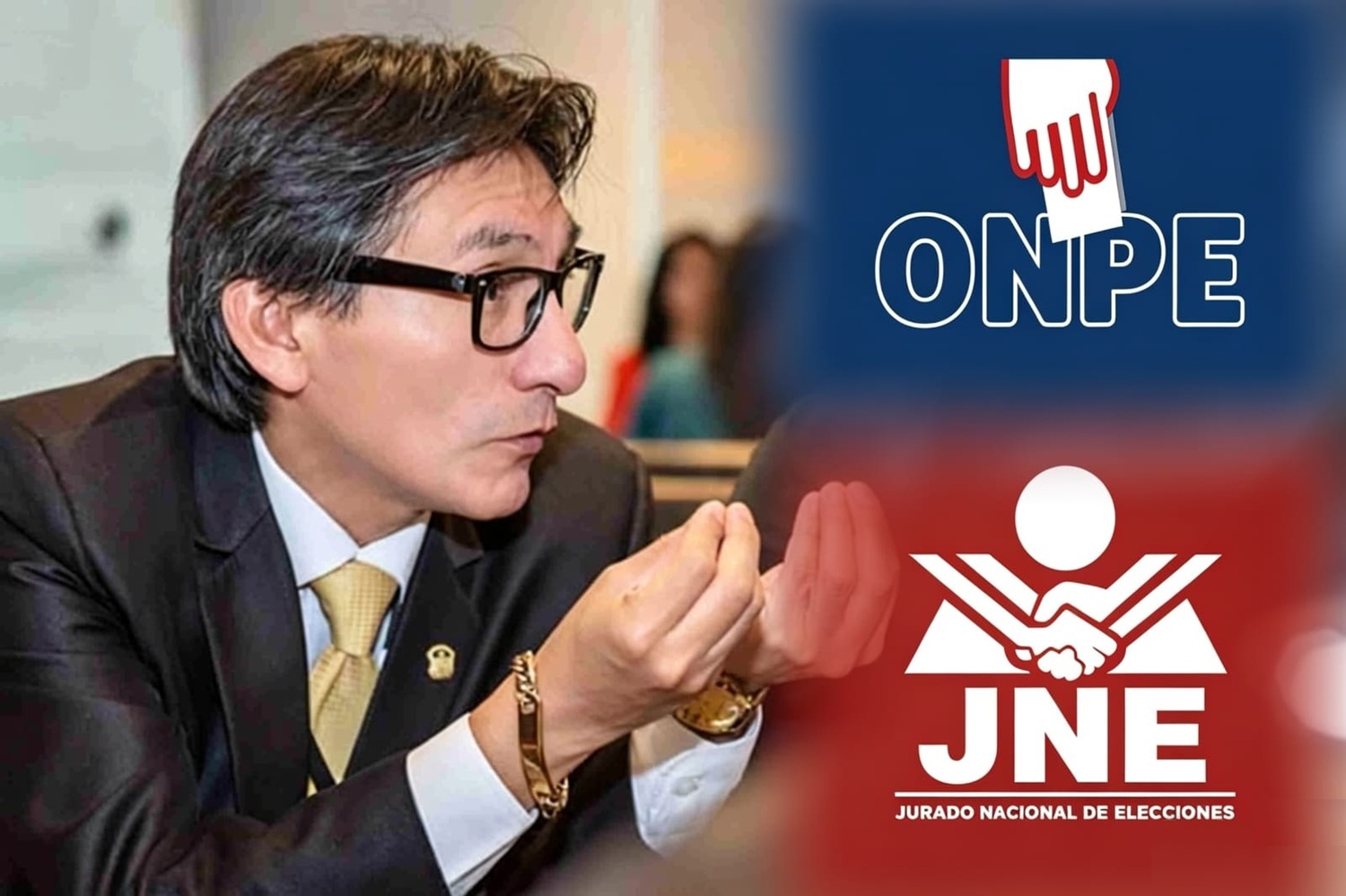
Agencia Peruana de Noticias PRENSAPERU.PE https://www.prensaperu.pe Twitter: @prensaperupe (Editorial del Director: Fernando Palomares Arévalo) Más de 34 millones de habitantes, 27′ 325 432 de electores habilitados y una pregunta que se repite cada cinco años como un estribillo incómodo: ¿por qué el Perú, Estado organizado y con instituciones reconocidas en teoría, no es capaz de entregar resultados electorales claros, definitivos y oportunos? ¿Por qué los ciudadanos deben permanecer en vilo durante semanas, incluso más de un mes, mientras actores privados, encuestadoras y organismos internacionales asumen el rol que debería corresponder exclusivamente al Estado?
Esta es la reflexión que surge una vez más durante el actual proceso presidencial. Mientras la Oficina Nacional de Procesos Electorales (ONPE) anuncia que el conteo final podría extenderse hasta mediados de julio —más de un mes después de la votación— la opinión pública observa cómo la información confiable proviene de Ipsos, Datum, la Asociación Civil Transparencia o misiones de observación extranjeras, en lugar de los organismos creados precisamente para garantizar la pureza y certeza del sufragio.
¿PARA QUÉ EXISTEN LAS INSTITUCIONES ELECTORALES?
La Constitución Política establece que la ONPE y el Jurado Nacional de Elecciones (JNE) son organismos autónomos, con personería jurídica y autonomía técnica, funcional, económica y administrativa. Fueron concebidos como pilares fundamentales: la primera para organizar y ejecutar el proceso, y el segundo para garantizar la legalidad y resolver impugnaciones. Su razón de ser es simple: generar certeza.
Sin embargo, en la práctica, cada elección revela una brecha creciente entre su misión fundacional y su desempeño real. Como señalan numerosos analistas, el sistema electoral peruano parece operar bajo una lógica del siglo pasado, como si viviéramos en la época de las carretas y no en la era digital y la comunicación inmediata.
Conceptos clave para entender la crítica:
Autonomía institucional
Facultad de actuar sin presiones políticas, pero también con la obligación de ser eficientes y transparentes. No es un fin en sí mismo, sino un medio para proteger la voluntad popular.
Certeza electoral
Condición indispensable de la democracia: los resultados deben ser claros, verificables y conocidos en un plazo razonable para evitar vacíos de poder y desconfianza.
Irregularidades estructurales
Fallas que no son aisladas —como demoras en el traslado de actas desde zonas alejadas o del exterior— sino que se repiten elección tras elección, revelando falta de planificación y previsión.
LA EXCUSA QUE SE REPITE: ¿SIEMPRE LOS PUEBLOS ALEJADOS?
Cada vez que la ciudadanía o los analistas cuestionan la lentitud del proceso, las autoridades electorales responden con el mismo argumento: “Es que en las comunidades andinas y nativas, en la sierra y la selva, las vías de comunicación son difíciles, por eso las actas tardan en llegar”.
Es una explicación que se ha repetido por décadas, hasta convertirse en un discurso oficial inamovible. Pero cabe preguntarse: ¿Acaso en más de 24 años de vida democrática no se ha podido avanzar en carreteras, en vías de acceso, en sistemas de comunicación o en mecanismos alternativos seguros para hacer llegar los votos? ¿Vamos a eternizar esta realidad como si fuera una condición natural e inmodificable?
Lo que para muchos es una limitación geográfica, para otros se ha convertido en un pretexto conveniente. Si la dificultad de acceso es el argumento, entonces el Estado debería haber trabajado durante años para solucionarla, no para aceptarla como algo inevitable. Mientras tanto, esa demora injustificada deja un margen de tiempo y espacio donde, según advierten investigadores y observadores, se abren las puertas a la manipulación, las trafas y las sospechas de fraude, precisamente en ese tramo donde el control es más difícil y la vigilancia más débil.
El contraste es evidente: procesar el 95 % de los votos en menos de 48 horas demuestra que el sistema puede ser rápido. Que el 5 % restante tome semanas, usando como única razón la lejanía, hace pensar que el problema no es la geografía, sino la falta de voluntad para modernizar, prever y garantizar que ni la distancia sirva de excusa para la opacidad.
LA ESPERA INFINITA: UN PROBLEMA QUE SE REPITE
El contraste con la región es elocuente. Mientras en Colombia o Chile se conocen tendencias definitivas en cuestión de horas y los resultados oficiales se confirman en días, en Perú se ha normalizado esperar entre 30 y 45 días para saber quién gobernará durante los siguientes cinco años.
Las autoridades explican que la demora se debe al procesamiento manual de actas, la revisión de observaciones, impugnaciones y el traslado desde zonas de difícil acceso. Pero la pregunta de fondo sigue vigente: ¿no es acaso responsabilidad del Estado prever estas dificultades y diseñar un sistema que las resuelva antes de que generen incertidumbre?
1.- De los más de 27 millones de votos, más del 95 % suele procesarse en las primeras 48 horas. El porcentaje restante —menos del 5 %— es el que toma semanas, precisamente porque incluye actas observadas, impugnadas o provenientes del exterior.
2.- Paradójicamente, es en ese pequeño porcentaje donde se concentra la desconfianza, ya que al no existir plazos estrictos y predecibles, la ciudadanía queda a merced de la lentitud burocrática y la especulación política.
CUANDO EL ESTADO DEJA DE SER REFERENTE
Lo más preocupante no es solo la demora, sino la transferencia de autoridad. Cuando el Estado no brinda información clara y oportuna, la sociedad termina consultando a encuestadoras privadas, organismos civiles o veedores internacionales.
1.- Empresas encuestadoras: Ipsos, Datum o CPI son citadas como fuentes confiables, aunque su función es estadística, no certificar votos.
2.- Transparencia: Asociación civil que realiza su propio conteo paralelo, asumiendo un costo y esfuerzo que debería ser exclusivo del Estado.
3.- Observadores internacionales: Misiones de la OEA o la Unión Europea terminan siendo quienes otorgan el “aval de credibilidad” al proceso, como si las instituciones locales no pudieran hacerlo por sí mismas.
¿Qué significa esto? Que el Estado ha perdido su rol protagónico. En lugar de ser el garante indiscutible, es uno más entre varios actores que informan, generando una sensación de debilidad institucional.
¿FALTA DE CAPACIDAD O FALTA DE DECISIÓN?
Las críticas no buscan deslegitimar el sistema, sino entender por qué persisten sus fallas. Los expertos señalan causas estructurales:
Sistema 100 % manual: A diferencia de otros países, Perú no ha avanzado en mecanismos digitales seguros para agilizar el conteo, argumentando que el papel es más confiable. Pero la seguridad no debería estar reñida con la velocidad.
Logística crónica: Cada elección se repiten problemas en el traslado de actas desde la selva, sierra y consulados. ¿No es posible crear un sistema de envío prioritario y seguro, o incluso de transmisión anticipada de datos mientras llegan los documentos físicos?
Plazos excesivos: La normativa permite hasta 30 días para proclamar resultados, lo que incentiva la lentitud en lugar de la eficiencia.
Como señala la reflexión ciudadana: “No es lógico que procesar el 95 % de los votos tome dos días, y el 5 % restante, un mes. Eso no es seguridad, es burocracia descontrolada y excusas que se usan año tras año”.
CONCLUSIONES
1.- Las instituciones no cumplen su misión fundacional: Fueron creadas para generar certeza, pero actualmente generan incertidumbre. Su lentitud y la repetición de las mismas excusas alejan cada vez más su funcionamiento del espíritu democrático que les dio origen.
2.- El argumento de la lejanía no puede ser eterno: Más de dos siglo de país libre e independiente es tiempo suficiente para mejorar vías, comunicación y logística. Usar la geografía como pretexto permanente solo alimenta la desconfianza y deja espacios abiertos para la manipulación.
3.- La dependencia de actores privados es una señal de alerta: Que el país deba esperar los datos de encuestadoras o veedores internacionales revela un vacío de autoridad del Estado. La información electoral debe ser un monopolio público, confiable y oportuno.
4.- El sistema necesita reforma urgente: No basta repetir que “es seguro porque es manual”. Es necesario modernizar la logística, reducir plazos, digitalizar etapas sin perder transparencia y garantizar que el resultado llegue a la ciudadanía en un tiempo razonable, respetando la voluntad popular sin dilaciones innecesarias.
Fuente: Agencia Peruana de Noticias PRENSAPERU.PE https://www.prensaperu.pe Twitter: @prensaperupe
Translate
Editorial: Electoral bodies! Guarantors of democracy or mere spectators of an absent state? Why can’t Peru, with its ONPE and JNE, deliver quick results like its neighbors?
Peruvian News Agency PRENSAPERU.PE https://www.prensaperu.pe Twitter: @prensaperupe (Editorial by the Director: Fernando Palomares Arévalo) More than 34 million inhabitants, 27′ 325 432 registered voters, and a question that repeats every five years like an uncomfortable refrain: why is Peru, an organized State with institutions recognized in theory, unable to deliver clear, definitive, and timely electoral results? Why must citizens remain in suspense for weeks, even more than a month, while private actors, polling firms, and international organizations assume the role that should belong exclusively to the State?
This is the reflection that arises once again during the current presidential process. While the National Office of Electoral Processes (ONPE) announces that the final count could extend until mid‑July —more than a month after voting took place— public opinion observes that reliable information comes from Ipsos, Datum, the civil association Transparencia, or international observation missions, rather than from the bodies created precisely to guarantee the purity and certainty of the vote.
WHAT IS THE PURPOSE OF ELECTORAL INSTITUTIONS?
The Political Constitution establishes that ONPE and the National Jury of Elections (JNE) are autonomous bodies with legal status and technical, functional, economic, and administrative independence. They were conceived as fundamental pillars: the former to organize and carry out the process, and the latter to guarantee legality and resolve challenges. Their purpose is simple: to generate certainty.
In practice, however, every election reveals a growing gap between their founding mission and their actual performance. As numerous analysts point out, the Peruvian electoral system seems to operate according to a logic from the past, as if we were living in the era of horse‑drawn carts rather than the digital age and instant communication.
Key concepts for understanding the critique:
Institutional autonomy
The authority to act free from political pressure, but also the obligation to operate efficiently and transparently. It is not an end in itself, but a means to protect the popular will.
Electoral certainty
An indispensable condition of democracy: results must be clear, verifiable, and known within a reasonable timeframe to avoid power vacuums and mistrust.
Structural irregularities
Failures that are not isolated —such as delays in the transport of tally sheets from remote areas or from abroad— but recur election after election, revealing a lack of planning and foresight.
THE SAME EXCUSE, OVER AND OVER: ALWAYS THE REMOTE COMMUNITIES?
Whenever citizens or analysts question the slowness of the process, electoral authorities respond with the same argument: “In Andean and indigenous communities, in the highlands and the jungle, transport routes are difficult, which is why tally sheets take time to arrive.”
This explanation has been repeated for decades, becoming an unchanging official narrative. But one must ask: after more than 24 years of democratic life, has it not been possible to develop roads, access routes, communication systems, or secure alternative mechanisms to deliver votes? Are we going to perpetuate this reality as if it were a natural and unchangeable condition?
What many view as a geographical limitation, others see as a convenient pretext. If difficult access is the justification, then the State should have worked over the years to solve it, rather than accepting it as inevitable. Meanwhile, this unjustified delay creates a window of time and space where, according to researchers and observers, manipulation, fraud, and suspicions of wrongdoing can take hold —precisely at the stage where oversight is most difficult and monitoring weakest.
The contrast is striking: processing 95 % of the votes in less than 48 hours proves that the system can be fast. That the remaining 5 % takes weeks, using remoteness as the sole reason, suggests that the problem is not geography, but a lack of willingness to modernize, plan ahead, and ensure that not even distance serves as an excuse for opacity.
THE ENDLESS WAIT: A RECURRING PROBLEM
The comparison with the region is revealing. While in Colombia or Chile definitive trends are known within hours and official results are confirmed within days, in Peru it has become normal to wait between 30 and 45 days to learn who will govern for the next five years.
Authorities explain that delays stem from the manual processing of tally sheets, the review of challenges and objections, and transport from hard‑to‑reach areas. But the fundamental question remains: is it not the State’s responsibility to anticipate these difficulties and design a system that addresses them before they generate uncertainty?
1.- Out of more than 27 million votes, over 95 % are usually processed within the first 48 hours. The remaining percentage —less than 5 %— is what takes weeks, precisely because it includes challenged, contested, or overseas tally sheets.
2.- Paradoxically, it is in this small percentage that mistrust concentrates, since without strict and predictable deadlines, citizens are left at the mercy of bureaucratic slowness and political speculation.
WHEN THE STATE CEASES TO BE THE REFERENCE
What is most concerning is not only the delay, but the transfer of authority. When the State fails to provide clear and timely information, society turns to private polling firms, civil organizations, or international observers.
1.- Polling firms: Ipsos, Datum, or CPI are cited as reliable sources, even though their role is statistical, not to certify votes.
2.- Transparencia: A civil association that conducts its own parallel count, assuming a cost and effort that should be the exclusive responsibility of the State.
3.- International observers: Missions from the OAS or the European Union end up providing the “credibility seal” for the process, as if local institutions could not do so on their own.
What does this mean? That the State has lost its leading role. Instead of being the undisputed guarantor, it becomes just one among several actors providing information, fostering a sense of institutional weakness.
LACK OF CAPACITY OR LACK OF POLITICAL WILL?
The criticisms do not seek to delegitimize the system, but to understand why its flaws persist. Experts point to structural causes:
100 % manual system: Unlike other countries, Peru has not developed secure digital mechanisms to speed up counting, arguing that paper is more reliable. But security should not be incompatible with speed.
Chronic logistical issues: Every election brings repeated problems in transporting tally sheets from the jungle, highlands, and consulates. Would it not be possible to establish a priority and secure delivery system, or even transmit preliminary data while the physical documents arrive?
Excessive deadlines: Current regulations allow up to 30 days to proclaim results, which encourages slowness rather than efficiency.
As citizens have noted: “It is illogical that processing 95 % of the votes takes two days, and the remaining 5 % takes a month. That is not security; it is uncontrolled bureaucracy and excuses used year after year.”
CONCLUSIONS
1.- Institutions failing their founding mission: They were created to generate certainty, but today they generate uncertainty. Their slowness and the repetition of the same excuses distance their performance further from the democratic spirit that gave rise to them.
2.- The remoteness argument cannot be eternal: More than two centuries as a free and independent nation is enough time to improve roads, communications, and logistics. Using geography as a permanent pretext only fuels mistrust and leaves gaps open for manipulation.
3.- Dependence on private actors is a warning sign: The fact that the country must wait for data from polling firms or international observers reveals a vacuum of State authority. Electoral information should be a public monopoly: reliable, and delivered on time.
4.- Urgent reform is needed: Repeating that “it is secure because it is manual” is not enough. It is necessary to modernize logistics, shorten deadlines, digitalize stages without losing transparency, and ensure that results reach citizens within a reasonable timeframe, respecting the popular will without unnecessary delays.
Source: Peruvian News Agency PRENSAPERU.PE https://www.prensaperu.pe Twitter: @prensaperupe