
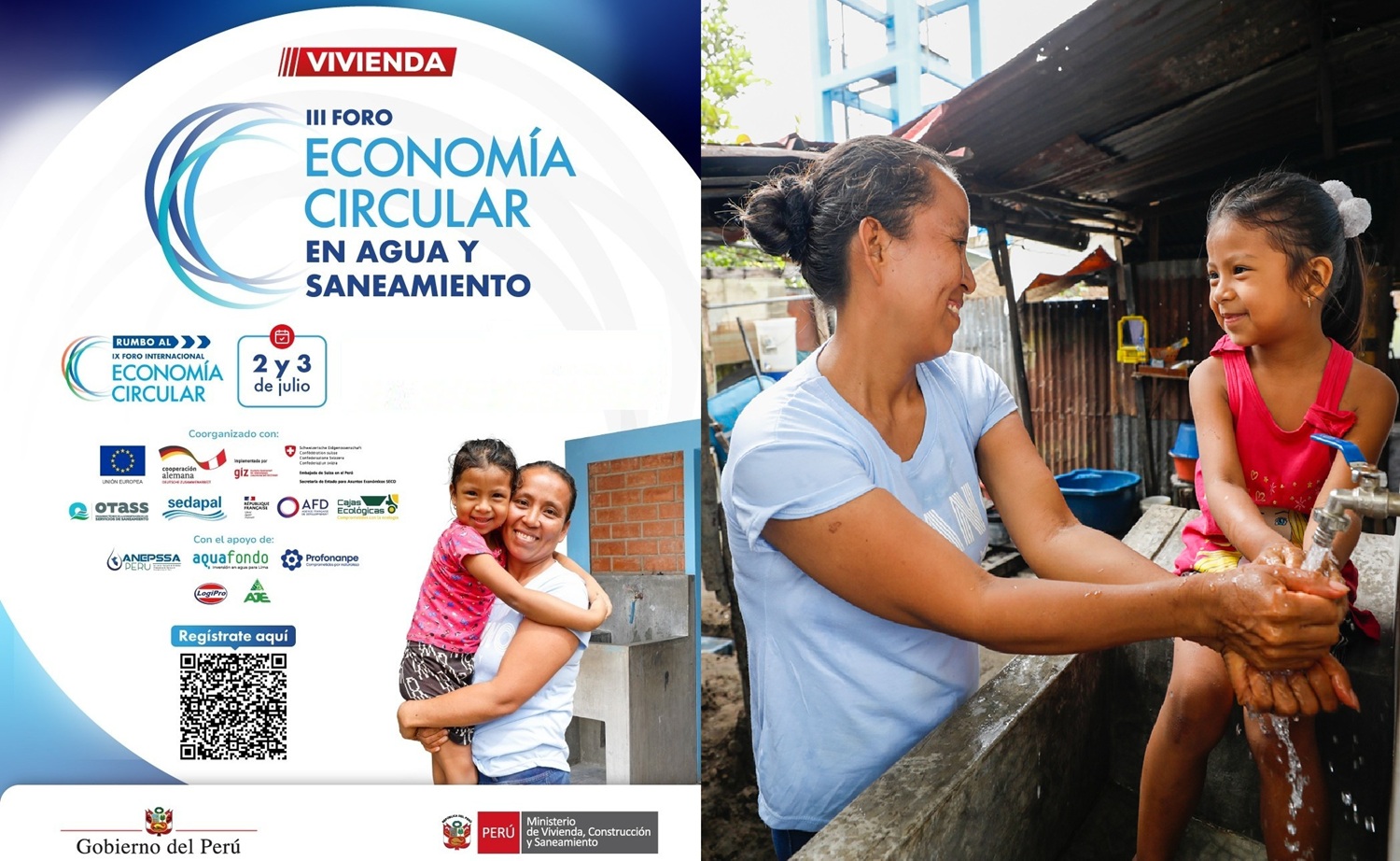
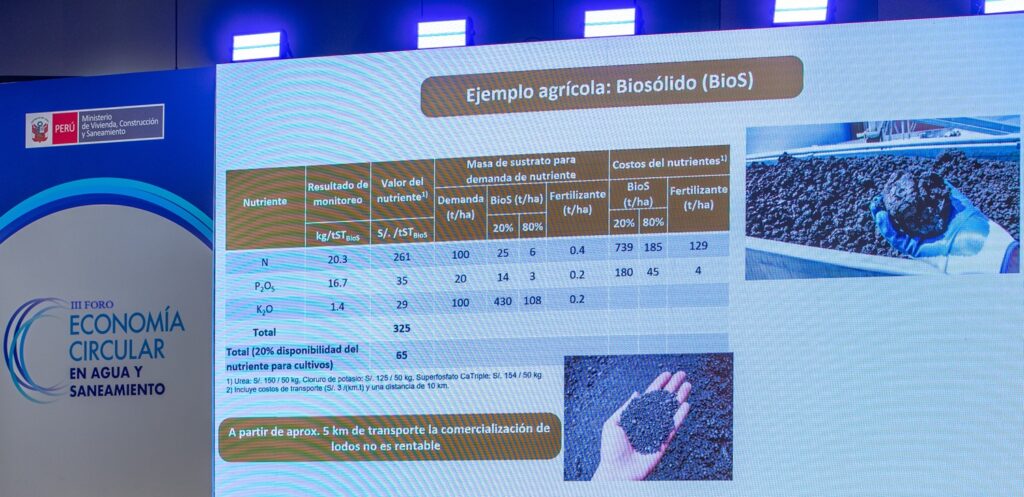
Agencia Peruana de Noticias PRENSAPERU.PE https://www.prensaperu.pe Twitter: @prensaperupe El III Foro de Economía Circular en Agua y Saneamiento se consolida como un espacio técnico y de diálogo estratégico para transformar la gestión del agua y los servicios de saneamiento en el país. Su objetivo principal es orientar los procesos y servicios que brinda el Ministerio de Vivienda, Construcción y Saneamiento (MVCS) hacia modelos más sostenibles, mediante la implementación de la Hoja de Ruta de Economía Circular del Sector Agua y Saneamiento. Además, busca compartir experiencias exitosas, generar alianzas y encontrar puntos de unión entre las actividades del sector y otras áreas de la actividad humana.
REFERENCIAS CONCEPTUALES DEL FORO
Economía circular: Modelo de producción y consumo que busca reducir, reutilizar, reciclar y recuperar materiales y energía en todos los procesos, evitando el desperdicio y protegiendo los recursos naturales, en lugar de seguir el esquema tradicional de “usar y tirar”.
Hoja de Ruta: Instrumento de planificación que define metas, acciones y plazos concretos para avanzar hacia un objetivo estratégico, en este caso, la transición del sector hacia la sostenibilidad.
Servicios de saneamiento: Conjunto de actividades que incluyen la captación, potabilización, distribución de agua potable, así como la recolección, tratamiento y disposición final de aguas residuales, esenciales para la salud pública y el cuidado del medio ambiente.
Sinergias: Acción conjunta entre instituciones o sectores que permite obtener resultados mayores y más eficaces que si trabajaran de forma separada.
FECHAS DE REALIZACIÓN
Jueves 2 de julio: de 8:30 a. m. a 6:00 p. m.
Viernes 3 de julio: de 8:30 a. m. a 2:00 p. m.
EXPOSITORES Y PANELISTAS
El foro contará con la participación de autoridades nacionales, expertos internacionales, representantes de la cooperación, academia y sector privado, entre ellos:
Luis Hernán Contreras Bonilla, Viceministro de Construcción y Saneamiento del MVCS.
Héctor Daniel Benítez Castro, Director General de Asuntos Ambientales del MVCS.
Representantes de la Embajada de Alemania, Banco Mundial, SEDAPAL, INACAL, SERNANP, universidades nacionales y extranjeras, así como empresas especializadas en sostenibilidad y gestión de recursos hídricos.
ORGANIZACIÓN Y APOYO
Es un evento organizado con el respaldo de instituciones nacionales e internacionales:
Coorganizan: Unión Europea, Cooperación Alemana (GIZ), Cooperación Económica de Suiza, OTASS, SEDAPAL, AFD y Cajas Ecológicas.
Con el apoyo de: ANEPSSA, Aquafondo, Profonanpe, Logipro y Aje.
De otro lado, este evento está dirigido a autoridades de los tres niveles de gobierno, representantes de ministerios vinculados al ambiente, agricultura, energía y economía, empresas prestadoras de servicios de saneamiento, sector privado, gremios y centros de estudio e investigación.
DATOS CONTEXTUALES
1.- La transición es necesaria y posible: La economía circular representa el modelo más adecuado para garantizar el acceso al agua potable y saneamiento en el largo plazo, evitando el agotamiento de los recursos hídricos y reduciendo los costos de operación.
2.- El trabajo conjunto es la clave: La participación de instituciones públicas, cooperación internacional, academia y sector privado demuestra que no se logra la sostenibilidad de forma aislada; las alianzas permiten compartir conocimientos, tecnologías y financiamiento.
3.- Existe una hoja de ruta clara: El sector cuenta ya con un plan definido, y este foro sirve para acelerar su puesta en práctica, adaptando soluciones exitosas a la realidad de cada región del país.
Fuente: Agencia Peruana de Noticias PRENSAPERU.PE https://www.prensaperu.pe Twitter: @prensaperupe
Translate
3rd Circular Economy Forum on Water and Sanitation! “Transforming water resource management in Peru, with sustainability and efficiency as the event’s core themes for revitalizing the sanitation sector.”
Peruvian News Agency PRENSAPERU.PE https://www.prensaperu.pe Twitter: @prensaperupe The III Circular Economy Forum on Water and Sanitation has established itself as a technical space and platform for strategic dialogue aimed at transforming water management and sanitation services in the country. Its main objective is to guide the processes and services provided by the Ministry of Housing, Construction and Sanitation (MVCS) toward more sustainable models, through the implementation of the Roadmap for Circular Economy in the Water and Sanitation Sector. It also seeks to share successful experiences, build partnerships, and identify points of connection between the activities of the sector and other areas of human activity.
CONCEPTUAL REFERENCES FOR THE FORUM
Circular economy: A production and consumption model that aims to reduce, reuse, recycle, and recover materials and energy throughout all processes, avoiding waste and protecting natural resources, instead of following the traditional “take, make, and dispose” approach.
Roadmap: A planning tool that defines specific goals, actions, and timelines to advance toward a strategic objective — in this case, the transition of the sector toward sustainability.
Sanitation services: The set of activities that include the collection, treatment, and distribution of drinking water, as well as the collection, treatment, and final disposal of wastewater, which are essential for public health and environmental protection.
Synergies: Joint action between institutions or sectors that makes it possible to achieve greater and more effective results than if they worked separately.
DATES OF THE EVENT
Thursday, July 2: from 8:30 a.m. to 6:00 p.m.
Friday, July 3: from 8:30 a.m. to 2:00 p.m.
SPEAKERS AND PANELISTS
The forum will feature the participation of national authorities, international experts, cooperation representatives, academia, and the private sector, including:
Luis Hernán Contreras Bonilla, Vice Minister of Construction and Sanitation, MVCS
Héctor Daniel Benítez Castro, Director General of Environmental Affairs, MVCS
Representatives from the Embassy of Germany, the World Bank, SEDAPAL, INACAL, SERNANP, national and international universities, as well as companies specializing in sustainability and water resource management.
ORGANIZATION AND SUPPORT
This event is organized with the backing of national and international institutions:
Co-organizers: European Union, German Development Cooperation (GIZ), Swiss Economic Cooperation, OTASS, SEDAPAL, AFD, and Cajas Ecológicas.
Supported by: ANEPSSA, Aquafondo, Profonanpe, Logipro, and Aje.
Furthermore, this event is aimed at authorities from the three levels of government, representatives of ministries related to the environment, agriculture, energy, and economy, water and sanitation service providers, the private sector, trade associations, and research and academic institutions.
CONTEXTUAL INFORMATION
1.- The transition is necessary and feasible: Circular economy represents the most suitable model to guarantee access to drinking water and sanitation in the long term, preventing the depletion of water resources and reducing operational costs.
2.- Collaboration is key: The participation of public institutions, international cooperation, academia, and the private sector shows that sustainability cannot be achieved in isolation; partnerships enable the sharing of knowledge, technologies, and funding.
3.- A clear roadmap is in place: The sector already has a defined plan, and this forum serves to accelerate its implementation, adapting successful solutions to the reality of each region of the country.
Source: Peruvian News Agency PRENSAPERU.PE https://www.prensaperu.pe Twitter: @prensaperupe