
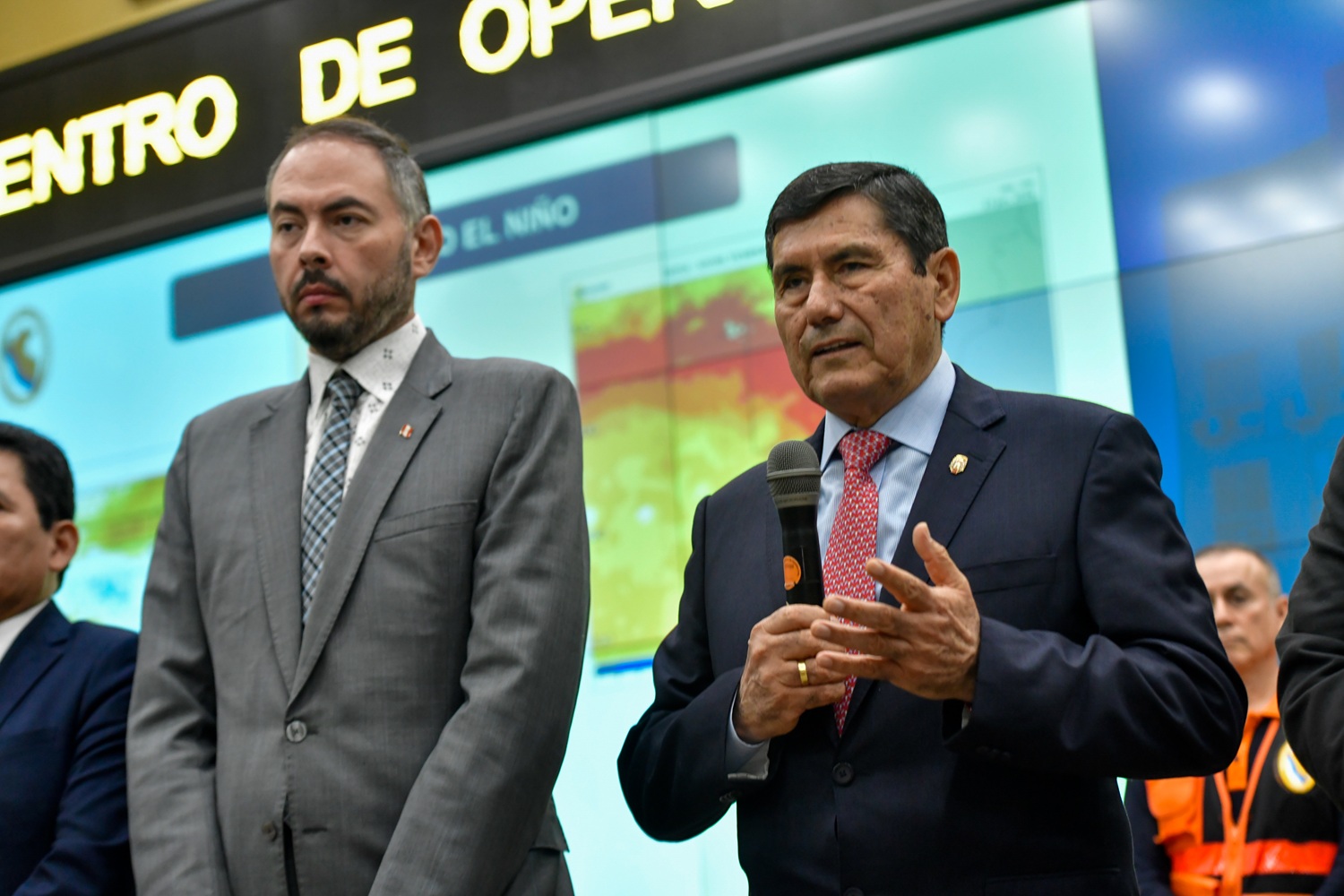
Agencia Peruana de Noticias PRENSAPERU.PE https://www.prensaperu.pe Twitter: @prensaperupe El presidente del Consejo de Ministros, Luis Arroyo Sánchez, destacó las acciones que viene desplegando el Gobierno Nacional para fortalecer la capacidad de respuesta del Estado frente a los efectos del fenómeno El Niño. Esta estrategia se apoya en tres pilares fundamentales: la asignación oportuna de recursos, la coordinación multisectorial y la ejecución de medidas orientadas a mitigar los impactos sobre la población y la infraestructura crítica del país.
FENÓMENO EL NIÑO
Es un evento climático natural caracterizado por el calentamiento anormal de las aguas superficiales del Océano Pacífico ecuatorial. En Perú, provoca lluvias intensas, inundaciones, deslizamientos de tierra y aumento del caudal de ríos, generando riesgos para la vida, la salud, la vivienda y la actividad económica.
GESTIÓN DE RIESGOS DE DESASTRES
Conjunto de acciones integrales destinadas a identificar, analizar, reducir y controlar los riesgos, así como prepararse y responder ante emergencias, para proteger a la población y reducir pérdidas.
INFRAESTRUCTURA CRÍTICA
Conjunto de obras y servicios esenciales para el funcionamiento del país: carreteras, puentes, sistemas de agua potable, redes eléctricas, establecimientos de salud y escuelas.
FONDOS DE CONTINGENCIA
Recursos económicos reservados específicamente para atender situaciones imprevistas o emergencias, sin afectar el presupuesto regular de otras áreas del Estado.
De otro lado, tras liderar una nueva sesión del Consejo de Ministros en el Centro de Operaciones de Emergencia Nacional (COEN) —institución encargada de monitorear riesgos y coordinar acciones ante desastres—, el jefe del gabinete señaló que la prioridad absoluta del Ejecutivo es proteger la integridad de las personas y garantizar una respuesta rápida, organizada y articulada ante cualquier emergencia.
“Estamos trabajando todos los sectores en los planes de contingencia para lluvias y fenómenos asociados que nos permitan mitigar los daños. Nuestro objetivo es actuar oportunamente y reducir los impactos sobre la población”, afirmó Arroyo Sánchez.
En esa línea, informó que la Autoridad Nacional de Infraestructura (ANIN) continúa avanzando en la elaboración de estudios técnicos y proyectos estratégicos. Estas iniciativas buscan no solo reparar daños cuando ocurren, sino también reducir la vulnerabilidad de las zonas más expuestas y fortalecer la capacidad de respuesta ante futuros eventos climáticos.
El jefe del gabinete reafirmó que el Gobierno de transición ha asignado los recursos necesarios a las diversas instituciones competentes, asegurando que cuenten con los medios para actuar de forma coordinada y eficaz frente al fenómeno El Niño.
FINANCIAMIENTO GARANTIZADO
Por su parte, el ministro de Economía y Finanzas, Rodolfo Acuña, aseguró que el financiamiento para atender emergencias está totalmente garantizado. Detalló que el Estado cuenta con más de 2 mil millones de dólares en fondos de contingencia, destinados específicamente a acciones de prevención, mitigación, respuesta y recuperación.
Asimismo, el jefe del Instituto Nacional de Defensa Civil (Indeci), Luis Vásquez, explicó que el plan multisectorial para enfrentar los impactos del fenómeno El Niño contempla metas claras y acciones que se ejecutan antes de que ocurran los eventos climáticos. Estas medidas incluyen la limpieza de cauces, la señalización de zonas de riesgo, la distribución de kits de ayuda y la capacitación de equipos locales, todo con el fin de reducir la exposición de la población y agilizar la atención si se presentan emergencias.
Precisó también que se han reservado partidas presupuestarias especiales para atender posibles afectaciones, permitiendo activar de forma inmediata tanto medidas preventivas como operaciones de respuesta en cualquier región del país.
DATOS CONTEXTUALES
1.- La prevención es el eje central: El Gobierno no solo actúa ante la emergencia, sino que prioriza la ejecución de acciones anticipadas para reducir riesgos y proteger a la población antes de que ocurran los daños.
2.- Existe financiamiento suficiente: La disponibilidad de más de 2 mil millones de dólares en fondos de contingencia brinda seguridad y agilidad para movilizar recursos sin interrupciones.
3.- La coordinación interinstitucional es clave: La labor conjunta entre COEN, Indeci, ANIN, el Ministerio de Economía y otros sectores permite una respuesta más organizada y efectiva en todo el territorio nacional.
4.- Se fortalece la infraestructura para el futuro: Los estudios y proyectos en curso buscan reducir la vulnerabilidad de las obras públicas, evitando que cada evento climático genere daños de gran magnitud.
5.- La prioridad es la vida y el bienestar: Todas las acciones se orientan a garantizar la seguridad de las personas, el acceso a servicios básicos y la continuidad de las actividades esenciales durante el desarrollo del fenómeno.
Fuente: Agencia Peruana de Noticias PRENSAPERU.PE https://www.prensaperu.pe Twitter: @prensaperupe
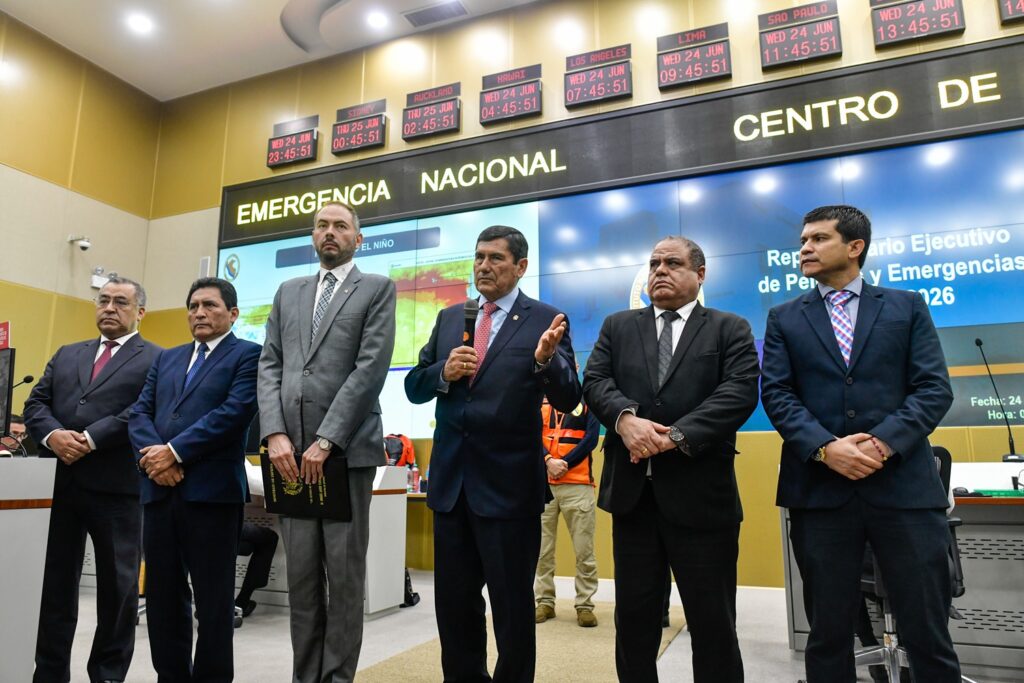
Translate
Following the Council of Ministers meeting at the COE: “The Government is coordinating comprehensive actions to address the El Niño phenomenon in Peru; the State ensures a rapid response to any emergency.”
Peruvian News Agency PRENSAPERU.PE https://www.prensaperu.pe Twitter: @prensaperupe The President of the Council of Ministers, Luis Arroyo Sánchez, highlighted the actions being implemented by the National Government to strengthen the State’s response capacity to the effects of the El Niño phenomenon. This strategy is based on three fundamental pillars: the timely allocation of resources, multisectoral coordination, and the execution of measures aimed at mitigating impacts on the population and the country’s critical infrastructure.
EL NIÑO PHENOMENON
It is a natural climatic event characterized by abnormal warming of surface waters in the equatorial Pacific Ocean. In Peru, it triggers heavy rainfall, flooding, landslides, and increased river flow, creating risks to life, health, housing, and economic activity.
DISASTER RISK MANAGEMENT
A set of comprehensive actions designed to identify, analyze, reduce, and control risks, as well as to prepare for and respond to emergencies, in order to protect the population and minimize losses.
CRITICAL INFRASTRUCTURE
The network of essential works and services required for the functioning of the country: roads, bridges, drinking water systems, power grids, health facilities, and schools.
CONTINGENCY FUNDS
Financial resources set aside specifically to address unforeseen situations or emergencies, without affecting the regular budget of other areas of the State.
Furthermore, after chairing a new session of the Council of Ministers at the National Emergency Operations Center (COEN) —the body responsible for monitoring risks and coordinating actions in the event of disasters— the Head of the Cabinet stated that the Executive’s absolute priority is to protect the safety and well-being of people and ensure a rapid, organized, and coordinated response to any emergency.
“We are working across all sectors on contingency plans for rainfall and related phenomena that will allow us to mitigate damage. Our goal is to act in a timely manner and reduce impacts on the population,” Arroyo Sánchez affirmed.
In this regard, he reported that the National Infrastructure Authority (ANIN) is continuing to advance in the preparation of technical studies and strategic projects. These initiatives seek not only to repair damage when it occurs but also to reduce the vulnerability of the most exposed areas and strengthen response capacity for future climatic events.
The Head of the Cabinet reaffirmed that the Transitional Government has allocated the necessary resources to the various competent institutions, ensuring they have the means to act in a coordinated and effective manner in the face of the El Niño phenomenon.
GUARANTEED FUNDING
For his part, the Minister of Economy and Finance, Rodolfo Acuña, confirmed that funding for emergency response is fully secured. He specified that the State has more than 2 billion US dollars in contingency funds, allocated specifically for prevention, mitigation, response, and recovery actions.
Likewise, the Head of the National Civil Defense Institute (INDECI), Luis Vásquez, explained that the multisectoral plan to address the impacts of the El Niño phenomenon includes clear goals and actions to be carried out before the climatic events occur. These measures include clearing riverbeds, marking risk zones, distributing aid kits, and training local teams —all aimed at reducing the population’s exposure and speeding up assistance should emergencies arise.
He also clarified that special budget allocations have been reserved to address potential impacts, allowing for the immediate activation of both preventive measures and response operations in any region of the country.
CONTEXTUAL INFORMATION
1.- Prevention is the central focus: The Government does not only act when an emergency occurs; it prioritizes the implementation of proactive measures to reduce risks and protect the population before damage takes place.
2.- Sufficient funding is available: The availability of more than 2 billion US dollars in contingency funds provides security and agility to mobilize resources without interruptions.
3.- Inter-institutional coordination is essential: Joint work between COEN, INDECI, ANIN, the Ministry of Economy, and other sectors enables a more organized and effective response across the entire national territory.
4.- Infrastructure is being strengthened for the future: Ongoing studies and projects aim to reduce the vulnerability of public works, preventing large-scale damage from occurring with every climatic event.
5.- Priority is given to life and well-being: All actions are oriented toward ensuring people’s safety, access to basic services, and the continuity of essential activities throughout the duration of the phenomenon.
Source: Peruvian News Agency PRENSAPERU.PE https://www.prensaperu.pe Twitter: @prensaperupe