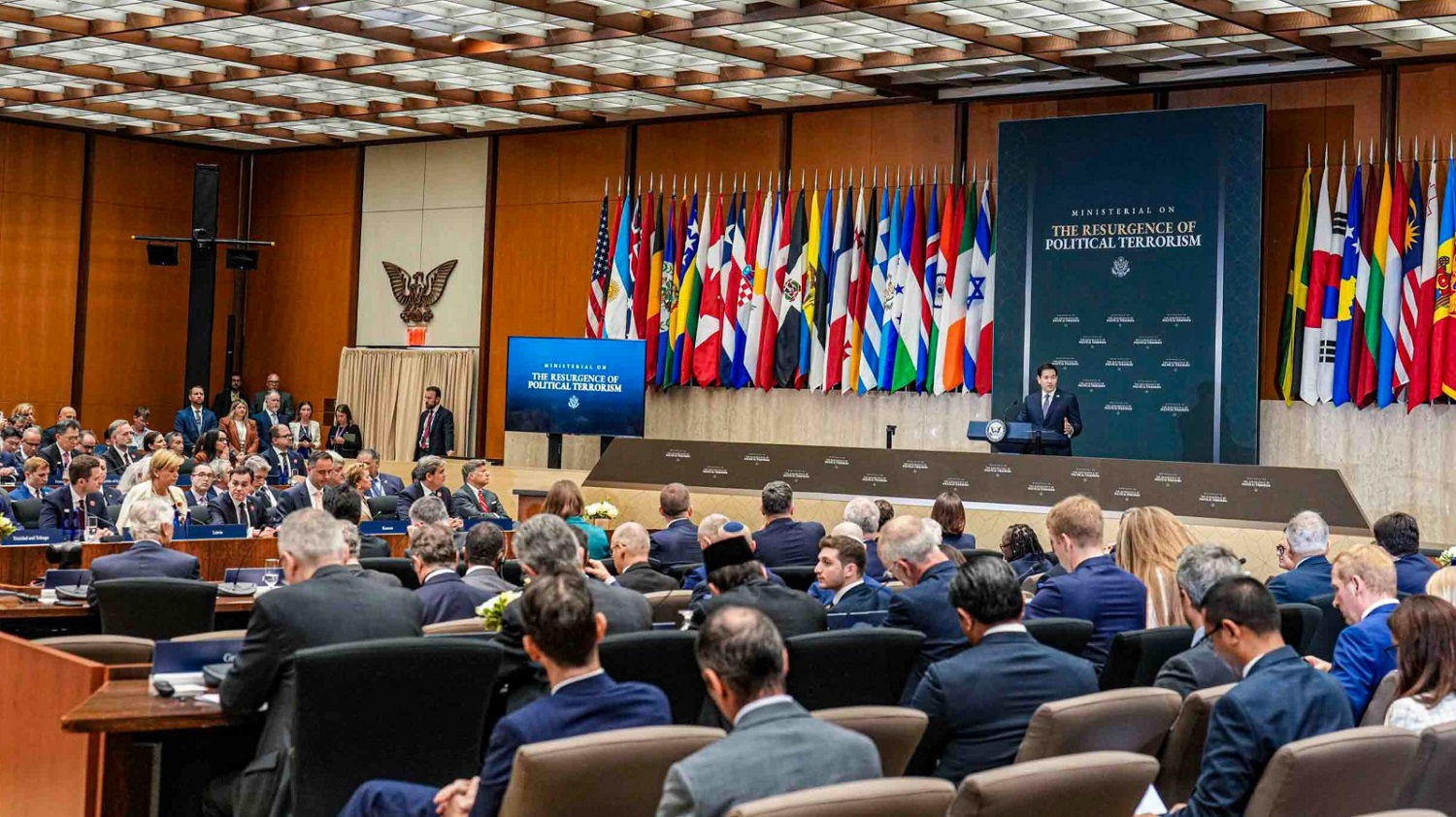
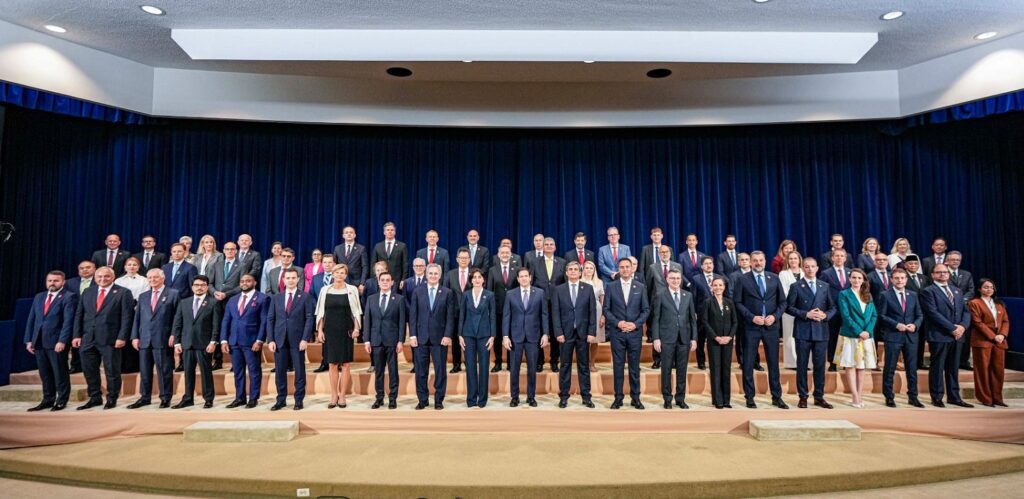
Agencia Peruana de Noticias PRENSAPERU.PE https://www.prensaperu.pe Twitter: @prensaperupe El canciller de la República, Carlos Pareja, lideró este jueves la participación peruana en la Reunión Ministerial sobre el Resurgimiento del Terrorismo Político, convocada por el Departamento de Estado de los Estados Unidos en el marco de su agenda oficial en Washington. La cita fue presidida por el secretario de Estado Marco Rubio y reunió a representantes de más de 60 países, convirtiéndose en un espacio clave para el análisis conjunto de una amenaza que ha cobrado nuevas dimensiones en el escenario mundial.
Durante el encuentro, las delegaciones intercambiaron experiencias, diagnósticos y propuestas para articular una respuesta coordinada y efectiva frente al avance de este fenómeno. Entre los acuerdos y lineamientos revisados destacan el intercambio fluido de información e inteligencia estratégica, la cooperación operativa entre fuerzas del orden, el fortalecimiento del control fronterizo, la interrupción de las cadenas de financiamiento que sostienen a redes terroristas y la protección de personal, instalaciones y servicios esenciales para el funcionamiento de los Estados.
El canciller Pareja reafirmó la condena absoluta e incondicional del Perú al terrorismo en cualquiera de sus manifestaciones y orígenes. Destacó la disposición nacional de seguir aportando a los esfuerzos hemisféricos y globales para neutralizar este flagelo, y advirtió sobre uno de los riesgos más graves en la región: la creciente articulación entre grupos terroristas, el narcotráfico y la delincuencia organizada transnacional, que multiplican su capacidad de daño y dificultan su persecución.
AVANCES EN LA AGENDA BILATERAL ESTRATÉGICA
Paralelamente, el titular de Relaciones Exteriores sostuvo una reunión de trabajo con la secretaria ejecutiva del Departamento de Estado, embajadora Lisa Kenna. En el encuentro se valoró muy positivamente el nivel actual de la relación bilateral y se revisó la amplia agenda que conforma la Asociación Estratégica entre ambas naciones, comprometiéndose a continuar profundizando estos lazos con la próxima administración que asuma funciones en el Perú.
En el marco de un almuerzo de trabajo especial, Pareja analizó con el subsecretario de Guerra para Políticas de EE. UU., Elbridge Colby, y el secretario adjunto de Guerra para Asuntos del Hemisferio Occidental, Joseph Humire, los resultados altamente positivos de la Conferencia de Ministros de Defensa de las Américas celebrada recientemente en la ciudad del Cusco, así como otros temas prioritarios de la cooperación en seguridad y defensa. El canciller recordó que esta relación es una prioridad para el Perú, posición que ha sido correspondida por EE. UU. al reconocer al país como Aliado Principal no OTAN, una condición especial que facilita el acceso a tecnología, capacitación y cooperación exclusiva.
BICENTENARIO, RECONOCIMENTOS Y CONDECORACIÓN
La agenda concluyó con una ceremonia especial en la residencia de la Embajada del Perú, con motivo del bicentenario del establecimiento de relaciones diplomáticas entre ambos países, que contó con la presencia de altas autoridades del gobierno y del Congreso estadounidense.
En este marco se entregó un reconocimiento especial a las empresas Credicorp, Southern Copper Corporation, Compañía de Minas Buenaventura, Fortuna Mining Corp., Cementos Pacasmayo, Intercorp Financial Services y Auna, todas ellas con presencia en la Bolsa de Valores de Nueva York. La distinción resalta su decisiva contribución al desarrollo económico nacional, así como su labor para proyectar al Perú como un actor competitivo y confiable en los mercados internacionales.
Finalmente, el canciller Pareja impuso la Orden El Sol del Perú en grado de Comendador a la filántropa estadounidense Adrienne Arsht, vicepresidenta ejecutiva del Atlantic Council. El reconocimiento destaca su invaluable labor desde el Centro Latinoamericano de dicha institución, que ha sido fundamental para impulsar el diálogo estratégico y mantener al Perú como un socio destacado en la agenda política, económica y comercial de los Estados Unidos.
DATOS CONCEPTUALES
Terrorismo político: Uso sistemático de la violencia, la intimidación o el miedo por parte de grupos o individuos para alterar el orden institucional, imponer ideologías o modificar decisiones de los poderes del Estado.
Aliado Principal no OTAN: Estatus especial que otorga Estados Unidos a países con los que comparte valores y alineamiento estratégico, facilitando cooperación en seguridad, defensa y acceso a recursos que no se brindan a terceros.
Asociación Estratégica: Nivel avanzado de vínculo bilateral, basado en confianza mutua y trabajo conjunto en temas de interés común que van más allá del comercio, como seguridad, tecnología y gobernanza global.
Delincuencia organizada transnacional: Grupos estructurados que operan cruzando fronteras nacionales para cometer delitos ilícitos, aprovechando vacíos legales y debilidades institucionales para ampliar su poder.
DATOS CONTEXTUALES
1.- El Perú reafirma su liderazgo regional y compromiso global en la lucha contra el terrorismo, advirtiendo sobre los riesgos de su alianza con el narcotráfico y la delincuencia organizada.
2.- La condición de Aliado Principal no OTAN y la Asociación Estratégica consolidan un vínculo maduro que permitirá seguir avanzando en seguridad y desarrollo con la nueva administración peruana.
3.- El bicentenario de relaciones diplomáticas marca también el reconocimiento al sector empresarial peruano como motor del desarrollo y la proyección internacional del país.
4.- El diálogo público-privado y la cooperación con actores influyentes del exterior son claves para mantener la presencia del Perú en las agendas estratégicas mundiales.
Fuente: Agencia Peruana de Noticias PRENSAPERU.PE https://www.prensaperu.pe Twitter: @prensaperupe
Translate
Peru Leads Global Efforts with the United States, Strengthening the Strategic Cooperation Alliance on ‘Terrorism and Border Security’ as Central Pillars of Peru’s Agenda in Washington.
Peruvian News Agency PRENSAPERU.PE https://www.prensaperu.pe Twitter: @prensaperupe The Minister of Foreign Affairs of the Republic, Carlos Pareja, led Peru’s participation this Thursday in the Ministerial Meeting on the Resurgence of Political Terrorism, convened by the United States Department of State as part of his official agenda in Washington. The meeting was chaired by Secretary of State Marco Rubio and brought together representatives from more than 60 countries, becoming a key space for joint analysis of a threat that has taken on new dimensions in the global scenario.
During the meeting, delegations exchanged experiences, diagnoses and proposals to forge a coordinated and effective response to the advance of this phenomenon. Among the agreements and guidelines reviewed, highlights include seamless sharing of information and strategic intelligence, operational cooperation between law enforcement agencies, strengthening of border controls, disruption of financing chains that sustain terrorist networks, and protection of personnel, facilities and essential services for the functioning of States.
Minister Pareja reaffirmed Peru’s absolute and unconditional condemnation of terrorism in all its forms and origins. He highlighted the country’s willingness to continue contributing to hemispheric and global efforts to neutralize this scourge, and warned of one of the most serious risks in the region: the growing link between terrorist groups, drug trafficking and transnational organized crime, which multiplies their capacity for harm and makes their prosecution more difficult.
PROGRESS IN THE STRATEGIC BILATERAL AGENDA
In parallel, the head of Foreign Affairs held a working meeting with the Executive Secretary of the Department of State, Ambassador Lisa Kenna. During the meeting, the current level of the bilateral relationship was assessed very positively, and the broad agenda that makes up the Strategic Association between both nations was reviewed, committing to continue deepening these ties with the incoming administration that takes office in Peru.
At a special working lunch, Pareja discussed with U.S. Under Secretary of Defense for Policy Elbridge Colby, and Assistant Secretary of Defense for Western Hemisphere Affairs Joseph Humire, the highly positive results of the Conference of Defense Ministers of the Americas recently held in the city of Cusco, as well as other priority issues of security and defense cooperation. The Minister recalled that this relationship is a priority for Peru, a position that has been reciprocated by the United States in recognizing the country as a Major Non‑NATO Ally, a special status that facilitates access to technology, training and exclusive cooperation.
BICENTENNIAL, RECOGNITIONS AND DECORATION
The agenda concluded with a special ceremony at the residence of the Embassy of Peru, on the occasion of the bicentennial of the establishment of diplomatic relations between both countries, which was attended by senior authorities from the U.S. Government and Congress.
In this context, a special recognition was presented to the companies Credicorp, Southern Copper Corporation, Compañía de Minas Buenaventura, Fortuna Mining Corp., Cementos Pacasmayo, Intercorp Financial Services and Auna, all listed on the New York Stock Exchange. The distinction highlights their decisive contribution to national economic development, as well as their work in projecting Peru as a competitive and reliable player in international markets.
Finally, Minister Pareja presented the Order of the Sun of Peru in the rank of Commander to American philanthropist Adrienne Arsht, Executive Vice President of the Atlantic Council. The recognition highlights her invaluable work through the institution’s Latin American Center, which has been fundamental in promoting strategic dialogue and keeping Peru firmly positioned on the political, economic and trade agenda of the United States.
CONCEPTUAL DATA
Political terrorism: The systematic use of violence, intimidation or fear by groups or individuals to alter the institutional order, impose ideologies or modify decisions of State powers.
Major Non‑NATO Ally: Special status granted by the United States to countries with which it shares values and strategic alignment, facilitating cooperation in security, defense and access to resources not available to third parties.
Strategic Association: An advanced level of bilateral ties, based on mutual trust and joint work on issues of common interest that go beyond trade, such as security, technology and global governance.
Transnational organized crime: Structured groups operating across national borders to commit illegal acts, taking advantage of legal loopholes and institutional weaknesses to expand their power.
CONTEXTUAL DATA
1.- Peru reaffirms its regional leadership and global commitment in the fight against terrorism, warning of the risks of its alliance with drug trafficking and organized crime.
2.- Major Non‑NATO Ally status and the Strategic Association consolidate a mature bond that will allow further progress in security and development with the incoming Peruvian administration.
3.- The bicentennial of diplomatic relations also marks the recognition of the Peruvian business sector as an engine of development and the country’s international projection.
4.- Public‑private dialogue and cooperation with influential external actors are key to maintaining Peru’s presence on global strategic agendas.
Source: Peruvian News Agency PRENSAPERU.PE https://www.prensaperu.pe Twitter: @prensaperupe