
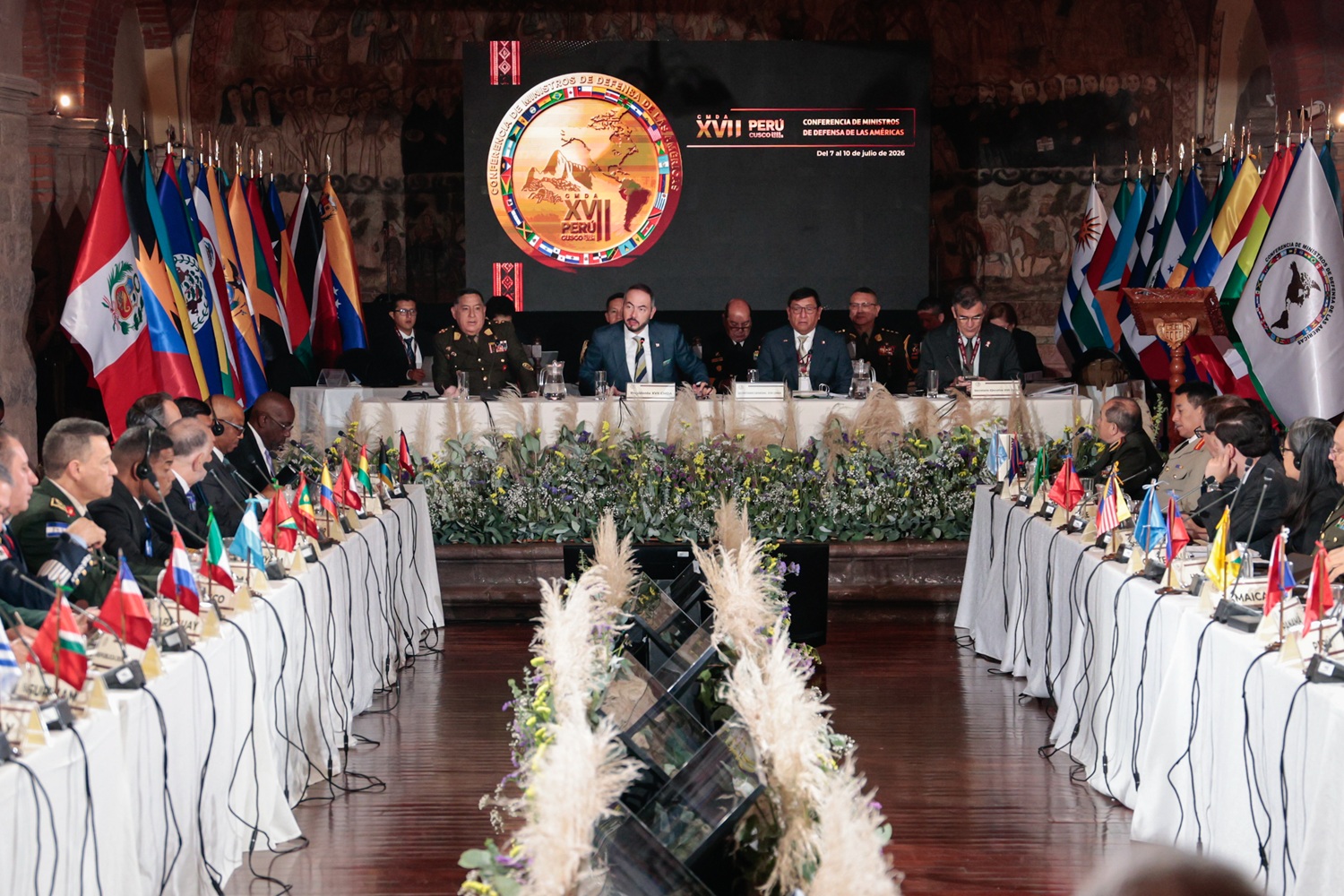
Agencia Peruana de Noticias PRENSAPERU.PE https://www.prensaperu.peTwitter: @prensaperupe Al concluir la XVII Conferencia de Ministros de Defensa de las Américas (CMDA), celebrada en la ciudad histórica del Cusco, ministros de Defensa y delegaciones oficiales de 33 naciones del continente suscribieron la Declaración de Cusco, documento que recoge de manera integral los acuerdos, entendimientos y compromisos alcanzados tras jornadas de diálogo estratégico, análisis conjunto y trabajo técnico.
Durante la ceremonia de clausura, el ministro de Defensa del Perú y presidente pro tempore de esta edición, Amadeo Javier Flores Carcagno, destacó que la conferencia permitió sostener “un diálogo franco, respetuoso y orientado a resultados”. Reafirmó que la defensa hemisférica no depende solo de capacidades militares o recursos, sino también de la confianza mutua, la cooperación leal y una visión compartida frente a los desafíos que afectan a toda la región.
“El intercambio desarrollado en esta conferencia confirma que la cooperación en defensa es más efectiva cuando se sustenta en la transparencia, la buena fe y el reconocimiento de intereses comunes. Ese es el camino que debemos preservar, y los resultados quedan plasmados en los acuerdos adoptados”, señaló el titular del sector.
Asimismo, expresó el honor del Perú por haber sido sede de este espacio continental y agradeció el compromiso de todas las delegaciones: “Hablamos diferentes idiomas, tenemos realidades distintas, pero enfrentamos retos comunes. Al trabajar juntos podemos fortalecer y unir a un hemisferio más seguro, en paz y en democracia”.
DATOS CONCEPTUALES
Conferencia de Ministros de Defensa de las Américas (CMDA): Es el principal espacio de diálogo político estratégico en materia de defensa en el continente americano. Se reúne periódicamente para analizar amenazas comunes, definir lineamientos de cooperación y fortalecer vínculos entre las instituciones de defensa de los países miembros, respetando siempre la soberanía y autonomía de cada nación.
Presidencia Pro Tempore: Es la responsabilidad temporal que asume un país para organizar, coordinar y liderar las actividades de la conferencia durante un período determinado. Al finalizar su mandato, transfiere la conducción al siguiente Estado elegido.
Amenazas transnacionales: Son peligros que no respetan fronteras nacionales —como la delincuencia organizada, el terrorismo o las economías ilícitas— y que por su naturaleza requieren respuestas conjuntas y coordinadas entre varios países.
Infraestructuras críticas: Son instalaciones, sistemas y redes esenciales cuyo funcionamiento ininterrumpido es indispensable para la seguridad, la economía y la vida cotidiana de una nación: incluyen redes energéticas, de salud, comunicaciones, transporte y servicios financieros.
Interoperabilidad: Es la capacidad de las fuerzas armadas y organismos de seguridad de distintos países de trabajar de manera coordinada, compartir información y actuar en conjunto en operaciones de ayuda humanitaria, seguridad o respuesta a emergencias.
COMPROMISOS DE LA DECLARACIÓN DE CUSCO
El documento suscrito reafirma en primer lugar el compromiso irrenunciable de todos los Estados participantes con los principios de la Carta de las Naciones Unidas, la Carta de la Organización de los Estados Americanos, la Carta Democrática Interamericana, así como con el Derecho Internacional Humanitario y el Derecho Internacional de los Derechos Humanos, en plena concordancia con las normas internas de cada país.
Entre los acuerdos centrales destacan:
1.- Fortalecer la cooperación hemisférica para enfrentar desafíos comunes como la delincuencia organizada transnacional, el terrorismo, las economías ilícitas y otras amenazas emergentes.
2.- Promover el intercambio seguro de información, el fortalecimiento de capacidades institucionales, las operaciones coordinadas y la seguridad fronteriza, siempre respetando la soberanía, integridad territorial y autonomía de cada Estado.
3.- Proteger las infraestructuras críticas como elemento esencial para la soberanía, la defensa nacional y el bienestar de las poblaciones.
4.- Avanzar en ciberdefensa y seguridad del ciberespacio, mediante el intercambio de buenas prácticas, medidas de confianza y formación para hacer frente a ataques digitales y amenazas tecnológicas.
5.- Profundizar la cooperación en asistencia humanitaria y respuesta ante desastres naturales, mejorando la preparación y la coordinación entre las fuerzas de defensa del continente.
En este último punto, se reconoce formalmente el valor de ejercicios conjuntos como MECODEX 2025 y 2026, así como el primer ejercicio regional de ciberdefensa, como herramientas prácticas para consolidar la confianza mutua y la capacidad de actuar en conjunto.
TRANSFERENCIA DE LA PRESIDENCIA
Como parte del cierre oficial, se hizo efectiva la transferencia de la Presidencia Pro Tempore de la CMDA a los Estados Unidos de América, representado en la ceremonia por el subsecretario de Guerra para Política, Elbridge A. Colby. Este destacó que la nueva etapa que comienza tendrá como objetivo principal transformar los compromisos acordados en Cusco en acciones concretas, proyectos y resultados tangibles para la seguridad de todo el hemisferio.
Con la adopción de la Declaración de Cusco, los 33 países reafirmaron su voluntad de trabajar de manera solidaria, respetuosa y sostenida en favor de la paz, la seguridad, la democracia y el desarrollo sostenible en las Américas, consolidando a la CMDA como el espacio referente en defensa del continente.
CONCLUSIONES
1.- La Declaración de Cusco consolida una visión regional compartida, la defensa en las Américas se construye sobre el respeto al derecho internacional, la democracia y la cooperación, y no sobre acciones unilaterales.
2.- Las amenazas que afectan al continente —desde el crimen organizado hasta los riesgos digitales— exigen respuestas conjuntas, confirmando que ningún país puede garantizar su seguridad de manera aislada.
3.- Se amplía el alcance de la cooperación en defensa hacia temas clave como la protección de infraestructuras críticas y la ciberdefensa, adaptando el trabajo regional a los riesgos del siglo XXI.
4.- El Perú deja una presidencia pro tempore que fortaleció el diálogo constructivo, dejando bases sólidas para que la siguiente etapa convierta los acuerdos en proyectos concretos.
5.- La CMDA reafirma su validez como espacio legítimo y necesario para articular políticas de defensa, alineadas siempre con los valores democráticos y el bienestar de las poblaciones.
Fuente: Agencia Peruana de Noticias PRENSAPERU.PE https://www.prensaperu.pe Twitter: @prensaperupe
Translate
Cusco Sets the Defense Roadmap for the Americas! “33 Countries Sign the ‘Cusco Declaration’ to Defend the Continent: Beyond Military Matters, United in Protecting Critical Infrastructure and Cyberspace.”
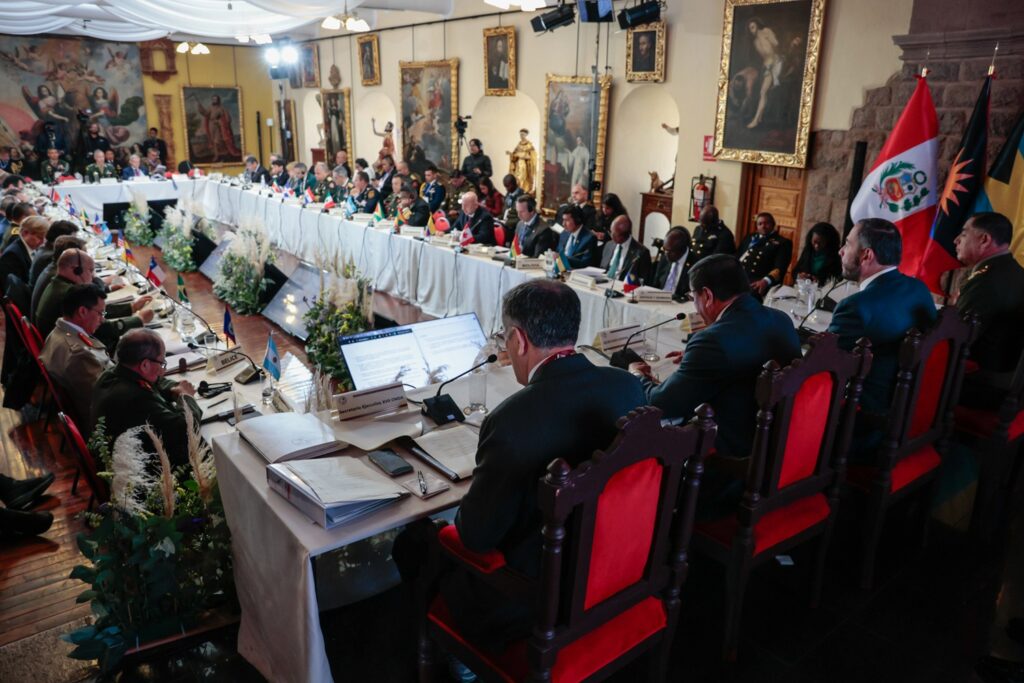
Peruvian News Agency PRENSAPERU.PE https://www.prensaperu.pe Twitter: @prensaperupe Upon conclusion of the XVII Conference of Ministers of Defense of the Americas (CMDA), held in the historic city of Cusco, Defense Ministers and official delegations from 33 nations across the hemisphere signed the Cusco Declaration, a document that comprehensively sets out the agreements, understandings and commitments reached after days of strategic dialogue, joint analysis and technical work.
During the closing ceremony, the Minister of Defense of Peru and Pro Tempore President of this edition, Amadeo Javier Flores Carcagno, highlighted that the conference enabled “frank, respectful and results-oriented dialogue”. He reaffirmed that hemispheric defense depends not only on military capabilities or resources, but also on mutual trust, loyal cooperation and a shared vision regarding the challenges affecting the entire region.
“The exchanges held at this conference confirm that defense cooperation is most effective when grounded in transparency, good faith and recognition of common interests. This is the path we must preserve, and the results are reflected in the agreements adopted,” the minister stated.
He also expressed Peru’s honor in having hosted this continental forum and thanked all delegations for their commitment: “We speak different languages and have different realities, but we face shared challenges. By working together, we can strengthen and unite a more secure, peaceful and democratic hemisphere.”
CONCEPTUAL DATA
Conference of Ministers of Defense of the Americas (CMDA): The main forum for strategic political dialogue on defense matters in the Americas. It meets periodically to analyze common threats, define cooperation guidelines and strengthen ties between the defense institutions of member countries, while always respecting the sovereignty and autonomy of each nation.
Pro Tempore Presidency: The temporary responsibility assumed by a country to organize, coordinate and lead the conference’s activities for a set period. At the end of its term, it transfers leadership to the next elected State.
Transnational threats: Hazards that do not respect national borders —such as organized crime, terrorism or illicit economies— and that by their nature require joint and coordinated responses from multiple countries.
Critical infrastructure: Essential facilities, systems and networks whose uninterrupted operation is indispensable for a nation’s security, economy and daily life: they include energy, health, communications, transport and financial service networks.
Interoperability: The ability of armed forces and security agencies from different countries to work in a coordinated manner, share information and act together in humanitarian assistance, security or emergency response operations.
COMMITMENTS OF THE CUSCO DECLARATION
The signed document first reaffirms the inalienable commitment of all participating States to the principles of the Charter of the United Nations, the Charter of the Organization of American States, the Inter-American Democratic Charter, as well as to International Humanitarian Law and International Human Rights Law, in full accordance with each country’s domestic legal order.
Key agreements include:
1.- Strengthening hemispheric cooperation to address common challenges such as transnational organized crime, terrorism, illicit economies and other emerging threats.
2.- Promoting the secure exchange of information, strengthening institutional capacities, conducting coordinated operations and enhancing border security, while always respecting the sovereignty, territorial integrity and autonomy of each State.
3.- Protecting critical infrastructure as an essential element for sovereignty, national defense and the well-being of populations.
4.- Advancing cyber defense and cybersecurity, through the exchange of best practices, confidence-building measures and training to counter digital attacks and technological threats.
5.- Deepening cooperation in humanitarian assistance and natural disaster response, improving preparedness and coordination among defense forces across the hemisphere.
In this regard, the document formally recognizes the value of joint exercises such as MECODEX 2025 and 2026, as well as the first regional cyber defense exercise, as practical tools to build mutual trust and the capacity to act together.
TRANSFER OF THE PRESIDENCY
As part of the official closing, the Pro Tempore Presidency of the CMDA was formally transferred to the United States of America, represented at the ceremony by Under Secretary of the Army for Policy Elbridge A. Colby. He emphasized that the new phase ahead will focus primarily on translating the commitments agreed in Cusco into concrete actions, projects and tangible results for the security of the entire hemisphere.
With the adoption of the Cusco Declaration, the 33 countries reaffirmed their resolve to continue working in solidarity, respect and commitment to peace, security, democracy and sustainable development in the Americas, consolidating the CMDA as the leading forum for defense in the hemisphere.
CONCLUSIONS
1.- The Cusco Declaration consolidates a shared regional vision, defense in the Americas is built on respect for international law, democracy and cooperation, not on unilateral action.
2.- Threats affecting the hemisphere —from organized crime to digital risks— demand joint responses, confirming that no country can guarantee its security in isolation.
3.- Defense cooperation is being expanded to include key areas such as critical infrastructure protection and cyber defense, adapting regional efforts to twenty-first century risks.
4.- Peru concludes its Pro Tempore Presidency having strengthened constructive dialogue, laying solid foundations for the next phase to translate agreements into concrete projects.
5.- The CMDA reaffirms its validity as a legitimate and necessary forum for shaping defense policies, always aligned with democratic values and the well-being of populations.
Source: Peruvian News Agency PRENSAPERU.PE https://www.prensaperu.pe Twitter: @prensaperupe