
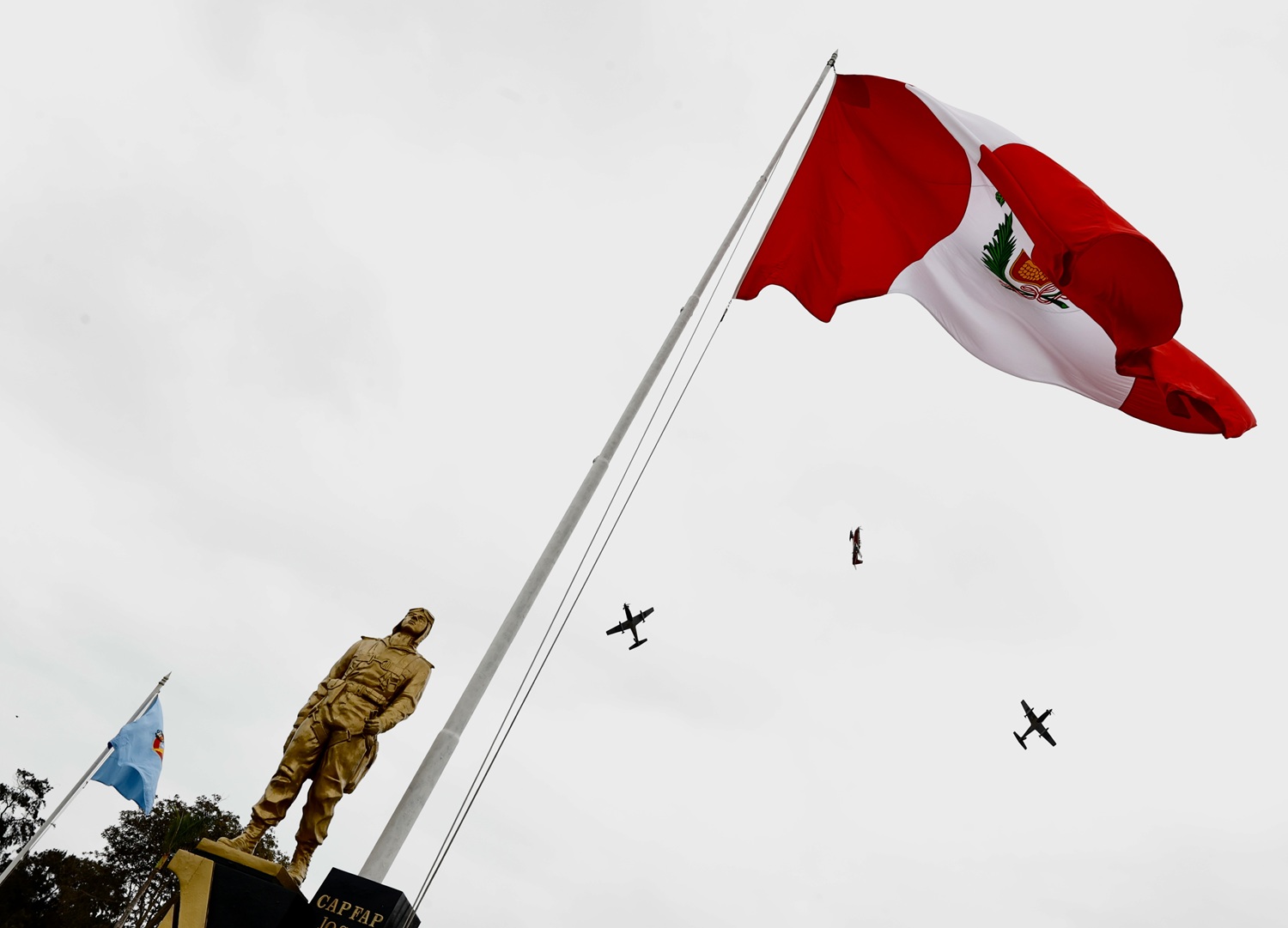
Agencia Peruana de Noticias PRENSAPERU.PE https://www.prensaperu.pe Twitter: @prensaperupe En la Base Aérea Las Palmas, ubicada en el distrito de Santiago de Surco, se llevó a cabo en la víspera la solemne ceremonia conmemorativa por el 85.º aniversario de la inmolación del Gran General del Aire del Perú, Capitán FAP José Abelardo Quiñones Gonzales. El evento sirvió para que la Fuerza Aérea del Perú (FAP) reafirmara su compromiso irrenunciable de trabajar con firmeza en la defensa de la soberanía nacional, la seguridad integral del país y el bienestar de todos los peruanos.
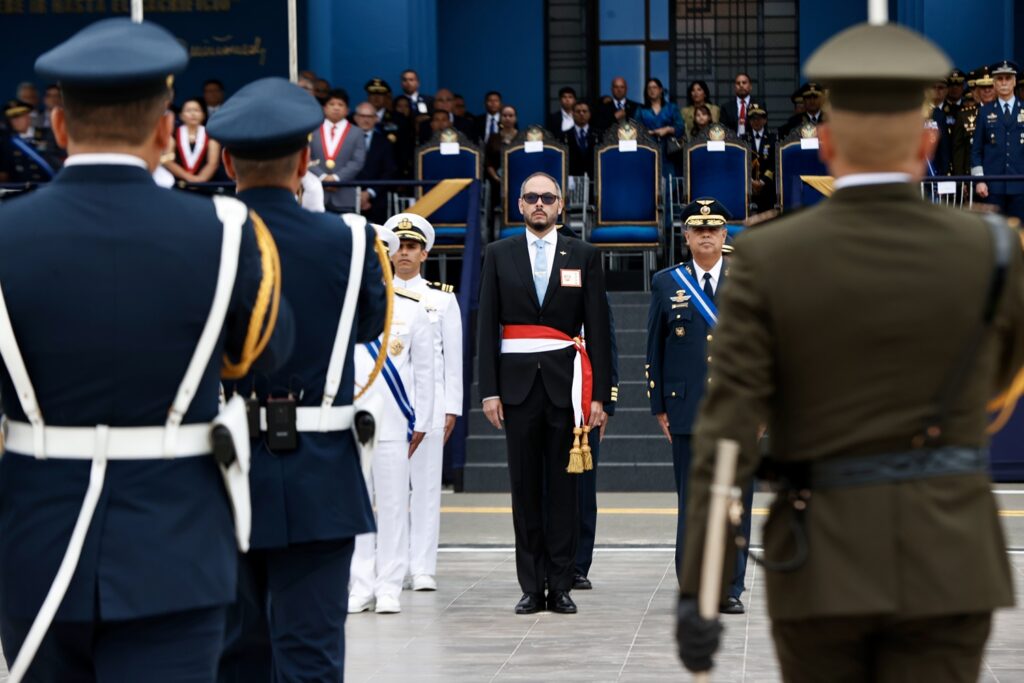
El acto rindió homenaje no solo a la memoria inmortal del héroe máximo de la aviación peruana, sino también a la de todos los hombres y mujeres que, a lo largo de la historia de la institución, han ofrendado su vida en estricto cumplimiento del deber. La ceremonia fue encabezada por el presidente del Congreso de la República, Fernando Rospigliosi Capurro, quien contó con la presencia destacada del ministro de Defensa, Amadeo Flores Carcagno, y del comandante general de la Fuerza Aérea, General del Aire Mario Contreras León Carty, entre otras altas autoridades del Estado.
Durante su intervención, el titular del Parlamento destacó el rol fundamental y solidario de la institución, subrayando su permanente compromiso con el Perú, especialmente en su labor de apoyo a las zonas más alejadas y olvidadas del territorio nacional, donde contribuye decisivamente al bienestar de la población.
Por su parte, el comandante general de la Fuerza Aérea ofreció una reflexión sobre la evolución de la misión institucional, señalando que la seguridad en la actualidad no se reduce únicamente a la defensa física del territorio, sino que abarca la capacidad de garantizar que el Perú pueda decidir libremente su propio destino. En ese sentido, reveló que la FAP impulsa decididamente un proceso de transformación orientado a fortalecer sus capacidades esenciales y a consolidar un modelo aeroespacial moderno e integrado, dotado de las herramientas necesarias para responder con eficacia a los desafíos presentes y futuros.
La jornada protocolar contó con la asistencia de la presidenta del Poder Judicial, Janet Tello Flores; el presidente del Consejo de Ministros, Luis Enrique Arroyo Sánchez; el defensor del Pueblo, Josué Manuel Gutiérrez Cóndor; la jefa de la RENIEC, Carmen Milagros Velarde Koechlin; el comandante general de la Marina de Guerra del Perú, Almirante Javier Bravo de Rueda Delgado, y otras distinguidas personalidades del ámbito castrense y civil.
Como broche de oro a la jornada, se realizó un imponente desfile terrestre y aéreo que expuso la totalidad de las capacidades logísticas y humanas de la institución. La ciudadanía pudo apreciar en acción a los helicópteros MI-17, las aeronaves de instrucción Enstrom, los vehículos de apoyo conocidos como las “Nutrias de Acero”, y los modernos Boeing 787, entre otros medios, demostrando el alto nivel de preparación y equipamiento con el que cuenta la aviación militar peruana.
DATOS CONCEPTUALES
Inmolación: Se refiere al sacrificio supremo en honor a un ideal o patria. En el caso peruano, representa el acto heroico del Capitán José Abelardo Quiñones, quien al negarse a abandonar su nave durante el conflicto de 1941 y mantener su curso de combate ante el fuego enemigo, ofrendó su vida convirtiéndose en el símbolo máximo de valentía y lealtad para las nuevas generaciones de aviadores.
Soberanía nacional: Es la facultad suprema e independiente que tiene el Estado para gobernarse por sí mismo, sin intervención externa, ejerciendo control absoluto sobre su territorio, su espacio aéreo, sus recursos y su población.
Modelo aeroespacial: Es la visión estratégica moderna que integra el dominio del espacio aéreo con actividades relacionadas al espacio ultraterrestre, permitiendo ampliar las fronteras de la defensa, la vigilancia, la ciencia y la ayuda humanitaria, dotando a la institución de autonomía tecnológica y operativa.
Base Aérea: Instalación militar acondicionada para el alojamiento, mantenimiento y operación de aeronaves y personal aéreo, constituyendo el centro neurálgico desde donde se planifican y ejecutan las misiones de defensa y apoyo a la comunidad.
DATOS
1.- Legado como brújula institucional: La conmemoración de los 85 años de la inmolación del Capitán Quiñones no es solo un tributo histórico, sino el cimiento ético que sostiene los valores de honor, disciplina y sacrificio de toda la Fuerza Aérea del Perú en el presente.
2.- Reconceptualización de la seguridad: La institución ha dejado claro que su labor excede la vigilancia de fronteras; hoy se enfoca en garantizar la autonomía estratégica del país mediante un modelo aeroespacial que asegure la independencia para decidir el rumbo nacional.
3.- Reconocimiento interinstitucional: La presencia transversal de los tres poderes del Estado y organismos autónomos valida la importancia de la FAP como pilar fundamental de la estabilidad y el desarrollo social, destacando su labor insustituible en las zonas más remotas.
4.- Modernización visible y efectiva: El desfile y exhibición de aeronaves y equipos de última generación confirman que el proceso de transformación avanza, dotando al país de una fuerza aérea capaz, confiable y preparada para cualquier contingencia o misión humanitaria.
Fuente: Agencia Peruana de Noticias PRENSAPERU.PE https://www.prensaperu.pe Twitter: @prensaperupe
Translate
“85 Years of Heroic Legacy: On its anniversary, the Peruvian Air Force pays tribute to Quiñones and unveils its new aerospace model, redefining national security and the value of Peruvian aviation.”
Peruvian News Agency PRENSAPERU.PE https://www.prensaperu.pe Twitter: @prensaperupe On the eve of the anniversary, the solemn commemorative ceremony for the 85th anniversary of the sacrifice of the Grand General of the Air of Peru, FAP Captain José Abelardo Quiñones Gonzales, was held at Las Palmas Air Base, located in the district of Santiago de Surco. This event served as an opportunity for the Air Force of Peru (FAP) to reaffirm its unwavering commitment to work firmly in defense of national sovereignty, the comprehensive security of the country, and the well-being of all Peruvians.
The ceremony paid tribute not only to the immortal memory of the maximum hero of Peruvian aviation but also to all the men and women who, throughout the institution’s history, have laid down their lives in strict fulfillment of duty. The ceremony was presided over by the President of the Congress of the Republic, Fernando Rospigliosi Capurro, who was accompanied by the prominent presence of the Minister of Defense, Amadeo Flores Carcagno, and the General Commander of the Air Force, Air General Mario Contreras León Carty, among other high state authorities.
During his address, the head of Parliament highlighted the fundamental and supportive role of the institution, emphasizing its permanent commitment to Peru, especially in its support work in the most remote and neglected areas of the national territory, where it makes a decisive contribution to the well-being of the population.
For his part, the General Commander of the Air Force offered a reflection on the evolution of the institutional mission, noting that security today is not limited solely to the physical defense of the territory but encompasses the capacity to guarantee that Peru can freely decide its own destiny. In this regard, he revealed that the FAP is decisively driving a transformation process aimed at strengthening its essential capabilities and consolidating a modern and integrated aerospace model, equipped with the necessary tools to respond effectively to present and future challenges.
The protocol day was attended by the President of the Judiciary, Janet Tello Flores; the President of the Council of Ministers, Luis Enrique Arroyo Sánchez; the Ombudsman, Josué Manuel Gutiérrez Cóndor; the Head of RENIEC, Carmen Milagros Velarde Koechlin; the General Commander of the Peruvian Navy, Admiral Javier Bravo de Rueda Delgado, and other distinguished civilian and military figures.
As the culmination of the day, an impressive ground and air parade was held, showcasing the full logistical and human capabilities of the institution. The public was able to see the MI-17 helicopters, Enstrom training aircraft, support vehicles known as “Steel Beavers”, and modern Boeing 787s in action, among other assets, demonstrating the high level of preparedness and equipment of the Peruvian military aviation.
CONCEPTUAL DATA
Sacrifice: Refers to the supreme sacrifice in honor of an ideal or the homeland. In the Peruvian context, it represents the heroic act of Captain José Abelardo Quiñones, who, by refusing to abandon his aircraft during the 1941 conflict and maintaining his combat course amidst enemy fire, laid down his life, becoming the ultimate symbol of courage and loyalty for new generations of aviators.
National Sovereignty: The supreme and independent authority that the State possesses to govern itself, without external interference, exercising absolute control over its territory, airspace, resources, and population.
Aerospace Model: A modern strategic vision that integrates the domain of airspace with activities related to outer space, allowing for the expansion of the frontiers of defense, surveillance, science, and humanitarian aid, endowing the institution with technological and operational autonomy.
Air Base: A military facility adapted for the lodging, maintenance, and operation of aircraft and air personnel, constituting the nerve center from which defense and community support missions are planned and executed.
DATA
1.- Legacy as an Institutional Compass: The commemoration of the 85th anniversary of Captain Quiñones’ sacrifice is not merely a historical tribute but the ethical foundation that sustains the values of honor, discipline, and sacrifice of the entire Air Force of Peru in the present.
2.- Reconceptualization of Security: The institution has made it clear that its work goes beyond border surveillance; today, it focuses on guaranteeing the country’s strategic autonomy through an aerospace model that ensures independence in defining the national course.
3.- Inter-Institutional Recognition: The cross-cutting presence of the three branches of the State and autonomous bodies validates the importance of the FAP as a fundamental pillar of stability and social development, highlighting its irreplaceable work in the most remote areas.
4.- Visible and Effective Modernization: The parade and exhibition of state-of-the-art aircraft and equipment confirm that the transformation process is advancing, providing the country with a capable, reliable air force prepared for any contingency or humanitarian mission.
Source: Peruvian News Agency PRENSAPERU.PE https://www.prensaperu.pe Twitter: @prensaperupe