
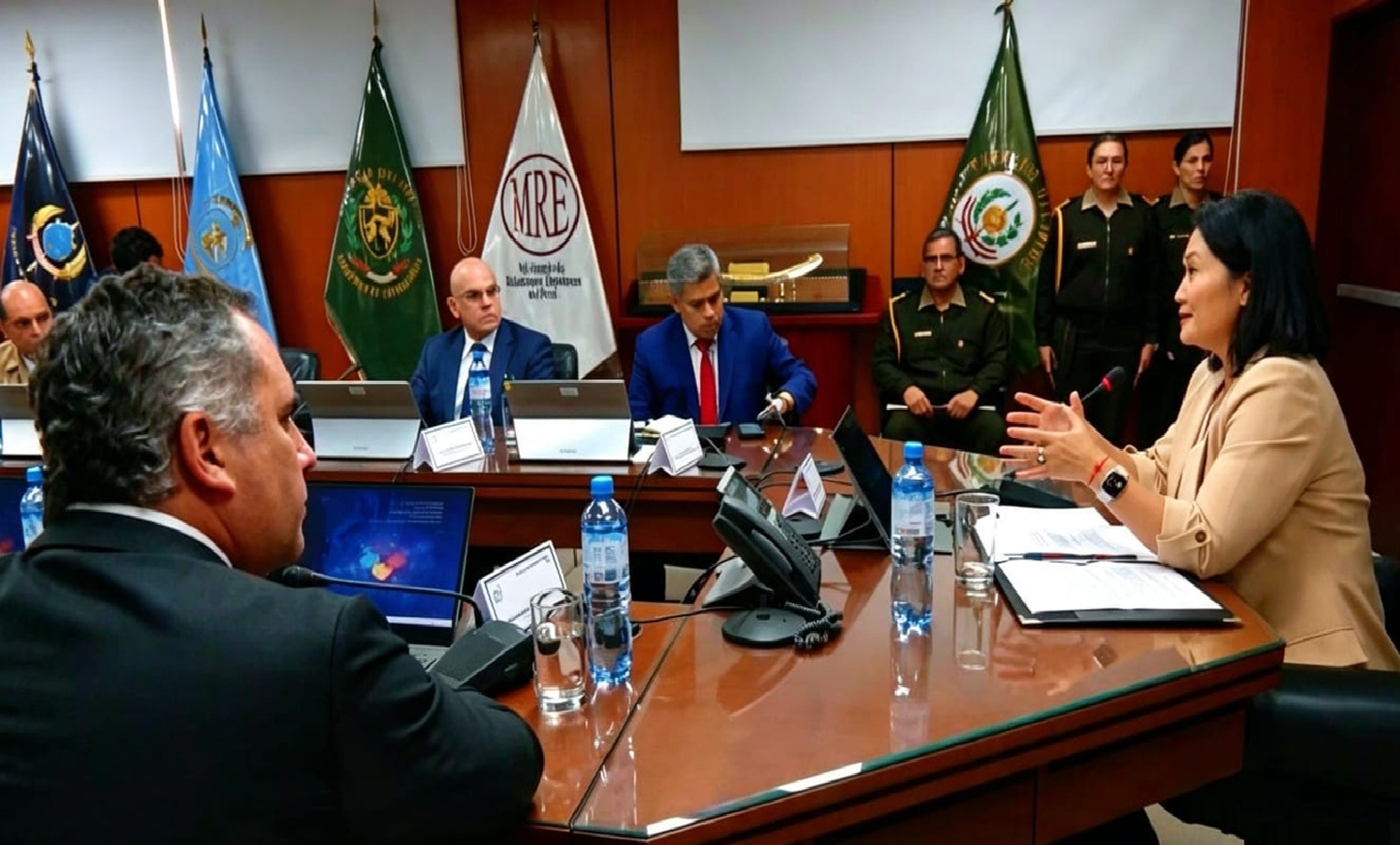
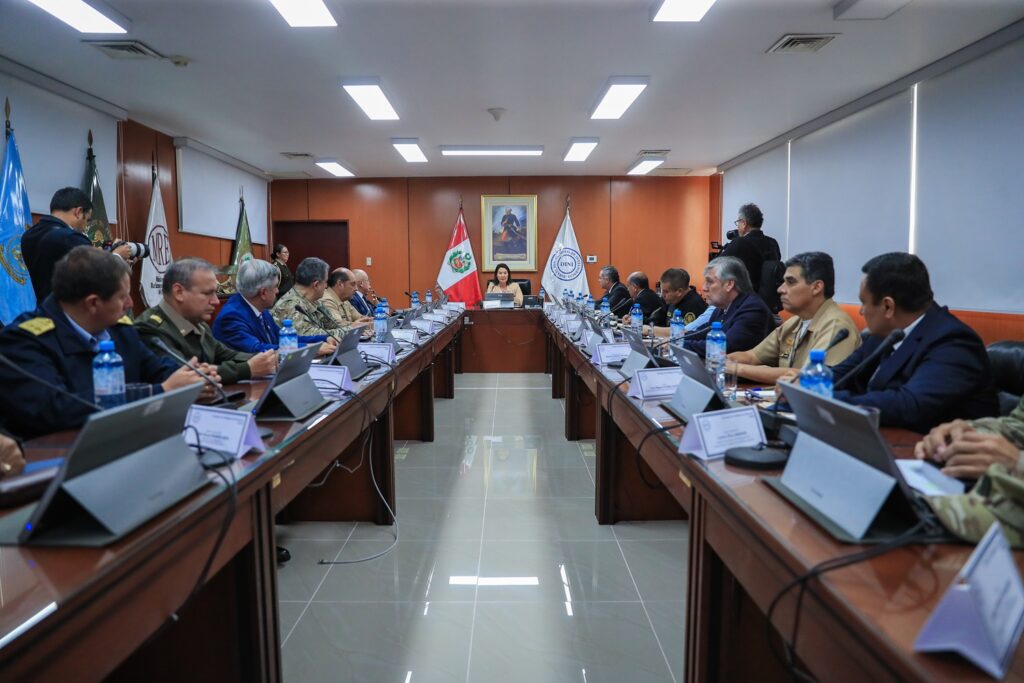
Agencia Peruana de Noticias PRENSAPERU.PE https://www.prensaperu.pe Twitter: @prensaperupe La presidenta de la República, Keiko Fujimori, presidió hoy el primer Consejo de Inteligencia Nacional, instancia clave convocada para articular toda la capacidad del Estado frente a las amenazas que afectan la seguridad y la tranquilidad de los peruanos.
Durante la reunión, la mandataria estableció con claridad: “La columna vertebral para recuperar la paz será la inteligencia”, resaltando que el Estado debe dejar de reaccionar y empezar a anticiparse a los hechos delictivos.
¿Qué es el Consejo de Inteligencia Nacional?
Es la máxima instancia de coordinación entre el Poder Ejecutivo, las Fuerzas Armadas, la Policía Nacional y el sistema de inteligencia del país. Su propósito es unificar criterios, compartir información y diseñar estrategias conjuntas para proteger la seguridad nacional.
Participantes y temas tratados
Asistieron el presidente del Consejo de Ministros Luis Galarreta; los ministros de Relaciones Exteriores, Defensa, Interior y Justicia; el director de Inteligencia Nacional (DINI), Hugo Cornejo; el jefe del Comando Conjunto de las Fuerzas Armadas; y los comandantes generales del Ejército, Fuerza Aérea y Marina de Guerra.
Se presentó un diagnóstico oficial sobre las diez principales amenazas que enfrenta el país:
Crimen organizado: Estructuras delictivas que operan de forma planificada y coordinada para cometer delitos de gran escala.
Delincuencia común: Actos delictivos que ocurren diariamente en las calles y afectan directamente a los ciudadanos.
Corrupción: Uso indebido de cargos públicos para obtener beneficios personales o de terceros.
Minería ilegal: Extracción de recursos naturales sin autorización, causando daño ambiental y perjuicio al Estado.
Tráfico ilícito de drogas: Producción, transporte y comercialización de sustancias prohibidas.
Extorsiones y violencia asociada: Cobro de cupos con amenazas o violencia contra personas, comercios y familias.
Presencia de bandas criminales en zonas de frontera: Grupos delictivos que operan en límites territoriales aprovechando la falta de control.
Tráfico ilícito de personas: Traslado ilegal de personas con fines de explotación.
Contrabando: Ingreso o salida de mercancías sin cumplir normas legales ni tributarias.
Delitos contra el medio ambiente: Acciones que dañan los recursos naturales y los ecosistemas del país.
El comandante general del Ejército, Oswaldo Calle, señaló que este encuentro marca un hito histórico y reafirmó: “No escatimaremos esfuerzos porque contamos con el respaldo de la presidenta y de todo el Ejecutivo”.
De otro lado,, el director de la DINI, Hugo Cornejo, calificó la jornada como inédita: “Es la primera vez en la historia que se reúnen autoridades del Ejecutivo y todo el sistema de inteligencia del país”.
Objetivo central
Fortalecer el trabajo de inteligencia para detectar, prevenir y neutralizar las acciones delictivas, devolviendo así orden, paz y seguridad a las familias peruanas.
DATOS CONCEPTUALES
Inteligencia Nacional: Conjunto de actividades destinadas a recopilar, analizar y difundir información oportuna para anticipar riesgos y apoyar la toma de decisiones del Estado.
Sistema de Inteligencia: Conjunto de instituciones y organismos que trabajan de forma articulada para proteger la seguridad del país.
Amenazas: Situaciones o acciones que ponen en riesgo la tranquilidad, la integridad y el desarrollo de la nación.
Respuesta articulada: Acción coordinada de distintas instituciones del Estado para actuar con mayor eficacia.
DATOS CONTEXTUALES
1.- La seguridad ciudadana deja de ser un tema aislado y pasa a ser prioridad nacional con respaldo directo de la Presidencia.
2.- La inteligencia deja de ser un tema reservado y se convierte en la herramienta principal para prevenir delitos antes de que ocurran.
3.- Por primera vez en la historia, el Ejecutivo, las Fuerzas Armadas y el sistema de inteligencia se reúnen de forma conjunta para trazar una sola estrategia.
4.- El Estado reconoce las amenazas reales que afectan al país y se compromete a enfrentarlas con unidad y determinación.
Fuente: Agencia Peruana de Noticias PRENSAPERU.PE https://www.prensaperu.pe Twitter: @prensaperupe
Translate
First National Intelligence Council: Peruvian President Keiko Fujimori stated that intelligence will be the backbone to restoring peace. We begin the fight against crime and its ten threats with intelligence and unity.
Peruvian News Agency PRENSAPERU.PE https://www.prensaperu.pe Twitter: @prensaperupe President of the Republic Keiko Fujimori presided today over the first National Intelligence Council, a key body convened to coordinate the State’s full capacity against the threats affecting the security and well-being of Peruvians.
During the meeting, the President clearly stated: “Intelligence will be the backbone of restoring peace”, emphasizing that the State must stop reacting and begin to anticipate criminal acts.
What is the National Intelligence Council?
It is the highest coordination body bringing together the Executive Branch, the Armed Forces, the National Police, and the country’s intelligence system. Its purpose is to unify criteria, share information, and design joint strategies to protect national security.
Participants and Issues Discussed
In attendance were the President of the Council of Ministers Luis Galarreta; the Ministers of Foreign Affairs, Defense, Interior, and Justice; the Director of National Intelligence (DINI), Hugo Cornejo; the Head of the Joint Command of the Armed Forces; and the Commanding Generals of the Army, Air Force, and Navy.
An official assessment was presented on the ten main threats facing the country:
Organized crime: Criminal structures operating in a planned and coordinated manner to commit large-scale offenses.
Common crime: Criminal acts occurring daily in public spaces that directly affect citizens.
Corruption: Improper use of public office to obtain personal or third-party benefits.
Illegal mining: Extraction of natural resources without authorization, causing environmental harm and loss to the State.
Illicit drug trafficking: Production, transport, and commercialization of prohibited substances.
Extortion and associated violence: Demanding payments under threat or violence against individuals, businesses, and families.
Presence of criminal groups in border areas: Criminal organizations operating in territorial boundaries taking advantage of limited oversight.
Illicit trafficking in persons: Illegal transfer of people for exploitation purposes.
Smuggling: Entry or exit of goods without complying with legal or tax regulations.
Environmental crimes: Actions that harm the country’s natural resources and ecosystems.
The Commanding General of the Army, Oswaldo Calle, stated that this meeting marks a historic milestone and reaffirmed: “We will spare no effort, because we have the backing of the President and the entire Executive Branch.”
Meanwhile, DINI Director Hugo Cornejo described the session as unprecedented: “This is the first time in history that Executive Branch authorities and the entire national intelligence system have gathered together.”
Main Objective
To strengthen intelligence work in order to detect, prevent, and neutralize criminal actions, thereby restoring order, peace, and security to Peruvian families.
CONCEPTUAL DATA
National Intelligence: The set of activities aimed at gathering, analyzing, and disseminating timely information to anticipate risks and support State decision-making.
Intelligence System: The network of institutions and bodies working in coordination to safeguard the country’s security.
Threats: Situations or actions that endanger the nation’s peace, integrity, and development.
Coordinated Response: Joint action by different State institutions to operate with greater effectiveness.
CONTEXTUAL DATA
1.- Citizen security ceases to be an isolated matter and becomes a national priority with direct backing from the Presidency.
2.- Intelligence is no longer a restricted subject and becomes the primary tool for preventing crimes before they occur.
3.- For the first time in history, the Executive Branch, the Armed Forces, and the intelligence system meet together to define a single strategy.
4.- The State acknowledges the real threats affecting the country and commits to confronting them with unity and determination.
Source: Peruvian News Agency PRENSAPERU.PE https://www.prensaperu.pe Twitter: @prensaperupe