
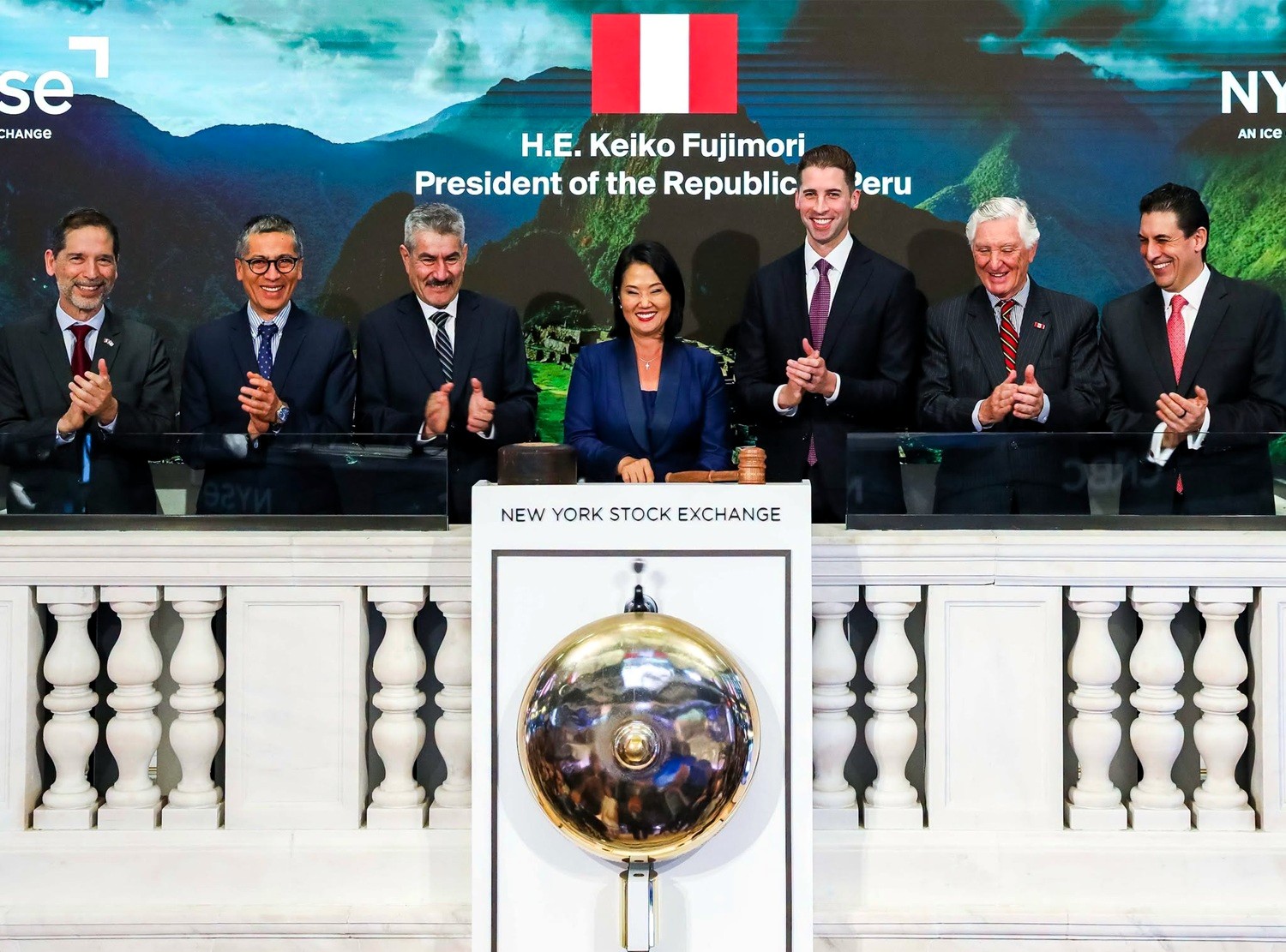
Agencia Peruana de Noticias PRENSAPERU.PE https://www.prensaperu.pe Twitter: @prensaperupe En un acto de trascendencia sin precedentes, la presidenta de la República, Keiko Fujimori, realizó el 24 de septiembre de 2026 el tradicional toque de la campana de cierre de la Bolsa de Valores de Nueva York (NYSE), el recinto bursátil más antiguo, grande e influyente del mundo. La ceremonia se enmarcó dentro de la agenda internacional de la jefa de Estado durante la Semana de Alto Nivel de la Asamblea General de las Naciones Unidas, con el propósito central de presentar al Perú ante la comunidad financiera mundial como un destino seguro, sólido y atractivo para la inversión.
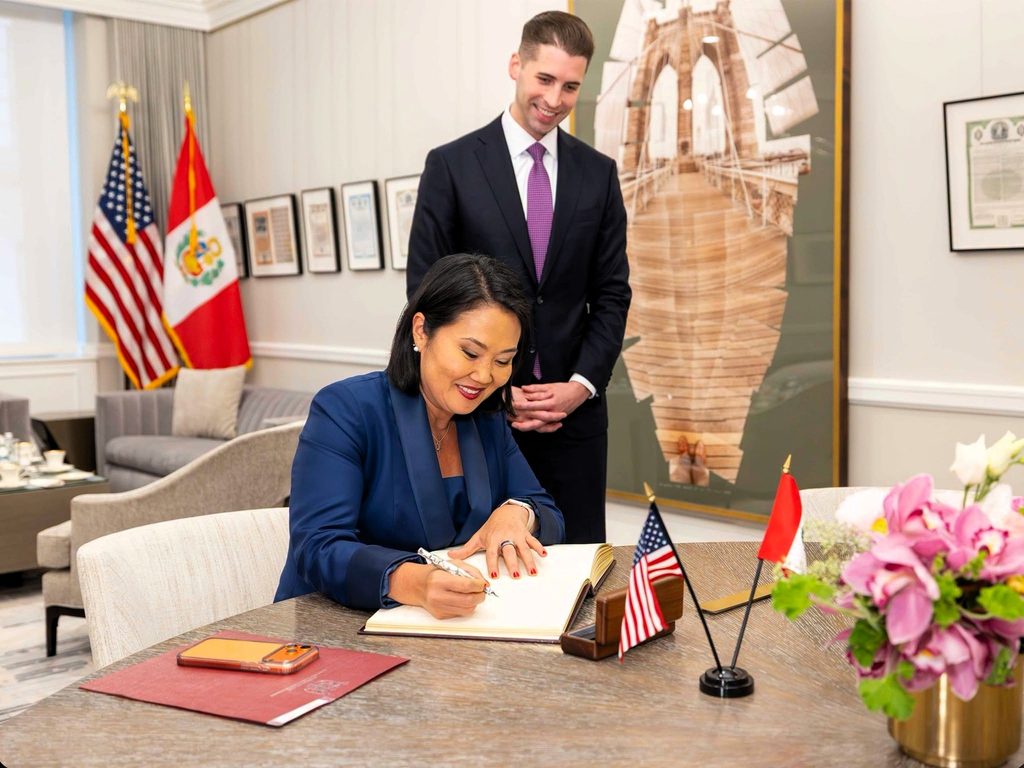
A su llegada a la sede de la NYSE, la mandataria fue recibida por la presidenta de la institución, Lynn Martin, con quien sostuvo un encuentro protocolar. Posteriormente, se trasladó al piso de negociaciones —el Trading Floor— donde firmó el Libro del Campanazo (Bell Ringer Book), registro histórico que conserva los nombres de cuantos han tenido el honor de protagonizar este acto. Finalmente, acompañada por la delegación peruana y directivos de la Bolsa, la jefa de Estado alzó el mazo ceremonial y golpeó la campana, marcando el fin de la jornada bursátil en un instante transmitido en vivo a mercados de todo el planeta.
I.- ¿QUÉ ES EL CAMPANAZO? ORIGEN, TRADICIÓN Y EL SIGNIFICADO DEL MAZO
El toque de la campana de apertura o cierre de la Bolsa de Nueva York no es un espectáculo casual ni un gesto meramente decorativo: es una tradición que nació con la propia institución y ha evolucionado hasta convertirse en uno de los símbolos más reconocidos de las finanzas mundiales.
Su origen se remonta a finales del siglo XVIII y principios del XIX: la Bolsa fue fundada en 1792; en 1871 se utilizaba un gong de estilo chino para señalar el inicio y el fin de las operaciones diarias. En 1903, con la mudanza a su sede actual en Wall Street, el gong fue reemplazado por una campana eléctrica. Sin embargo, un detalle fundamental se ha mantenido intacto desde los orígenes: el uso del mazo. En los primeros tiempos, antes de la mecanización, era el golpe manual con un mazo de madera lo que daba la señal. Hoy, aunque la campana funciona por mecanismo eléctrico, el mazo ceremonial sigue siendo el instrumento con el que cada invitado ejecuta el acto: no es un añadido, no es algo exclusivo de esta ocasión, es la forma en que se ha hecho durante más de un siglo con todas las personalidades distinguidas.
El significado del mazo y del gesto: El mazo que sostuvo la presidenta Keiko Fujimori tiene un diseño sobrio y solemne, semejante al que usan los presidentes de tribunales o los moderadores de asambleas deliberantes. Su uso en la ceremonia no es casual: representa la autoridad para dar la señal, la decisión de abrir o cerrar una etapa, la voluntad de hacer escuchar la voz del país. Cuando la mandataria alzó el mazo y lo hizo resonar sobre la campana, no solo produjo un sonido: emitió una declaración simbólica de presencia, determinación y liderazgo. El gesto une el pasado con el presente: la misma solemnidad de hace más de cien años, hoy en manos de la primera mandataria peruana en protagonizar el acto, haciendo resonar el nombre del Perú al ritmo de la campana más escuchada del planeta.
Su significado general: Tocar la campana con el mazo equivale a recibir el respaldo de la institución financiera más prestigiosa del planeta. Quien lo hace aparece en pantallas de todo el mundo, recibe visibilidad global y, sobre todo, se le reconoce como un actor confiable ante los inversores. Cuando lo hace un jefe de Estado, el mensaje es aún más poderoso: significa que el país abre formalmente sus puertas al capital internacional, que se presenta como socio serio y que cumple con las reglas del juego financiero global.
No es un privilegio que se otorgue a cualquier persona: la lista de quienes han tocado la campana incluye presidentes de naciones, primeros mandatarios de potencias, directivos de empresas líderes y figuras de relevancia mundial. Cada invitación es, en sí misma, una declaración de confianza.
II.- ANTECEDENTES: PRESIDENTES DE PAÍSES LATINOAMERICANOS EN LA NYSE DESDE EL AÑO 2000
La revisión de los registros históricos de la Bolsa de Valores de Nueva York permite constatar que no es frecuente que un presidente de la región realice el campanazo. Entre los casos documentados desde el año 2000 destacan:
Néstor Kirchner (Argentina, 2006): Tocó la campana de apertura en septiembre de 2006, acompañado por Cristina Fernández de Kirchner. Fue un gesto de proyección económica del país en el escenario internacional.
Javier Milei (Argentina, 2024): Realizó el campanazo de apertura en septiembre de 2024, como parte de su primera gira oficial a Nueva York, buscando atraer inversiones y mostrar el rumbo económico de su gestión.
Keiko Fujimori (Perú, 2026): Es la primera mandataria peruana en ejercicio que protagoniza el campanazo de cierre en la historia del Perú. Ningún presidente peruano anterior lo había realizado, lo que convierte este acto en un hito sin precedentes en la relación del país con el mundo financiero.
Otros jefes de Estado de la región han mantenido reuniones en la sede de la NYSE o han sido invitados a eventos relacionados, pero no han protagonizado la ceremonia del toque de la campana, lo que refuerza la singularidad de la participación de Keiko Fujimori.
III.- EL PERÚ COMO FOCO DE ATENCIÓN ESTRATÉGICA EN SUDAMÉRICA
La visita de la presidenta a la Bolsa de Nueva York no puede entenderse aislada del contexto geopolítico y económico actual. Sudamérica ha recuperado protagonismo en la agenda de las grandes potencias y de los inversores globales, y el Perú ocupa un lugar central en este escenario por varias razones:
Riqueza y diversidad de recursos: El país es uno de los mayores productores mundiales de minerales, posee una biodiversidad única, recursos hídricos y energéticos que lo convierten en un socio estratégico para industrias clave.
Estabilidad macroeconómica: A pesar de los desafíos políticos, el Perú ha mantenido décadas de crecimiento, baja inflación y reservas internacionales sólidas —superiores a los 100 mil millones de dólares—, factores que los inversores valoran especialmente.
Posición geográfica privilegiada: Con acceso al océano Pacífico, el Perú es puerta de entrada a mercados de Asia y América del Norte, situándose como eje logístico y comercial de la región.
Plataforma para empresas nacionales: Varias empresas peruanas ya cotizan o acceden a financiamiento a través de mercados internacionales conectados a la NYSE. El campanazo refuerza esta vía para que más compañías peruanas obtengan capital, crezcan y generen empleo.
En este sentido, el acto en Wall Street no es solo protocolo: es una declaración de presencia. El Perú se coloca en la vitrina mundial en un momento en que las grandes potencias redefinen sus alianzas económicas y buscan socios confiables en la región. La invitación a tocar la campana confirma que el país es observado, deseado y esperado como actor relevante del escenario global.
IV.- DATOS CONCEPTUALES
Bolsa de Valores de Nueva York (NYSE): La bolsa de valores más grande y antigua del mundo, fundada en 1792. Es el principal centro de negociación de acciones y valores internacionales. Tocar su campana con el mazo ceremonial equivale a aparecer en la plataforma financiera de mayor visibilidad del planeta.
Campanazo de apertura / cierre: Ceremonia que marca el inicio o el fin de la jornada bursátil. Nació como señal operativa; hoy es un acto simbólico de reconocimiento y proyección. Cuando lo realiza un jefe de Estado, significa que su país es presentado formalmente ante la comunidad inversora mundial.
Mazo ceremonial: Instrumento de diseño solemne que se ha utilizado desde los orígenes de la Bolsa. Antiguamente servía para dar la señal manual de inicio y cierre; hoy, aunque la campana funciona eléctricamente, se conserva como símbolo de autoridad, decisión y continuidad con la tradición.
Libro del Campanazo: Registro histórico de la NYSE donde firman quienes han tenido el honor de tocar la campana. Su firma queda como constancia permanente del paso de la persona o institución por la institución.
Inversión extranjera directa: Capital proveniente del exterior que se instala en un país para crear empresas, infraestructura o generar producción. No es dinero que llega y se va: es compromiso a mediano y largo plazo, que crea empleo y transfiere tecnología.
Visibilidad internacional: Grado en que un país, marca o propuesta es conocida y valorada fuera de sus fronteras. Tocar la campana de la NYSE multiplica la exposición del Perú ante millones de inversores y medios especializados.
V.- DATOS CONTEXTUALES
1.- El campanazo de Keiko Fujimori en la Bolsa de Nueva York constituye un hito histórico: es la primera vez que una mandataria peruana protagoniza este acto, colocando al Perú en el mismo escenario donde han estado mandatarios de las principales naciones del mundo.
2.- El mazo ceremonial que sostuvo la presidenta no es un adorno ni un añadido reciente: es el vínculo vivo con la tradición de más de un siglo de la institución. Su uso recuerda que la autoridad y la decisión son los cimientos sobre los que se construye la confianza financiera.
3.- Más que protocolo, el acto es una declaración de confianza: la invitación de la NYSE reconoce al Perú como un destino serio y atractivo para el capital internacional, en un momento en que la competencia por inversiones en la región es intensa.
4.- Desde el año 2000: pocos presidentes de Sudamérica han protagonizado el campanazo. Este hecho resalta la oportunidad única que tiene el Perú de diferenciarse, posicionarse y atraer capitales que pueden transformarse en desarrollo y empleo.
5.- El Perú no compite solo por recursos naturales: compite por confianza. La presencia en Wall Street busca demostrar que el país ofrece estabilidad, reglas claras y perspectiva de crecimiento, elementos indispensables para que las inversiones lleguen y se queden.
6.- Este paso es el inicio, no el fin: la visibilidad obtenida debe traducirse en acuerdos concretos, proyectos compartidos y mayor comercio. La campana anuncia el comienzo de una nueva etapa; los resultados dependerán de la continuidad, la seriedad y la coherencia con que el Perú mantenga su palabra ante el mundo.
Fuente: Agencia Peruana de Noticias PRENSAPERU.PE https://www.prensaperu.pe Twitter: @prensaperupe
Translate
The Peruvian economy makes waves on Wall Street! With the ringing of the bell and the gavel in hand, President Keiko Fujimori shapes the country’s future at the New York Stock Exchange. Peru joins the ranks of nations that have made their mark at the NYSE.
Peruvian News Agency PRENSAPERU.PE https://www.prensaperu.pe Twitter: @prensaperupe In an act of unprecedented significance, the President of the Republic, Keiko Fujimori, performed the traditional closing bell ceremony at the New York Stock Exchange (NYSE) on September 24, 2026 — the oldest, largest, and most influential financial venue in the world. The ceremony formed part of the Head of State’s international agenda during the High-Level Week of the United Nations General Assembly, with the central purpose of presenting Peru to the global financial community as a safe, solid, and attractive destination for investment.
Upon arrival at the NYSE headquarters, the President was received by the institution’s President, Lynn Martin, with whom she held a formal meeting. She then proceeded to the trading floor, where she signed the Bell Ringer Book — the historic registry preserving the names of all who have had the honor of performing this ceremony. Finally, accompanied by the Peruvian delegation and Exchange executives, the Head of State raised the ceremonial gavel and struck the bell, marking the close of the trading session in an instant broadcast live to markets across the globe.
I.- WHAT IS THE BELL-RINGING CEREMONY? ORIGIN, TRADITION, AND THE MEANING OF THE GAVEL
The ringing of the opening or closing bell at the New York Stock Exchange is no casual spectacle or merely decorative gesture: it is a tradition born alongside the institution itself, which has evolved to become one of the most recognized symbols in global finance.
Its origins stretch from the late 18th to the early 19th century: the Exchange was founded in 1792; in 1871, a Chinese-style gong was used to signal the start and end of daily operations. In 1903, upon moving to its current Wall Street location, the gong was replaced by an electric bell. Yet one fundamental detail has remained unchanged from the very beginning: the use of the gavel. In the early days, before mechanization, it was the manual strike with a wooden gavel that gave the signal. Today, even though the bell operates by electric mechanism, the ceremonial gavel remains the instrument through which each guest performs the act: it is no afterthought, nor something exclusive to this occasion — it is how the ceremony has been conducted for over a century with every distinguished dignitary.
Meaning of the gavel and the gesture: The gavel held by President Keiko Fujimori has a sober, solemn design, resembling those used by court presidents or moderators of deliberative assemblies. Its use in the ceremony is no accident: it represents the authority to give the signal, the decision to open or close a chapter, the will to make the nation’s voice heard. When the President raised the gavel and made it resound upon the bell, she produced more than sound: she issued a symbolic declaration of presence, determination, and leadership. The gesture unites past and present: the same solemnity of over a century ago, now in the hands of the first Peruvian President to perform the ceremony, making the name of Peru resonate to the chime of the world’s most listened-to bell.
General significance: Striking the bell with the gavel is equivalent to receiving the endorsement of the most prestigious financial institution on the planet. Those who do so appear on screens worldwide, gain global visibility, and above all, are acknowledged as reliable actors before investors. When a Head of State performs the act, the message carries even greater power: it signifies that the nation formally opens its doors to international capital, presents itself as a serious partner, and abides by the rules of the global financial order.
This is not a privilege granted to just anyone: the roll of those who have rung the bell includes presidents of nations, heads of state, leaders of major corporations, and figures of global standing. Every invitation is, in itself, a statement of trust.
II.- HISTORICAL CONTEXT: LATIN AMERICAN PRESIDENTS AT THE NYSE SINCE 2000
A review of the New York Stock Exchange’s historical records confirms that it is uncommon for a regional president to perform the bell-ringing ceremony. Documented cases since 2000 include:
Néstor Kirchner (Argentina, 2006): Rang the opening bell in September 2006, accompanied by Cristina Fernández de Kirchner. A gesture projecting the country’s economy onto the international stage.
Javier Milei (Argentina, 2024): Performed the opening bell ceremony in September 2024 during his first official visit to New York, seeking to attract investment and signal his administration’s economic direction.
Keiko Fujimori (Peru, 2026): The first sitting Peruvian President to perform the closing bell ceremony in the nation’s history. No previous Peruvian President has done so, making this an unprecedented milestone in the country’s relationship with the financial world.
Other Heads of State from the region have held meetings at the NYSE or been invited to related events, but have not performed the bell-ringing ceremony — further underscoring the uniqueness of Keiko Fujimori’s participation.
III.- PERU AS A STRATEGIC FOCUS IN SOUTH AMERICA
The President’s visit to the New York Stock Exchange cannot be viewed in isolation from the current geopolitical and economic context. South America has regained prominence in the agendas of major powers and global investors, and Peru occupies a central place in this landscape for several reasons:
Resource wealth and diversity: Peru ranks among the world’s leading mineral producers, possesses unparalleled biodiversity, and holds water and energy resources that make it a strategic partner for key industries.
Macroeconomic stability: Despite political challenges, Peru has maintained decades of growth, low inflation, and robust international reserves — exceeding US$100 billion — factors particularly valued by investors.
Strategic geographic location: With access to the Pacific Ocean, Peru serves as a gateway to Asian and North American markets, positioning itself as a logistical and commercial hub for the region.
Platform for national enterprise: Several Peruvian companies already list or access financing through international markets connected to the NYSE. The bell-ringing strengthens this pathway, enabling more Peruvian firms to secure capital, expand, and generate employment.
In this sense, the event at Wall Street is more than protocol: it is a declaration of presence. Peru places itself in the global showcase at a moment when major powers are redefining economic alliances and seeking reliable partners across the region. The invitation to ring the bell confirms that Peru is being watched, sought, and expected as a relevant actor on the global stage.
IV.- CONCEPTUAL DEFINITIONS
New York Stock Exchange (NYSE): The world’s largest and oldest stock exchange, founded in 1792. The principal marketplace for international stocks and securities. Striking its bell with the ceremonial gavel amounts to appearing on the world’s most visible financial platform.
Opening / Closing Bell Ceremony: Ritual marking the start or end of the trading session. Originating as an operational signal, today it is a symbolic act of recognition and projection. When performed by a Head of State, it signifies the nation’s formal introduction to the global investment community.
Ceremonial Gavel: Solemnly designed instrument used since the Exchange’s founding. Originally serving as the manual signal to begin and end trading; today, though the bell operates electrically, it is preserved as a symbol of authority, decision, and continuity with tradition.
Bell Ringer Book: NYSE historic registry signed by all who have had the honor of ringing the bell. The signature stands as permanent testament to the individual’s or institution’s place in the Exchange’s history.
Foreign Direct Investment: Capital from abroad established within a country to build enterprises, infrastructure, or generate production. Not transient funds: it represents medium- and long-term commitment that creates employment and transfers technology.
International Visibility: The extent to which a nation, brand, or proposal is known and valued beyond its borders. Ringing the NYSE bell multiplies Peru’s exposure to millions of investors and specialized media.
V.- CONCLUSIONS
1.- Keiko Fujimori’s bell-ringing at the New York Stock Exchange stands as a historic milestone: for the first time, a Peruvian President has performed the ceremony, placing Peru on the same stage occupied by leaders of the world’s foremost nations.
2.- The ceremonial gavel held by the President is no ornament or recent addition: it is the living link to the institution’s century-old tradition. Its use reminds us that authority and resolve are the bedrock upon which financial trust is built.
3.- Beyond protocol, the act is a declaration of confidence: the NYSE invitation recognizes Peru as a serious and attractive destination for international capital at a time of intense competition for investment across the region.
4.- Since the year 2000: few South American presidents have performed the bell-ringing. This fact highlights Peru’s unique opportunity to distinguish itself, position itself, and attract capital that may translate into development and employment.
5.- Peru competes not merely on natural resources: but on trust. Its presence on Wall Street seeks to demonstrate that the nation offers stability, clear rules, and growth prospects — essential foundations for investment to arrive and endure.
6.- This step is a beginning, not an end: the visibility gained must translate into concrete agreements, shared projects, and expanded trade. The bell heralds a new chapter; outcomes will depend on the consistency, seriousness, and integrity with which Peru honors its commitments to the world.
Source: Peruvian News Agency PRENSAPERU.PE https://www.prensaperu.pe Twitter: @prensaperupe