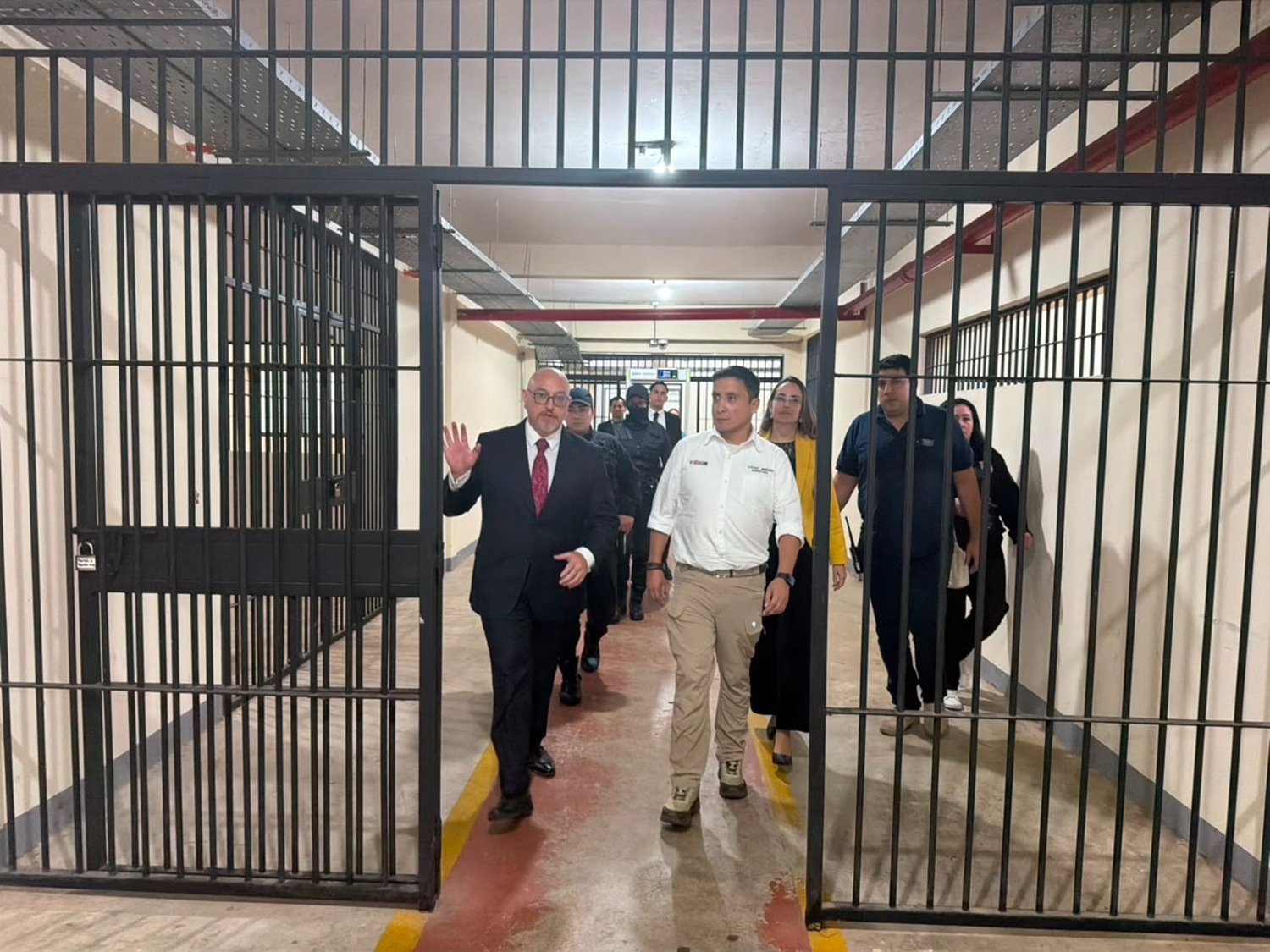
Agencia Peruana de Noticias PRENSAPERU.PE https://www.prensaperu.pe Twitter: @prensaperupe En el marco de una misión oficial de cooperación y intercambio de experiencias en materia de justicia, el ministro de Justicia y Derechos Humanos, Luis Jiménez Borra, realizó una visita técnica a la República del Paraguay. El objetivo principal de este viaje de trabajo fue conocer de primera mano la realidad del sistema penitenciario y de atención a menores en conflicto con la ley de ese país, evaluar su infraestructura y analizar detalladamente las estrategias de resocialización que se están implementando.
LA RESOCIALIZACIÓN: Es el proceso fundamental dentro de la administración de justicia que busca preparar y capacitar a las personas privadas de libertad para que, al recuperar su libertad, puedan integrarse nuevamente a la sociedad como ciudadanos que respetan las normas, cuentan con herramientas laborales y educativas, y son capaces de convivir pacíficamente con los demás.
La primera parada de la comitiva fue el Complejo Penitenciario para Mujeres Privadas de la Libertad (COMPLE), ubicado en la ciudad de Emboscada, uno de los establecimientos penitenciarios femeninos más importantes y grandes de la región. Allí, el titular del sector Justicia sostuvo una reunión de trabajo y diálogo técnico con el viceministro de Política Criminal de Paraguay, Rubén Maciel Guerreño. La autoridad paraguaya presentó un informe detallado sobre la organización interna del centro, el cual está dividido en 8 módulos o áreas independientes de alojamiento. En su conjunto, este complejo alberga actualmente a más de 1500 internas, por lo que la gestión de sus servicios y la aplicación de políticas penitenciarias son un reto constante para las autoridades locales.
Durante su recorrido por las instalaciones, el ministro Jiménez ingresó específicamente a los módulos 3 y 4, espacios destinados a la aplicación de modelos de intervención avanzados. Allí pudo conocer el enfoque integral que se está desarrollando, el cual combina tres pilares esenciales: capacitación laboral, trabajo productivo y educación formal. Este modelo busca que las personas internas aprovechen su tiempo de reclusión para adquirir habilidades que les permitan generar ingresos y mejorar su calidad de vida presente y futura. El ministro visitó personalmente los talleres de oficios, la moderna sala de cómputo destinada al aprendizaje de tecnologías digitales y el centro de atención médica, el cual cuenta con una infraestructura especializada que incluye una zona habilitada para la realización de pequeñas cirugías y atenciones clínicas complejas, garantizando así el derecho fundamental a la salud dentro del recinto.
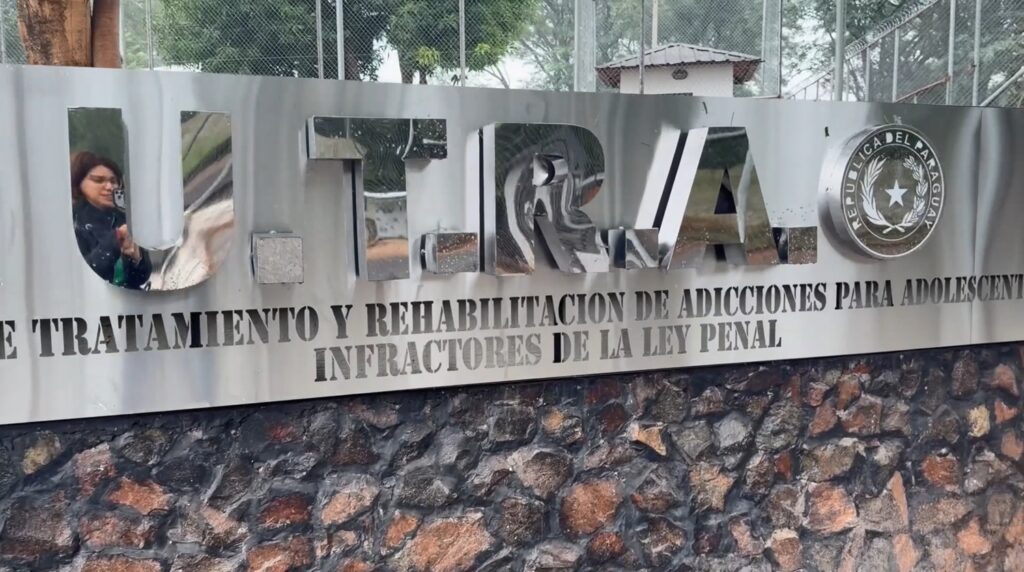
Posteriormente, la visita se trasladó al Centro Educativo de Itauguá (CEI), un establecimiento dedicado a la atención de adolescentes en conflicto con la ley penal. Actualmente, este centro alberga a 55 jóvenes, y se encuentra en una etapa de renovación y mejora continua, con obras de adecuación en curso para optimizar sus espacios y servicios. Acompañado por su director, César Fernández, el ministro recorrió las instalaciones de la Unidad de Tratamiento y Rehabilitación de Adicciones (UTRA), un espacio especializado que fue oficialmente habilitado en octubre de 2025.
LA UTRA: es un área de intervención específica diseñada para atender a jóvenes de entre 14 y 18 años que, además de estar en conflicto con la ley, presentan dependencia o consumo problemático de sustancias. Su funcionamiento se basa en una atención integral que combina:
Atención médica integral: chequeos, tratamientos físicos y salud mental.
Acompañamiento psicológico: terapias individuales y grupales para abordar las causas de su conducta.
Orientación educativa: continuación de sus estudios regulares.
Reinserción social: actividades que fortalecen los vínculos familiares y comunitarios.
Finalmente, la comitiva visitó el Centro Educativo Integral “La Esperanza”, un establecimiento que funciona bajo un régimen semiabierto.
EL RÉGIMEN SEMIABIERTO: régimen semiabierto: Es una etapa intermedia dentro del sistema penal juvenil, caracterizado por tener menos restricciones que un centro cerrado. Permite que los jóvenes desarrollen la mayor parte de sus actividades educativas, recreativas y laborales con mayor autonomía, preparándolos gradualmente para su libertad total, bajo supervisión y reglas claras de disciplina.
Este centro pone énfasis absoluto en la formación educativa y la formación en valores y disciplina. El ministro dialogó con su director, Adalberto Ramírez, quien explicó los distintos proyectos educativos innovadores que se ejecutan allí, destacando la implementación de programas de educación básica y educación media bilingüe. Este modelo no solo garantiza el acceso a la educación, sino que también fortalece la identidad cultural y las competencias comunicativas de los adolescentes, brindándoles herramientas académicas certificadas que son clave para su futuro desarrollo profesional.
Conclusiones
1.- La infraestructura y la salud son pilares de la dignidad penitenciaria: La visita demostró que el sistema paraguayo ha avanzado en dotar a sus centros de reclusión de espacios adecuados, talleres y servicios médicos especializados. Esto confirma que la resocialización no es posible sin condiciones dignas de alojamiento y sin garantizar el derecho a la salud, elementos esenciales para que una persona privada de libertad pueda empezar un proceso de cambio real.
2.- La especialización es clave para atender problemas complejos: La creación de unidades específicas como la UTRA evidencia que el tratamiento de adolescentes en conflicto con la ley requiere enfoques diferenciados. Al abordar problemas de adicciones de forma médica, psicológica y educativa simultáneamente, se entiende que la conducta delictiva suele estar ligada a carencias o problemas no resueltos, y que atenderlos es la única forma efectiva de reducir la reincidencia.
3.- La educación bilingüe y el trabajo son las mejores herramientas de reinserción: Tanto en el complejo de mujeres como en los centros juveniles, se observó que la estrategia central se basa en educar y capacitar. El modelo de educación bilingüe y la enseñanza de oficios no solo otorgan conocimientos, sino que devuelven la autoestima y brindan oportunidades económicas reales, convirtiéndose en el mecanismo más sólido para devolver a las personas a la sociedad como miembros productivos y autónomos.
Fuente: Agencia Peruana de Noticias PRENSAPERU.PE https://www.prensaperu.pe Twitter: @prensaperupe
Translate
Minister Jiménez explored resocialization models in Paraguay: Modern penitentiary infrastructure with job training, productive work and formal education as central pillars for reintegration.
Peruvian News Agency PRENSAPERU.PE https://www.prensaperu.pe Twitter: @prensaperupe Within the framework of an official cooperation mission and experience-sharing initiative in the field of justice, the Minister of Justice and Human Rights, Luis Jiménez Borra, carried out a technical visit to the Republic of Paraguay. The primary objective of this working trip was to gain first-hand knowledge of the reality of the penitentiary system and the care provided to minors in conflict with the law in that country, to evaluate its infrastructure, and to conduct a detailed analysis of the resocialization strategies currently being implemented. Furthermore, this visit sought to establish channels for technical cooperation, identify best practices that could be adapted to our national reality, and strengthen bilateral ties in matters related to human rights and the administration of justice, ensuring that every observation made serves to improve public policies aimed at the most vulnerable populations within the justice system.
RESOCIALIZATION: This is the fundamental process within justice administration that aims to prepare and train persons deprived of their liberty so that, upon regaining their freedom, they can reintegrate into society as citizens who respect the rules, possess labor and educational tools, and are capable of living peacefully alongside others. It goes beyond simple reintegration, as it implies a comprehensive transformation of the individual, addressing not only their technical skills but also their values, social skills, and personal development, ensuring that they have the necessary support to build a productive life free of crime, thus contributing to the safety and well-being of the entire community.
The first stop for the official delegation was the Penitentiary Complex for Women Deprived of Liberty (COMPLE), located in the city of Emboscada, one of the most important and largest women’s penitentiary establishments in the region. There, the head of the Justice sector held a working meeting and technical dialogue with the Vice Minister of Criminal Policy of Paraguay, Rubén Maciel Guerreño. The Paraguayan authority presented a detailed report on the internal organization of the center, which is divided into 8 modules or independent housing areas. Taken as a whole, this complex currently houses more than 1,500 female inmates, making the management of its services and the application of penitentiary policies a constant challenge for local authorities, who must balance security requirements with the necessary conditions for human treatment and effective rehabilitation, ensuring that overcrowding does not become an obstacle to the development of resocialization activities or the guarantee of fundamental rights for every person confined there.
During his tour of the facilities, Minister Jiménez specifically entered Modules 3 and 4, spaces designated for the implementation of advanced intervention models. There, he learned about the comprehensive approach being developed, which combines three essential pillars: vocational training, productive work, and formal education. This model aims to ensure that inmates use their time in confinement to acquire skills that allow them to generate income and improve their present and future quality of life, understanding that work and education are not only rights but also powerful tools to rebuild self-esteem and project a dignified future. The Minister personally visited the vocational workshops, the modern computer room intended for learning digital technologies, and the medical care center, which has specialized infrastructure including an area equipped for performing minor surgeries and complex clinical care, thus guaranteeing the fundamental right to health within the facility and demonstrating how medical care is understood as an integral part of the rehabilitation process and not just an auxiliary service.
Subsequently, the visit moved to the Itauguá Educational Center (CEI), an institution dedicated to the care of adolescents in conflict with criminal law. Currently, this center houses 55 young people and is in a stage of continuous renewal and improvement, with adaptation works underway to optimize its spaces and services, ensuring that the physical environment meets the pedagogical and therapeutic needs required for this age group. Accompanied by its director, César Fernández, the Minister toured the facilities of the Addictions Treatment and Rehabilitation Unit (UTRA), a specialized space that was officially opened in October 2025, designed to offer a differentiated response to a problem that significantly affects the population served and that requires specific, multidisciplinary, and continuous attention to achieve effective and lasting changes in the lives of the young people.
THE UTRA: This is a specific intervention area designed to serve young people between the ages of 14 and 18 who, in addition to being in conflict with the law, present substance dependence or problematic consumption patterns. Its operation is based on comprehensive care that combines:
Comprehensive medical care: check-ups, physical treatments, and mental health support, addressing both the physical consequences of consumption and the psychological disorders associated with it.
Psychological support: individual and group therapies to address the root causes of their behavior, work on emotional regulation, and develop social skills and coping strategies that allow them to face life’s challenges without resorting to violence or substance use.
Educational guidance: continuation of their regular studies, ensuring that their legal situation does not interrupt their academic training and that they obtain official certifications that support their future employability.
Social reintegration: activities that strengthen family and community ties, promoting the participation of the environment in the recovery process and creating support networks that facilitate their return to society and reduce the risk of reoffending.
Finally, the delegation visited the “La Esperanza” Comprehensive Educational Center, an institution that operates under a semi-open regime, a model that represents a significant advance in the treatment of adolescent offenders, as it balances security with the necessary freedom to learn and develop responsibility.
THE SEMI-OPEN REGIME: This is an intermediate stage within the juvenile justice system, characterized by having fewer restrictions than a closed center. It allows young people to carry out most of their educational, recreational, and work activities with greater autonomy, gradually preparing them for their full freedom, under supervision and with clear rules of discipline that help them learn to coexist and respect norms. This model is based on trust and progressive responsibility, understanding that the ultimate goal is not confinement itself, but the acquisition of skills and habits that allow them to function fully and independently in society once they complete their sentence or measure.
This center places absolute emphasis on educational training and the development of values and discipline, understanding that these are the pillars that sustain any true process of change. The Minister spoke with its director, Adalberto Ramírez, who explained the various innovative educational projects being implemented there, highlighting the implementation of basic education and bilingual secondary education programs. This model not only guarantees access to education but also strengthens the cultural identity and communication skills of adolescents, providing them with certified academic tools that are key to their future professional development and social inclusion, while promoting respect for their roots and the development of critical thinking and creativity.
Conclusions
1.- Infrastructure and health are pillars of penitentiary dignity: The visit demonstrated that the Paraguayan system has made progress in providing its detention centers with adequate spaces, workshops, and specialized medical services. This confirms that resocialization is not possible without dignified housing conditions and without guaranteeing the right to health, which are essential elements for a person deprived of liberty to be able to begin a real process of change. Furthermore, it highlights that investment in infrastructure and healthcare is not an expense but an investment in public safety, as adequate conditions directly contribute to reducing violence within centers and preparing individuals to return to society as respectful and productive citizens.
2.- Specialization is key to addressing complex problems: The creation of specific units such as UTRA shows that the treatment of adolescents in conflict with the law requires differentiated approaches that go beyond general care. By addressing addiction problems through medical, psychological, and educational means simultaneously, it is understood that criminal behavior is often linked to unmet needs, traumas, or unresolved problems, and that addressing these underlying causes is the only effective way to reduce recidivism and ensure that young people can rebuild their lives. This specialized focus also demonstrates the importance of interdisciplinary teams and continuous training for professionals working in the justice sector.
3.- Bilingual education and work are the best tools for reintegration: Both in the women’s complex and in the youth centers, it was observed that the central strategy is based on educating and training individuals comprehensively. The bilingual education model and the teaching of trades not only provide technical knowledge and academic certifications but also restore self-esteem, reinforce cultural identity, and provide real economic opportunities, becoming the most solid mechanism to return people to society as productive and autonomous members. This approach confirms that education is the most powerful instrument for social transformation and that every investment made in the training of persons deprived of liberty translates directly into greater well-being and security for the entire society.
Source: Peruvian News Agency PRENSAPERU.PE https://www.prensaperu.pe Twitter: @prensaperupe