
Agencia Peruana de Noticias PRENSAPERU.PE https://www.prensaperu.pe Twitter: @prensaperupe El nuevo esquema legislativo peruano quedó totalmente definido tras la proclamación oficial de resultados por el Jurado Nacional de Elecciones (JNE). Para el periodo 2026‑2031 funcionará un sistema bicameral compuesto por la Cámara de Senadores o Cámara Alta y la Cámara de Diputados o Cámara Baja, al que se suma la representación nacional ante el Parlamento Andino. Seis agrupaciones políticas obtuvieron curules en las tres instancias, sin que ninguna alcance mayoría absoluta por sí sola.
DISTRIBUCIÓN DE LA CÁMARA ALTA
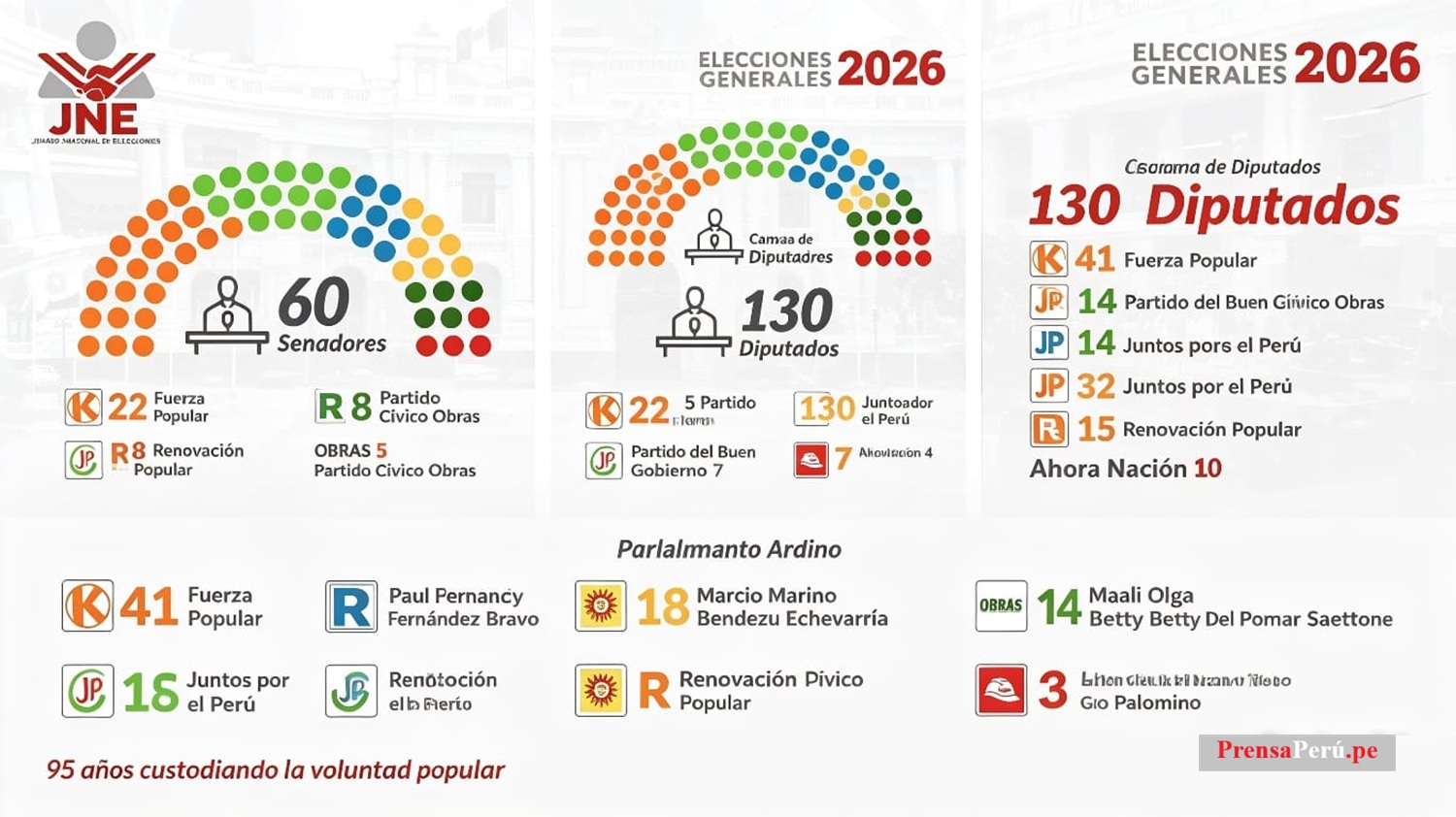
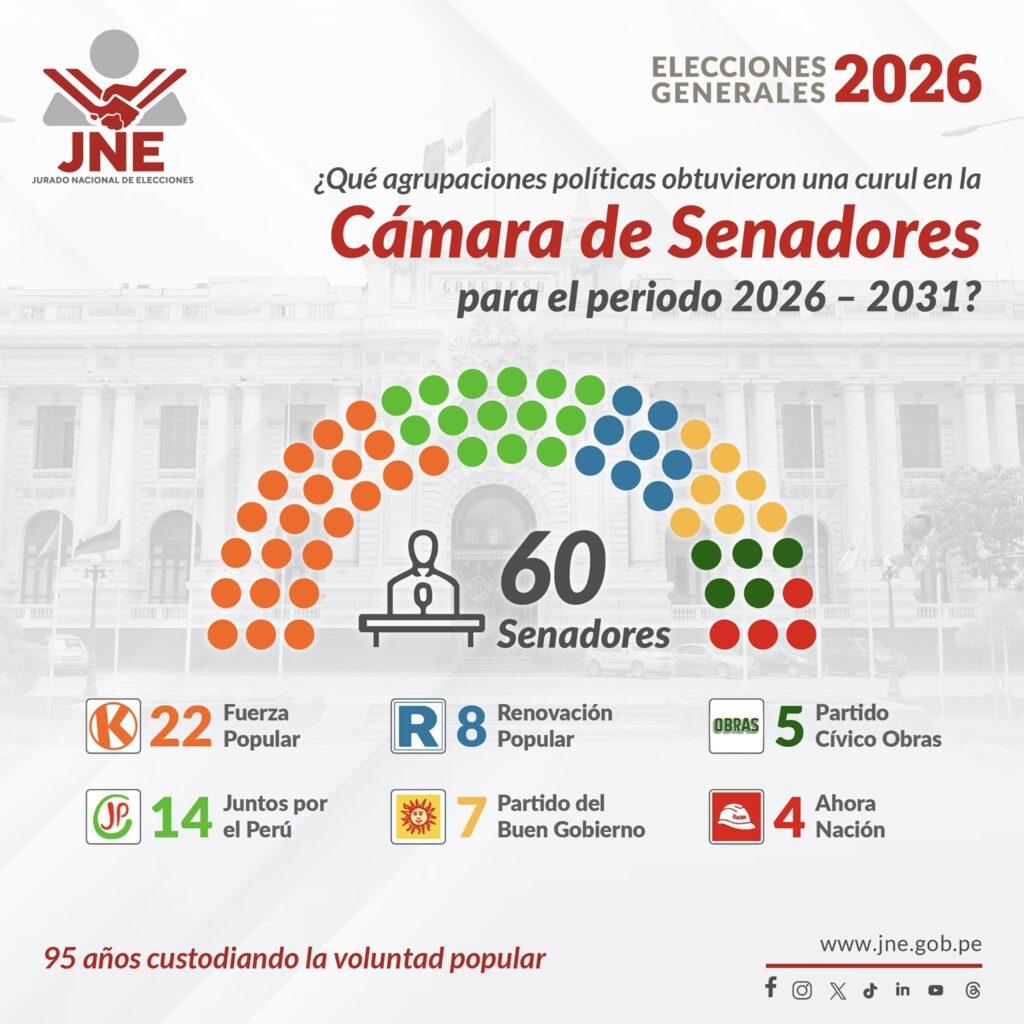
La Cámara de Senadores cuenta con 60 integrantes. La distribución por fuerzas políticas es la siguiente:
Fuerza Popular: 22 escaños
Juntos por el Perú: 14
Renovación Popular: 8
Partido del Buen Gobierno: 7
Partido Cívico Obras: 5
Ahora Nación: 4
Fuerza Popular se consolida como la bancada más numerosa, aunque se sitúa por debajo de los 31 escaños necesarios para gobernar sin alianzas. Le sigue Juntos por el Perú, que se posiciona como segunda fuerza.
COMPOSICIÓN DE LA CÁMARA BAJA
La Cámara de Diputados está integrada por 130 representantes, con esta distribución:
Fuerza Popular: 41
Juntos por el Perú: 32
Partido del Buen Gobierno: 18
Renovación Popular: 15
Partido Cívico Obras: 14
Ahora Nación: 10
La tendencia se repite: mismas agrupaciones, mismo orden de liderazgo, lo que revela coherencia en el respaldo recibido en todo el territorio. Ninguna llega al umbral de 66 curules para actuar en solitario.
REPRESENTACIÓN ANTE EL PARLAMENTO ANDINO
Para la instancia de integración regional se eligieron cinco titulares y sus respectivos suplentes, uno por cada agrupación principal:
Fuerza Popular: Luis Fernando Galarreta Velarde
Juntos por el Perú: Paul Percy Fernández Bravo
Partido del Buen Gobierno: Marcio Marino Bendezu Echevarría
Renovación Popular: Maali Olga Betty Del Pomar Saettone
Partido Cívico Obras: Jahn Clerk Nicanor Toledo Palomino
Cada titular cuenta con dos representantes suplentes listos para actuar conforme al reglamento del organismo andino.
DATOS
1.- El nuevo Legislativo se estructura bajo la bicameralidad: 60 senadores y 130 diputados, lo que introduce distintos niveles de debate, revisión y trámite normativo.
2.- Fuerza Popular es la fuerza mayoritaria en ambas cámaras, pero no alcanza mayoría absoluta: los acuerdos y consensos resultarán obligatorios para aprobar leyes, presupuestos y designaciones.
3.- Seis fuerzas comparten el escenario: lo que supone alta fragmentación y mayor diversidad de voces, aunque también mayor complejidad para construir mayorías estables.
4.- Existe correspondencia entre el apoyo recibido en Senado y en Diputados: el orden de bancadas se mantiene, reflejando una preferencia electoral sostenida.
5.- La representación ante el Parlamento Andino: reproduce esa misma pluralidad, proyectando al ámbito subregional la composición política surgida de las urnas.
Fuente: Agencia Peruana de Noticias PRENSAPERU.PE https://www.prensaperu.peTwitter: @prensaperupe
Translate
Peru’s New Legislative Branch! A bicameral system—comprising a Senate and a Chamber of Deputies—with no single party holding a majority; six political forces will share parliamentary duties alongside the Andean Parliament for the 2026–2031 term.
Peruvian News Agency PRENSAPERU.PE https://www.prensaperu.pe Twitter: @prensaperupe Peru’s new legislative framework has been fully defined following the official proclamation of results by the National Jury of Elections (JNE). For the 2026‑2031 term, a bicameral system will operate, comprising the Senate or Upper House and the Chamber of Deputies or Lower House, complemented by national representation before the Andean Parliament. Six political groups secured seats in all three bodies, none achieving an absolute majority on its own.
UPPER HOUSE DISTRIBUTION
The Senate has 60 members. The distribution by political force is as follows:
Fuerza Popular: 22 seats
Juntos por el Perú: 14
Renovación Popular: 8
Partido del Buen Gobierno: 7
Partido Cívico Obras: 5
Ahora Nación: 4
Fuerza Popular consolidates its position as the largest parliamentary group, although it remains below the 31‑seat threshold required to govern without alliances. It is followed by Juntos por el Perú, which ranks as the second‑largest force.
LOWER HOUSE COMPOSITION
The Chamber of Deputies comprises 130 representatives, distributed as follows:
Fuerza Popular: 41
Juntos por el Perú: 32
Partido del Buen Gobierno: 18
Renovación Popular: 15
Partido Cívico Obras: 14
Ahora Nación: 10
The pattern is consistent: the same groups appear in the same order of strength, reflecting steady support nationwide. No formation reaches the threshold of 66 seats needed to act independently.
REPRESENTATION BEFORE THE ANDEAN PARLIAMENT
Five principal representatives and their respective alternates were elected for this regional integration body, one from each leading group:
Fuerza Popular: Luis Fernando Galarreta Velarde
Juntos por el Perú: Paul Percy Fernández Bravo
Partido del Buen Gobierno: Marcio Marino Bendezu Echevarría
Renovación Popular: Maali Olga Betty Del Pomar Saettone
Partido Cívico Obras: Jahn Clerk Nicanor Toledo Palomino
Each principal member has two alternate representatives ready to serve in accordance with the regulations of the Andean institution.
KEY ANALYTICAL FINDINGS
1.- The new Legislature is structured on a bicameral basis: 60 senators and 130 deputies, establishing different levels for debate, review and legislative procedure.
2.- Fuerza Popular is the leading force in both chambers but falls short of an absolute majority: agreements and consensus‑building will therefore be essential to pass laws, budgets and appointments.
3.- Six political forces share the stage: implying high fragmentation and a greater diversity of voices, though also greater complexity in building stable majorities.
4.- There is a clear correlation between levels of support recorded in the Senate and in the Chamber of Deputies: the ranking of parliamentary groups remains unchanged, reflecting consistent electoral preferences.
5.- Representation before the Andean Parliament: mirrors this pluralism, extending the political composition emerging from the polls to the sub‑regional level.
Source: Peruvian News Agency PRENSAPERU.PE https://www.prensaperu.pe Twitter: @prensaperupe