
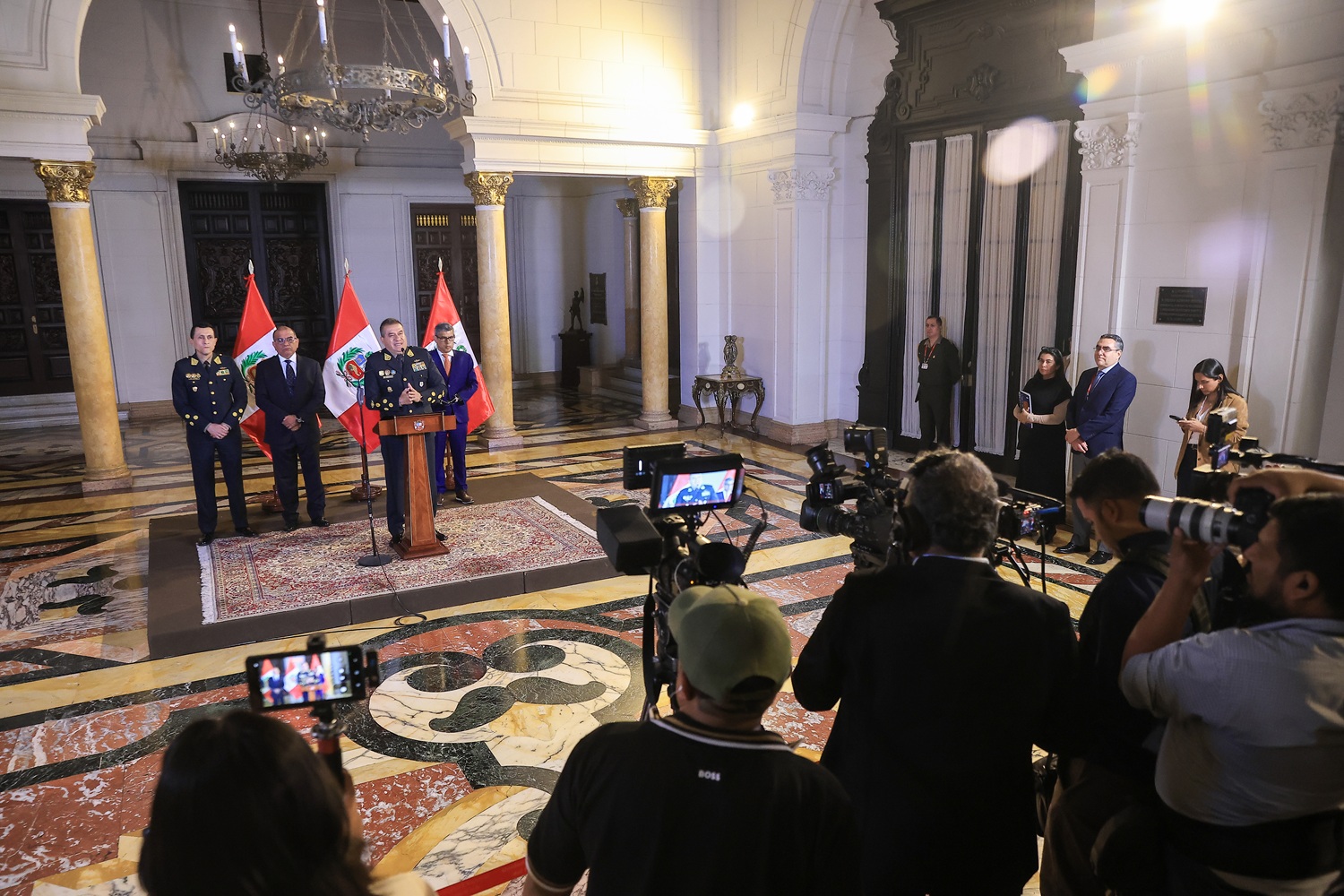
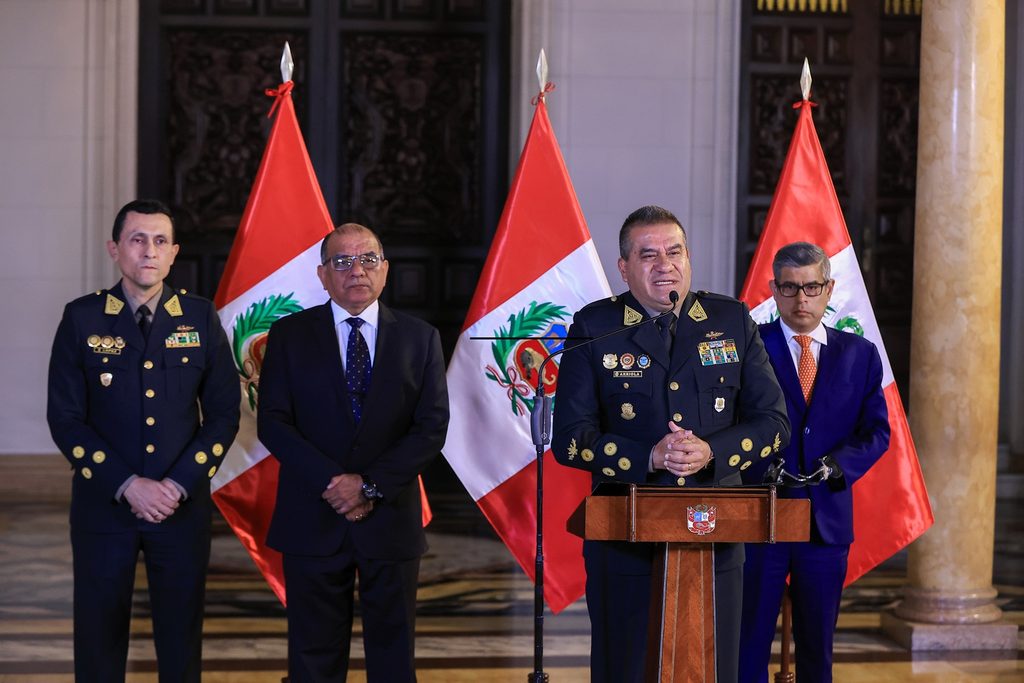
Agencia Peruana de Noticias PRENSAPERU.PE https://www.prensaperu.pe Twitter: @prensaperupe En un pronunciamiento realizado el 6 de septiembre en Palacio de Gobierno, el Comandante General de la Policía Nacional del Perú, General PNP Óscar Arriola Delgado, anunció su decisión de solicitar su pase al retiro y entregar el mando institucional al Teniente General Fredy López Mendoza, hasta entonces Jefe del Estado Mayor General de la PNP . El acto contó con la presencia del presidente del Consejo de Ministros, Luis Galarreta Velarde, y del ministro del Interior, César Astudillo, quienes respaldaron la decisión como un gesto de institucionalidad y reafirmaron la estrategia gubernamental de fortalecer la seguridad ciudadana con nuevas herramientas y recursos . El relevo se produce en un contexto de creciente preocupación pública por el avance de la criminalidad organizada, la extorsión y la violencia delictiva en diversas regiones del país .
I.- DESARROLLO DE LOS HECHOS Y DECLARACIONES
Declaraciones del General Óscar Arriola Delgado
El Comandante General inició su intervención invocando la institucionalidad, el amor a la institución y la gobernabilidad del país como motivaciones centrales de su decisión :
“Siempre pensando, sintiendo, respirando responsablemente en la institucionalidad, en el amor a la Policía Nacional y en la gobernabilidad del país… En los próximos días me relevaré en el cargo con el Teniente General Fredy López Mendoza, decisión que obedece a la motivación antes dispuesta.”
Expresó su gratitud a las autoridades que lo nombraron y respaldaron: la expresidenta Dina Boluarte, el presidente del Consejo de Ministros anterior y la presidenta Keiko Fujimori, y se despidió con “la conciencia absolutamente limpia y la frente muy en alto”, recordando su origen en Chiclayo .
Dirigiéndose a todo el cuerpo policial, les exhortó:
“Les pido nunca desfallecer, siempre pensar en el compromiso y juramento que realizaron ante Dios, la patria, la bandera y la familia… Sigan adelante, no pueden vencernos. Nunca nos venció ni el terrorismo ni ninguna de las modalidades de criminalidad organizada. Esta vez no va a ser la excepción.”
Declaraciones del Presidente del Consejo de Ministros, Luis Galarreta
El premier calificó la decisión del general Arriola como “un gesto de un peruano comprometido con su país”, reconociendo su trayectoria meritocrática y su amor por la institución . Subrayó que el relevo responde a un proceso institucional ordenado, respetando la prelación jerárquica:
“Se designará al General Fredy López Mendoza para que reemplace en el cargo al General Arriola. Esta designación atiende una transferencia, repito, institucional.”
Advirtió sobre la doble estrategia de la criminalidad:
“La criminalidad no solamente tiene el objetivo de atentar contra el ser humano, sino también debilitar las instituciones y que la ciudadanía no crea en el Estado de derecho. Eso no lo podemos permitir.”
Anunció que en las próximas semanas el Gobierno presentará nuevas acciones concretas:
“Vamos a dotar de nuevas herramientas tecnológicas, de recursos… El objetivo es uno solo: defender la vida humana y construir un Perú seguro. En las próximas semanas presentaremos varias acciones para que la ciudadanía vea cómo continuamos esta lucha.”
II.- CONTEXTO Y RELEVANCIA
El relevo se produce tras menos de un año de gestión del General Arriola, quien asumió el 30 de septiembre de 2025 , en medio de crecientes cuestionamientos por el aumento de la delincuencia común, la extorsión y el crimen organizado en diversas regiones. El nuevo comandante general, Fredy López Mendoza, se venía desempeñando como Jefe del Estado Mayor General desde el 1 de enero de 2026.
III.- DATOS CONCEPTUALES
Comandante General de la PNP: Máxima autoridad institucional de la Policía Nacional del Perú, designada por el presidente de la República y ratificada por el Consejo de Ministros. Tiene bajo su mando la conducción operativa y administrativa de toda la institución policial, conforme al Decreto Legislativo N° 1267 .
Pase al retiro por renovación de cuadros: Mecanismo legal contemplado en el Decreto Legislativo N° 1149 (Ley de la Carrera y Situación del Personal de la PNP), mediante el cual los oficiales generales y superiores pasan a la situación de retiro tras cumplir requisitos de tiempo de servicio, permanencia en el grado y evaluación integral, con el fin de garantizar la renovación y continuidad institucional .
Estado Mayor General de la PNP: Segundo cargo de mayor jerarquía dentro de la estructura institucional, responsable de la planificación, coordinación y supervisión de las operaciones policiales a nivel nacional. Su titular es, por prelación institucional, el relevo natural del Comandante General.
Seguridad ciudadana: Condición social en la que las personas pueden ejercer sus derechos y libertades con pleno respeto a su integridad física y patrimonial, libre de amenazas o violencia. Comprende la prevención del delito, la persecución criminal y la garantía del orden interno.
Institucionalidad democrática: Principio según el cual las decisiones de Estado se adoptan conforme a procedimientos legales y sucesión de cargos establecida, garantizando continuidad, previsibilidad y respeto al Estado de derecho, independientemente de las personas que ocupan temporalmente los cargos.
IV.- CONCLUSIONES
1.- El relevo en la cúpula policial se enmarca formalmente en los principios de institucionalidad y continuidad del Estado de derecho, al respetarse la prelación jerárquica y el mecanismo de sucesión conforme a la normativa vigente. Sin embargo, el anuncio se produce en un contexto de creciente presión social y política por los niveles de inseguridad ciudadana, lo que evidencia la estrecha vinculación entre el desempeño de la cúpula policial y la confianza ciudadana en las instituciones.
2.- La decisión del General Arriola de presentar su pase al retiro por propia voluntad, según sus propias declaraciones, busca preservar la autonomía institucional de la PNP frente a la coyuntura política, evitando que la crisis de seguridad se traduzca en una crisis institucional o en una politización del mando policial. Su despedida, cargada de simbolismo y exhortaciones a la unidad, refleja el peso de la responsabilidad moral que acompaña al cargo .
3.- El Gobierno aprovechó el anuncio del relevo para reafirmar su narrativa de firmeza y renovación en la lucha contra la criminalidad, presentando el cambio de mando como oportunidad para fortalecer estrategias, dotar de nuevas herramientas tecnológicas y recursos, y enfrentar con renovada energía la delincuencia organizada. El mensaje central es de continuidad en la estrategia, pero con renovado impulso y liderazgo .
4.- Se advierte con claridad que la inseguridad ciudadana ya no es solo un problema de orden público, sino un desafío integral que la criminalidad utiliza también como herramienta para debilitar la confianza en las instituciones democráticas, tal como lo señaló expresamente el premier Galarreta. Esta dimensión convierte la lucha contra el delito en una defensa del sistema democrático en su conjunto.
5.- El éxito del nuevo mando policial no dependerá exclusivamente del cambio de liderazgo, sino de la concreción de los anuncios de fortalecimiento tecnológico, presupuestal y de coordinación interinstitucional entre la PNP, el Poder Judicial y el Ministerio Público, tal como reconoció el propio general entrante al señalar que la tranquilidad ciudadana llegará “en algún momento”, no de manera inmediata. La ciudadanía esperará resultados tangibles en un plazo breve.
6.- La ceremonia de relevo evidencia que la seguridad ciudadana se ha convertido en la prioridad central de la agenda pública peruana, un tema que trasciende los cambios de mando y exige políticas de Estado sostenidas, con asignación presupuestal adecuada, continuidad estratégica y respaldo social e institucional más allá de coyunturas políticas.
Fuente: Agencia Peruana de Noticias PRENSAPERU.PE https://www.prensaperu.pe Twitter: @prensaperupe
Translate
End of an Era: General Óscar Arriola Announces Retirement and Institutional Transition at the Helm of the National Police. “Neither Terrorism nor Crime Ever Defeated Us,” Firmly Stated the Still‑Serving Head of the National Police of Peru.
Peruvian News Agency PRENSAPERU.PE https://www.prensaperu.pe Twitter: @prensaperupe In a statement delivered at the Government Palace on September 6, General Óscar Arriola Delgado, Commander‑General of the National Police of Peru, announced his decision to request retirement and transfer institutional command to Lieutenant General Fredy López Mendoza, until then Chief of the General Staff of the PNP. The ceremony was attended by the President of the Council of Ministers, Luis Galarreta Velarde, and the Minister of the Interior, César Astudillo, who endorsed the decision as an act of institutionalism and reaffirmed the government’s strategy to strengthen public security with new tools and resources. The leadership transition takes place amid growing public concern over the advance of organized crime, extortion, and criminal violence across several regions of the country.
I.- DEVELOPMENT OF FACTS AND DECLARATIONS
Declarations by General Óscar Arriola Delgado
The Commander‑General began his intervention invoking institutionalism, love for the institution, and the governability of the country as the central motivations for his decision:
«Always thinking, feeling, and acting responsibly with institutionalism in mind, with love for the National Police and for the governability of the country… In the coming days, Lieutenant General Fredy López Mendoza will succeed me in office, a decision that obeys the motivation stated above.»
He expressed gratitude to the authorities who appointed and supported him: former President Dina Boluarte, the previous President of the Council of Ministers, and President Keiko Fujimori, bidding farewell with «an absolutely clear conscience and head held high», recalling his origins in Chiclayo.
Addressing the entire police force, he exhorted them:
«I ask you never to falter, always think of the commitment and oath you took before God, the homeland, the flag, and your family… Move forward — they cannot defeat us. Neither terrorism nor any form of organized crime ever defeated us. This time will be no different.»
Declarations by the President of the Council of Ministers, Luis Galarreta
The Prime Minister described General Arriola’s decision as «the gesture of a Peruvian committed to his country», recognizing his merit‑based career and love for the institution. He emphasized that the transition follows an orderly institutional process, respecting hierarchical seniority:
«General Fredy López Mendoza will be appointed to replace General Arriola in office. This appointment responds to —I repeat— an institutional transfer.»
He warned about the dual strategy of criminality:
«Criminality does not only aim to harm human beings; it also seeks to weaken institutions and make citizens lose faith in the rule of law. We cannot allow that.»
He announced that in the coming weeks the Government will present new concrete actions:
«We will provide new technological tools and resources… Our goal is one and admits no ambiguity: to defend human life and build a safe Peru. In the coming weeks we will present several initiatives so that citizens may see how we continue this fight.»
II.- CONTEXT AND RELEVANCE
The transition occurs after less than one year in office for General Arriola, who assumed command on September 30, 2025, amid growing criticism over rising common crime, extortion, and organized crime in various regions. The new Commander‑General, Fredy López Mendoza, had been serving as Chief of the General Staff since January 1, 2026.
III.- CONCEPTUAL FRAMEWORK
Commander‑General of the PNP: Highest institutional authority of the National Police of Peru, appointed by the President of the Republic and ratified by the Council of Ministers. Exerts operational and administrative command over the entire police institution, in accordance with Legislative Decree No. 1267.
Retirement through personnel renewal: Legal mechanism established in Legislative Decree No. 1149 (Law on the Career and Status of PNP Personnel), whereby general and senior officers move to retirement status after fulfilling requirements of length of service, time in rank, and comprehensive evaluation, in order to guarantee institutional renewal and continuity.
General Staff of the PNP: Second‑highest hierarchical body within the institutional structure, responsible for the planning, coordination, and supervision of police operations nationwide. Its head is, by institutional seniority, the natural successor to the Commander‑General.
Public security: Social condition in which people may exercise their rights and freedoms with full respect for their physical and patrimonial integrity, free from threats or violence. Encompasses crime prevention, criminal prosecution, and the guarantee of internal order.
Democratic institutionalism: Principle according to which State decisions are adopted in accordance with established legal procedures and succession of offices, guaranteeing continuity, predictability, and respect for the rule of law, regardless of the persons temporarily holding office.
IV.- CONCLUSIONS
1. The leadership transition at the head of the police force is formally framed within the principles of institutionalism and continuity of the rule of law, respecting hierarchical seniority and the established succession mechanism under current regulations. However, the announcement comes amid growing social and political pressure regarding public insecurity levels, evidencing the close link between the performance of police leadership and citizen trust in institutions.
2. General Arriola’s decision to request retirement on his own accord, according to his own statements, seeks to preserve the institutional autonomy of the PNP amid the political context, preventing the security crisis from becoming an institutional crisis or the politicization of police command. His farewell, laden with symbolism and appeals to unity, reflects the weight of moral responsibility that accompanies the office.
3. The Government seized the announcement of the transition to reaffirm its narrative of firmness and renewal in the fight against criminality, presenting the change in leadership as an opportunity to strengthen strategies, provide new technological tools and resources, and confront organized crime with renewed resolve. The central message is one of continuity in strategy, but with renewed momentum and leadership.
4. It is clearly noted that public insecurity is no longer merely a matter of public order, but a comprehensive challenge that criminality also exploits as a tool to weaken trust in democratic institutions, as explicitly stated by Prime Minister Galarreta. This dimension turns the fight against crime into a defense of the democratic system as a whole.
5. The success of the new police leadership will not depend exclusively on the change in command, but on the realization of announced investments in technology, budgetary strengthening, and inter‑institutional coordination between the PNP, the Judiciary, and the Public Prosecutor’s Office, as the incoming general himself acknowledged when stating that citizen peace will come «in due time», not immediately. Citizens will expect tangible results within a brief timeframe.
6. The transition ceremony demonstrates that public security has become the central priority on Peru’s public agenda — an issue that transcends changes in command and demands sustained State policies, adequate budgetary allocation, strategic continuity, and broad social and institutional backing beyond political cycles.
Source: Peruvian News Agency PRENSAPERU.PE https://www.prensaperu.pe Twitter: @prensaperupe