
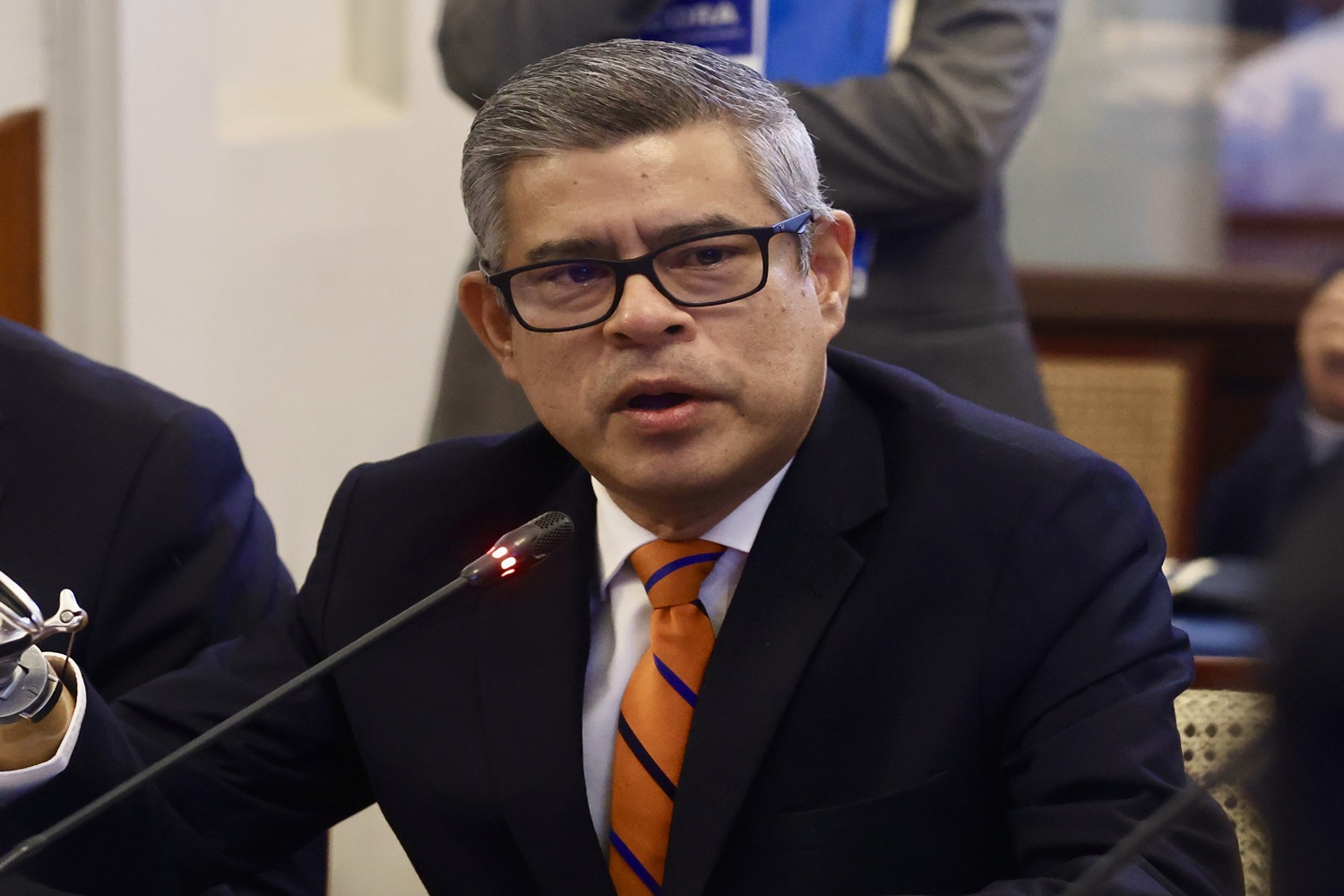
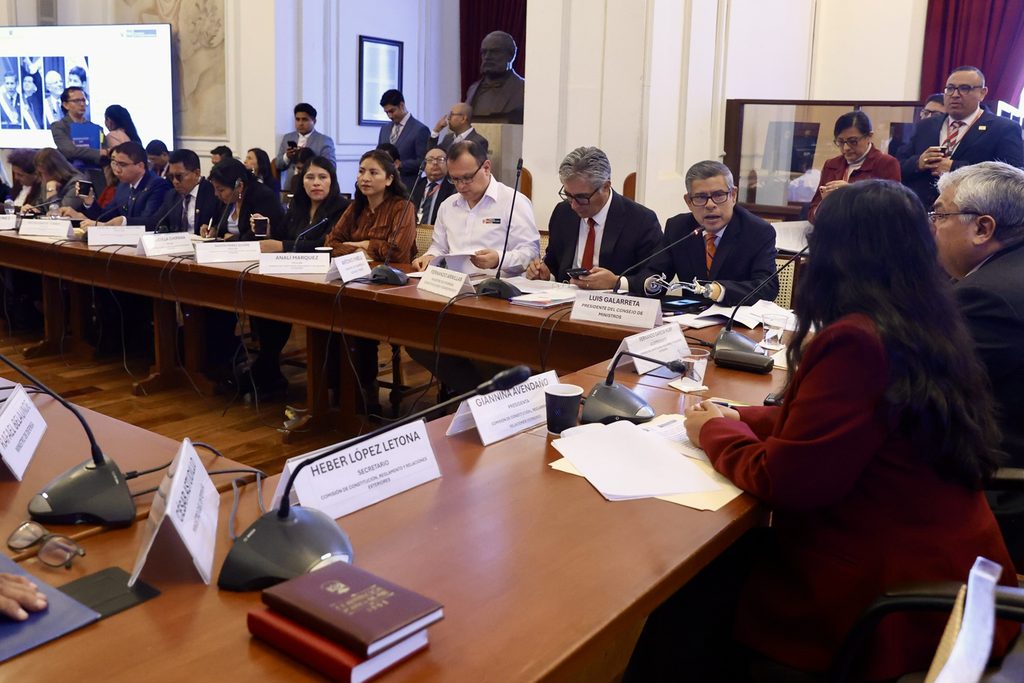
Agencia Peruana de Noticias PRENSAPERU.PE https://www.prensaperu.pe Twitter: @prensaperupe El presidente del Consejo de Ministros, Luis Galarreta Velarde, sustentó ante la Comisión de Constitución, Reglamento y Relaciones Exteriores de la Cámara de Diputados el pedido del Poder Ejecutivo para que el Congreso le delegue facultades legislativas por un plazo determinado. Lejos de limitarse a los temas de seguridad ciudadana o atención al Fenómeno El Niño, el Gobierno plantea que esta atribución es una práctica democrática ordinaria, necesaria para materializar su programa de gobierno, avanzar en reformas estructurales y cerrar brechas sociales que no pueden esperar los tiempos habituales del proceso legislativo. El debate abre preguntas centrales sobre el uso de esta herramienta, su alcance, sus límites y su impacto en el funcionamiento democrático del Estado peruano.
I. – DESARROLLO AMPLIADO Y ROBUSTECIDO
A.- El alcance de la solicitud: mucho más que emergencia
En su exposición ante los legisladores, el jefe del Gabinete Ministerial marcó una diferencia fundamental respecto a peticiones anteriores: la delegación de facultades no se pide solo por crisis o peligros inminentes, sino como mecanismo habitual de planificación de gobierno. Explicó que incluso si no existiera la amenaza del Fenómeno El Niño ni el aumento de la violencia criminal, el Ejecutivo igualmente solicitaría esta atribución, porque es la forma como cada administración organiza su agenda al iniciar el mandato.
Esta afirmación cambia el sentido del debate: ya no se trata de dar poderes especiales por una situación excepcional, sino de reconocer que el tiempo que toma legislar de forma ordinaria es demasiado lento frente a la magnitud de las transformaciones que el país necesita. El Gobierno ha señalado que lleva 42 días de gestión con medidas concretas ya aplicadas, pero muchas de ellas dependen de cambios legales profundos que no pueden dictarse solo mediante decretos de urgencia, que están restringidos a asuntos económicos y financieros.
B.- Los sectores involucrados y la amplitud de la agenda
El acompañamiento del premier por los titulares de los sectores de Interior, Defensa, Desarrollo Agrario y Riego, Vivienda, Construcción y Saneamiento, Justicia y Derechos Humanos, Trabajo y Promoción del Empleo, y Economía y Finanzas, revela que la solicitud abarca casi toda la actividad pública. No se limita a seguridad o desastres:
Seguridad y orden: Reforma del sistema penitenciario, actualización del marco normativo para la investigación criminal, fortalecimiento de las capacidades de la Policía Nacional y las Fuerzas Armadas.
Desarrollo agrario y agua: Normas para gestionar el riesgo hídrico, obras de infraestructura de riego, protección de zonas vulnerables y apoyo a la producción rural.
Vivienda y saneamiento: Aceleración de proyectos de agua potable, desagüe y vivienda social, simplificación de procedimientos para reducir costos y tiempos.
Justicia y derechos humanos: Reforma procesal, modernización del sistema de administración de justicia, agilización de procesos y garantía de derechos fundamentales.
Trabajo y economía: Mejora del clima de inversión, formalización del empleo, estímulo a la producción y al comercio, reducción de trabas administrativas.
C.- El argumento central: la brecha entre tiempo legislativo y necesidad ciudadana
El punto más fuerte presentado por Galarreta es el desajuste entre la velocidad de la demanda social y la velocidad del sistema legislativo. Mencionó que una ley puede tardar entre seis y ocho meses en aprobarse, mientras que las necesidades de la población —salud, seguridad, agua, empleo— exigen respuestas inmediatas.
Aquí surge una distinción clave:
1.- Medidas de coyuntura: se pueden resolver con decretos de urgencia o disposiciones administrativas.
2.- Reformas estructurales: requieren modificar, crear o coordinar varias leyes al mismo tiempo, ajustar instituciones y cambiar modelos de gestión; para esto, la delegación de facultades es el instrumento adecuado.
Sin embargo, esta misma amplitud es también el punto de mayor controversia: ¿hasta dónde puede llegar el alcance de lo “estructural”? ¿Qué materias quedan fuera? ¿Cómo se garantiza que no se legislará sobre temas prohibidos por la Constitución?
D.- Perspectiva democrática: tradición y control
El premier señaló que la delegación es una “costumbre democrática”, y es cierto que casi todos los gobiernos desde la Constitución de 1993 han recurrido a ella. Pero la costumbre no elimina la responsabilidad: el Congreso sigue siendo el representante directo de la ciudadanía, y al delegar, no abdica de su función, sino que establece límites, plazos y materias precisas. Todo decreto legislativo que se emita puede ser revisado, modificado o derogado por el Parlamento, y si se excede en sus facultades, puede ser declarado inconstitucional por el Tribunal Constitucional.
En el caso peruano, la experiencia muestra que cuando la delegación es amplia y mal definida, suele generar tensiones políticas; cuando es clara, limitada y bien supervisada, se convierte en una herramienta eficaz para avanzar en cambios que benefician a la población.
E.- ¿Por qué es necesario para el Perú de hoy?
El país enfrenta problemas que no se resuelven con parches:
Brechas sociales que han durado décadas: más del 30% de la población en pobreza, déficit enorme en agua, saneamiento y vivienda.
Cambio climático y Fenómeno El Niño: requieren planificación a largo plazo, inversión masiva y normas especiales.
Seguridad ciudadana: la delincuencia organizada, la extorsión y el tráfico ilícito requieren reformas integrales en justicia, penitenciaría, inteligencia y control territorial.
Productividad y competitividad: normas antiguas, contradictorias o excesivas frenan la inversión y el empleo.
Sin delegación, todos estos temas quedan atrapados en el trámite lento, y los beneficios tardan años en llegar. Con una delegación bien diseñada, el Estado puede actuar más rápido, pero siempre bajo control y rendición de cuentas.
II.- DATOS CONCEPTUALES
Delegación de facultades legislativas: Atribución constitucional establecida en el Artículo 104 de la Constitución Política del Perú, mediante la cual el Congreso de la República transfiere temporalmente al Poder Ejecutivo la capacidad de dictar normas con rango de ley. Se ejerce por plazo determinado y sobre materias específicas señaladas en la ley de delegación; el Ejecutivo no puede legislar sobre materia constitucional, tributaria, presupuestaria, ni sobre leyes orgánicas. Las normas que emite reciben el nombre de Decretos Legislativos.
Equilibrio de poderes: Principio fundamental del Estado Democrático y Social de Derecho, según el cual las funciones del Estado se distribuyen entre órganos independientes —Ejecutivo, Legislativo y Judicial— para evitar la concentración del poder y garantizar controles recíprocos. La delegación no suprime ni sustituye al Legislativo, sino que es una colaboración temporal y reglada; el Congreso mantiene siempre la facultad de control, revisión y derogación.
Reformas estructurales: Cambios de fondo en las normas, instituciones y modelos de organización del Estado y la economía, diseñados para modificar causas profundas de problemas persistentes. No son medidas de emergencia o coyunturales, sino transformaciones que buscan mejorar la productividad, la equidad, la gestión pública y el desarrollo sostenible; requieren marcos legales sólidos y coherentes, que suelen tardar mucho más en aprobarse por el trámite parlamentario ordinario.
Decreto de urgencia: Instrumento normativo que también usa el Ejecutivo, pero exclusivamente en caso de extraordinaria urgencia o interés nacional, en materia económica y financiera. Tiene rango de ley, pero es más limitado en su alcance temático y requiere que el Congreso lo examine, apruebe o desapruebe en un plazo breve. A diferencia de la delegación, no sirve para impulsar reformas integrales o de largo plazo.
Proceso legislativo ordinario: Secuencia establecida por la Constitución y el Reglamento del Congreso para elaborar, debatir y aprobar leyes. Incluye presentación, estudio en comisiones, debates en pleno y aprobación final. Su duración promedio oscila entre seis y ocho meses por iniciativa, lo que resulta insuficiente cuando se requiere modificar varios marcos legales de forma articulada y simultánea.
III. CONCLUSIONES
1.- La delegación de facultades legislativas no es una medida de emergencia exclusiva ni una herramienta de excepción, sino un mecanismo constitucional ordinario. El Gobierno tiene razón al señalar que es parte de la práctica democrática en el Perú, pero esto no significa que sea ilimitada: su validez depende siempre de que se respeten los límites materiales, temporales y temáticos establecidos en la Constitución y en la ley que la autoriza.
2.- La solicitud va mucho más allá de la seguridad o la atención de desastres. Responde a una visión de gestión que busca reformas estructurales en casi todos los sectores del Estado: economía, justicia, trabajo, agricultura, vivienda y saneamiento. El argumento central es que el tiempo que toma legislar por vía ordinaria —entre seis y ocho meses por norma— es demasiado lento para la urgencia de las necesidades sociales y el desarrollo del país.
3.- Existe una diferencia clara entre decretos de urgencia y decretos legislativos, y el Gobierno la ha distinguido bien. Los primeros sirven para temas económicos-financieros puntuales y coyunturales; los segundos permiten reformas integrales y sistemáticas. Si el objetivo es transformar el modelo de gestión pública y cerrar brechas históricas, la delegación es el instrumento adecuado, siempre que se defina con precisión qué materias comprende.
4.- El verdadero desafío no es autorizar o no autorizar, sino cómo se diseña y controla la delegación. La velocidad no debe sacrificar la calidad democrática: el Congreso debe delimitar con claridad alcance, plazo y materias; debe mantener mecanismos estrictos de seguimiento y revisión; y el Ejecutivo debe rendir cuentas de cada norma que dicte. Sin controles, la herramienta puede convertirse en un atajo que debilita el debate y la representación ciudadana; con reglas claras, puede acelerar el desarrollo.
Fuente: Agencia Peruana de Noticias PRENSAPERU.PE https://www.prensaperu.pe Twitter: @prensaperupe
Translate
Premier Galarreta: “Delegate Legislative Powers to Move Forward!” What is Being Requested: A Constitutional Tool or a Legislative Shortcut? “Even Without El Niño or Crime, We Would Request These Powers,” States the Fujimori Administration.
Peruvian News Agency PRENSAPERU.PE https://www.prensaperu.pe Twitter: @prensaperupe The President of the Council of Ministers, Luis Galarreta Velarde, presented before the Committee on Constitutional Affairs, Rules of Procedure, and Foreign Relations of the Chamber of Deputies the request submitted by the Executive Branch for the Congress to delegate legislative powers to it for a fixed period. Far from being limited to matters of public security or response to the El Niño Phenomenon, the Government argues that this authority is a standard democratic practice, necessary to implement its policy agenda, advance structural reforms, and close social gaps that cannot wait for the timelines of the ordinary legislative process. The debate raises fundamental questions regarding the use of this mechanism, its scope, its limits, and its impact on the democratic functioning of the Peruvian State.
I.- EXPANDED AND DETAILED ANALYSIS
A.- The Scope of the Request: Far More Than an Emergency Measure
During his presentation to legislators, the Head of the Cabinet of Ministers drew a fundamental distinction compared to previous requests: legislative powers are not being sought solely due to crises or imminent threats, but as a standard mechanism for government planning. He explained that even in the absence of the El Niño Phenomenon or rising criminal violence, the Executive Branch would still request this authority, as it is the established way for every administration to structure its agenda at the start of its term.
This statement redefines the core of the debate: the issue is no longer about granting special powers because of an exceptional situation, but rather acknowledging that the pace of ordinary lawmaking is far too slow given the scale of transformation the country requires. The Government has indicated that it has already implemented concrete measures during its first 42 days in office, but many of these depend on deep legal changes that cannot be achieved solely through emergency decrees — instruments which are restricted exclusively to economic and financial matters.
B.- Sectors Involved and the Breadth of the Agenda
The Premier was accompanied by the Ministers of the Interior, Defense, Agrarian Development and Irrigation, Housing, Construction and Sanitation, Justice and Human Rights, Labor and Employment Promotion, and Economy and Finance. This presence reveals that the request covers nearly all areas of public activity and is by no means limited to security or disaster management:
Security and Public Order: Reform of the prison system, updating the regulatory framework for criminal investigation, and strengthening the operational capabilities of the National Police and the Armed Forces.
Agrarian Development and Water Resources: Regulations for water risk management, investment in irrigation infrastructure, protection of vulnerable areas, and support for rural production.
Housing and Sanitation: Accelerating projects for drinking water supply, wastewater treatment, and social housing; simplifying administrative procedures to reduce costs and delays.
Justice and Human Rights: Procedural reform, modernization of the justice administration system, streamlining legal processes, and guaranteeing fundamental rights.
Labor and Economy: Improving the investment climate, promoting formal employment, stimulating production and trade, and reducing bureaucratic barriers.
C.- The Core Argument: The Gap Between Legislative Timelines and Citizen Needs
The most compelling point presented by Galarreta is the mismatch between the speed at which society demands solutions and the speed at which the legislative system operates. He noted that a single law typically takes between six and eight months to be approved, while the needs of the population — regarding health, security, water, and employment — require immediate responses.
This leads to a key distinction:
1.- Short-term or situational measures: These can be addressed through emergency decrees or administrative provisions.
2.- Structural reforms: These require amending, creating, or coordinating multiple laws simultaneously, adjusting institutional frameworks, and changing management models. For this purpose, the delegation of legislative powers is the appropriate instrument.
However, this very breadth is also the main point of controversy: How far can the definition of “structural” extend? What matters remain outside its scope? How is it guaranteed that the Executive will not legislate on matters prohibited by the Constitution?
D.- Democratic Perspective: Tradition and Oversight
The Premier stated that delegating powers is a “democratic tradition.” Indeed, nearly every administration since the 1993 Constitution has resorted to this mechanism. Yet tradition does not eliminate accountability: the Congress remains the direct representative of the citizenry. When it delegates authority, it does not abdicate its function, but rather establishes clear limits, timeframes, and specific subject areas. Every Legislative Decree issued can be reviewed, modified, or repealed by Parliament; and if it exceeds the scope of authority granted, it may be declared unconstitutional by the Constitutional Court.
Peruvian experience shows that when delegations are broad and vaguely defined, they tend to generate political tensions. When they are clear, limited, and subject to proper oversight, they become an effective tool for advancing changes that benefit the population.
E.- Why Is This Necessary for Peru Today?
The country faces deep-seated problems that cannot be solved with temporary fixes:
Persistent social gaps: Over 30% of the population lives in poverty, and there is a massive deficit in access to water, sanitation, and housing.
Climate change and the El Niño Phenomenon: These require long-term planning, large-scale investment, and specialized regulatory frameworks.
Public security: Organized crime, extortion, and illicit trafficking demand comprehensive reforms across the justice system, prison administration, intelligence services, and territorial control.
Productivity and competitiveness: Outdated, contradictory, or overly complex regulations act as brakes on investment and job creation.
Without legislative delegation, all these issues remain trapped in slow procedural cycles, and benefits take years to materialize. With a well-designed delegation, the State can act more rapidly — while always remaining subject to oversight and accountability.
II.- CONCEPTUAL DEFINITIONS
Delegation of Legislative Powers: A constitutional authority established under Article 104 of the Political Constitution of Peru, whereby the Congress of the Republic temporarily transfers to the Executive Branch the power to issue regulations with the force of law. This authority is granted for a fixed term and applies only to specific matters defined in the enabling law. The Executive Branch cannot legislate on constitutional matters, taxation, budgetary issues, or organic laws. Regulations issued under this authority are known as Legislative Decrees.
Separation of Powers: A fundamental principle of the Democratic and Social State governed by the rule of law, according to which State functions are distributed among independent bodies — the Executive, the Legislature, and the Judiciary — to prevent the concentration of power and to ensure mutual checks and balances. Delegation does not replace or suppress the Legislative Branch; rather, it constitutes a temporary and regulated form of cooperation. The Congress always retains the power to oversee, review, and repeal regulations issued.
Structural Reforms: Fundamental changes to the legal framework, institutions, and organizational models of the State and the economy, designed to address the root causes of persistent problems. These are not emergency or short-term measures, but transformations aimed at improving productivity, equity, public management, and sustainable development. They require solid and coherent legal frameworks, which typically take much longer to approve through the ordinary parliamentary process.
Emergency Decree: A regulatory instrument also used by the Executive Branch, but limited exclusively to situations of extraordinary urgency or national interest, and restricted to economic and financial matters. It carries the force of law, but has a narrower scope and must be reviewed, approved, or rejected by Congress within a short timeframe. Unlike legislative delegation, it cannot be used to promote comprehensive or long-term reforms.
Ordinary Legislative Process: The formal sequence established by the Constitution and the Rules of Procedure of Congress for drafting, debating, and approving laws. It includes the submission of proposals, study by committees, plenary debate, and final approval. On average, this process takes between six and eight months per initiative — a timeline that becomes insufficient when multiple legal frameworks need to be modified in a coordinated and simultaneous manner.
III.- CONCLUSIONS
1.- The delegation of legislative powers is not an exclusive emergency measure or an exceptional tool, but a standard constitutional mechanism. The Government is correct in stating that it forms part of democratic practice in Peru. However, this does not mean it is unlimited: its validity always depends on strict compliance with the material, temporal, and thematic limits established by the Constitution and by the law that authorizes it.
2.- The request goes far beyond security or disaster response. It responds to a governance vision that seeks structural reforms across almost every sector of the State: economy, justice, labor, agriculture, housing, and sanitation. The central argument is that the pace of ordinary lawmaking — six to eight months per regulation — is simply too slow given the urgency of social needs and the development requirements of the country.
3.- There is a clear distinction between Emergency Decrees and Legislative Decrees, and the Government has correctly highlighted this difference. The former are intended for specific, short-term economic and financial matters; the latter allow for comprehensive and systemic reform. When the objective is to transform public management models and close historical gaps, delegation is the appropriate instrument — provided that the scope of matters it covers is defined with precision.
4.- The real challenge is not whether to authorize or reject the request, but how the delegation is designed and regulated. Speed must not come at the expense of democratic quality: Congress must clearly define the scope, timeframe, and subject areas; it must maintain strict mechanisms for monitoring and review; and the Executive Branch must be held accountable for every regulation it issues. Without proper oversight, this tool can become a shortcut that weakens public debate and representation. With clear rules in place, it can accelerate national development.
Source: Peruvian News Agency PRENSAPERU.PE https://www.prensaperu.pe Twitter: @prensaperupe