
Agencia Peruana de Noticias PRENSAPERU.PE https://www.prensaperu.pe Twitter: @prensaperupe A los jóvenes de hoy: “Quizás no lo imaginen, quizás no lo crean. Pero hubo un tiempo en que la pantalla no era un escaparate de vulgaridad, ni un escenario para el grito y la burla. Hubo una época donde quienes hacían televisión eran ciudadanos íntegros, éticos y respetuosos: verdaderos líderes que entendieron que ante ellos no había un público consumidor, sino una nación entera esperando ser educada, respetada y ennoblecida. No buscaban el rating a cualquier precio, buscaban formar mejores personas. Esa televisión existió, fue real, y en estas líneas recordamos a dos de sus grandes referentes”.
LOS ARQUITECTOS DE UNA TELEVISIÓN CON VALORES: PABLO DE MADALENGOITIA Y KIKO LEEDGARD
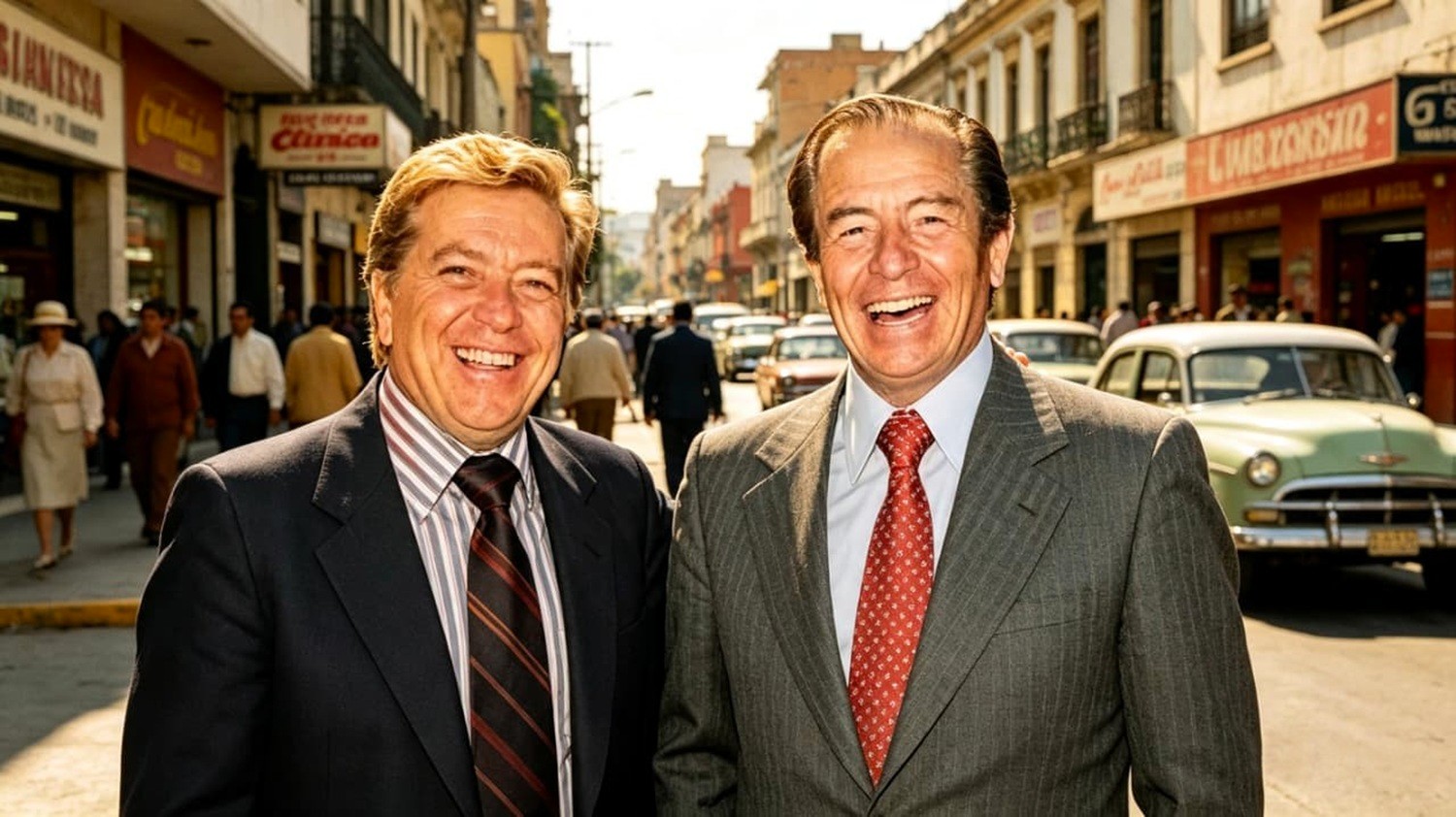
La fotografía que acompaña esta nota periodística es un testimonio vivo de una época dorada de la televisión peruana. Dos nombres sobresalen por su compromiso con la cultura, la educación y la dignidad del espectador: Pablo de Madalengoitia y Kiko Ledgard.
PABLO DE MADALENGOITIA
Nacido en el seno de una familia vinculada a las letras y al periodismo, Pablo de Madalengoitia construyó una trayectoria ejemplar en la radio y televisión peruanas. Se le reconoce como uno de los pioneros en entender que la pantalla chica no era un simple aparato de entretenimiento, sino una poderosa herramienta educativa. Con un estilo serio, culto y respetuoso, condujo espacios que combinaban cultura, historia y formación cívica. Su voz y su presencia transmitían autoridad moral y seriedad; no necesitaba recurrir al escándalo ni a la vulgaridad para atraer al público. Su trabajo se basaba en el estudio riguroso, la preparación minuciosa y el profundo amor por el Perú y su identidad. Representaba al comunicador que educaba mientras informaba y que formaba ciudadanos mientras entretenía.
KIKO LEEDGARD
Por su parte, Kiko Ledgard fue la otra cara de esa televisión de calidad: un animador que conjugaba elegancia, ingenio y decoro. Conocido por su trato afable, su cultura general y su capacidad para tratar cualquier tema con altura, convirtió cada programa en un espacio de encuentro familiar. No apelaba al grito, al chiste fácil o a la burla degradante; su humor era inteligente, su trato cortés y su presencia en pantalla generaba confianza y respeto. Fue un hombre de televisión que entendió que la audiencia merece lo mejor, no lo más bajo. Su labor se desarrolló bajo el principio de que la pantalla pública es también un espacio de formación de costumbres y de refuerzo de los vínculos sociales y nacionales.
Juntos, y cada uno por su camino, encarnaron una época donde la televisión estaba concebida como un servicio a la nación, no solo como un negocio. Los dueños de los medios de entonces, si bien buscaban sostenibilidad económica, comprendían que su responsabilidad social estaba por encima de cualquier ganancia inmediata. Existía un equilibrio entre el aspecto comercial y la misión cultural y educativa.
EL VIRAJE: DE SERVICIO PÚBLICO A MERCANCÍA SIN VALORES
Hoy el panorama es radicalmente distinto. La televisión de señal abierta en el Perú ha transitado hacia un modelo donde prima la lógica mercantilista: el contenido se diseña no por su valor formativo, sino por su capacidad de generar rating y publicidad. Se ha instalado lo que muchos denominan —con dolor y sinceridad— una verdadera degradación de la programación: espacios donde la vulgaridad, la agresividad, la burla al prójimo y la exhibición de conductas negativas se presentan como entretenimiento. Programas que incitan al conflicto, que ridiculizan a las personas, que normalizan la falta de respeto y que, en lugar de elevar el nivel del espectador, se acomodan a lo más bajo de sus instintos.
Los dueños de los medios han cambiado también su visión: hoy impera una lógica de mercado sin brújula moral. Todo parece valer con tal de obtener utilidades. Ya no se consulta qué aporta el contenido al espectador, sino cuánto rinde en encuadro económico. Se ha perdido el sentido de responsabilidad social: la televisión deja de ser un instrumento de formación ciudadana para convertirse en un producto más, sujeto a las leyes del mercado sin ética ni límites. El resultado es una programación que, en lugar de fortalecer la identidad nacional, el respeto a las instituciones y la dignidad humana, erosiona esos pilares día tras día.
DATOS CONCEPTUALES
Para mejorar el proceso de asimilar el contenido que quiero compartirles, es preciso definir categorías que permitan comprender la profundidad del contraste entre ambas épocas:
TELEVISIÓN EDUCATIVA-FORMATIVA: Modelo comunicacional orientado a la transmisión de conocimientos, valores cívicos, identidad nacional y formación integral del espectador. Su fin no es solo entretener, sino cultivar el pensamiento crítico, el respeto y el amor por la patria.
TELEVISIÓN COMERCIAL-MERCANTILISTA: Paradigma donde el contenido se subordina a la lógica del mercado y la maximización de ganancias. La programación se diseña en función del rating y la publicidad, relegando la función educativa y ética a un segundo plano.
DIGNIDAD HUMANA: Valor intrínseco de toda persona, que debe ser respetado y promovido en todo espacio público, incluyendo los medios de comunicación.
RESPONSABILIDAD SOCIAL DEL MEDIO: Obligación ética y jurídica de los medios de comunicación de contribuir al bienestar común, a la formación ciudadana y al fortalecimiento de la cultura nacional.
DEFORMACIÓN AXIOLÓGICA: Proceso mediante el cual se alteran, minimizan o invierten los valores sociales fundamentales, sustituyéndolos por patrones conductuales contrarios a la convivencia pacífica y al respeto mutuo.
DATOS CONTEXTUALES
1.- La televisión peruana transitó de un modelo formativo y cultural a uno prioritariamente comercial, en el que el contenido se subordina a la lógica de ganancias inmediatas en lugar del bienestar del espectador.
2.- Figuras como Pablo de Madalengoitia y Kiko Ledgard representan un paradigma de comunicación basado en el respeto, la preparación intelectual y la responsabilidad social, valores que hoy han sido desplazados por la búsqueda del escándalo y la vulgaridad.
3.- El cambio de contenido responde también a una transformación en la visión de los propietarios de los medios, donde la rentabilidad económica ha desplazado el compromiso con la educación, la cultura y los valores cívicos.
4.- La ausencia de contenidos constructivos deteriora progresivamente la convivencia social y la dignidad humana, al normalizar conductas contrarias al respeto, la solidaridad y la identidad nacional.
5.- Recuperar la función educativa y cultural de la televisión sigue siendo una tarea pendiente y necesaria, no solo para los comunicadores, sino para la sociedad entera, que tiene derecho a recibir contenidos que enriquezcan y no que degraden.
Fuente: Agencia Peruana de Noticias PRENSAPERU.PE https://www.prensaperu.pe Twitter: @prensaperupe
Translate
A time when television educated and entertained. Today, it neither educates nor entertains—it distorts! Pablo de Madalengoitia and Kiko Ledgard—when the screen uplifted the human spirit. Memories of a television era that honored Peru.
Peruvian News Agency PRENSAPERU.PE https://www.prensaperu.pe Twitter: @prensaperupe “You may not imagine it, you may not believe it. But there was a time when the screen was neither a showcase for vulgarity nor a stage for shouting and mockery. There was an era when those who made television were upright, ethical, and respectful citizens — true leaders who understood that before them stood not a consuming audience, but an entire nation waiting to be educated, respected, and ennobled. They did not seek ratings at any cost; they sought to build better human beings. That television existed. It was real. And in these lines, we honor two of its greatest figures.”
THE ARCHITECTS OF TELEVISION WITH VALUES: PABLO DE MADALENGOITIA AND KIKO LEDGARD
The photograph accompanying this news story is a living testimony to a golden age of Peruvian television. Two names stand out for their commitment to culture, education, and the dignity of the viewer: Pablo de Madalengoitia and Kiko Ledgard.
PABLO DE MADALENGOITIA
Born into a family linked to letters and journalism, Pablo de Madalengoitia built an exemplary career in Peruvian radio and television. He is recognized as one of the pioneers who understood that the small screen was not merely an entertainment device, but a powerful educational tool. With a serious, cultured, and respectful style, he hosted programs that combined culture, history, and civic education. His voice and presence conveyed moral authority and gravity; he never needed scandal or vulgarity to attract an audience. His work was rooted in rigorous study, meticulous preparation, and a deep love for Peru and its identity. He embodied the communicator who educated while informing, and who shaped citizens while entertaining.
KIKO LEDGARD
For his part, Kiko Ledgard represented the other face of quality television: a host who combined elegance, wit, and decorum. Known for his affable manner, his broad culture, and his ability to address any subject with distinction, he turned every program into a space for family gathering. He never resorted to shouting, cheap jokes, or degrading mockery; his humor was intelligent, his manner courteous, and his presence on screen inspired confidence and respect. He was a man of television who understood that audiences deserve the best, not the lowest. His work rested on the principle that the public screen is also a space for shaping customs and strengthening social and national bonds.
Together, each along his own path, they embodied an era when television was conceived as a service to the nation — not merely as a business. The media owners of that time, while seeking financial sustainability, understood that their social responsibility stood above any immediate profit. There existed a balance between the commercial aspect and the cultural and educational mission.
THE SHIFT: FROM PUBLIC SERVICE TO A COMMODITY WITHOUT VALUES
Today the landscape is radically different. Open-signal television in Peru has moved toward a model dominated by a mercantilist logic: content is designed not for its formative value, but for its ability to generate ratings and advertising. What many describe — with sorrow and sincerity — as a true degradation of programming has taken hold: spaces where vulgarity, aggression, mockery of others, and the display of negative behaviors are presented as entertainment. Programs that incite conflict, ridicule people, normalize disrespect, and — instead of elevating the viewer — accommodate their basest instincts.
Media owners have also shifted their worldview: today a market logic without moral compass prevails. Everything seems permissible in the pursuit of profit. No longer do they ask what content contributes to the viewer, but how much it yields in economic returns. The sense of social responsibility has been lost: television has ceased to be an instrument of civic formation and has become just another product, subject to market laws without ethics or boundaries. The result is programming that, rather than strengthening national identity, respect for institutions, and human dignity, erodes those foundations day by day.
CONCEPTUAL FRAMEWORK
To fully grasp the contrast between these two eras, it is essential to define key categories:
EDUCATIONAL-FORMATIVE TELEVISION: A communicational model oriented toward the transmission of knowledge, civic values, national identity, and the integral formation of the viewer. Its purpose is not only to entertain, but to cultivate critical thinking, respect, and love for the homeland.
COMMERCIAL-MERcantILIST TELEVISION: A paradigm in which content is subordinated to market logic and profit maximization. Programming is designed around ratings and advertising, relegating educational and ethical functions to a secondary plane.
HUMAN DIGNITY: The intrinsic worth of every human being, which must be respected and promoted in all public spaces, including the media.
SOCIAL RESPONSIBILITY OF THE MEDIA: The ethical and legal obligation of media outlets to contribute to the common good, civic education, and the strengthening of national culture.
AXIOLOGICAL DEGRADATION: A process through which fundamental social values are altered, minimized, or inverted, and replaced by behavioral patterns contrary to peaceful coexistence and mutual respect.
CONTEXTUAL CONCLUSIONS
1.- Peruvian television transitioned from a formative and cultural model to a predominantly commercial one, where content is subordinated to the logic of immediate profit rather than the viewer’s well‑being.
2.- Figures such as Pablo de Madalengoitia and Kiko Ledgard represent a paradigm of communication based on respect, intellectual preparation, and social responsibility — values that have since been displaced by the pursuit of scandal and vulgarity.
3.- This shift in content also reflects a transformation in media ownership culture, where financial profitability has displaced commitment to education, culture, and civic values.
4.- The absence of constructive content progressively erodes social coexistence and human dignity by normalizing behaviors contrary to respect, solidarity, and national identity.
5.- Restoring television’s educational and cultural function remains a necessary and pending task — not only for communicators, but for society as a whole, which holds the right to receive content that enriches rather than degrades.
Source: Peruvian News Agency PRENSAPERU.PE https://www.prensaperu.pe Twitter: @prensaperupe