
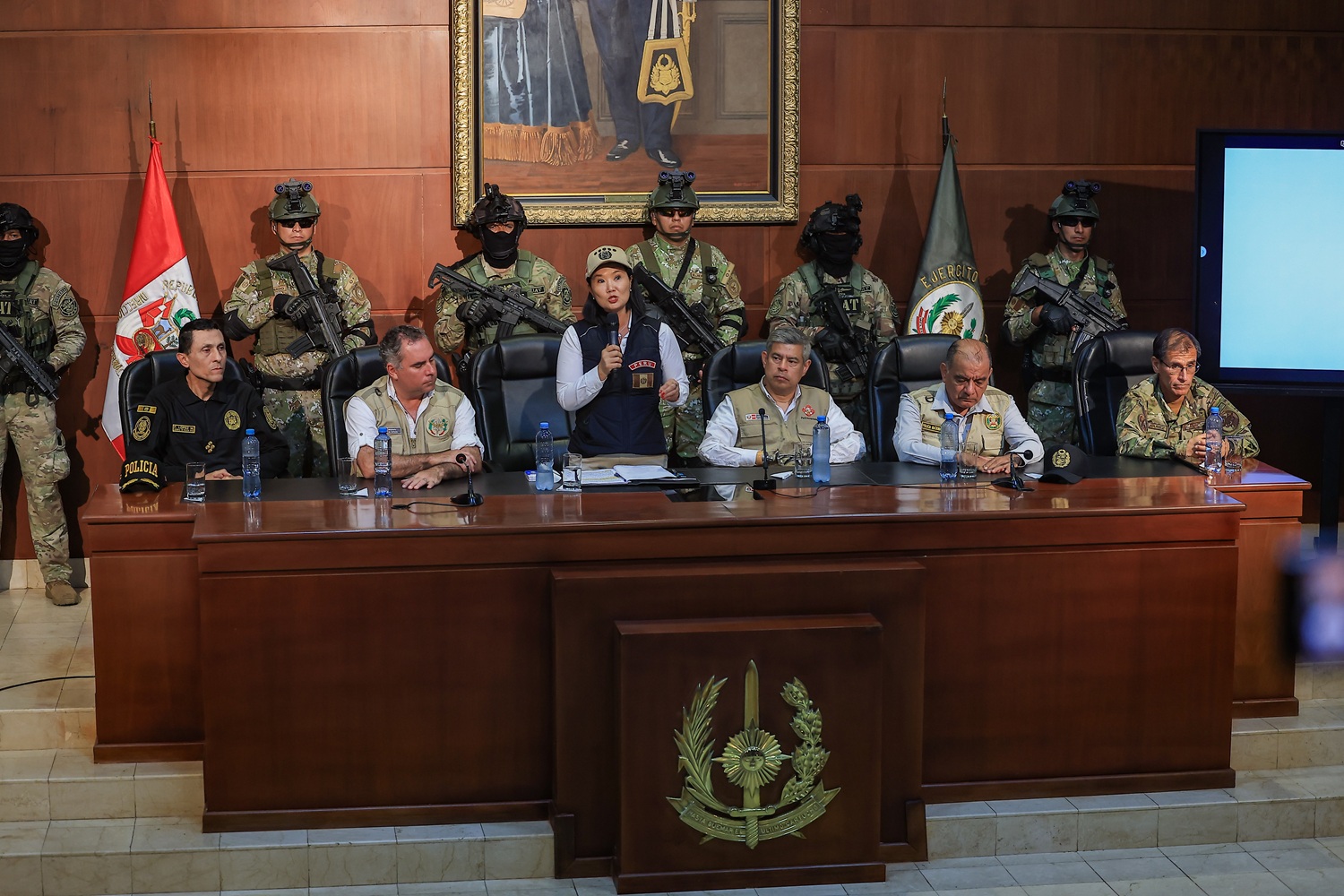
Agencia Peruana de Noticias PRENSAPERU.PE https://www.prensaperu.pe Twitter: @prensaperupe La presidenta de la República, Keiko Fujimori, reafirmó en la víspera que la estrategia de seguridad impulsada por el Ejecutivo a través del Comando Unificado “no tiene punto de retorno” y constituye una decisión “irreversible”. Desde el Cuartel General del Ejército, la jefa de Estado destacó que el nuevo organismo reúne a 1,300 efectivos de élite de las Fuerzas Armadas y la Policía Nacional, quienes ya han iniciado su despliegue en distintas ciudades y regiones del país. Sin embargo, los ciudadanos en las calles le reiteran que ya basta de discursos y paseos, queremos ¡Resultados!
La primera mandataria, señaló: “Sabemos que es un buen primer paso, pero de un largo camino que seguramente será difícil, pero que quede bien claro que no hay punto de retorno. Esta decisión es irreversible”, afirmó la mandataria. Anunció además que el Ejecutivo presentará reportes periódicos semanales con cifras, estadísticas e imágenes de los avances de esta estrategia.
Durante el acto, la presidenta hizo un llamado directo al Congreso de la República, y utilizó palabras ofensivas y de contenido antidemocrático: “Es momento de definiciones y tenemos que saber de qué lado están. El pueblo peruano nos juzgará”. Amplió su escasa reflexión señalando que el país debe elegir entre el lado de la violencia o el de la paz: “¿Estamos del lado del Movadef, de Sendero Luminoso o de nuestras Fuerzas Armadas y de Chavín de Huántar?”. Ósea que estar de lado de la Constitución y de las buenas costumbres es ser sedicioso, vuelve a patinar verbal y compulsivamente Keiko Fujimori ante su inminente desastrosa administración gubernamental.
Del mismo, la presidenta Fujimori celebró las conductas desalineadas de sus ministros en la víspera, durante su presentación ante el Senado de la República; la presidenta expresó sin titubear su respaldo al ministro del Interior, César Astudillo, tras haber mostrado una conducta matonesca y ramplona a la majestad del parlamento peruano, específicamente en el Senado.
En otro momento, Fujimori convocó al sector privado —empresas de telecomunicaciones y del sistema financiero— y al Poder Judicial a integrar este esfuerzo: “Hacemos un llamado a las diferentes organizaciones que cuentan con información para que se pongan al servicio de esta lucha”. Remarcó: “Esperemos que todos estén a la altura”.
PRIMEROS RESULTADOS EN CIFRAS
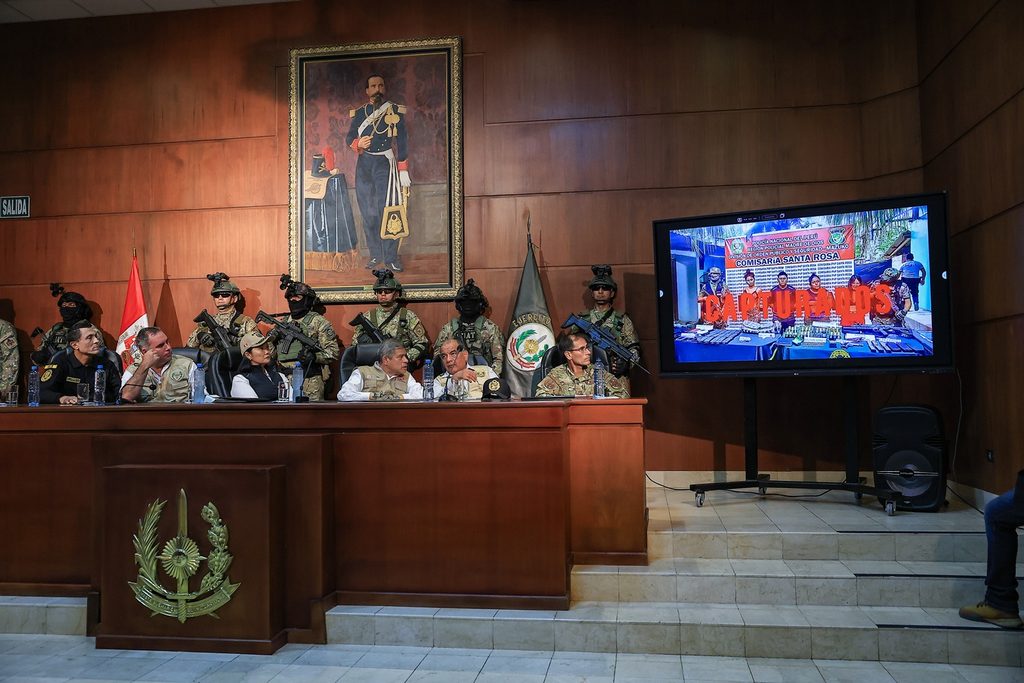
El Comandante General de la Policía Nacional, General Fredy López, informó que en sus primeros tres días de operación, el Comando Unificado logró importantes resultados en La Libertad, Piura, Madre de Dios, Puno, Lima y Callao:
1.- En Trujillo, La Libertad: 13 personas requisitoriadas detenidas; más de US$ 42,000 incautados de minería ilegal; 217 extranjeros intervenidos, 60 en situación irregular en proceso de expulsión; requisa en el Penal El Milagro con recuperación de objetos prohibidos; 210 armas incautadas entre agosto y setiembre.
2.- En Madre de Dios: Captura de Aldo Blas Sánchez Huamán, alias “Leo”, presunto cabecilla de una banda criminal en “La Pampa”; incautación de armas, municiones y un vehículo.
3.- En el Callao: 5 personas detenidas; armas, municiones y teléfonos celulares incautados.
4.- En Lima: 2 delincuentes abatidos y 3 detenidos; incautación de armas y motocicletas.
5.- En Piura: Varias personas detenidas; armas de fuego y cartuchos de dinamita decomisados.
El General de División Miguel Álvarez Villalobos, del Comando Conjunto de las Fuerzas Armadas, precisó que el apoyo militar se brinda a requerimiento de la Policía, cubriendo los anillos de seguridad durante las intervenciones. Señaló además que, conforme se obtenga inteligencia de alto valor, las fuerzas especiales de ambas instituciones ejecutarán acciones para capturar o neutralizar a los líderes de las organizaciones criminales.
DATOS CONCEPTUALES
Comando Unificado: Es una instancia operativa conjunta integrada por efectivos especializados de las Fuerzas Armadas y la Policía Nacional del Perú, creada para coordinar y ejecutar acciones contra la delincuencia común y el crimen organizado a nivel nacional, bajo liderazgo político del Poder Ejecutivo.
Operaciones especiales: Son acciones tácticas ejecutadas por personal altamente entrenado, dirigidas contra objetivos estratégicos como líderes de bandas criminales, que requieren coordinación interinstitucional e inteligencia previa para minimizar riesgos y maximizar resultados.
Anillos de seguridad: Es el esquema de despliegue de fuerzas durante una intervención policial o militar: fuerzas policiales actúan en el punto central de la operación, mientras que las Fuerzas Armadas aseguran el perímetro exterior para impedir fugas o interferencias externas.
CONCLUSIONES
1.- El lanzamiento del Comando Unificado marca un cambio de estrategia en la seguridad ciudadana, con despliegue simultáneo en varias regiones y respaldo directo desde el más alto nivel del Ejecutivo. Su carácter “irreversible” busca transmitir firmeza tanto a la ciudadanía como a las organizaciones criminales.
2.- Los primeros resultados demuestran capacidad operativa conjunta, aunque tres días de acción no permiten aún medir impacto sostenido. La periodicidad en la difusión de resultados será clave para mantener la confianza ciudadana y la transparencia.
3.- El llamado al Congreso plantea un desafío político: la seguridad no debe ser materia de confrontación entre poderes, sino de consenso nacional. Las facultades legislativas que el Ejecutivo requiere demandan decisión rápida del Legislativo.
4.- La incorporación del sector privado y del sistema de justicia reconoce que el crimen organizado opera en red; combatirlo exige información financiera, tecnológica y judicial coordinada, no solo presencia policial.
5.- El respaldo al ministro Astudillo demuestra la carencia de virtudes democráticas y refleja un autoritarismo que destruye las buenas practicas parlamentarias y las relaciones entre poderes del Estado. Las discrepancias políticas no deben debilitar a quienes lideran la defensa de la ciudadanía, y sobre todo el respeto y la dignidad humana.
Fuente: Agencia Peruana de Noticias PRENSAPERU.PE https://www.prensaperu.pe Twitter: @prensaperupe
Translate
Keiko Fujimori: the fight against crime is an irreversible decision a ‘Unified Command’ is deploying 1,300 personnel across the country. However, citizens on the streets reiterate that they have had enough of speeches and empty gestures; they want results!
Peruvian News Agency PRENSAPERU.PE https://www.prensaperu.pe Twitter: @prensaperupe Keiko Fujimori, President of the Republic, reaffirmed yesterday that the security strategy implemented by the Executive Branch through the Unified Command “has no turning back” and constitutes an “irreversible” decision. Speaking from the Army General Headquarters, the Head of State emphasized that the new body brings together 1,300 elite personnel from the Armed Forces and the National Police, who have already begun their deployment in various cities and regions across the country. However, citizens on the streets continue to tell her: enough of speeches and appearances, we want results!
The President stated: “We know this is a good first step, on a long road that will surely be difficult, but let it be perfectly clear: there is no turning back. This decision is irreversible.” She also announced that the Executive Branch will issue weekly reports containing figures, statistics, and images showing the strategy’s progress.
During the event, the President issued a direct call to the Congress of the Republic, using offensive and anti-democratic language: “It is time to take a stand. We must know which side everyone is on. The Peruvian people will judge us.” Offering little further reflection, she framed the country’s choice as between violence or peace: “Are we on the side of Movadef, Shining Path, or on the side of our Armed Forces and the Chavín de Huántar operation?” In other words, upholding the Constitution and proper conduct is somehow being treated as sedition. Once again, Keiko Fujimori appears to be stumbling verbally and compulsively, reflecting the evident shortcomings of her administration.
Likewise, President Fujimori praised inappropriate behavior displayed by her ministers during their appearance before the Senate. Without hesitation, she expressed full backing for Interior Minister César Astudillo, following his confrontational and disrespectful conduct toward the authority of the Peruvian Parliament.
Fujimori also called upon the private sector telecommunications and financial system entities and the Judiciary to join this effort: “We call upon different organizations that hold information to place it at the service of this struggle.” She added: “We hope everyone rises to the occasion.”
FIRST RESULTS IN FIGURES
National Police Commander-in-Chief General Fredy López reported that in its first three days of operations, the Unified Command achieved significant results in La Libertad, Piura, Madre de Dios, Puno, Lima, and Callao:
1.- Trujillo, La Libertad: 13 wanted persons detained; over US$42,000 seized from illegal mining; 217 foreign nationals checked, 60 in irregular status and being processed for expulsion; search operation at El Milagro Prison recovering prohibited items; 210 weapons seized between August and September.
2.- Madre de Dios: Capture of Aldo Blas Sánchez Huamán, known as “Leo,” alleged leader of a criminal organization operating in the area known as “La Pampa”; weapons, ammunition, and one vehicle seized.
3.- Callao: 5 persons detained; weapons, ammunition, and mobile phones seized.
4.- Lima: 2 criminals killed in confrontation and 3 persons detained; weapons and motorcycles seized.
5.- Piura: Several persons detained; firearms and sticks of dynamite seized.
Division General Miguel Álvarez Villalobos, from the Joint Command of the Armed Forces, clarified that military support is provided at the request of the National Police, securing security perimeters during interventions. He further indicated that as actionable intelligence becomes available on high-value strategic targets linked to criminal organizations, special operations forces from both institutions will carry out actions to capture or neutralize their leaders.
CONCEPTUAL DATA
Unified Command: A joint operational body made up of specialized personnel from the Armed Forces and the National Police of Peru, established to coordinate and carry out actions against ordinary and organized crime nationwide, under the political leadership of the Executive Branch.
Special operations: Tactical missions carried out by highly trained personnel, targeting strategic objectives such as criminal organization leaders. These require inter-institutional coordination and prior intelligence work to minimize risk and maximize effectiveness.
Security perimeters: The force deployment scheme during police or military interventions: police forces operate at the scene of the operation, while the Armed Forces secure the surrounding area to prevent escape or outside interference.
CONCLUSIONS
1.- The launch of the Unified Command marks a shift in citizen security strategy, with simultaneous deployment across multiple regions and direct backing from the highest levels of the Executive. Describing the effort as “irreversible” seeks to convey resolve to both the public and criminal organizations.
2.- Early results demonstrate effective joint operational capacity, though three days of activity are insufficient to measure long-term impact. Regular public reporting will be essential to maintain citizen trust and transparency.
3.- The call to Congress highlights a political challenge: security should not be a source of confrontation between branches of government, but rather a matter of national consensus. The legislative powers requested by the Executive require timely decision-making from the Legislature.
4.- Engaging the private sector and the justice system recognizes that organized crime operates as a network; combating it requires coordinated financial, technological, and legal information sharing, not just increased police presence.
5.- The President’s continued support for Minister Astudillo demonstrates a lack of democratic standards and reflects an authoritarian approach that undermines parliamentary norms and institutional relations. Political disagreements should never weaken those responsible for protecting citizens, nor should they override respect for institutions and human dignity.
Source: Peruvian News Agency PRENSAPERU.PE https://www.prensaperu.pe Twitter: @prensaperupe