
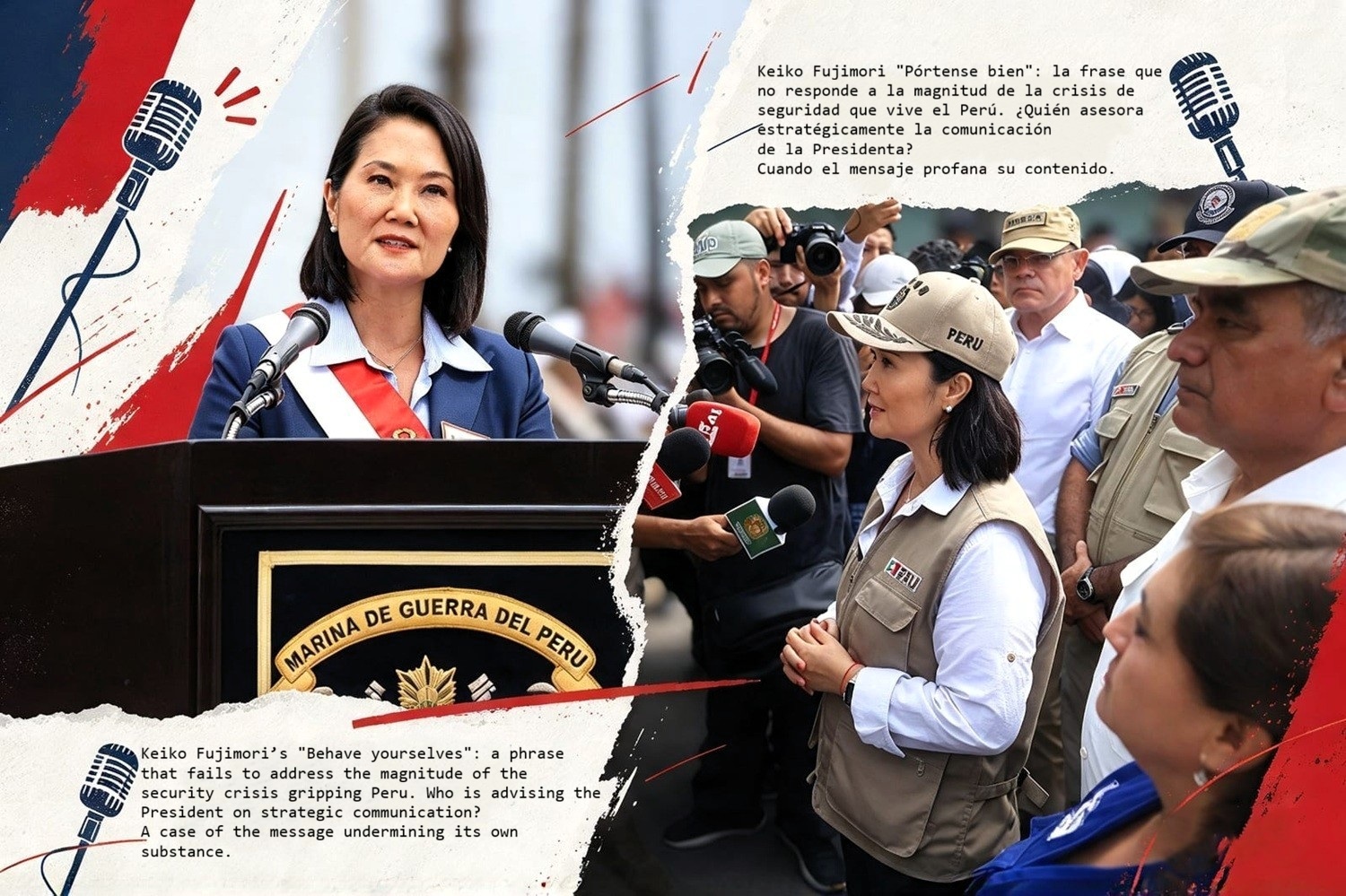
Agencia Peruana de Noticias PRENSAPERU.PE https://www.prensaperu.pe Twitter: @prensaperupe La palabra de quien ejerce la Jefatura de Estado pesa más que la de cualquier ciudadano. Cada declaración, cada gesto y cada mensaje no solo informan: construyen confianza, establecen prioridades y proyectan la estabilidad de un país. En un solo día de homenaje patrio y luego en una visita a un centro de máxima seguridad, recientes intervenciones de la Presidenta han puesto sobre la mesa una preocupación que va más allá de las frases: la necesidad de que la máxima autoridad cuente con información precisa, asesoría estratégica y sensibilidad institucional al momento de dirigirse al país.
El 8 de octubre, fecha en que el Perú conmemora el 147º aniversario del Combate Naval de Angamos y rinde homenaje al Almirante Miguel Grau Seminario, y el Día de la Marina de Guerra del Perú, la ceremonia debió centrarse en el legado del héroe nacional. Sin embargo, la Presidenta se apartó del propósito de la efeméride para abordar temas de coyuntura política, específicamente las dificultades que enfrenta su gobierno con el Congreso respecto a las facultades legislativas solicitadas. Estas declaraciones, emitidas a la prensa en un acto de unidad nacional y recuerdo histórico, opacaron el homenaje y generaron cuestionamientos sobre la pertinencia de sus palabras en ese contexto.
Lo que agrava la observación es el desconocimiento implícito sobre la propia figura de Miguel Grau. El “Caballero de los Mares” no solo fue un marino excepcional: antes de la guerra, fue Diputado por Paita, representante del pueblo en el Parlamento de su tiempo. Renunció a su curul voluntariamente para volver a ponerse el uniforme y asumir el mando del monitor Huáscar, cuando pocos estaban dispuestos a enfrentar a la flota enemiga. Grau demostró que las instituciones y la defensa de la patria están por encima de cualquier diferencia entre poderes del Estado. Usar su homenaje para plantear discrepancias con el Legislativo resulta particularmente inoportuno, porque Grau es precisamente el símbolo de que cuando la nación está en juego, los conflictos políticos se dejan de lado.
“Pórtense bien”
A este episodio se suma la reciente visita al Penal de Milagro, en Trujillo. Allí, frente a los internos de uno de los centros penitenciarios de mayor peligrosidad del país, la Presidenta les dijo simplemente: “pórtense bien”. La frase, aunque bienintencionada, resulta insuficiente ante la magnitud de una crisis de seguridad que involucra bandas con estructura nacional y transnacional, recursos millonarios y presuntas vinculaciones incluso con agentes del Estado. Más aún cuando anunció una especie de “recompensa” para quienes delaten desde dentro, sin explicar cómo se garantizará la protección de quienes colaboren, con qué recursos se premiará y qué se hará con la información recibida. La ciudadanía espera de su Presidenta propuestas sólidas, políticas integrales y respuestas institucionales, no recomendaciones que cualquiera podría dar en una conversación cotidiana.
No se trata de un hecho aislado. En otras ocasiones, la Presidenta ha sido criticada por priorizar contenidos de redes sociales —como publicaciones en TikTok— en momentos en que el país enfrentaba problemas urgentes. Cada vez que la máxima autoridad habla o actúa, comunica algo más que el mensaje inmediato: comunica prioridades. Cuando se desvía del propósito de actos solemnes, cuando minimiza problemas complejos con frases sencillas o cuando distrae la atención de lo urgente con contenidos triviales, lo que se transmite es inseguridad y falta de enfoque.
El problema de fondo no es solo lo que se dice, sino cuándo y dónde se dice. Una jefatura de Estado requiere equipo que asesore no solo sobre qué comunicar, sino sobre el momento, el lugar y la forma adecuada. La palabra presidencial debe elevar el debate, no dispersarlo; debe unir, no distraer; debe reflejar la magnitud de los retos que enfrenta el país, no simplificarlos hasta hacerlos irreconocibles. El Perú merece que su máxima autoridad esté bien informada, bien asesorada y consciente de que cada palabra suya tiene peso, especialmente en los momentos más importantes de la vida nacional.
DATOS CONCEPTUALES
Pertinencia institucional: Es la cualidad de las intervenciones públicas que consiste en decir lo adecuado, en el momento y lugar adecuados. En actos oficiales de carácter histórico o solemne, el mensaje debe guardar relación con el propósito del evento, sin desviarlo hacia temas de coyuntura partidaria o política cotidiana.
Asesoría estratégica: Es el apoyo profesional especializado que orienta a los gobernantes sobre qué decir, cómo decirlo y en qué momento, considerando el impacto institucional, social y político de cada declaración pública. No se trata de cambiar lo que se piensa, sino de comunicarlo con responsabilidad y oportunidad.
Liderazgo simbólico: Es la capacidad de un gobernante para representar los valores, la historia y la identidad de la nación mediante su conducta y sus palabras. En fechas conmemorativas, el jefe de Estado encarna la memoria colectiva del país; por ello, sus palabras deben honrar esa memoria y no aprovecharla para otros fines.
Comunicación de Estado vs. comunicación de gobierno: La primera se refiere a lo que conviene al país en su conjunto; la segunda a lo que conviene a la administración de turno. En actos públicos de carácter nacional, debe prevalecer la perspectiva de Estado, por encima de intereses o dificultades coyunturales del gobierno.
CONCLUSIONES
1.- Las declaraciones presidenciales en actos solemnes deben honrar el significado de la fecha. Conmemorar a Miguel Grau no es el momento adecuado para plantear discrepancias con el Congreso, precisamente porque Grau representa la unidad del país por encima de las divisiones políticas.
2.- Frente al problema del crimen organizado, el país requiere políticas públicas integrales, no frases que minimicen su complejidad. Decirles “pórtense bien” a internos de un penal de alta seguridad no resuelve nada; en cambio, sí transmite la impresión de que no se comprende la profundidad del problema.
3.- Una propuesta de recompensa a informantes desde dentro de un penal requiere un sistema claro de garantías, protección y legalidad. Anunciarlo sin detalles genera más dudas que soluciones y puede poner en riesgo a quienes supuestamente se busca incentivar.
4.- El uso del tiempo y los espacios públicos por parte de la máxima autoridad comunica prioridades. Cuando se comparten contenidos triviales en momentos de crisis, la ciudadanía percibe que lo urgente y lo importante no reciben la atención que merecen.
5.- Contar con un equipo sólido de asesoría política, histórica y estratégica no es un lujo, es una necesidad de Estado. Prevenir errores de contexto, de forma y de oportunidad debe ser parte del apoyo permanente que recibe toda autoridad.
6.- El respeto a las instituciones y a la historia nacional empieza por reconocer su sentido y su momento. Miguel Grau fue primero representante del pueblo y luego defensor de la soberanía; recordarlo hoy significa entender que los intereses del Perú siempre deben estar por encima de las dificultades entre poderes del Estado.
Fuente: Agencia Peruana de Noticias PRENSAPERU.PE https://www.prensaperu.pe Twitter: @prensaperupe
Translate
Keiko Fujimori’s “Behave yourselves”: a phrase that fails to address the magnitude of the security crisis gripping Peru. Who is advising the President on strategic communication? A case of the message undermining its own substance.
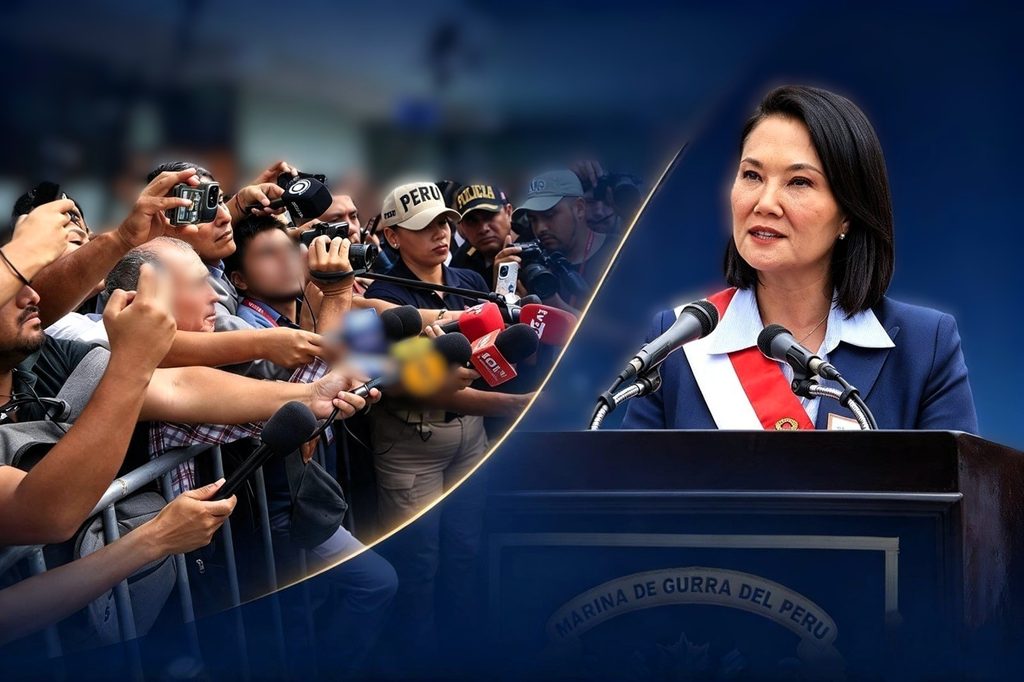
Peruvian News Agency PRENSAPERU.PE https://www.prensaperu.pe Twitter: @prensaperupe The words of the Head of State carry greater weight than those of any citizen. Every statement, gesture, and message does more than simply inform: it builds trust, sets priorities, and projects the stability of a nation. Over the course of a single national commemoration day and a subsequent visit to a maximum‑security facility, recent interventions by the President have brought to light a concern that goes beyond mere phrasing: the need for the highest authority to rely on accurate information, strategic advice, and institutional sensitivity when addressing the nation.
On October 8—a date marking the 147th anniversary of the Naval Battle of Angamos, honoring Admiral Miguel Grau Seminario, and celebrated as Peruvian Navy Day—the ceremony should have focused on the national hero’s legacy. However, the President deviated from the occasion’s purpose to address current political issues, specifically the difficulties her administration is facing with Congress regarding requested legislative powers. These statements, made to the press during an event dedicated to national unity and historical remembrance, overshadowed the tribute and raised questions about the appropriateness of her remarks in that context.
What makes this observation more significant is the apparent lack of awareness regarding the very figure of Miguel Grau. The “Gentleman of the Seas” was not merely an exceptional naval officer: before the war, he served as Deputy for Paita, representing the people in the Parliament of his time. He voluntarily resigned his seat to put on his uniform once again and take command of the ironclad Huáscar, at a time when few were willing to confront the enemy fleet. Grau demonstrated that institutions and the defense of the homeland stand above any differences between branches of government. Using his commemoration to express disagreements with the Legislative Branch seems particularly inappropriate, because Grau is the very symbol of the principle that when the nation is at stake, political conflicts must be set aside.
Behave yourselves
This episode follows the recent visit to the Penal del Milagro in Trujillo. There, speaking to inmates at one of the country’s highest‑security prisons, the President simply told them: “behave yourselves.” The phrase, while well‑intentioned, is insufficient given the scale of the security crisis — one involving organizations with national and transnational structures, vast resources, and alleged connections extending even to State officials. This concern deepens when she announced a kind of “reward” system for those who provide information from within, without explaining how the safety of collaborators will be guaranteed, what resources will fund such rewards, or how the information will be used. Citizens expect their President to propose comprehensive policies and institutional responses, not casual remarks that anyone might make in everyday conversation.
These are not isolated incidents. On other occasions, the President has been criticized for prioritizing social media content — such as TikTok posts — at times when the country faced urgent challenges. Every time the highest authority speaks or acts, she communicates more than an immediate message: she communicates priorities. When solemn occasions are diverted from their purpose, complex problems are oversimplified, or attention is drawn away from urgent matters toward trivial content, the result is a perception of uncertainty and a lack of focus.
The core issue is not only what is said, but when and where it is said. A Head of State needs advisors who guide not only on what to communicate, but on the right moment, place, and manner to do so. Presidential discourse should elevate public debate rather than fragment it; it should unite rather than distract; and it should reflect the true scale of the challenges facing the nation rather than oversimplify them beyond recognition. Peru deserves a leader who is well‑informed, well‑advised, and fully conscious that every word carries weight — especially during the most significant moments in national life.
CONCEPTUAL DATA
Institutional appropriateness: The quality of ensuring public remarks are fitting, timely, and delivered in the proper setting. During solemn or historically significant events, messages should remain aligned with the purpose of the occasion rather than diverting toward partisan or day‑to‑day political matters.
Strategic advice: Professional guidance that helps leaders determine what to communicate, how to express it, and when to speak, taking into account the institutional, social, and political impact of every public statement. Its purpose is not to alter a leader’s convictions, but to ensure they are communicated responsibly and appropriately.
Symbolic leadership: The ability of a leader to embody the nation’s values, history, and identity through both conduct and speech. On commemorative dates, the Head of State represents the collective memory of the country; therefore, words should honor that shared heritage rather than serving unrelated purposes.
State communication vs. government communication: State communication concerns what serves the nation as a whole; government communication concerns what serves the administration in office. During national public events, the broader national perspective must take precedence over immediate governmental interests or difficulties.
CONCLUSIONS
1.- Presidential remarks during solemn ceremonies must honor the significance of the occasion. Commemorating Miguel Grau is not the appropriate moment to express disagreements with Congress, especially since Grau himself represents national unity above political division.
2.- Organized crime demands comprehensive public policy, not phrases that minimize its complexity. Telling high‑security prison inmates to “behave themselves” solves nothing; instead, it suggests a limited understanding of the issue’s depth.
3.- Any proposal offering rewards to informants from within prison walls requires clear systems of protection, legal safeguards, and transparency. Making such an announcement without detail raises more questions than answers and may endanger the very people it aims to encourage.
4.- How public time and spaces are used reveals national priorities. When trivial content overshadows urgent matters, citizens rightly conclude that their most pressing concerns are not receiving due attention.
5.- Access to solid political, historical, and strategic advice is not a luxury, it is a fundamental requirement of governance. Preventing errors of context, timing, and tone must be a constant part of the support available to any public authority.
6.- Respect for institutions and national history begins with understanding their meaning and timing. Miguel Grau was first a representative of the people and then a defender of national sovereignty; honoring his memory today means recognizing that Peru’s interests always transcend temporary difficulties between branches of government.
Source: Peruvian News Agency PRENSAPERU.PE https://www.prensaperu.pe Twitter: @prensaperupe