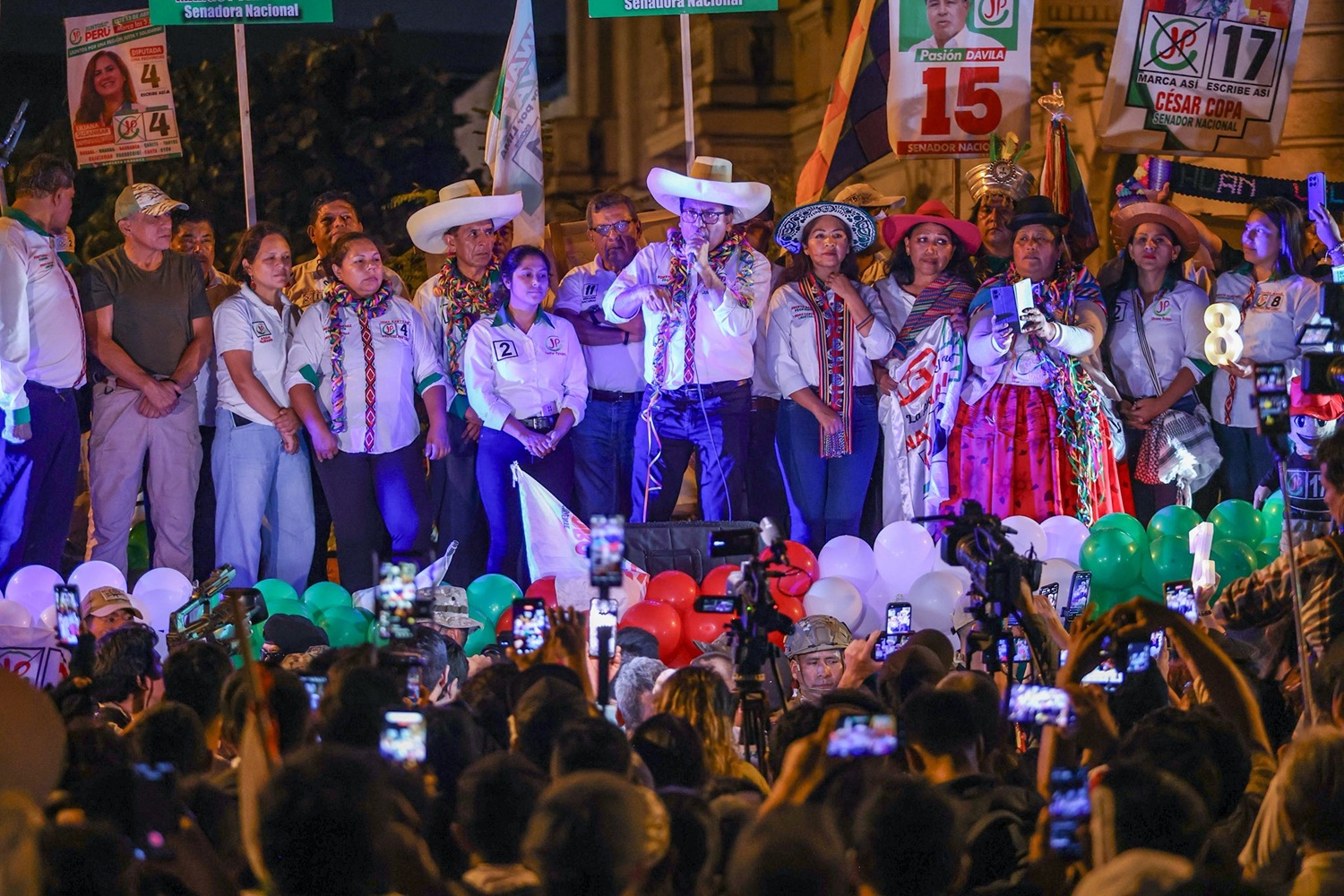
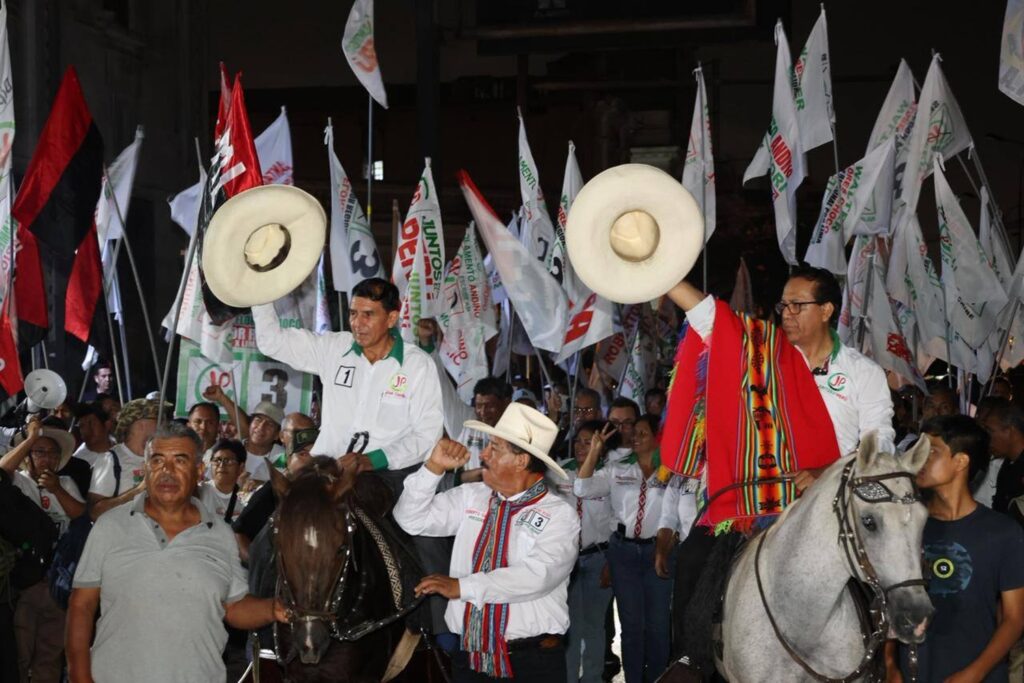
Agencia Peruana de Noticias PRENSAPERU.PE https://www.prensaperu.pe Twitter: @prensaperupe En la víspera, en una multitudinaria Plazuela Dos de Mayo de Lima, el candidato presidencial de Juntos por el Perú, Roberto Sánchez Palomino, cerró su campaña política de cara a las elecciones presidenciales del próximo domingo 12 de abril de 2026. Ante miles de simpatizantes, Sánchez Palomino expuso un ambicioso programa de gobierno centrado en la justicia social, la democratización económica y una profunda reforma del Estado.
El discurso del candidato estuvo cargado de referencias al “Perú profundo” y a la figura del expresidente Pedro Castillo, a quien reiteró su demanda de libertad. Sánchez Palomino criticó duramente a la “derecha bruta y achorada” y al “pacto mafioso” que, según sus palabras, impidieron gobernar a Castillo y han mantenido un modelo económico y político excluyente por más de 30 años.
Las Propuestas Clave de Roberto Sánchez Palomino Incluyen:
Nueva Constitución a través de una Asamblea Constituyente: El pilar de su propuesta es la refundación de la patria mediante un nuevo contrato social que garantice derechos fundamentales y la soberanía sobre los recursos.
Democratización de la Riqueza y Nacionalización del Gas de Camisea: Plantea una auditoría social de los contratos de Camisea y una renegociación para que los beneficios lleguen al pueblo. Además, propone una minería social que reconozca los derechos ancestrales y fomente la titularidad de concesiones para las comunidades, con un banco minero nacional que apoye su formalización y un régimen tributario especial.
Industrialización y Valor Agregado: Buscará cambiar la matriz económica del país impulsando la industria, la transferencia de tecnología y la creación de valor agregado a las materias primas, especialmente en acuerdos comerciales como el TLC con China.
Defensa del Medio Ambiente y No a Proyectos Contaminantes: Manifestó un rotundo “No va” a proyectos como Tía María y Safranal, enfatizando el respeto a las cabeceras de cuenca y el desarrollo agrícola.
Soberanía Energética y Defensa de Petroperú: Reafirmó que “Petroperú no se vende, Petroperú se defiende”, señalando la importancia de la empresa estatal en el sector energético.
Segunda Reforma Agraria y Revolución Agrícola: Inspirado en Juan Velasco Alvarado y las políticas de Pedro Castillo, propone apoyar al pequeño agricultor con voluntad política, presupuesto y reforma tributaria.
Revolución Educativa y Acceso Universal: Postula el ingreso libre a la educación universitaria y un reconocimiento digno a los maestros, garantizando un sueldo mínimo de 5,500 soles y el pago del 100% de su deuda social.
Reforma Integral del Sistema de Justicia: Sánchez Palomino anunció la invitación al ex fiscal José Domingo Pérez para liderar la reforma integral del sistema de justicia, con el objetivo de combatir la impunidad y la corrupción.
Fortalecimiento del Sector Salud: Propone duplicar las vacantes para profesionales de la salud, garantizar un sistema único integrado de salud y aumentar progresivamente el presupuesto hasta el 9% del PBI, además de la “muerte civil” y cadena perpetua para corruptos.
Reconocimiento y Protección a Grupos Vulnerables: Se compromete a duplicar la Pensión 65 a Pensión 60 (500 soles), reconocer los derechos de personas con discapacidad y asegurar un sueldo mínimo para las trabajadoras del hogar.
Combate a la Criminalidad y Fortalecimiento Policial: Convocó a ronderos y reservistas, y propuso combatir la corrupción policial, duplicar efectivos y restablecer la Policía de Investigaciones del Perú (PIP). También demandó justicia para las víctimas de las protestas de diciembre, pidiendo sanción para quienes autorizaron disparos y “blindaron con impunidad”.
Política Exterior Soberana: Reafirmó la posición del Perú frente a los imperios, exigiendo comercio justo y fomentando alianzas con los BRICS y China para la transferencia de tecnología e industrialización.
Desarrollo Industria Petroquímica: Propuso el desarrollo de la petroquímica nacional para producir urea, un fertilizante vital para la agricultura peruana, utilizando el gas de Camisea. Su objetivo es reducir la dependencia de Perú de las importaciones de urea, que actualmente cubren el 100% de la demanda y cuyos precios han triplicado en los últimos años, generando vulnerabilidad para los agricultores. Esta iniciativa busca asegurar la soberanía alimentaria y fomentar una “segunda reforma agraria” a través de la autosuficiencia en la producción de fertilizantes.
El candidato cerró su discurso con un mensaje de esperanza y unidad para refundar la patria, destacando la necesidad de un Estado plurinacional que respete y dé voz a los pueblos originarios y a la “Lima provinciana”.
Conclusiones Clave del Discurso:
1.- Enfoque en la Refundación y la Nueva Constitución: La propuesta central de Roberto Sánchez es la creación de un nuevo pacto social a través de una Asamblea Constituyente, buscando desmantelar lo que él denomina el “modelo mercantilista” y el “Estado criollo” que ha perpetuado la desigualdad.
2.- Reivindicación de Pedro Castillo y Crítica a la Derecha: El candidato se posiciona como heredero político de Pedro Castillo, pidiendo su libertad y criticando duramente a las élites económicas y políticas, buscando movilizar al electorado que se siente representado por el “Perú profundo”.
3.- Economía con Soberanía y Justicia Social: Sus propuestas económicas giran en torno a la nacionalización de recursos estratégicos (gas de Camisea), la promoción de una minería social, la industrialización y la defensa de empresas estatales como Petroperú, todo ello bajo el paraguas de un comercio justo y sin arrodillarse ante potencias extranjeras.
4.- Reformas Profundas en Educación, Salud y Justicia: Sánchez Palomino plantea cambios estructurales en servicios básicos, garantizando el acceso universal a la educación y salud, dignificando la labor magisterial y proponiendo una reforma judicial liderada por José Domingo Pérez para combatir la corrupción y la impunidad.
5.- Impulso a la Petroquímica y Autosuficiencia en Urea: Propone el desarrollo de una industria petroquímica nacional para producir urea, buscando asegurar la soberanía alimentaria del país y reducir la dependencia de importaciones.
Fuente: Agencia Peruana de Noticias PRENSAPERU.PE https://www.prensaperu.pe Twitter: @prensaperupe
Translate
“Refounding Now! Roberto Sánchez Palomino (Together for the Country) Challenges the ‘Mafia Pact’ and Calls for a New Constitution in an Explosive Campaign Closing.”
Peruvian News Agency PRENSAPERU.PE https://www.prensaperu.pe Twitter: @prensaperupe On the eve, in a massive gathering at Lima’s Dos de Mayo Square, the presidential candidate for Juntos por el Perú, Roberto Sánchez Palomino, concluded his political campaign ahead of the presidential elections scheduled for next Sunday, April 12, 2026. Before thousands of supporters, Sánchez Palomino presented an ambitious government program focused on social justice, economic democratization, and a profound reform of the State.
The candidate’s speech was charged with references to the “deep Peru” (Perú profundo) and the figure of former president Pedro Castillo, whose freedom he reiterated his demand for. Sánchez Palomino sharply criticized the “brutish and thieving right” (“derecha bruta y achorada”) and the “mafia pact” that, according to his words, prevented Castillo from governing and has maintained an exclusive economic and political model for over 30 years.
Roberto Sánchez Palomino’s Key Proposals Include:
New Constitution through a Constituent Assembly: The cornerstone of his proposal is the refoundation of the nation through a new social contract that guarantees fundamental rights and sovereignty over resources.
Democratization of Wealth and Nationalization of Camisea Gas: He proposes a social audit of the Camisea contracts and a renegotiation to ensure benefits reach the people. Additionally, he advocates for social mining that recognizes ancestral rights and promotes concession ownership for communities, supported by a national mining bank that aids their formalization and a special tax regime.
Industrialization and Added Value: He aims to change the country’s economic matrix by promoting industry, technology transfer, and the creation of added value for raw materials, especially in trade agreements like the FTA with China.
Environmental Defense and Opposition to Polluting Projects: He issued a resounding “No” to projects such as Tía María and Safranal, emphasizing respect for headwaters and agricultural development.
Energy Sovereignty and Defense of Petroperú: He reaffirmed that “Petroperú is not for sale, Petroperú is defended,” highlighting the importance of the state-owned company in the energy sector.
Second Agrarian Reform and Agricultural Revolution: Inspired by Juan Velasco Alvarado and Pedro Castillo’s policies, he proposes supporting small farmers with political will, budget, and tax reform.
Educational Revolution and Universal Access: He advocates for free access to university education and dignified recognition for teachers, guaranteeing a minimum salary of 5,500 soles and 100% payment of their social debt.
Comprehensive Justice System Reform: Sánchez Palomino announced an invitation to former prosecutor José Domingo Pérez to lead the comprehensive reform of the justice system, with the goal of combating impunity and corruption.
Strengthening the Health Sector: He proposes doubling vacancies for health professionals, ensuring a single integrated health system, and progressively increasing the budget to 9% of the GDP, alongside “civil death” and life imprisonment for corrupt individuals.
Recognition and Protection for Vulnerable Groups: He commits to doubling “Pensión 65” to “Pensión 60” (500 soles), recognizing the rights of people with disabilities, and ensuring a minimum wage for domestic workers.
Combating Crime and Strengthening Police: He called upon “ronderos” (rural patrols) and reservists, and proposed combating police corruption, doubling personnel, and reestablishing the Peruvian Investigative Police (PIP). He also demanded justice for the victims of the December protests, calling for sanctions against those who authorized shootings and provided “impunity shields.”
Sovereign Foreign Policy: He reaffirmed Peru’s stance against empires, demanding fair trade and fostering alliances with BRICS and China for technology transfer and industrialization.
Petrochemical Industry Development: He proposed the development of the national petrochemical industry to produce urea, a vital fertilizer for Peruvian agriculture, using Camisea gas. His objective is to reduce Peru’s dependence on urea imports, which currently cover 100% of demand and whose prices have tripled in recent years, creating vulnerability for farmers. This initiative seeks to ensure food sovereignty and foster a “second agrarian reform” through self-sufficiency in fertilizer production.
The candidate concluded his speech with a message of hope and unity for the refoundation of the nation, emphasizing the need for a plurinational state that respects and gives voice to indigenous peoples and “provincial Lima.”
Key Conclusions from the Speech:
1.- Focus on Refoundation and a New Constitution: Roberto Sánchez’s central proposal is the creation of a new social pact through a Constituent Assembly, seeking to dismantle what he calls the “mercantilist model” and the “criollo state” that has perpetuated inequality.
2.- Reclaiming Pedro Castillo and Criticizing the Right: The candidate positions himself as Pedro Castillo’s political heir, demanding his freedom and sharply criticizing economic and political elites, seeking to mobilize voters who feel represented by the “deep Peru.”
3.- Economy with Sovereignty and Social Justice: His economic proposals revolve around the nationalization of strategic resources (Camisea gas), the promotion of social mining, industrialization, and the defense of state-owned companies like Petroperú, all under the umbrella of fair trade without subservience to foreign powers.
4.- Profound Reforms in Education, Health, and Justice: Sánchez Palomino proposes structural changes in basic services, guaranteeing universal access to education and health, dignifying the work of teachers, and advocating for a justice reform led by José Domingo Pérez to combat corruption and impunity.
5.- Boosting Petrochemicals and Self-Sufficiency in Urea: Proposes the development of a national petrochemical industry to produce urea, seeking to ensure the country’s food sovereignty and reduce dependence on imports.
Source: Peruvian News Agency PRENSAPERU.PE https://www.prensaperu.pe Twitter: @prensaperupe