
Agencia Peruana de Noticias PRENSAPERU.PE https://www.prensaperu.pe Twitter: @prensaperupe (Editorial del Director: Fernando Palomares Arévalo) El siguiente informe recoge el estudio detallado y el análisis exhaustivo realizado sobre los debates, acuerdos y planteamientos estratégicos surgidos en la reunión ministerial de APEC en Suzhou. Se profundiza en los ejes centrales que definen el escenario comercial actual, examinando los desafíos globales, los riesgos de fragmentación y las oportunidades que ofrece la nueva economía. A partir de las intervenciones oficiales y las conclusiones técnicas, se desglosan las responsabilidades compartidas, las líneas de cooperación y las propuestas concretas que los países de la región han definido para sostener el crecimiento y la estabilidad. El contenido que se presenta a continuación expone con claridad las bases, conceptos y visiones de futuro que guiarán la integración y el intercambio en Asia-Pacífico, así como el papel fundamental que este espacio juega frente a la incertidumbre mundial. Un documento completo que recoge la hoja de ruta trazada por las 21 economías para defender el comercio abierto, impulsar la innovación y fortalecer la cooperación como motor del desarrollo compartido.
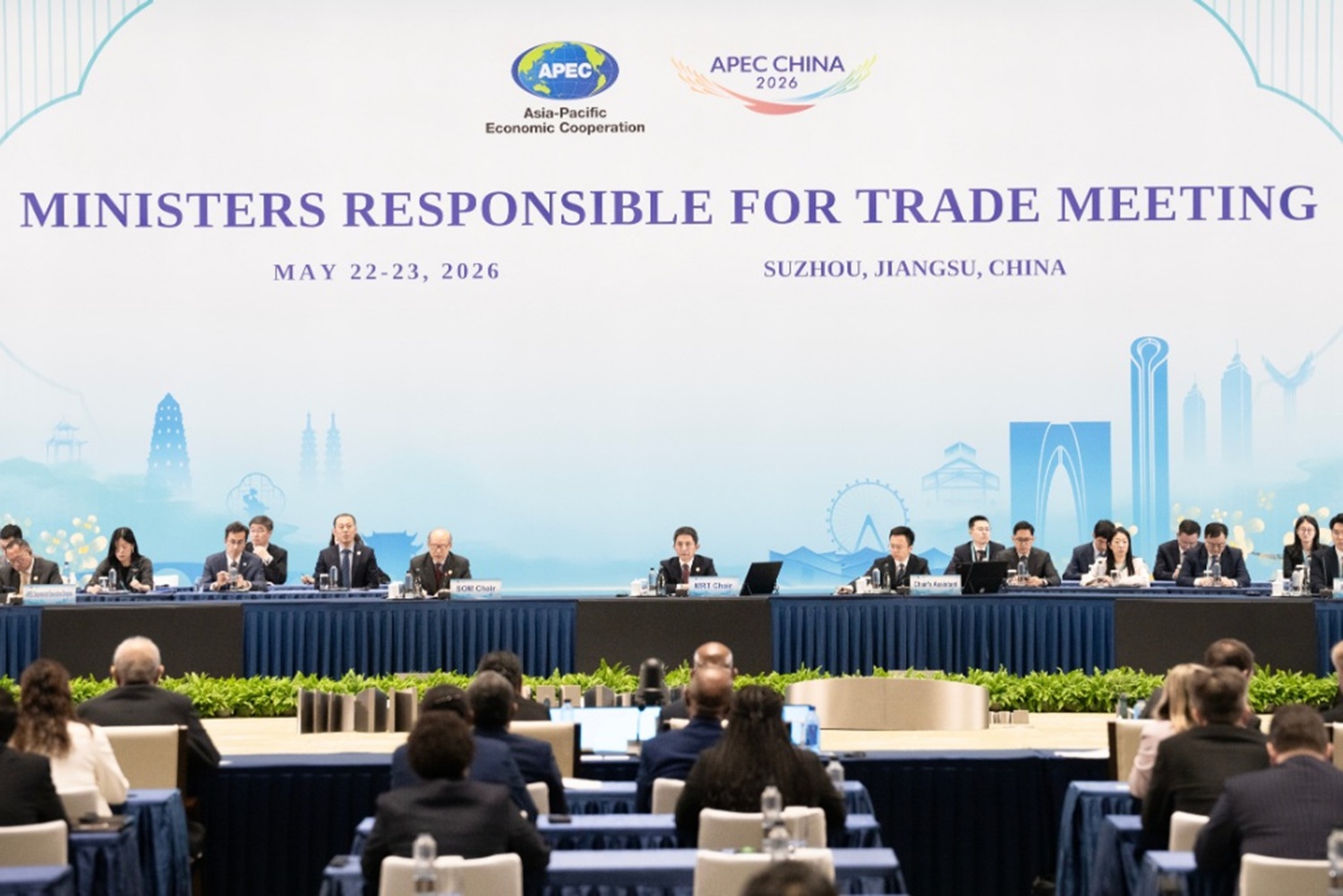
Garantizar la continuidad, fluidez y seguridad del intercambio comercial internacional en un contexto global marcado por cambios profundos, tensiones y falta de previsibilidad fue el eje central que reunió en la ciudad de Suzhou a los ministros encargados del comercio exterior de las 21 economías que integran la Cooperación Económica Asia-Pacífico (APEC). Este encuentro ministerial, celebrado un viernes, se configuró como un espacio estratégico de análisis, diálogo y definición de rumbos, donde los representantes coincidieron en la necesidad urgente de fortalecer los lazos de cooperación recíproca, defender un entorno de intercambio abierto y regido por normas claras, y asegurar que esta región del mundo continúe siendo el motor principal de crecimiento, desarrollo y generación de oportunidades para todos sus integrantes.
La reunión se desarrolla en un momento histórico clave
La economía mundial está siendo transformada de manera acelerada por cambios en las rutas y patrones de intercambio, la reorganización de las cadenas globales de suministro y la irrupción masiva de nuevas tecnologías que modifican la forma de producir, vender y comprar. Ante este escenario dinámico y complejo, la cooperación práctica, real y efectiva entre naciones deja de ser una opción para convertirse en una necesidad ineludible, destinada a enfrentar los desafíos comunes y convertir las transformaciones en ventajas compartidas.
APEC
La Cooperación Económica Asia-Pacífico es el principal foro de diálogo y cooperación económica de la región, conformado por 21 economías de diversas dimensiones, niveles de desarrollo y realidades, que trabajan conjuntamente con el objetivo de promover el crecimiento económico sostenible, la cooperación técnica, la integración comercial y la liberalización de mercados. A diferencia de organismos que negocian tratados vinculantes, APEC funciona como un espacio de consenso, diálogo y definición de metas compartidas, basado en el principio del compromiso voluntario y el beneficio mutuo.
UN MUNDO EN TRANSFORMACIÓN: RIESGOS DE PROTECCIONISMO Y FRAGMENTACIÓN
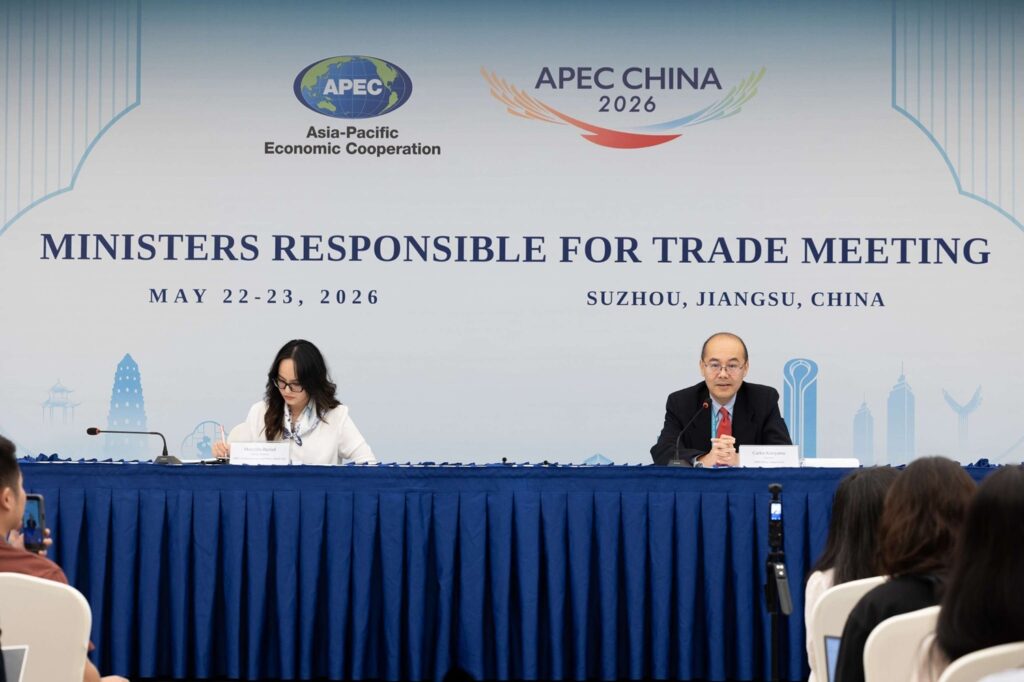
Durante la sesión de apertura, el viceministro de Comercio de la República Popular China, Li Chenggang, como anfitrión del encuentro, planteó con claridad el escenario que enfrenta la región: “Estamos viviendo cambios sin precedentes en un siglo, que se producen a una velocidad vertiginosa”. El directivo alertó sobre dos fenómenos que representan los mayores riesgos actuales: el aumento del proteccionismo —la tendencia de los países a cerrar sus mercados, poner barreras y priorizar sus intereses nacionales por encima de la integración— y el avance de la fragmentación comercial, un proceso por el cual la economía global se divide en bloques aislados o alineados según afinidades políticas, rompiendo la red de intercambios que ha permitido el crecimiento de las últimas décadas.
“Ante estas complejidades, las economías de APEC han demostrado su determinación de defender conjuntamente el orden económico y comercial regional”, afirmó el viceministro Li, reafirmando el compromiso colectivo.
En su intervención, destacó el papel histórico fundamental que ha jugado este organismo: “APEC ha sido un pilar de apoyo para la cooperación económica regional y una herramienta clave para ayudar a las economías a atravesar períodos de crisis e incertidumbre”. Como dato contundente sobre la relevancia de esta zona, precisó que cerca del 60% de todos los acuerdos comerciales regionales vigentes en el mundo tienen su origen en la región Asia-Pacífico, lo que demuestra que aquí se ha construido la mayor parte de la arquitectura comercial moderna.
CONCEPTOS PARA ENTENDER EL CONTEXTO
Proteccionismo: Conjunto de políticas y medidas gubernamentales destinadas a limitar o dificultar la entrada de bienes, servicios o capitales extranjeros, con el argumento de proteger la producción nacional, pero que suelen derivar en el encarecimiento de productos, menor variedad y ralentización del crecimiento global.
Fragmentación económica: Proceso de división del mercado mundial en áreas separadas, donde el comercio y la inversión se restringen a alianzas políticas o geográficas específicas, en lugar de fluir según criterios de eficiencia, costos o calidad, lo que rompe la estructura multilateral.
TRES GRANDES RESPONSABILIDADES PARA EL FUTURO DE LA REGIÓN
Para hacer frente al panorama desafiante y asegurar que la región siga siendo resiliente y creciendo, el viceministro Li Chenggang presentó tres grandes ejes o responsabilidades que todas las economías miembros deben asumir, basadas en la historia, la realidad actual y el potencial de APEC.
1.- Fidelidad a la misión fundacional: apertura y liberalización
La primera responsabilidad es volver a los principios que dieron origen al organismo y que han demostrado ser la solución más efectiva en momentos difíciles. “La liberalización del comercio y la inversión siempre ha sido el camino correcto que ha seguido esta región para salir adelante, desde la crisis financiera asiática de finales de los años 90 hasta la crisis económica mundial de 2008”, recordó.
La lección de la historia es clara: cerrarse no resuelve los problemas, al contrario, los agrava. Por ello, el viceministro llamó a la unidad: “Cada vez resulta más necesario que busquemos puntos en común, respetemos nuestras diferencias y superemos juntos las dificultades, porque es así como infundimos confianza a toda la economía mundial”.
2.- Diversidad como fortaleza, no como obstáculo
La segunda responsabilidad parte de una realidad innegable: las 21 economías de APEC son muy distintas entre sí. Hay naciones industrializadas, economías emergentes, países en vías de desarrollo; cada uno tiene etapas de crecimiento diferentes, recursos distintos e intereses nacionales propios. Sin embargo, esta diversidad es precisamente el mayor valor del organismo.
“El sentido de existencia de APEC reside en ser el lugar donde se reúnen economías con intereses diferentes. Nuestro deber es abandonar definitivamente la mentalidad de suma cero —esa idea errónea de que si uno gana, otro pierde— y trabajar para encontrar el máximo común denominador posible, mediante un enfoque objetivo, racional y pragmático”, explicó Li Chenggang.
El concepto juego de suma cero: Es una visión económica y política que entiende las relaciones internacionales como una competencia donde la ganancia de un país equivale necesariamente a la pérdida de otro. Frente a esto, APEC promueve la visión de suma positiva: el intercambio y la cooperación permiten que todos ganen, se desarrollen y se beneficien mutuamente.
3.- Liderazgo en la construcción de normas y consensos
La tercera responsabilidad define el rol actual del organismo. El viceministro aclaró que, aunque APEC no es un foro dedicado a negociar tratados obligatorios, sí tiene la obligación histórica de tomar la iniciativa en los debates comerciales y económicos mundiales. Su función es liderar el pensamiento, generar ideas y lograr consensos que luego sirvan de base para acuerdos formales.
En cuanto a la hoja de ruta práctica, señaló dos caminos:
Para lo ya acordado: Debemos implementar los compromisos y metas establecidas con mayor rapidez, disciplina y eficiencia, para que generen resultados tangibles cuanto antes.
Para lo que nos diferencia: Debemos actuar con flexibilidad, entendiendo que las diferencias existen, pero no son barreras, sino retos para ir construyendo consensos paso a paso.
INTEGRACIÓN, TECNOLOGÍA Y SOSTENIBILIDAD: LOS TEMAS DE DEBATE
Bajo estos lineamientos, los ministros profundizaron en temas técnicos y estratégicos que definen el comercio actual y el futuro inmediato.
1.- Recuperar la confianza y avanzar hacia el libre comercio regional.
Uno de los puntos centrales fue analizar cómo devolver la credibilidad al sistema multilateral de comercio, que hoy se ve debilitado. El foco principal estuvo puesto en impulsar decididamente la creación de la Zona de Libre Comercio de Asia y el Pacífico (FTAAP, por sus siglas en inglés), una iniciativa histórica de APEC que busca crear el área de libre intercambio más grande del planeta, integrando a todas las economías de la región. Este proyecto es visto como la herramienta más potente para mantener la integración económica y contrarrestar las tendencias de fragmentación que se observan en otras partes del mundo.
2.- Visión de la OMC: Riesgos globales.
Los participantes recibieron una actualización de primera mano por parte de la Directora General de la Organización Mundial del Comercio (OMC), la Dra. Ngozi Okonjo-Iweala, sobre los avances tras la última Conferencia Ministerial realizada en Yaundé, Camerún. La máxima autoridad del comercio mundial alertó sobre las amenazas que se ciernen sobre las perspectivas económicas: las tensiones geopolíticas en distintas regiones y el alza en los precios de la energía y el petróleo presionan fuertemente el flujo de mercancías, la estabilidad de las cadenas de suministro y las proyecciones de crecimiento para los próximos años.
3.- Comercio digital e Inteligencia Artificial: Oportunidades para todos.
La revolución tecnológica es un eje transversal. Los ministros analizaron cómo la inteligencia artificial está redefiniendo cada paso del comercio y cómo las economías de APEC pueden aprovechar el comercio digital y el comercio electrónico transfronterizo para generar riqueza. Se puso énfasis especial en las pequeñas y medianas empresas (PYMES), que representan la mayor parte del tejido empresarial de la región: estas herramientas tecnológicas permiten que negocios pequeños puedan acceder a mercados internacionales, algo que antes estaba reservado solo a grandes corporaciones.
Para liberar todo este potencial, se definió que es fundamental coordinar estándares técnicos, simplificar trámites y facilitar los cruces de fronteras digitales, asegurando que la tecnología sea un beneficio compartido y no una nueva barrera.
4.- Cadenas de suministro resilientes y sostenibles.
Finalmente, se abordó la necesidad de transformar la forma de producir y transportar. Ya no basta con que las cadenas de suministro sean eficientes y baratas; ahora deben ser resilientes —capaces de resistir crisis, desastres o cambios bruscos— y sostenibles, respetuosas con el medio ambiente. Se discutió sobre cooperación en tecnologías bajas en carbono, energías limpias y modelos de producción que permitan crecer económicamente mientras se cumplen las metas globales de protección ambiental y desarrollo sostenible.
CONCLUSIÓN GENERAL DEL ENCUENTRO
Al cerrar la jornada, el viceministro Li Chenggang resumió el significado profundo de esta reunión: “Desde Suzhou, enviamos una señal clara y potente al mundo: APEC defiende el multilateralismo, promueve la cooperación y fortalece la confianza en todo el espacio Asia-Pacífico”. Y agregó que los avances alcanzados aquí constituyen una contribución fundamental y significativa para la próxima Reunión de Líderes de APEC, que se celebrará a finales de este año en la ciudad de Shenzhen, donde se definirán las metas políticas más altas de la región.
DATOS CONCEPTUALES A CONSIDERAR
1.- La integración comercial es la mejor respuesta ante la incertidumbre: Ante el proteccionismo y la fragmentación, los ministros ratificaron que la apertura, las normas compartidas y la integración regional no son opciones, sino estrategias esenciales para mantener el crecimiento y proteger a las economías de las crisis globales.
2.- La diversidad es una fortaleza estratégica: APEC se consolida como el único espacio donde economías muy distintas pueden dialogar y avanzar, dejando de lado la competencia aislada. Su valor reside en la capacidad de encontrar puntos medios y consensos sobre la base del pragmatismo y el beneficio mutuo.
3.- Tecnología y sostenibilidad definen el nuevo modelo comercial: El comercio del futuro, y del presente inmediato, pasa necesariamente por la transformación digital, el uso de inteligencia artificial y el respeto ambiental. Estas herramientas son clave para incluir a las pequeñas empresas y hacer que el crecimiento sea duradero.
4.- La región Asia-Pacífico sigue siendo el motor de la economía mundial: Con casi el 60% de los acuerdos comerciales globales nacidos aquí, APEC confirma su liderazgo y su responsabilidad de mantener el orden económico, aportando estabilidad cuando otras regiones tienden a dividirse.
5.- Compromiso firme con el multilateralismo: La reunión envió un mensaje inequívoco: APEC continuará liderando los debates globales, defendiendo el sistema de intercambio abierto y preparando el terreno para acuerdos mayores, como la Zona de Libre Comercio, que servirán de guía para la economía mundial.
Fuente: Agencia Peruana de Noticias PRENSAPERU.PE https://www.prensaperu.pe Twitter: @prensaperupe
Translate
APEC Suzhou 2026: “Ministers from the 21 economies agree to defend open trade with ‘Technology, AI and Digital Trade’, against risks of global fragmentation.”
Peruvian News Agency PRENSAPERU.PE https://www.prensaperu.pe Twitter: @prensaperupe The following report compiles the detailed study and comprehensive analysis conducted regarding the debates, agreements, and strategic approaches that emerged during the APEC Ministerial Meeting in Suzhou. It delves deeply into the core pillars defining the current trade landscape, examining global challenges, risks of fragmentation, and the opportunities offered by the new economy. Based on official statements and technical conclusions, it breaks down shared responsibilities, lines of cooperation, and specific proposals that countries in the region have defined to sustain growth and stability. The content presented below clearly sets forth the foundations, concepts, and future visions that will guide integration and trade in the Asia-Pacific, as well as the fundamental role this forum plays in the face of global uncertainty. It is a comprehensive document outlining the roadmap set by the 21 economies to defend open trade, drive innovation, and strengthen cooperation as the engine for shared development.
Ensuring the continuity, fluidity, and security of international trade exchange within a global context marked by profound changes, tensions, and a lack of predictability was the central theme that brought together in the city of Suzhou the ministers responsible for foreign trade from the 21 economies that comprise the Asia-Pacific Economic Cooperation (APEC). This ministerial gathering, held on a Friday, served as a strategic space for analysis, dialogue, and defining directions, where representatives agreed on the urgent need to strengthen bonds of mutual cooperation, defend an exchange environment that is open and governed by clear rules, and ensure that this region of the world remains the primary engine for growth, development, and the generation of opportunities for all its members.
The meeting takes place at a key historical moment: the global economy is undergoing rapid transformation driven by changes in trade routes and patterns, the reorganization of global supply chains, and the massive emergence of new technologies that alter the way goods are produced, sold, and purchased. Faced with this dynamic and complex scenario, practical, real, and effective cooperation among nations ceases to be an option and becomes an unavoidable necessity, aimed at addressing common challenges and turning transformations into shared advantages.
APEC
Asia-Pacific Economic Cooperation is the region’s primary forum for dialogue and economic cooperation, consisting of 21 economies of varying sizes, development levels, and circumstances, working together with the goal of promoting sustainable economic growth, technical cooperation, trade integration, and market liberalization. Unlike organizations that negotiate binding treaties, APEC functions as a space for consensus, dialogue, and the definition of shared goals, based on the principles of voluntary commitment and mutual benefit.
A WORLD IN TRANSFORMATION: RISKS OF PROTECTIONISM AND FRAGMENTATION
During the opening session, Li Chenggang, Vice Minister of Commerce of the People’s Republic of China and host of the meeting, clearly outlined the scenario facing the region: “We are experiencing unprecedented changes in a century, occurring at a vertiginous pace.” The official issued a warning regarding two phenomena that represent the greatest current risks: the rise of protectionism — the tendency of countries to close their markets, erect barriers, and prioritize national interests above integration — and the advancement of trade fragmentation, a process whereby the global economy divides into isolated blocs or aligns according to political affinities, breaking down the network of exchange that has enabled growth over recent decades.
“Faced with these complexities, APEC economies have demonstrated their determination to jointly defend the regional economic and trade order,” stated Vice Minister Li, reaffirming collective commitment.
In his address, he highlighted the fundamental historical role played by this organization: “APEC has been a pillar of support for regional economic cooperation and a key tool in helping economies navigate periods of crisis and uncertainty.” As compelling evidence regarding the relevance of this zone, he specified that nearly 60 percent of all active regional trade agreements in the world originate in the Asia-Pacific region, demonstrating that the majority of modern trade architecture has been built here.
CONCEPTS FOR UNDERSTANDING THE CONTEXT
Protectionism: A set of government policies and measures designed to limit or hinder the entry of foreign goods, services, or capital, with the argument of protecting domestic production, but which usually result in higher prices for products, less variety, and a slowdown in global growth.
Economic fragmentation: The process of dividing the global market into separate areas, where trade and investment are restricted to specific political or geographical alliances, rather than flowing according to criteria of efficiency, cost, or quality, thereby breaking down the multilateral structure.
THREE MAJOR RESPONSIBILITIES FOR THE FUTURE OF THE REGION
To address the challenging landscape and ensure that the region remains resilient and continues to grow, Vice Minister Li Chenggang presented three major pillars or responsibilities that all member economies must assume, based on history, current reality, and APEC’s potential.
1.- Fidelity to the founding mission: openness and liberalization
The first responsibility is to return to the principles that gave rise to the organization and that have proven to be the most effective solution in difficult times. “Trade and investment liberalization has always been the correct path followed by this region to move forward, from the Asian financial crisis of the late 1990s to the global financial crisis of 2008,” he recalled.
The lesson of history is clear: closing off does not solve problems; on the contrary, it worsens them. Therefore, the Vice Minister called for unity: “It is increasingly necessary for us to seek common ground, respect our differences, and overcome difficulties together, because this is how we instill confidence in the entire global economy.”
2.- Diversity as a strength, not an obstacle
The second responsibility stems from an undeniable reality: the 21 APEC economies are very different from one another. There are industrialized nations, emerging economies, and developing countries; each has different stages of growth, distinct resources, and its own national interests. However, this diversity is precisely the organization’s greatest value.
“APEC’s reason for existence lies in being the place where economies with differing interests come together. Our duty is to definitively abandon the zero-sum mindset — that mistaken idea that if one side wins, the other loses — and work to find the greatest common denominator possible through an objective, rational, and pragmatic approach,” explained Li Chenggang.
The concept of the zero-sum game: An economic and political view that understands international relations as a competition where one country’s gain necessarily equals another country’s loss. In contrast, APEC promotes the positive-sum vision: exchange and cooperation allow everyone to win, develop, and benefit mutually.
3.- Leadership in building norms and consensus
The third responsibility defines the organization’s current role. The Vice Minister clarified that, although APEC is not a forum dedicated to negotiating binding treaties, it does have a historical obligation to take the lead in global trade and economic debates. Its role is to lead thinking, generate ideas, and achieve consensus that will later serve as the basis for formal agreements.
Regarding the practical roadmap, he pointed out two approaches:
Concerning what has already been agreed: We must implement established commitments and goals with greater speed, discipline, and efficiency, so that they produce tangible results as soon as possible.
Concerning what differentiates us: We must act with flexibility, understanding that differences exist, but they are not barriers; rather, they are challenges to build consensus step by step.
INTEGRATION, TECHNOLOGY, AND SUSTAINABILITY: THE TOPICS OF DEBATE
Under these guidelines, ministers delved into technical and strategic issues that define current trade and the immediate future.
1.- Restoring confidence and advancing toward regional free trade.
One of the central points involved analyzing how to restore credibility to the multilateral trading system, which today has been weakened. The main focus was placed on resolutely driving the creation of the Free Trade Area of the Asia-Pacific (FTAAP), a historic APEC initiative seeking to create the largest free trade area on the planet, integrating all economies in the region. This project is viewed as the most powerful tool for maintaining economic integration and counteracting fragmentation trends observed in other parts of the world.
2.- WTO vision: Global risks.
Participants received first-hand updates from Dr. Ngozi Okonjo-Iweala, Director-General of the World Trade Organization (WTO), on progress following the Fourteenth Ministerial Conference (MC14) held in Yaoundé, Cameroon. The highest authority on global trade warned about threats looming over economic outlooks: geopolitical tensions in various regions and rising energy and oil prices are placing strong pressure on trade flows, supply chain stability, and growth projections for the coming years.
3.- Digital trade and Artificial Intelligence: Opportunities for all.
The technological revolution is a cross-cutting pillar. Ministers analyzed how artificial intelligence is redefining every step of trade and how APEC economies can leverage digital trade and cross-border e-commerce to generate wealth. Special emphasis was placed on small and medium-sized enterprises (SMEs), which represent the majority of the region’s business fabric: these technological tools allow small businesses to access international markets, something that previously was reserved exclusively for large corporations.
To unlock this full potential, it was established that it is essential to coordinate technical standards, simplify procedures, and facilitate cross-border digital transactions, ensuring that technology serves as a shared benefit rather than a new barrier.
4.- Resilient and sustainable supply chains.
Finally, the need to transform how goods are produced and transported was addressed. It is no longer sufficient for supply chains to be efficient and low-cost; they must now be resilient — capable of withstanding crises, disasters, or sudden changes — and sustainable, with respect for the environment. Discussions focused on cooperation regarding low-carbon technologies, clean energy, and production models that enable economic growth while meeting global environmental protection and sustainable development goals.
GENERAL CONCLUSION OF THE MEETING
At the close of the day, Vice Minister Li Chenggang summarized the profound meaning of this meeting: “From Suzhou, we send a clear and powerful signal to the world: APEC defends multilateralism, promotes cooperation, and strengthens confidence throughout the entire Asia-Pacific region.” He added that the progress achieved here constitutes a fundamental and significant contribution to the next APEC Leaders’ Meeting, to be held later this year in the city of Shenzhen, where the highest political goals for the region will be defined.
CONCEPTUAL DATA TO CONSIDER
1.- Trade integration is the best response to uncertainty: Faced with protectionism and fragmentation, ministers ratified that openness, shared norms, and regional integration are not optional, but rather essential strategies to sustain growth and protect economies from global crises.
2.- Diversity is a strategic strength: APEC is consolidated as the only space where very different economies can engage in dialogue and move forward, setting aside isolated competition. Its value lies in the ability to find middle ground and consensus based on pragmatism and mutual benefit.
3.- Technology and sustainability define the new trade model: The trade of the future — and of the immediate present — necessarily involves digital transformation, the use of artificial intelligence, and respect for the environment. These tools are key to including small businesses and ensuring that growth is sustainable.
4.- The Asia-Pacific region remains the engine of the global economy: With nearly 60% of global trade agreements originating here, APEC confirms its leadership and its responsibility to maintain economic order, providing stability at a time when other regions tend toward division.
5.- Firm commitment to multilateralism: The meeting sent an unequivocal message: APEC will continue to lead global debates, defend the open trading system, and prepare the ground for larger agreements, such as the Free Trade Area, which will serve as a guide for the global economy.
Source: Peruvian News Agency PRENSAPERU.PE https://www.prensaperu.pe Twitter: @prensaperupe