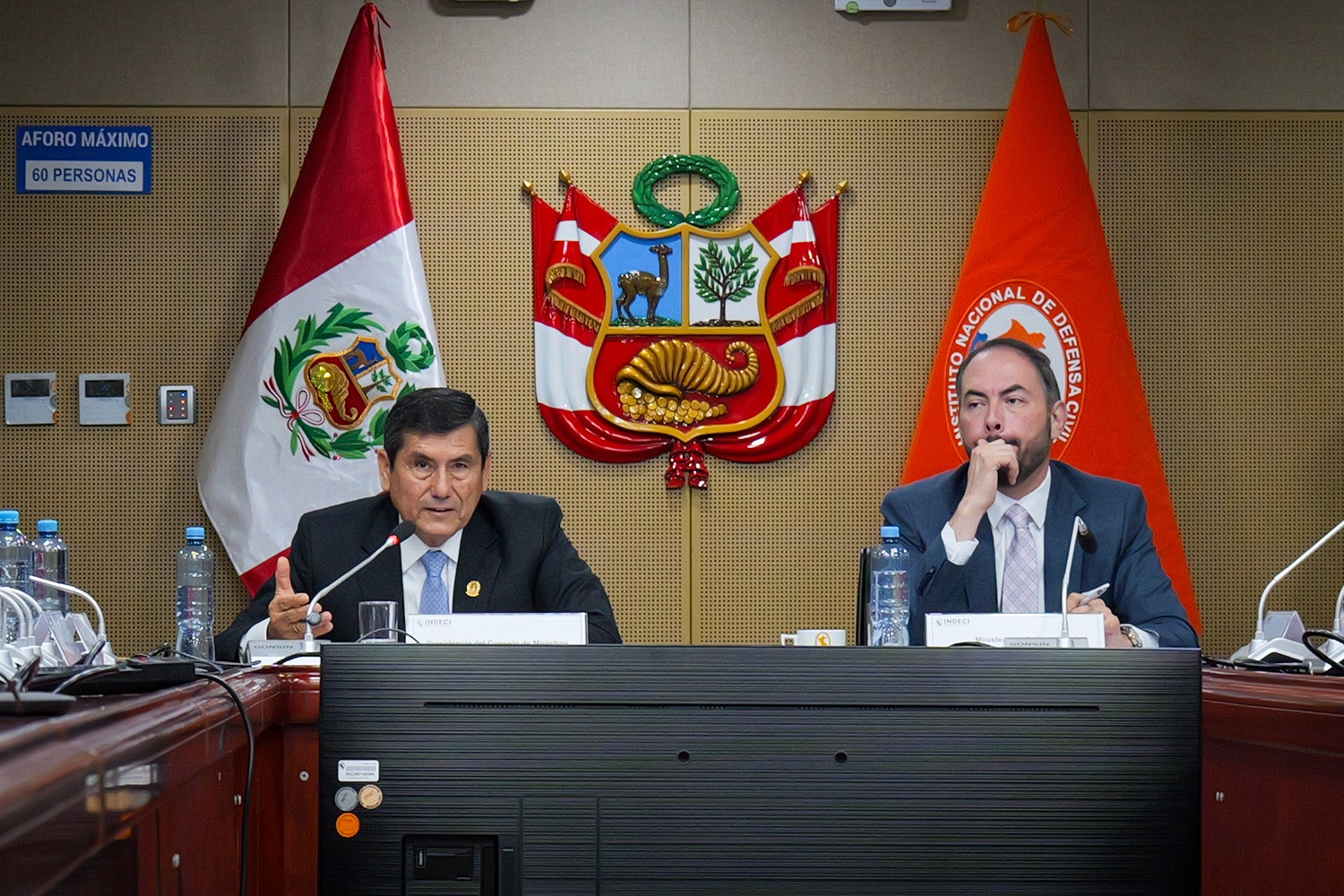
Agencia Peruana de Noticias PRENSAPERU.PE https://www.prensaperu.pe Twitter: @prensaperupe Con el objetivo fundamental de asegurar una respuesta unificada, eficaz y oportuna por parte de todo el Poder Ejecutivo, y así reducir los efectos negativos que podría generar el avance del Fenómeno de El Niño Costero, el presidente del Consejo de Ministros, Luis Arroyo, presidió una reunión estratégica de coordinación multisectorial realizada en las instalaciones del Centro de Operaciones de Emergencia Nacional (COEN). En este espacio de trabajo, el jefe del gabinete ministerial hizo un llamado firme a los titulares de los diferentes sectores del Estado, así como a las instituciones científicas y técnicas del país, para que actúen con visión anticipatoria, adoptando todas las medidas preventivas necesarias que permitan enfrentar cualquier situación de crisis, poniendo siempre como prioridad absoluta la protección de la vida, la salud y el bienestar de las familias que se encuentran en mayor condición de vulnerabilidad en todo el territorio nacional.
“Como Gobierno tenemos que estar preparados ante cualquier contingencia que se presente, y esa preparación recae de manera especial en el Instituto Nacional de Defensa Civil (Indeci), al cual hemos instruido para que no solo cuente con todo el abastecimiento, materiales y recursos logísticos necesarios para atender y apoyar a la población, sino también para que fortalezca y capacite permanentemente a sus Grupos de Intervención Rápida para Emergencias y Desastres, equipos especializados que deben estar listos para actuar en el momento exacto en que se les requiera. A este esfuerzo nacional se suman de manera decisiva nuestras Fuerzas Armadas y la Policía Nacional del Perú (PNP), instituciones que, por su despliegue territorial y capacidad operativa, serán quienes brinden la primera respuesta frente a cualquier evento adverso”, enfatizó el presidente Arroyo, dejando clara la responsabilidad compartida y el rol protagónico de estas entidades en la seguridad ciudadana.
En esa misma línea, el titular de la Presidencia del Consejo de Ministros (PCM) resaltó que una gestión moderna y eficiente del riesgo de desastres no se limita solo a la atención inmediata cuando ocurre el daño, sino que debe comprender un ciclo completo que va desde la prevención y la preparación, pasando por la respuesta, hasta llegar a la recuperación y rehabilitación de las zonas afectadas. Por ello, exhortó a todos los sectores involucrados a garantizar la conclusión total de las obras de refacción, mantenimiento y mejora en aquellas zonas que fueron afectadas por eventos anteriores, con el fin de que estén recuperadas y en condiciones adecuadas antes de que se presenten nuevas lluvias o fenómenos hidrometeorológicos. Asimismo, estableció una medida concreta y de gran impacto: exigió celeridad y agilización administrativa a todas las instancias correspondientes para asegurar que los gobiernos regionales y locales cuenten con la disponibilidad económica y de recursos en un plazo máximo de siete días calendario, cada vez que estos lo soliciten y justifiquen, eliminando trabas burocráticas que puedan retrasar las acciones de protección.
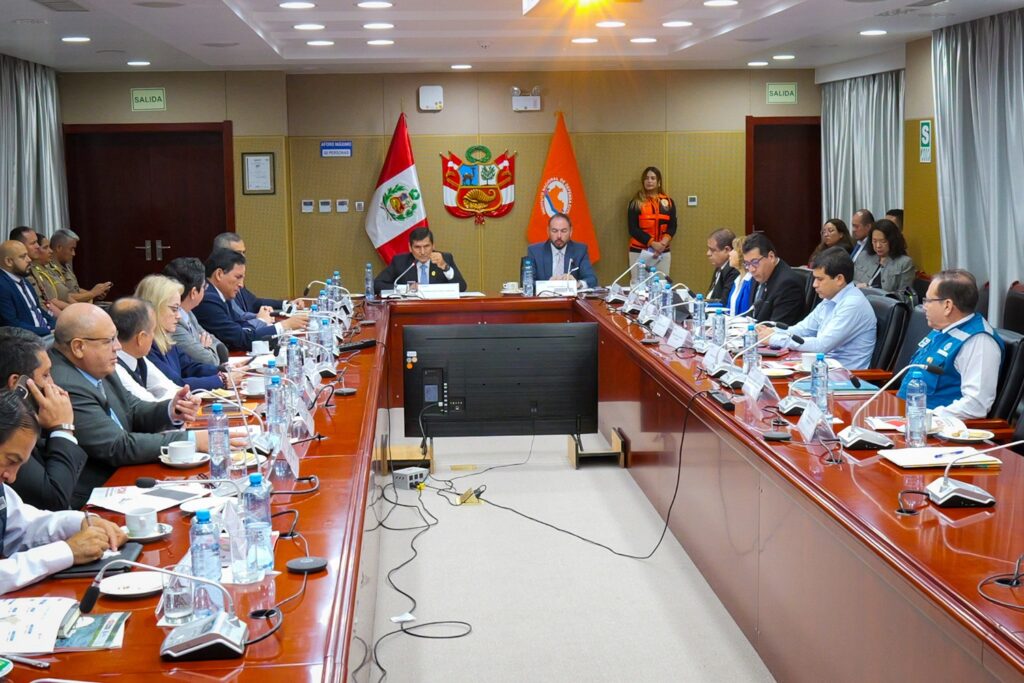
El encuentro de coordinación congregó a las principales autoridades del Estado vinculadas a la seguridad, el desarrollo y la prevención. Estuvieron presentes los ministros de Defensa, Interior, Economía y Finanzas, Salud, Vivienda, Construcción y Saneamiento, Producción, Energía y Minas, Desarrollo Agrario y Riego, y Cultura; así como los viceministros de Transportes y Comunicaciones, y de Educación. La participación de este conjunto de sectores demuestra que el fenómeno de El Niño no es un tema de un solo sector, sino que impacta en la salud, la educación, la agricultura, la vivienda, la economía y la seguridad, requiriendo una visión integral.
De igual forma, asistieron los representantes de las instituciones técnicas y científicas que generan la información necesaria para la toma de decisiones: el Centro Nacional de Estimación, Prevención y Reducción del Riesgo de Desastres (Cenepred), el Instituto del Mar del Perú (Imarpe), el Servicio Nacional de Meteorología e Hidrología del Perú (Senamhi) y la Autoridad Nacional del Agua (ANA). Estas entidades son las encargadas de monitorear permanentemente el comportamiento del océano, la atmósfera y los recursos hídricos, entregando pronósticos, alertas y recomendaciones que permiten al Gobierno planificar sus acciones con base en evidencia científica.
Según lo informado por el Estudio Nacional del Fenómeno El Niño (Enfen), en su comunicado quincenal correspondiente al mes de mayo, se mantiene vigente el estado de Alerta de El Niño Costero, confirmando que el fenómeno está presente y activo en la región. El organismo técnico ha emitido pronósticos detallados que indican una alta probabilidad de que este evento climático se prolongue y mantenga sus efectos hasta febrero del año 2027, caracterizándose en general con una magnitud débil. Sin embargo, advierte sobre una etapa crítica entre los meses de mayo y agosto de 2026, periodo en el que existe la posibilidad de que su intensidad aumente y alcance un nivel moderado, lo que supone un riesgo mayor de lluvias intensas, inundaciones y daños en zonas vulnerables.
Ante este escenario climático proyectado, el Gobierno de transición reafirmó su compromiso institucional y de Estado: trabajar de manera intensa y ordenada para dejar una ruta técnica y estratégica claramente trazada, que sirva de hoja de ruta para la próxima gestión gubernamental. El objetivo es que, más allá de los cambios de administración, el país cuente con planes y acciones definidas para anticiparse a las crisis, reducir los riesgos existentes y priorizar siempre la protección de la vida humana, así como la preservación de los medios de subsistencia y la economía familiar de las poblaciones peruanas más expuestas a los efectos del clima.
DEFINICIONES CONTEXTUALES
Fenómeno de El Niño Costero: Es un fenómeno climático y oceanográfico que se caracteriza por el calentamiento anormal de las aguas del mar en la zona costera del Pacífico sudeste, frente a las costas del Perú y Ecuador. A diferencia del fenómeno global, este se concentra en nuestra región y provoca alteraciones severas en el clima, generando lluvias intensas, inundaciones, desbordes de ríos y deslizamientos de tierra, especialmente en la costa y sierra, afectando la agricultura, la pesca y la infraestructura.
Alerta de El Niño Costero: Es la declaración oficial emitida por el organismo técnico competente (Enfen) que confirma que el fenómeno se ha iniciado o está en desarrollo. Esta alerta implica que las instituciones del Estado deben activar sus planes de contingencia, monitorear permanentemente la situación y preparar todas las acciones necesarias para la protección de la población, según la magnitud pronosticada (débil, moderada o fuerte).
Gestión del Riesgo de Desastres: Es el proceso social y administrativo compuesto por un conjunto de acciones, políticas y decisiones que tienen como objetivo identificar, analizar, prevenir, reducir y controlar los riesgos de desastres. No se trata solo de atender la emergencia, sino de actuar antes (prevención), durante (respuesta) y después (rehabilitación y reconstrucción) de un evento, buscando proteger la vida y reducir pérdidas económicas y sociales.
Grupos de Intervención Rápida: Son equipos operativos, altamente capacitados y equipados, pertenecientes al sistema de defensa civil, diseñados para movilizarse y actuar en el menor tiempo posible ante cualquier emergencia o desastre. Están entrenados para realizar labores de rescate, evacuación, apoyo logístico y primeros auxilios en zonas de difícil acceso o afectadas.
Centro de Operaciones de Emergencia Nacional (COEN): Es la plataforma técnica desde donde se coordina, monitorea y dirige la respuesta del Estado ante cualquier situación de emergencia o desastre a nivel nacional. Funciona las 24 horas del día, reúne información de todo el país y articula las acciones entre los diferentes sectores y niveles de gobierno.
CONCLUSIONES ESTRATÉGICAS
1.- Anticipación como eje central de la política pública: La reunión y las disposiciones del gabinete demuestran un cambio fundamental en la forma de actuar del Estado: se deja atrás la respuesta reactiva para dar paso a una gestión preventiva. Conocer con anticipación el pronóstico hasta febrero de 2027 y la etapa crítica entre mayo y agosto de 2026 permite planificar obras, asignar presupuesto y entrenar equipos antes de que los daños ocurran, lo que salva vidas y reduce costos.
2.- Articulación total del Estado como garantía de eficacia: La presencia de casi todos los sectores ministeriales y de las instituciones científicas confirma que el Fenómeno de El Niño afecta a todo el país y a todos los sectores de la vida nacional. La decisión de coordinar desde el COEN y establecer plazos máximos de atención (7 días para entrega de recursos) elimina la dispersión de esfuerzos y agiliza la ayuda hacia los gobiernos locales, que son quienes están más cerca de la población.
3.- Rol esencial de la ciencia y la técnica en la toma de decisiones: El trabajo conjunto con Cenepred, Senamhi, Imarpe y ANA pone de manifiesto que la gestión de riesgos debe basarse en información confiable y conocimientos técnicos. Las alertas y pronósticos no son solo datos, sino herramientas que permiten definir dónde actuar primero, qué tipo de medidas tomar y cuáles son los escenarios probables, evitando decisiones basadas en la intuición o la improvisación.
4.- Responsabilidad de Estado y visión de futuro: El compromiso de dejar una ruta trazada para la siguiente gestión es un acto de responsabilidad institucional. Al ser un fenómeno que se extenderá hasta el 2027, la preparación no puede limitarse al periodo actual, sino que debe garantizar continuidad en las acciones. Esto asegura que la protección a la población vulnerable sea una política permanente, independientemente de los cambios políticos, y que el país esté mejor preparado para enfrentar los retos climáticos venideros.
Fuente: Agencia Peruana de Noticias PRENSAPERU.PE https://www.prensaperu.pe Twitter: @prensaperupe
Translate
“Government activates national plan in response to El Niño Costero: immediate measures to protect vulnerable families, with actions and guaranteed resources within a maximum of seven days, indicated PCM.”
Peruvian News Agency PRENSAPERU.PE https://www.prensaperu.pe Twitter: @prensaperupe With the fundamental aim of ensuring a unified, effective and timely response from the entire Executive Branch, and thereby mitigating the negative impacts that may arise from the progression of the Coastal El Niño phenomenon, the President of the Council of Ministers, Luis Arroyo, chaired a strategic multisectoral coordination meeting held at the facilities of the National Emergency Operations Centre (COEN). During this working session, the Head of the Ministerial Cabinet issued a firm call to the heads of the various State sectors, as well as to the country’s scientific and technical institutions, urging them to act with a proactive vision and adopt all necessary preventive measures to enable the country to face any crisis situation, always placing the protection of life, health and well‑being of families in the most vulnerable conditions throughout the national territory as the absolute priority.
“As a Government, we must be prepared for any contingency that may arise, and this preparedness rests in particular with the National Institute of Civil Defence (INDECI), which we have instructed not only to ensure it is fully supplied with all materials and logistical resources required to assist the population, but also to strengthen and continuously train its Rapid Response Teams for Emergencies and Disasters —specialised units that must be ready to act at the exact moment they are needed. This national effort is decisively supported by our Armed Forces and the National Police of Peru (PNP); institutions which, given their territorial deployment and operational capacity, will provide the first response to any adverse event”, emphasised the President of the Council of Ministers, making clear the shared responsibility and leading role of these entities in safeguarding public security.
In the same vein, the Head of the Presidency of the Council of Ministers (PCM) stressed that modern and efficient disaster risk management is not limited only to immediate response when damage occurs, but must encompass a complete cycle ranging from prevention and preparedness, through response, to the recovery and rehabilitation of affected areas. He therefore urged all sectors involved to guarantee the completion of repair, maintenance and improvement works in areas affected by previous events, so that these are restored and in adequate condition before new rainfall or hydrometeorological phenomena occur. Furthermore, he established a concrete and high‑impact measure: he demanded speed and administrative streamlining from all relevant bodies to ensure that regional and local governments have access to funds and resources within a maximum period of seven calendar days, whenever these are requested and justified, removing bureaucratic obstacles that could delay protection actions.
The coordination meeting brought together the main State authorities responsible for security, development and prevention. Attendees included the Ministers of Defence, Interior, Economy and Finance, Health, Housing, Construction and Sanitation, Production, Energy and Mines, Agrarian Development and Irrigation, and Culture; as well as the Deputy Ministers of Transport and Communications, and of Education. The participation of this group of sectors demonstrates that the El Niño phenomenon is not an issue for a single sector alone, but impacts health, education, agriculture, housing, the economy and security, requiring a comprehensive approach.
Likewise, representatives attended from the technical and scientific institutions that generate the information required for decision‑making: the National Centre for Estimation, Prevention and Reduction of Disaster Risk (CENEPRED), the Peruvian Marine Institute (IMARPE), the National Service of Meteorology and Hydrology (SENAMHI) and the National Water Authority (ANA). These bodies are responsible for permanently monitoring the behaviour of the ocean, atmosphere and water resources, providing forecasts, alerts and recommendations that enable the Government to plan its actions based on scientific evidence.
According to information provided by the National Study on the El Niño Phenomenon (ENFEN), in its fortnightly report corresponding to the month of May, the Coastal El Niño Alert status remains in force, confirming that the phenomenon is present and active in the region. The technical body has issued detailed forecasts indicating a high probability that this climatic event will continue and maintain its effects until February 2027, generally characterised by weak magnitude. However, it warns of a critical stage between the months of May and August 2026, a period during which there is a possibility that its intensity will increase and reach a moderate level, representing a greater risk of heavy rainfall, flooding and damage in vulnerable areas.
Faced with this projected climate scenario, the transitional Government reaffirmed its institutional and State commitment: to work intensively and in an organised manner to leave a clearly defined technical and strategic roadmap to serve as a guide for the next administration. The objective is to ensure that, beyond changes in government, the country has defined plans and actions in place to anticipate crises, reduce existing risks and always prioritise the protection of human life, as well as the preservation of livelihoods and family economies for the Peruvian populations most exposed to the effects of climate.
CONTEXTUAL DEFINITIONS
Coastal El Niño Phenomenon: A climatic and oceanographic phenomenon characterised by abnormal warming of sea waters in the coastal area of the south‑eastern Pacific, off the coasts of Peru and Ecuador. Unlike the global phenomenon, this one is concentrated in our region and causes severe alterations in weather patterns, generating heavy rainfall, flooding, river overflows and landslides, especially on the coast and in the highlands, affecting agriculture, fisheries and infrastructure.
Coastal El Niño Alert: The official declaration issued by the competent technical body (ENFEN) confirming that the phenomenon has begun or is developing. This alert implies that State institutions must activate their contingency plans, permanently monitor the situation and prepare all necessary actions to protect the population, according to the forecast magnitude (weak, moderate or strong).
Disaster Risk Management: The social and administrative process comprising a set of actions, policies and decisions aimed at identifying, analysing, preventing, reducing and controlling disaster risks. It is not only about responding to emergencies, but also about acting before (prevention), during (response) and after (rehabilitation and reconstruction) an event, seeking to protect lives and reduce economic and social losses.
Rapid Response Teams: Highly trained and equipped operational units belonging to the civil defence system, designed to mobilise and act as quickly as possible in any emergency or disaster situation. They are trained to carry out rescue, evacuation, logistical support and first aid tasks in hard‑to‑reach or affected areas.
National Emergency Operations Centre (COEN): The technical platform from which the State’s response to any emergency or disaster situation nationwide is coordinated, monitored and directed. It operates 24 hours a day, gathers information from across the country and coordinates actions between different sectors and levels of government.
STRATEGIC CONCLUSIONS
1.- Anticipation as the central pillar of public policy: The meeting and the provisions issued by the Cabinet demonstrate a fundamental shift in the way the State operates: moving away from a reactive response model towards preventive management. Knowing in advance the forecast extending until February 2027, as well as the critical stage between May and August 2026, allows infrastructure works to be planned, budgets allocated and teams trained before damage occurs —a measure that saves lives and reduces costs.
2.- Full coordination of the State as a guarantee of effectiveness: The presence of almost all ministerial sectors and scientific institutions confirms that the El Niño phenomenon affects the entire country and all sectors of national life. The decision to coordinate actions from COEN and establish maximum response times (seven days for the delivery of resources) eliminates the fragmentation of efforts and speeds up assistance to local governments, which are the authorities closest to the population.
3.- Essential role of science and technology in decision‑making: Joint work with CENEPRED, SENAMHI, IMARPE and ANA highlights that risk management must be based on reliable information and technical knowledge. Alerts and forecasts are not merely data, but tools that make it possible to define where to act first, what type of measures to implement and what scenarios are likely, thereby avoiding decisions based on intuition or improvisation.
4.- State responsibility and long‑term vision: The commitment to leave a defined roadmap for the next administration is an act of institutional responsibility. Given that the phenomenon will extend until 2027, preparedness cannot be limited to the current term, but must ensure continuity of action. This ensures that protection for vulnerable populations remains a permanent policy, independent of political changes, and that the country is better equipped to face future climate challenges.
Source: Peruvian News Agency PRENSAPERU.PE https://www.prensaperu.pe Twitter: @prensaperupe