
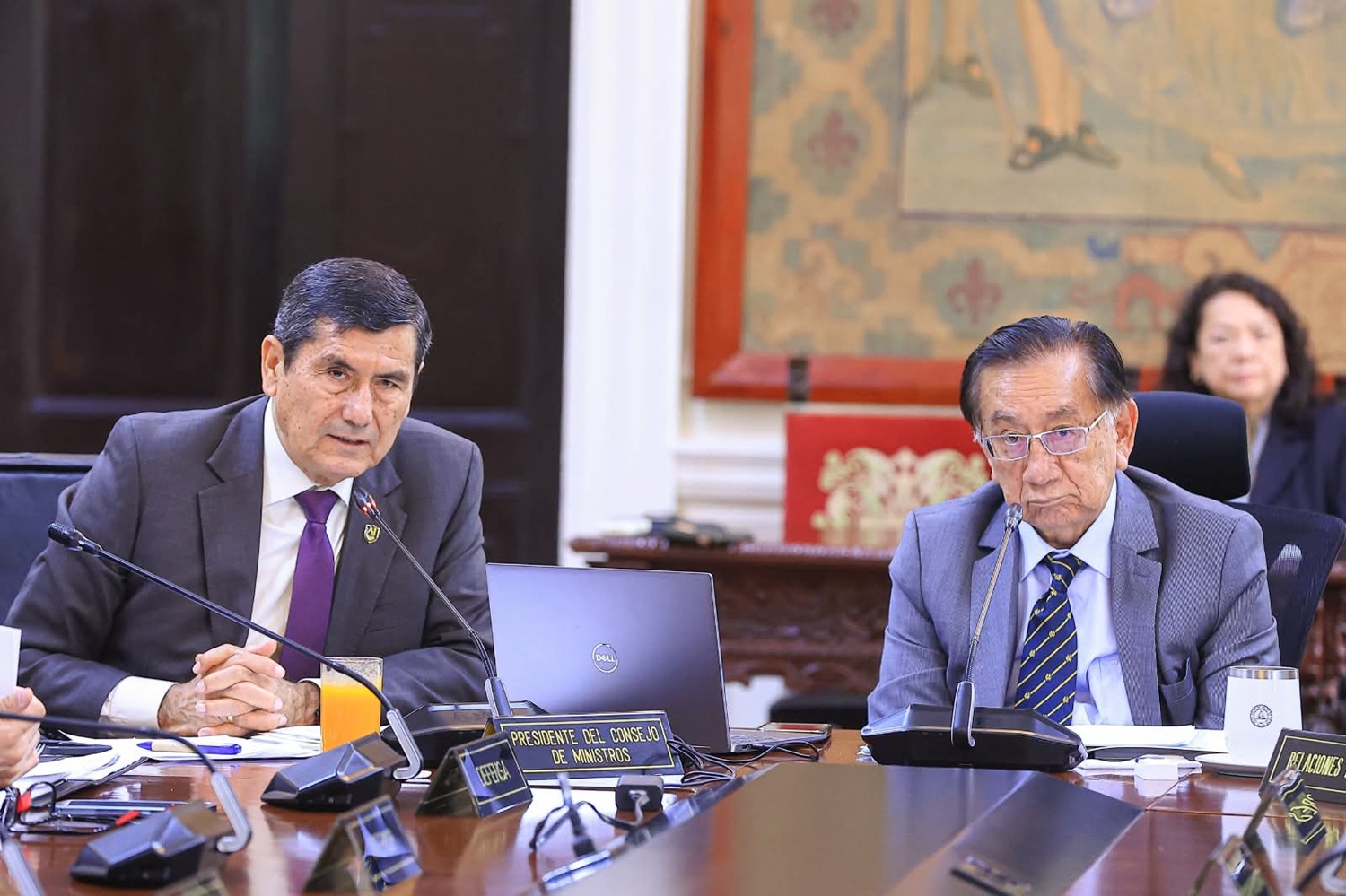
Agencia Peruana de Noticias PRENSAPERU.PE https://www.prensaperu.pe Twitter: @prensaperupe El Consejo de Ministros, presidido por el presidente de la República, José María Balcázar, aprobó hoy un conjunto de medidas estratégicas que buscan responder a las principales necesidades que enfrenta el país en materia económica, social, de gestión de riesgos y de seguridad. Estas decisiones, adoptadas a través de instrumentos legales y normativas específicas, demuestran el compromiso del Gobierno de Transición con la población, con los sectores productivos y con el desarrollo equitativo de todas las regiones, al abordar temas prioritarios que van desde el apoyo directo a los trabajadores del transporte hasta la protección de las zonas más vulnerables y la garantía de la seguridad en los espacios fronterizos.
Entre las iniciativas más destacadas se encuentra la aprobación de un decreto de urgencia que establece un subsidio económico temporal para el sector transporte, un rubro fundamental para la movilidad de personas y mercancías en todo el territorio nacional. Esta medida responde directamente al impacto que ha tenido el aumento de los precios de los combustibles en los costos operativos de los transportistas, tanto de pasajeros como de carga, afectando directamente la economía familiar y el abastecimiento de productos en todo el país. El subsidio se entregará durante un periodo de dos meses y equivale a S/ 4.00 por cada galón de diésel, tanto de la norma B5 como de la B20, combustibles que son los más utilizados en el parque vehicular del sector.
Para hacer efectivo este apoyo, el Estado ha destinado un monto total de S/ 33,8 millones de soles, recursos que se entregarán exclusivamente a quienes cumplan con requisitos estrictos para garantizar que el beneficio llegue realmente a quienes lo necesitan. Según explicó el jefe del Gabinete Ministerial, Luis Arroyo, los beneficiarios deben ser transportistas autorizados, que cuenten con habilitaciones vehiculares vigentes emitidas por las entidades competentes, que tengan su Registro Único de Contribuyentes (RUC) activo y en condición de habido, y que puedan comprobar sus compras de combustible mediante comprobantes de pago electrónicos emitidos por proveedores inscritos en el Registro de Hidrocarburos de Osinergmin. Estos requisitos aseguran que la medida sea transparente, eficiente y se dirija a la actividad formal, evitando distorsiones en el mercado.
CRÉDITOS SUPLEMENTARIOS: RECURSOS PARA EL DESARROLLO Y LA ESTABILIDAD
En el marco de la gestión de las finanzas públicas, el Consejo de Ministros aprobó también el proyecto de Ley de Créditos Suplementarios, una herramienta presupuestaria fundamental que permite incorporar nuevos recursos al Presupuesto del Sector Público para atender demandas prioritarias que no estaban previstas inicialmente o que requieren financiamiento adicional. Esta iniciativa tiene como objetivo principal cerrar las brechas sociales y de infraestructura que aún persisten en el país, garantizar la continuidad de los servicios esenciales que brinda el Estado y apoyar el proceso de transición democrática.
Los recursos que se asignarán a través de esta ley se destinarán a culminar obras de infraestructura estratégica que se encuentran en ejecución, así como a inversiones públicas que presentan niveles adecuados de avance físico y financiero, con el fin de que se conviertan pronto en beneficios concretos para la población. La distribución de estos fondos se realizará bajo estrictos criterios técnicos, tomando en cuenta la capacidad de ejecución y de gasto de los tres niveles de gobierno —nacional, regional y local—, lo que reafirma el compromiso del Ejecutivo con el mantenimiento de la estabilidad macroeconómica y el uso responsable de los recursos públicos.
Además, esta normativa garantiza el financiamiento de obligaciones pendientes en sectores clave como el Educación, asegurando que se cuente con los recursos necesarios para el desarrollo de actividades y servicios en este ámbito. Asimismo, se contempla la provisión de fondos para el pago de las gratificaciones de julio correspondientes a los trabajadores que laboran bajo el régimen de Contrato Administrativo de Servicios (CAS), un derecho laboral que el Estado cumple de manera puntual como parte de su responsabilidad con los empleados públicos.
ATENCIÓN A LA POBLACIÓN AFECTADA POR FENÓMENOS NATURALES
Ante la ocurrencia de lluvias intensas que han generado daños en diversas zonas del país, el Gobierno aprobó la prórroga del estado de emergencia por un periodo adicional de 60 días en un total de 41 distritos ubicados en 13 regiones: Áncash, Apurímac, Arequipa, Ayacucho, Cajamarca, Cusco, Huancavelica, Huánuco, Junín, Lima y Pasco. Esta medida permite mantener las acciones de protección y asistencia a la población afectada, garantizando que se puedan concluir los trabajos de limpieza de ríos, canales y zonas afectadas, así como asegurar que los sectores de Salud, Educación y Vivienda sigan brindando soporte, atención y soluciones a las familias que han sufrido pérdidas o daños en sus bienes y en su calidad de vida.
El estado de emergencia es un instrumento legal que faculta al Estado a adoptar medidas especiales para hacer frente a situaciones de riesgo o desastre, con el fin de proteger la vida, la salud y la propiedad de los ciudadanos. Al prorrogarlo, se reconoce que las tareas de recuperación y atención requieren un tiempo adicional para ser completadas de manera efectiva, y que es necesario mantener la coordinación entre las diferentes entidades públicas para garantizar que no quede ninguna población sin atención.
SEGURIDAD EN LA FRONTERA Y DESARROLLO TERRITORIAL
En materia de seguridad nacional y orden interno, el Consejo de Ministros aprobó la prórroga del estado de emergencia en la provincia de Zarumilla, ubicada en la región de Tumbes, y decidió incluir por primera vez a la provincia de Tumbes dentro de esta medida, por un periodo de 60 días. Esta decisión responde a la necesidad de fortalecer el control territorial y combatir la delincuencia organizada que afecta a estas zonas fronterizas, como la extorsión, el sicariato y el robo agravado, delitos que ponen en riesgo la tranquilidad y la integridad de la población.
Para hacer frente a estos problemas, la Policía Nacional del Perú contará con el apoyo de las Fuerzas Armadas, lo que permitirá intensificar los patrullajes, las operaciones de control y la vigilancia en las zonas estratégicas. Además, se creará el Comando de Coordinación Operativa Unificada (CCO), una instancia que reunirá a las diferentes entidades encargadas de la seguridad y el orden público, con el objetivo de coordinar acciones, compartir información y garantizar que las medidas se ejecuten de manera conjunta y eficaz, cumpliendo así el compromiso del Gobierno con las autoridades y la población de la región.
Por otro lado, el Gobierno adoptó medidas orientadas al desarrollo territorial y al fortalecimiento de la posición del Perú en el ámbito productivo y tecnológico. Se aprobó el proyecto de Ley que recategoriza como “villa” a los centros poblados de Casa Grande, Chatito y Vichayal, ubicados en el distrito de La Arena, región de Piura. Esta categoría administrativa otorga beneficios y facilidades para el desarrollo de servicios, infraestructura y actividades económicas en estas zonas, impulsando su crecimiento y mejorando las condiciones de vida de sus habitantes.
Asimismo, se declaró de interés nacional el I Foro Internacional “Uranio y Litio”, un evento que reunirá a especialistas, empresarios y autoridades para analizar el potencial de estos recursos minerales y energéticos en el país. Esta iniciativa busca posicionar al Perú como un actor relevante en la industria energética y tecnológica vinculada a la minería, promoviendo la investigación, la innovación y el desarrollo de actividades que generen valor agregado y oportunidades de desarrollo económico sostenible.
DEFINICIONES CONTEXTUALES
Decreto de urgencia: Es una norma legal que emite el Poder Ejecutivo en situaciones específicas que requieren una respuesta inmediata y que no pueden esperar el trámite ordinario en el Congreso. Permite adoptar medidas con carácter obligatorio y temporal, siempre que se justifiquen por razones de interés nacional, como la protección de la economía, la atención a la población o la seguridad.
Régimen CAS (Contrato Administrativo de Servicios): Es una modalidad laboral que permite al Estado contratar personal para desarrollar funciones temporales o específicas. A diferencia de otros regímenes, este sistema está regulado por leyes especiales y garantiza derechos básicos a los trabajadores, como el pago de beneficios sociales, entre ellos las gratificaciones, que se otorgan en dos ocasiones al año: en julio y en diciembre.
Estado de emergencia: Es una situación excepcional que se declara cuando se presentan eventos que afectan gravemente el orden público, la seguridad nacional o la vida y salud de la población. Al declararlo, se establecen medidas especiales para hacer frente a la situación, como el aumento de la presencia de fuerzas de seguridad, la restricción de actividades o la movilización de recursos, con el fin de proteger los intereses colectivos.
Créditos suplementarios: Son recursos adicionales que se incorporan al presupuesto del Estado a través de una ley, para financiar gastos que no estaban contemplados en el presupuesto inicial o que requieren mayor financiamiento. Su asignación se realiza bajo criterios técnicos y de prioridad, para garantizar que se destinen a las actividades y obras que más beneficios generen para la población.
Comando de Coordinación Operativa Unificada (CCO): Es una instancia de trabajo que reúne a representantes de diferentes entidades y instituciones que tienen competencias en un tema específico, en este caso la seguridad. Su objetivo es coordinar acciones, compartir información y definir estrategias comunes para que las medidas se ejecuten de manera eficiente y sin duplicidad de esfuerzos.
Recategorización de centros poblados: Es un proceso administrativo mediante el cual se cambia la categoría o clasificación de una zona habitada, según sus características demográficas, económicas y sociales. Al pasar a ser considerado como “villa”, la zona recibe beneficios normativos y administrativos que facilitan el desarrollo de servicios, infraestructura y actividades productivas.
CONCLUSIONES ESTRATÉGICAS
1.- Apoyo al sector productivo como base de la economía: El subsidio de S/ 4.00 por galón de diésel destinado a los transportistas demuestra que el Gobierno reconoce la importancia de este sector como motor de la economía. Al aliviar la carga económica que significa el aumento de los combustibles, se garantiza que se mantenga la movilidad de personas y mercancías, lo que a su vez permite mantener los precios de los productos en el mercado y protege el poder adquisitivo de la población en general. Esta medida no es solo un apoyo temporal, sino una forma de asegurar el funcionamiento adecuado de la actividad económica en todo el país.
2.- Financiamiento orientado a soluciones concretas: La aprobación de los créditos suplementarios confirma que los recursos públicos se están destinando a lo que realmente importa: cerrar brechas, mantener los servicios esenciales y cumplir con los derechos de los trabajadores. Al basar la distribución de fondos en criterios técnicos y de capacidad de ejecución, se evita el desperdicio de recursos y se garantiza que cada sol invertido se transforme en beneficios reales para la población, ya sea a través de obras de infraestructura o de la atención a necesidades básicas.
3.- Seguridad y protección de la población, prioridades indiscutibles: Las medidas adoptadas en materia de seguridad en Tumbes y la prórroga del estado de emergencia por lluvias intensas muestran que el Gobierno trabaja de manera integral: por un lado, protege la tranquilidad y el orden público en las zonas fronterizas, y por otro, atiende a las familias afectadas por fenómenos naturales. Entiende que no hay desarrollo ni bienestar si la población no se siente segura ni protegida, por lo que combina la presencia de las fuerzas del orden con la asistencia y el apoyo a quienes más lo necesitan.
4.- Desarrollo territorial y posicionamiento del país a largo plazo: Las decisiones sobre la recategorización de centros poblados y la declaratoria de interés nacional del Foro Internacional sobre minerales y energía muestran que se está trabajando tanto en el mejoramiento de las condiciones de vida de las comunidades locales como en el fortalecimiento de la posición del Perú en el ámbito internacional. Estas acciones demuestran que se tiene una visión de desarrollo integral, que combina el crecimiento económico con el progreso social, y que se aprovechan las oportunidades que ofrece el país para generar valor agregado y desarrollo sostenible para todos.
Fuente: Agencia Peruana de Noticias PRENSAPERU.PE https://www.prensaperu.pe Twitter: @prensaperupe
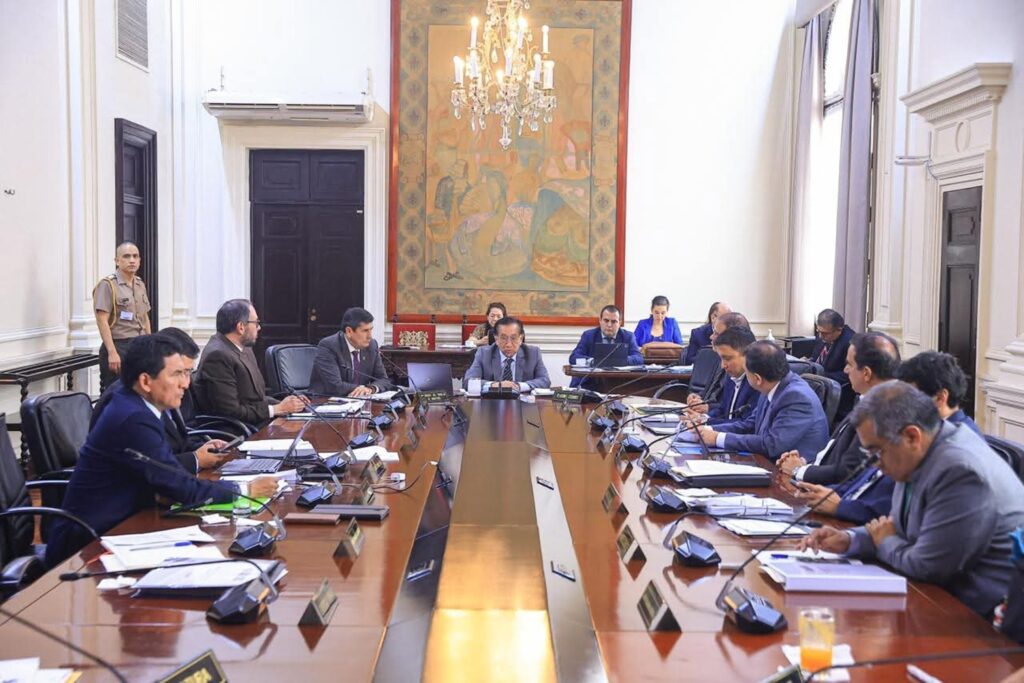
Translate
Government approves subsidy of S/ 4 per gallon of diesel for transporters, this support measure for two months will be for the entire national territory.
Peruvian News Agency PRENSAPERU.PE https://www.prensaperu.peTwitter: @prensaperupe The Council of Ministers, chaired by the President of the Republic, José María Balcázar, today approved a set of strategic measures aimed at addressing the main needs facing the country in economic, social, risk management and security matters. These decisions, adopted through legal instruments and specific regulations, demonstrate the commitment of the Transitional Government to the population, to productive sectors and to the equitable development of all regions, by addressing priority issues ranging from direct support for transport workers to the protection of the most vulnerable areas and the guarantee of security in border areas.
Among the most notable initiatives is the approval of an emergency decree establishing a temporary economic subsidy for the transport sector, a fundamental area for the mobility of people and goods throughout the national territory. This measure responds directly to the impact that the rise in fuel prices has had on the operating costs of transport operators, both passenger and cargo, directly affecting the household economy and the supply of products throughout the country. The subsidy will be granted for a period of two months and is equivalent to S/ 4.00 per gallon of diesel, both under the B5 and B20 standards, fuels which are the most widely used in the sector’s vehicle fleet.
To make this support effective, the State has allocated a total amount of S/ 33.8 million soles, resources which will be delivered exclusively to those who meet strict requirements to ensure that the benefit reaches those who truly need it. As explained by the Head of the Ministerial Cabinet, Luis Arroyo, beneficiaries must be authorised transport operators, holding valid vehicle permits issued by the competent authorities, having their Single Taxpayer Registry (RUC) active and in good standing, and being able to prove their fuel purchases through electronic payment receipts issued by suppliers registered in the Hydrocarbons Registry of Osinergmin. These requirements ensure that the measure is transparent, efficient and targeted at formal activity, avoiding market distortions.
SUPPLEMENTARY CREDITS: RESOURCES FOR DEVELOPMENT AND STABILITY
Within the framework of public finance management, the Council of Ministers also approved the Supplementary Credits Bill, a fundamental budgetary tool that allows new resources to be incorporated into the Public Sector Budget to meet priority demands that were not initially foreseen or that require additional funding. The main objective of this initiative is to close the social and infrastructure gaps that still persist in the country, guarantee the continuity of essential services provided by the State and support the democratic transition process.
The resources to be allocated through this law will be used to complete strategic infrastructure works that are currently under way, as well as for public investments showing adequate levels of physical and financial progress, so that they soon become concrete benefits for the population. The distribution of these funds will be carried out under strict technical criteria, taking into account the execution and spending capacity of the three levels of government —national, regional and local—, which reaffirms the Executive’s commitment to maintaining macroeconomic stability and the responsible use of public resources.
Furthermore, this regulation guarantees the financing of outstanding obligations in key sectors such as Education, ensuring that the necessary resources are available for the development of activities and services in this area. Likewise, it includes the provision of funds for the payment of July bonuses corresponding to workers employed under the Administrative Services Contract (CAS) regime, a labour right that the State fulfils in a timely manner as part of its responsibility towards public employees.
ASSISTANCE TO THE POPULATION AFFECTED BY NATURAL PHENOMENA
In response to the occurrence of heavy rains that have caused damage in various areas of the country, the Government approved the extension of the state of emergency for an additional period of 60 days in a total of 41 districts located in 13 regions: Ancash, Apurímac, Arequipa, Ayacucho, Cajamarca, Cusco, Huancavelica, Huánuco, Junín, Lima and Pasco. This measure makes it possible to maintain protection and assistance actions for the affected population, ensuring that work to clean up rivers, canals and affected areas can be completed, as well as ensuring that the Health, Education and Housing sectors continue to provide support, care and solutions for families who have suffered losses or damage to their property and quality of life.
The state of emergency is a legal instrument that empowers the State to adopt special measures to deal with risk or disaster situations, in order to protect the life, health and property of citizens. By extending it, recognition is given to the fact that recovery and care tasks require additional time to be completed effectively, and that it is necessary to maintain coordination between the different public entities to ensure that no population group is left without assistance.
BORDER SECURITY AND TERRITORIAL DEVELOPMENT
With regard to national security and internal order, the Council of Ministers approved the extension of the state of emergency in the province of Zarumilla, located in the region of Tumbes, and decided to include for the first time the province of Tumbes within the scope of this measure, for a period of 60 days. This decision responds to the need to strengthen territorial control and combat organised crime affecting these border areas, such as extortion, contract killing and aggravated robbery, crimes that jeopardise the peace of mind and safety of the population.
To deal with these problems, the National Police of Peru will have the support of the Armed Forces, which will make it possible to intensify patrols, control operations and surveillance in strategic areas. In addition, the Unified Operational Coordination Command (CCO) will be created, a body that will bring together the different entities in charge of security and public order, with the aim of coordinating actions, sharing information and guaranteeing that measures are implemented in a joint and efficient manner, thus fulfilling the Government’s commitment to the regional authorities and population.
On the other hand, the Government adopted measures aimed at territorial development and the strengthening of Peru’s position in the productive and technological sphere. A Bill was approved to reclassify the population centres of Casa Grande, Chatito and Vichayal, located in the district of La Arena, Piura region, as “towns”. This administrative category grants benefits and facilities for the development of services, infrastructure and economic activities in these areas, boosting their growth and improving the living conditions of their inhabitants.
Likewise, the I International Forum “Uranium and Lithium” was declared of national interest, an event that will bring together specialists, businesspeople and authorities to analyse the potential of these mineral and energy resources in the country. This initiative seeks to position Peru as a relevant player in the energy and technology industry linked to mining, promoting research, innovation and the development of activities that generate added value and opportunities for sustainable economic development.
CONTEXTUAL DEFINITIONS
Emergency Decree: A legal norm issued by the Executive Branch in specific situations requiring an immediate response that cannot await the ordinary procedure in Congress. It allows the adoption of measures of a mandatory and temporary nature, provided they are justified by reasons of national interest, such as the protection of the economy, assistance to the population or security.
CAS Regime (Administrative Services Contract): A labour modality that allows the State to hire personnel to perform temporary or specific functions. Unlike other regimes, this system is regulated by special laws and guarantees basic rights for workers, such as the payment of social benefits, including bonuses, which are granted twice a year: in July and December.
State of Emergency: An exceptional situation declared when events occur that seriously affect public order, national security or the life and health of the population. When declared, special measures are established to deal with the situation, such as increasing the presence of security forces, restricting activities or mobilising resources, in order to protect collective interests.
Supplementary Credits: Additional resources incorporated into the State budget through a law, to finance expenditures that were not contemplated in the initial budget or that require greater funding. Their allocation is carried out under technical and priority criteria, to ensure that they are directed towards activities and works that generate the greatest benefits for the population.
Unified Operational Coordination Command (CCO): A working body that brings together representatives of different entities and institutions with competences in a specific subject —in this case, security. Its purpose is to coordinate actions, share information and define common strategies so that measures are implemented efficiently and without duplication of efforts.
Reclassification of Population Centres: An administrative process through which the category or classification of an inhabited area is changed, according to its demographic, economic and social characteristics. Upon being reclassified as a “town”, the area receives regulatory and administrative benefits that facilitate the development of services, infrastructure and productive activities.
STRATEGIC CONCLUSIONS
1.- Support for the productive sector as the basis of the economy: The subsidy of S/ 4.00 per gallon of diesel allocated to transport operators demonstrates that the Government recognises the importance of this sector as an engine of the economy. By alleviating the economic burden represented by the rise in fuel prices, the mobility of people and goods is guaranteed, which in turn helps to maintain product prices in the market and protects the purchasing power of the population in general. This measure is not only temporary support, but also a way of ensuring the proper functioning of economic activity throughout the country.
2.- Financing geared towards concrete solutions: The approval of supplementary credits confirms that public resources are being allocated to what really matters: closing gaps, maintaining essential services and upholding workers’ rights. By basing the distribution of funds on technical criteria and execution capacity, the waste of resources is avoided and a guarantee is given that every sol invested is transformed into real benefits for the population, whether through infrastructure works or the provision of basic needs.
3.- Security and protection of the population, indisputable priorities: The measures adopted regarding security in Tumbes and the extension of the state of emergency due to heavy rains show that the Government works in a comprehensive manner: on the one hand, it protects peace of mind and public order in border areas, and on the other, it assists families affected by natural phenomena. It understands that there can be no development or well‑being if the population does not feel safe or protected, and therefore combines the presence of law enforcement agencies with assistance and support for those who need it most.
4.- Territorial development and long‑term positioning of the country: Decisions regarding the reclassification of population centres and the declaration of national interest for the International Forum on Minerals and Energy show that work is being carried out both to improve the living conditions of local communities and to strengthen Peru’s position in the international sphere. These actions demonstrate that a comprehensive development vision is in place, combining economic growth with social progress, and that the opportunities offered by the country are being used to generate added value and sustainable development for all.
Source: Peruvian News Agency PRENSAPERU.PE https://www.prensaperu.pe Twitter: @prensaperupe