
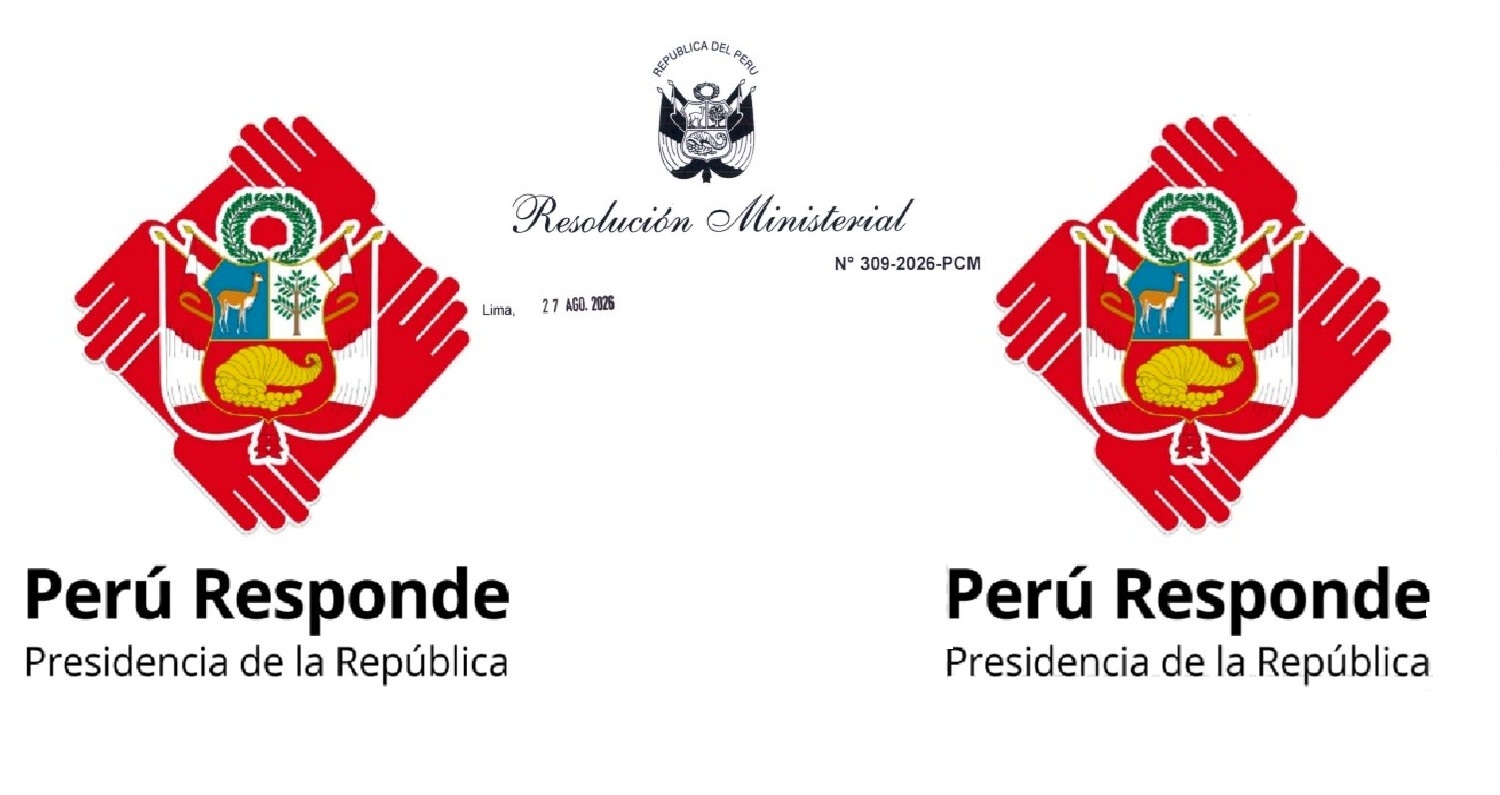
Agencia Peruana de Noticias PRENSAPERU.PE https://www.prensaperu.pe Twitter: @prensaperupe El Gobierno del Perú ha oficializado mediante Resolución Ministerial N.° 309-2026-PCM, publicada este viernes en el Boletín de Normas Legales del Diario Oficial El Peruano, la política oficial de comunicación social del Poder Ejecutivo: la identidad comunicacional denominada «Perú Responde», de aplicación obligatoria para todas las entidades, organismos, programas y proyectos del Poder Ejecutivo a nivel nacional, regional y local.
La norma, suscrita por el presidente del Consejo de Ministros, Luis Fernando Galarreta Velarde, establece que «Perú Responde» funcionará como la marca paraguas que agrupa, bajo un mismo lenguaje visual y conceptual, todas las acciones, servicios, campañas, intervenciones y entregas que realice el Estado. El propósito declarado es superar la dispersión comunicacional histórica del Ejecutivo, mediante la cual cada ministerio o institución comunicaba de manera aislada, dificultando que la ciudadanía identifique rápidamente qué acciones corresponden al Estado y cuáles a iniciativas particulares o privadas.
ALCANCE Y OBLIGATORIEDAD
Lo más relevante de la disposición es su carácter vinculante: no se trata de una recomendación, sino de una política de cumplimiento obligatorio. Esto significa que desde la entrada en vigencia de la resolución, toda pieza comunicacional —impresa, digital, audiovisual, física o en redes sociales— que emane de cualquier entidad del Poder Ejecutivo deberá incorporar la identidad «Perú Responde» según las especificaciones del manual de marca aprobado en el mismo acto.
La Secretaría de Comunicación Social de la Presidencia del Consejo de Ministros queda designada como la autoridad rectora: le corresponde conducir la implementación, supervisar el cumplimiento, emitir las directrices complementarias y resolver las dudas sobre su aplicación. Las entidades del sector público deberán adecuar sus materiales, señalética y plataformas digitales en los plazos que se establezcan.
CASUÍSTICA: ¿DÓNDE Y CÓMO SE APLICARÁ?
La obligatoriedad implica cambios concretos en todos los frentes de la acción pública:
En emergencias: Entrega de ayuda humanitaria, albergues, materiales de prevención —todo se identifica con «Perú Responde» para que la población reconozca inmediatamente que es el Estado quien actúa.
En programas sociales: Bonos, pensiones, alimentación escolar, salud maternoinfantil —los mensajes y plataformas llevan la identidad unificada, reduciendo confusiones y desinformación.
En infraestructura y obras: Carteles de identificación en carreteras, puentes, colegios, centros de salud en construcción o entregados —la ciudadanía ve claramente la intervención del Estado.
En campañas de información: Prevención sanitaria, seguridad vial, educación tributaria, orientación al ciudadano —un lenguaje visual único que genera reconocimiento y confianza.
En atención al público: Ventanillas, portales web, aplicaciones móviles, vehículos oficiales, uniformes —el ciudadano interactúa con una imagen coherente del Estado.
SENTIDO Y PROPORCIÓN DE LA MEDIDA
La medida responde a una legítima necesidad de ordenar la comunicación del Estado: la dispersión de marcas y mensajes fragmenta la percepción ciudadana y dificulta el acceso a la información pública. Sin embargo, su mayor fortaleza —la obligatoriedad— es también su punto de mayor exigencia: la identidad institucional debe mantenerse neutral, duradera y ajena a toda vinculación partidaria o personal. Su legitimidad dependerá de que se mantenga como un sello del Estado, no del gobierno de turno.
DATOS CONCEPTUALES
Política de comunicación social del Estado: Conjunto de lineamientos, normas y decisiones que definen cómo el Poder Ejecutivo se comunica con la ciudadanía. No es publicidad política: es el derecho del ciudadano a recibir información clara, uniforme y verificable sobre lo que el Estado hace por él.
Identidad comunicacional unificada: Sistema de elementos visuales y verbales que permiten reconocer que distintas acciones provienen de una misma institución —el Estado—, aunque sean ejecutadas por entidades diferentes. Transforma la percepción de un Estado fragmentado a un Estado coordinado.
Obligatoriedad normativa: Carácter vinculante de la disposición: todas las entidades destinatarias deben cumplirla sin excepción. No es una guía sugerida: es una norma de cumplimiento obligatorio, sujeta a supervisión y responsabilidad institucional.
Marca paraguas: Identidad principal que agrupa bajo sí a múltiples programas, entidades o servicios. Permite que el ciudadano reconozca el origen del mensaje sin necesidad de conocer la estructura interna del Estado.
Diario Oficial El Peruano: Medio de publicación oficial del Estado peruano. Toda norma que se publica allí adquiere vigencia legal y obligatoriedad general. Es el punto de partida para que la ciudadanía conozca y exija el cumplimiento de las leyes.
CONCLUSIONES
1.- La Resolución Ministerial N.° 309-2026-PCM resuelve un problema estructural: la invisibilidad y dispersión de la acción pública. Al establecer una identidad única y obligatoria, el Estado se hace reconocible y cercano, facilitando que la ciudadanía identifique, acceda y confíe en sus servicios.
2.- La obligatoriedad es necesaria para que la medida funcione, pero exige equilibrio: la marca debe aplicarse a todo lo que el Estado hace, pero nunca para promocionar a personas, partidos o gestiones de gobierno. Su valor institucional se mantiene solo si se mantiene neutral.
3.- «Perú Responde» es un instrumento de comunicación, no una reforma de gestión: mejora cómo se ve y se entiende al Estado, pero no reemplaza que este sea eficaz, oportuno y transparente. La imagen refuerza la realidad, pero no la sustituye. Si el Estado no responde en los hechos, la marca por sí sola no bastará.
4.- La publicación en El Peruano marca el inicio formal de una etapa que requiere coordinación, capacitación y supervisión permanente. El reto no es solo crear la marca, sino que cada entidad del país la aplique correctamente y la mantenga viva más allá de los cambios de gobierno.
Fuente: Agencia Peruana de Noticias PRENSAPERU.PE https://www.prensaperu.pe Twitter: @prensaperupe

Translate
Perú Responds: Mandatory Across the Entire Executive Branch — The State’s Unified Identity Published in the Official Gazette El Peruano. One Voice Across the Nation: The Rule That Standardizes the Image of All Ministries and Public Entities.
Peruvian News Agency PRENSAPERU.PE https://www.prensaperu.pe Twitter: @prensaperupe The Government of Peru has officially established, through Ministerial Resolution No. 309-2026-PCM —published this Friday in the Legal Norms Bulletin of the Official Gazette El Peruano— the official social communication policy of the Executive Branch: the institutional identity known as «Perú Responde», which is mandatory for all entities, bodies, programs, and projects of the Executive Branch at the national, regional, and local levels.
Signed by the President of the Council of Ministers, Luis Fernando Galarreta Velarde, the regulation establishes that «Perú Responde» will function as an umbrella brand, bringing together under a single visual and conceptual framework all actions, services, campaigns, interventions, and deliveries carried out by the State. Its stated purpose is to overcome the historical fragmentation of Executive Branch communication, whereby each ministry or institution communicated in isolation —making it difficult for citizens to quickly identify which actions correspond to the State and which to private or individual initiatives.
SCOPE AND MANDATORY NATURE
The most significant feature of the provision is its binding character: this is not a recommendation, but a mandatory policy. This means that upon the resolution’s entry into force, every communication piece —printed, digital, audiovisual, physical, or on social media— issued by any Executive Branch entity must incorporate the «Perú Responde» identity in accordance with the brand manual approved alongside the resolution.
The Secretariat for Social Communication of the Presidency of the Council of Ministers is designated as the governing authority: it is responsible for leading implementation, monitoring compliance, issuing supplementary guidelines, and resolving questions regarding application. Public sector entities must adapt their materials, signage, and digital platforms within the established timelines.
APPLICATION EXAMPLES: WHERE AND HOW IT WILL BE USED
Mandatory implementation brings concrete changes across all areas of public action:
In emergencies: Delivery of humanitarian aid, shelters, and prevention materials —all identified under «Perú Responde», so the public immediately recognizes the State as the acting authority.
Social programs: Cash transfers, pensions, school meals, maternal and child health services —messages and platforms carry the unified identity, reducing confusion and misinformation.
Infrastructure and public works: Identification signage on roads, bridges, schools, and health centers —citizens clearly see the State’s involvement.
Public information campaigns: Health prevention, road safety, tax education, and citizen guidance —a unified visual language that builds recognition and trust.
Public services: Service counters, websites, mobile apps, official vehicles, and staff uniforms —citizens interact with a consistent, coherent State identity.
RATIONALE AND BALANCE OF THE MEASURE
The policy responds to a legitimate need to streamline State communication: fragmented branding and disjointed messaging distort public perception and hinder access to public information. Yet its greatest strength —mandatory application— is also its most critical requirement: the institutional identity must remain neutral, enduring, and entirely separate from partisan or personal affiliations. Its legitimacy will depend on being maintained as a mark of the State itself, not of the current administration.
CONCEPTUAL FRAMEWORK
State Social Communication Policy: The set of guidelines, norms, and decisions governing how the Executive Branch communicates with citizens. It is not political advertising: it upholds the citizen’s right to receive clear, consistent, and verifiable information about what the State does on their behalf.
Unified Institutional Identity: A system of visual and verbal elements that enables the public to recognize that diverse actions originate from the same institution —the State— even when implemented by different bodies. It transforms the perception of a fragmented State into one of a coordinated entity.
Normative Mandate: The binding nature of the provision: all covered entities must comply without exception. This is not a suggested guideline —it is a legally enforceable rule, subject to oversight and institutional accountability.
Umbrella Brand: A primary identity that unifies multiple programs, entities, and services under a single framework. Enabling citizens to recognize the source of information without needing to understand the State’s internal structure.
Official Gazette El Peruano: Peru’s official State publication. Any norm published there acquires legal force and general applicability. It is the authoritative source through which citizens become aware of and may demand compliance with the law.
CONCLUSIONS
1.- Ministerial Resolution No. 309-2026-PCM addresses a structural problem: the invisibility and fragmentation of public action. By establishing a single, mandatory identity, the State becomes recognizable and accessible, making it easier for citizens to identify, access, and trust public services.
2.- Mandatory application is essential for the policy to succeed, but it requires balance: the brand must apply to everything the State does —but never to promote individuals, political parties, or specific administrations. Its institutional value endures only as long as it remains neutral.
3.- «Perú Responde» is a communication tool, not a management reform: it improves how the State is perceived and understood, but it cannot replace effectiveness, timeliness, and transparency. Image reinforces reality —it does not substitute for it. If the State fails to deliver in practice, the brand alone will not suffice.
4.- Publication in El Peruano marks the formal beginning of a process requiring ongoing coordination, training, and oversight. The challenge is not merely creating the brand —but ensuring every entity applies it correctly and sustains it beyond changes in government.
Source: Peruvian News Agency PRENSAPERU.PE https://www.prensaperu.pe Twitter: @prensaperupe