
Agencia Peruana de Noticias PRENSAPERU.PE https://www.prensaperu.pe Twitter: @prensaperupe El escenario político del Perú atraviesa un momento constitucionalmente delicado. El Consejo de Ministros, liderado por el premier Luis Galarreta, aprobó recientemente un amplio paquete de 66 solicitudes de facultades legislativas delegadas al Ejecutivo, en ocho materias que van desde seguridad ciudadana hasta reactivación económica, tributación y mitigación del Fenómeno El Niño, con un plazo de 120 días para su ejercicio . La presidenta Keiko Fujimori enviará próximamente esta solicitud al Congreso bicameral, esperando que el Legislativo confíe en el Ejecutivo y le otorgue esas competencias normativas.
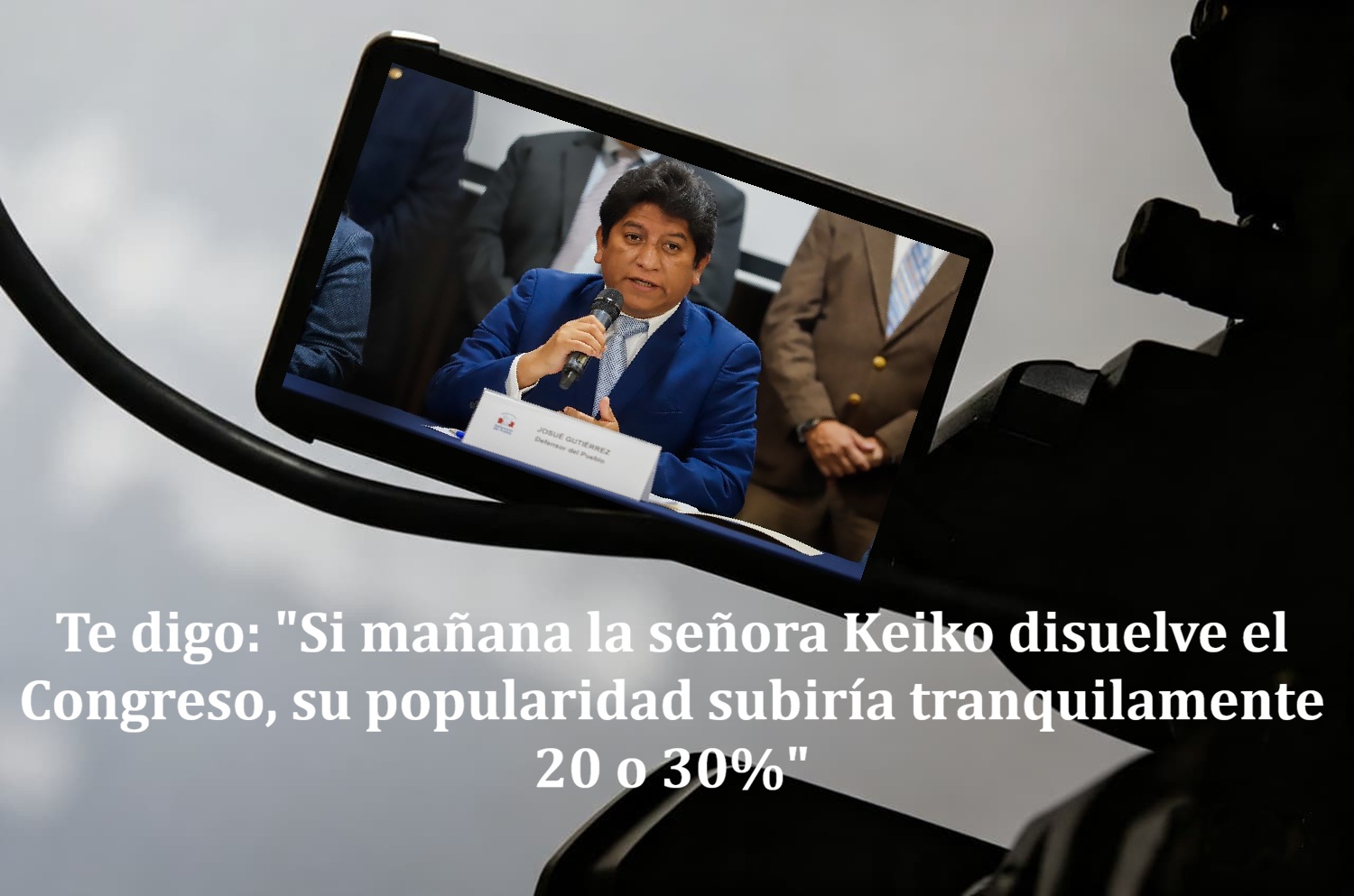
En este contexto, las declaraciones del Defensor del Pueblo, Josué Gutiérrez, adquieren una gravedad que trasciende una simple opinión: afirmó que disolver el Congreso podría subir la aprobación presidencial entre 20 y 30 puntos porcentuales, e incluso superar el 80% de respaldo ciudadano, aclarando después que “no lo deseaba” sino que era una “percepción”. Pero el momento y el sentido de esas palabras no son casuales: coinciden exactamente con la presentación del pedido de facultades legislativas. Y es ahí donde el discurso deja de ser una opinión y se convierte en una presión indebida sobre el Parlamento.
EL DEFENSOR DEL PUEBLO NO ES UN MENSAJERO DEL EJECUTIVO: SU FUNCIÓN ES CONSTITUCIONAL
La Constitución Política del Perú en su Artículo 162° y la Ley Orgánica N° 26520 establecen con absoluta claridad: la Defensoría del Pueblo es un órgano constitucional autónomo, que no responde a ningún poder del Estado. Su mandato es defender los derechos fundamentales y supervisar el cumplimiento de los deberes de la administración pública . No es vocero del Gobierno, no es asesor político del Ejecutivo, ni tampoco puede actuar como elemento de presión sobre el Legislativo. Su deber es ser garante del equilibrio democrático, no romperlo.
Cuando el Defensor del Pueblo, en un momento en que el Congreso debe decidir si entrega o no facultades al Ejecutivo, sale a declarar que “cerrar el Parlamento daría mucha popularidad al Gobierno”, el mensaje que reciben los parlamentarios y la ciudadanía es inequívoco: si no aprueban lo que el Ejecutivo pide, el costo político será tan bajo que el Gobierno podría prescindir de ustedes y ganar más apoyo. Es, en esencia, una amenaza encubierta: una advertencia de que el camino inconstitucional sería bien recibido, y por tanto, ¿para qué resistirse a entregar las facultades?
LA CONSTITUCIÓN NO ADMITE CHANTAJE EL ARTÍCULO 104° Y EL ARTÍCULO 134°
El Artículo 104° de la Constitución establece que el Congreso puede delegar en el Ejecutivo la facultad de legislar, mediante ley, sobre materias determinadas y con el plazo señalado. Es una facultad del Congreso, no una obligación. El Legislativo evalúa, debate, modifica y decide. No hay sanción constitucional por negar las facultades.
El Artículo 134° es taxativo: el Presidente solo puede disolver el Congreso si este ha censurado o negado su confianza a dos Consejos de Ministros. Fuera de ese supuesto, disolver el Parlamento es inconstitucional, nulo y genera responsabilidad. No existe cláusula que diga “si el Congreso no da facultades, se puede cerrar”. Eso no está escrito en ninguna parte.
Por tanto, sugerir que el Ejecutivo podría hacerlo y que sería popular, es introducir una sanción extraconstitucional para obligar al Congreso a ceder sus atribuciones. El Defensor del Pueblo no está para inventar consecuencias que la Constitución no establece; está para hacer respetar las que sí establece.
ANÁLISIS EPISTEMOLÓGICO Y ÉTICO: CUANDO EL GARANTE SE CONVIERTE EN EXTORSIONADOR
Epistemológicamente, el Defensor del Pueblo traslada el debate del derecho a la fuerza: ya no importa si es constitucional o no, importa si es popular. Y al hacerlo en el momento exacto en que el Congreso debe decidir sobre las facultades, su “percepción” deja de ser una observación sociológica y se convierte en instrumento de coerción política.
Éticamente, es aún más grave: la Defensoría debe ser imparcial y autónoma . Si el Defensor percibe que el Congreso es débil y que el Ejecutivo podría ganar cerrándolo, su deber no es publicitar esa ventaja, sino alertar contra su uso. Si un guarda de seguridad ve que la puerta está débil, no le avisa a los ladrones: refuerza la puerta. El Defensor del Pueblo hizo lo contrario: señaló la debilidad y calculó la ganancia de quien podría aprovecharla. Eso no es vigilancia, es complicidad discursiva.
EL IMPACTO: TRES PODERES SACUDIDOS Y LA CIUDADANÍA ENGAÑADA
Sobre el Legislativo: El mensaje que recibe el Parlamento es: “cede tus facultades o te cierran”. Se debilita su capacidad de negociación democrática y se atenta contra su independencia. Ningún poder libre puede deliberar bajo amenaza.
Sobre el Ejecutivo: Paradójicamente, también lo debilita. Porque si el Gobierno necesita que un tercero lo amenace para que le den lo que pide, está reconociendo que no tiene argumentos democráticos suficientes para convencer al Congreso. La presidenta tuvo que rechazar las declaraciones, pero el daño al clima de confianza ya está hecho.
Sobre la ciudadanía: El efecto más tóxico es enseñar al pueblo que la Constitución es negociable. Que si el Gobierno no consigue lo que quiere por las vías democráticas, hay un atajo que da más popularidad. Eso no es madurez política: es la educación del autoritarismo.
LA MIRADA PERIODÍSTICA: ¿AMENAZA O DIAGNÓSTICO? EL DEBER DE LOS MEDIOS
Los comunicadores sociales tienen aquí una responsabilidad clave: no pueden limitarse a repetir las declaraciones sin contextualizarlas. Deben señalar: no existe ninguna norma constitucional que permita disolver el Congreso por negar facultades. Lo que el Defensor del Pueblo dice que es “popularidad”, jurídicamente sería un golpe de Estado. Y los medios deben preguntar: ¿por qué quien debe defender la Constitución está calculando los beneficios políticos de violarla?
El riesgo es que la amenaza, repetida mil veces, se vuelva normal. Y lo que hoy es “una percepción”, mañana se convierta en una expectativa. El periodismo debe romper ese ciclo: ninguna popularidad justifica el quebrantamiento del orden democrático.
DATOS CONCEPTUALES
Facultades Legislativas Delegadas (Art. 104°): Atribución constitucional del Congreso de ceder temporalmente su potestad de legislar al Ejecutivo, sobre materias y plazos específicos. Es una decisión soberana del Legislativo, no una obligación. Su negativa no genera consecuencia jurídica alguna.
Disolución Constitucional del Congreso (Art. 134°): Medida excepcionalísima que solo procede tras la negación de confianza a dos Consejos de Ministros. No existe otra causa. Cualquier otra disolución es inconstitucional y nula de pleno derecho.
Órgano Constitucional Autónomo: Entidad del Estado que no depende de ningún poder, para garantizar su independencia. La Defensoría del Pueblo lo es, y por ello no puede alinearse ni presionar a favor de ninguno.
Separación de Poderes: Principio estructural de la democracia: cada poder tiene sus funciones y límites. Ninguno puede subordinar a los otros mediante amenazas. El Congreso es igual en jerarquía constitucional al Ejecutivo, no su subordinado.
Lealtad Constitucional: Deber de toda autoridad de respetar el texto fundamental, incluso —y sobre todo— cuando la popularidad podría favorecer su quebrantamiento. El Defensor del Pueblo tiene un deber agravado de lealtad, porque es el primero que debe exigirla.
Presión Indebida: Uso de argumentos extrajurídicos (amenazas, cálculos de popularidad, coerción simbólica) para influir en una decisión que debe tomarse libremente. Es contrario a la autonomía del Legislativo y al Estado de Derecho.
CONCLUSIONES
1.- El Defensor del Pueblo rebasó su mandato constitucional y asumió un rol que no le corresponde. No es su función calcular réditos políticos de medidas que quebrantarían el orden democrático; su deber es alertar contra ellas, especialmente cuando coinciden con un debate clave en el Congreso .
2.- Sus declaraciones funcionan como una amenaza simbólica al Legislativo en el momento exacto en que debe decidir sobre las facultades. Sugerir que cerrar el Parlamento daría popularidad, mientras el Congreso evalúa ceder sus atribuciones, es crear un clima de coerción inaceptable en una democracia. El Congreso debe decidir libremente, no bajo presión.
3.- Ninguna disposición constitucional permite disolver el Congreso si no se otorgan facultades al Ejecutivo. El Artículo 134° es taxativo y no admite analogías. Introducir esa posibilidad como escenario “ventajoso” es inventar una sanción que la Constitución no contempla, debilitando el Estado de Derecho.
4.- La popularidad no es fuente de legitimidad constitucional. Que una medida tenga apoyo ciudadano no la convierte en legal. La democracia se sustenta en reglas que el pueblo se dio a sí mismo, no en encuestas. El Defensor del Pueblo confundió aprobación con legitimidad, y eso es un error gravísimo para quien debe ser garante del derecho.
5.- El daño más profundo se hace a la ciudadanía, no a los políticos. Normalizar la idea de que el autoritarismo da resultados enseña a las personas a desconfiar de la democracia misma. Si el Defensor del Pueblo —quien debe proteger la confianza en las instituciones— les dice que las instituciones son prescindibles, ¿Quién las defenderá?
6.- La Defensoría del Pueblo debe ser refugio de derechos, no instrumento de presión política. Si su voz se usa para inclinar la balanza a favor del Ejecutivo frente al Legislativo, se rompe el equilibrio que la Constitución ordena preservar. La autonomía no es un privilegio del cargo: es una obligación con el pueblo del que emana todo poder.
Fuente: Agencia Peruana de Noticias PRENSAPERU.PE https://www.prensaperu.pe Twitter: @prensaperupe

Translate
Guardian or Threat? When the Ombudsman Calculates Popularity in Closing Parliament While Congress Decides on Legislative Powers. Mr. Josué Gutiérrez Cóndor, Your Mandate Is to Defend the Constitution, Not Extort Congress.
Peruvian News Agency PRENSAPERU.PE https://www.prensaperu.pe Twitter: @prensaperupe Peru’s political scenario is going through a constitutionally delicate moment. The Council of Ministers, led by Prime Minister Luis Galarreta, recently approved a broad package of 66 requests for delegated legislative powers to the Executive Branch, covering eight areas ranging from public security to economic reactivation, taxation, and mitigation of El Niño, with a 120‑day term for their exercise. President Keiko Fujimori will soon send this request to the Bicameral Congress, expecting the Legislative Branch to trust the Executive and grant it those regulatory powers.
In this context, the statements of the Ombudsman, Josué Gutiérrez, take on a seriousness that goes beyond a mere opinion: he affirmed that dissolving Congress could boost presidential approval by between 20 and 30 percentage points, and even exceed 80% citizen support, later clarifying that he “did not wish for this” but that it was a “perception.” Yet the timing and meaning of these words are not accidental: they coincide exactly with the submission of the request for legislative powers. And that is where the statement ceases to be an opinion and becomes undue pressure on Parliament.
THE OMBUDSMAN IS NOT A MESSENGER FOR THE EXECUTIVE: HIS ROLE IS CONSTITUTIONAL
Article 162° of the Political Constitution of Peru and Organic Law No. 26520 establish with absolute clarity: the Office of the Ombudsman is a constitutional autonomous body, answering to no branch of the State. Its mandate is to defend fundamental rights and oversee compliance with the duties of public administration. It is not a government spokesperson, not a political advisor to the Executive, nor can it act as an element of pressure on the Legislative Branch. Its duty is to be a guardian of democratic equilibrium, not to break it.
When the Ombudsman, at a moment when Congress must decide whether to grant powers to the Executive, declares that “closing Parliament would give the Government great popularity,” the message received by lawmakers and citizens is unambiguous: if you do not approve what the Executive asks, the political cost will be so low that the Government could do without you and gain more support. In essence, it is a veiled threat: a warning that the unconstitutional path would be well received, and therefore, why resist handing over the powers?
THE CONSTITUTION DOES NOT ACCEPT BLACKMAIL: ARTICLE 104° AND ARTICLE 134°
Article 104° of the Constitution states that Congress may delegate to the Executive the power to legislate, by law, on specific matters and for the stated term. This is a power of Congress, not an obligation. The Legislative Branch evaluates, debates, amends, and decides. There is no constitutional penalty for refusing the powers.
Article 134° is categorical: the President may only dissolve Congress if it has censured or denied confidence in two Councils of Ministers. Outside that scenario, dissolving Parliament is unconstitutional, null, and generates liability. There is no clause stating “if Congress does not grant powers, it may be closed.” That is not written anywhere.
Therefore, suggesting that the Executive could do so and that it would be popular is introducing an extra‑constitutional sanction to force Congress to yield its powers. The Ombudsman is not there to invent consequences that the Constitution does not establish; he is there to enforce those it does establish.
EPISTEMOLOGICAL AND ETHICAL ANALYSIS: WHEN THE GUARDIAN BECOMES AN EXTORTIONIST
Epistemologically, the Ombudsman shifts the debate from law to force: it no longer matters whether it is constitutional, only whether it is popular. And by doing so at the exact moment Congress must decide on the powers, his “perception” ceases to be a sociological observation and becomes an instrument of political coercion.
Ethically, it is even more serious: the Ombudsman’s Office must be impartial and autonomous. If the Ombudsman perceives that Congress is weak and that the Executive could gain by closing it, his duty is not to advertise that advantage, but to warn against its use. If a security guard sees that a door is weak, he does not inform the thieves — he reinforces the door. The Ombudsman did the opposite: he pointed out the weakness and calculated the gain for those who might exploit it. That is not oversight — that is discursive complicity.
THE IMPACT: THREE BRANCHES SHOOK AND THE CITIZENRY MISLED
On the Legislative Branch: The message to Parliament is: “yield your powers or be closed.” Its capacity for democratic negotiation is weakened, and its independence is undermined. No free body can deliberate under threat.
On the Executive Branch: Paradoxically, it is also weakened. For if the Government needs a third party to threaten people into giving it what it wants, it is acknowledging that it lacks sufficient democratic arguments to persuade Congress. The President had to reject the statements, but the damage to the climate of trust is already done.
On the citizenry: The most toxic effect is teaching the people that the Constitution is negotiable. That if the Government cannot get what it wants through democratic channels, there is a shortcut that brings greater popularity. That is not political maturity — that is the education of authoritarianism.
THE JOURNALISTIC PERSPECTIVE: THREAT OR DIAGNOSIS? THE DUTY OF THE MEDIA
Communicators bear a key responsibility here: they cannot limit themselves to repeating the statements without context. They must state: no constitutional provision allows Congress to be dissolved for refusing legislative powers. What the Ombudsman calls “popularity” would legally be a coup d’état. And the media must ask: why is the person who should defend the Constitution calculating the political benefits of violating it?
The risk is that the threat, repeated a thousand times, becomes normal. And what today is “a perception” may tomorrow become “an expectation.” Journalism must break that cycle: no popularity justifies breaking the democratic order.
CONCEPTUAL DEFINITIONS
Delegated Legislative Powers (Art. 104°): Constitutional authority of Congress to cede temporarily its law‑making power to the Executive, on defined matters and for a fixed term. It is a sovereign decision of the Legislative Branch, not an obligation. Its refusal generates no legal consequence whatsoever.
Constitutional Dissolution of Congress (Art. 134°): An extraordinary measure that may only proceed after confidence has been denied to two Councils of Ministers. No other cause exists. Any other dissolution is unconstitutional and null and void.
Constitutional Autonomous Body: A State entity independent of any branch, to guarantee its impartiality. The Ombudsman’s Office is such, and therefore cannot align itself with or pressure in favor of any branch.
Separation of Powers: Structural principle of democracy: each branch has its own functions and limits. None may subordinate the others through threats. Congress is equal in constitutional rank to the Executive, not its subordinate.
Constitutional Loyalty: The duty of every public official to respect the fundamental charter, even — and especially — when popularity might favor its violation. The Ombudsman has an enhanced duty of loyalty, for he is the very one who should demand it.
Undue Pressure: The use of extra‑legal arguments (threats, popularity calculations, symbolic coercion) to influence a decision that should be made freely. It is contrary to legislative autonomy and the Rule of Law.
CONCLUSIONS
1.- The Ombudsman exceeded his constitutional mandate and assumed a role that does not belong to him. It is not his function to calculate political returns from measures that would break the democratic order; his duty is to warn against them, especially when they coincide with a key debate in Congress.
2.- His statements function as a symbolic threat to the Legislative Branch at the very moment it must decide on the powers. Suggesting that closing Parliament would bring popularity while Congress weighs whether to cede its powers is creating a climate of coercion unacceptable in a democracy. Congress must decide freely, not under pressure.
3.- No constitutional provision allows Congress to be dissolved if legislative powers are not granted to the Executive. Article 134° is categorical and admits no analogy. Introducing that possibility as an “advantageous” scenario is inventing a sanction the Constitution does not contain, thereby weakening the Rule of Law.
4.- Popularity is not a source of constitutional legitimacy. That a measure enjoys public support does not make it legal. Democracy rests upon rules the people have given themselves, not on opinion polls. The Ombudsman confused approval with legitimacy — a grave error for one who should be a guardian of the law.
5.- The deepest harm is done to the citizenry, not to politicians. Normalizing the idea that authoritarianism delivers results teaches people to distrust democracy itself. If the Ombudsman — who should protect trust in institutions — tells people institutions are expendable, who will defend them?
6.- The Ombudsman’s Office must be a sanctuary for rights, not an instrument of political pressure. If its voice is used to tip the scale in favor of the Executive against the Legislative Branch, the constitutional balance is broken. Autonomy is not a privilege of office — it is an obligation to the people from whom all power emanates.
Source: Peruvian News Agency PRENSAPERU.PE https://www.prensaperu.pe Twitter: @prensaperupe