
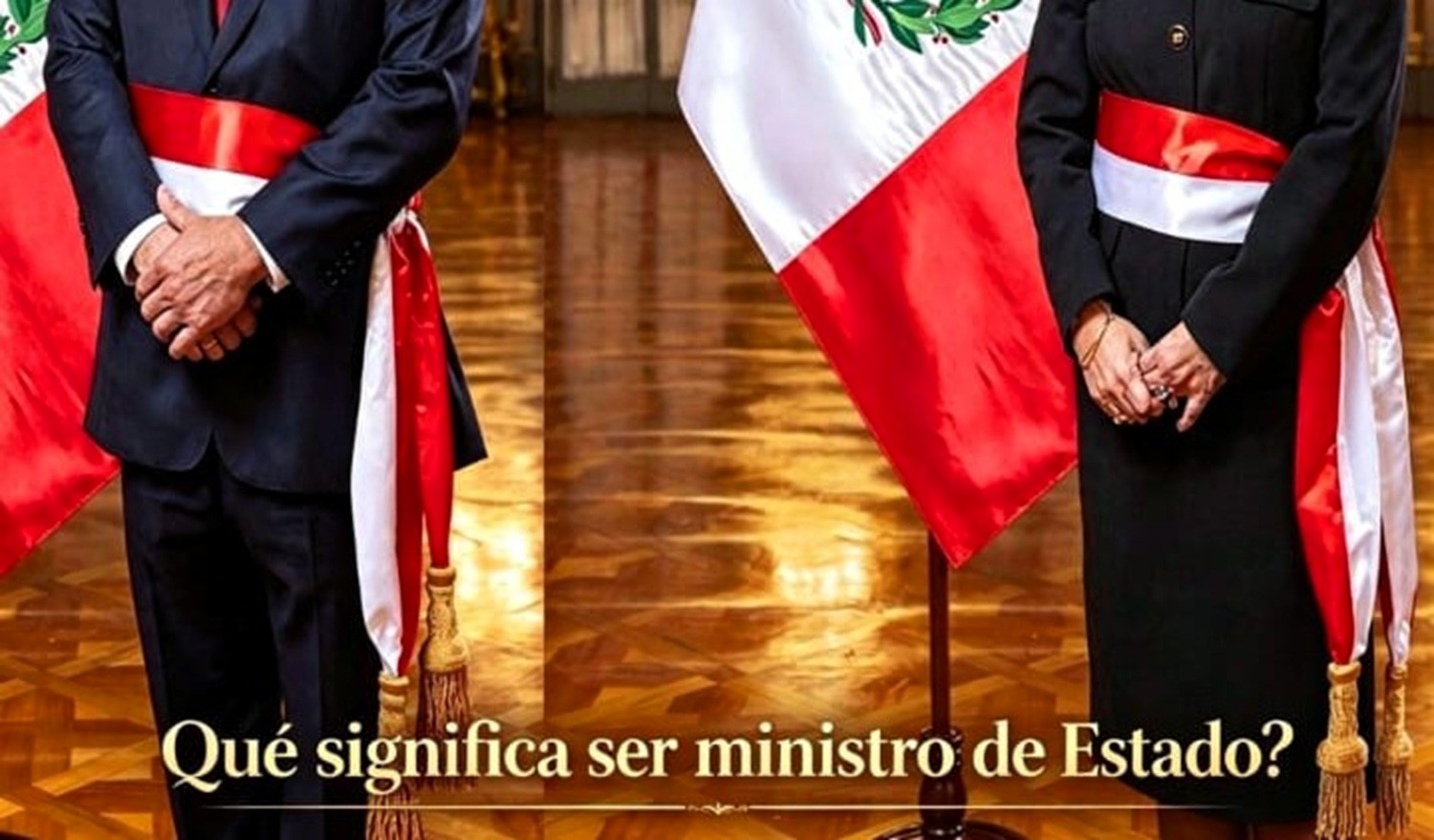
Agencia Peruana de Noticias PRENSAPERU.PE https://www.prensaperu.pe Twitter: @prensaperupe Cabe preguntarse, en este momento en que el país observa con atención a sus nuevas autoridades, ¿de dónde viene propiamente el nombre de ministro? No es una palabra inventada por la política moderna: tiene raíces profundas y un sentido que muchos han dejado atrás.
Etimológicamente, viene del latín minister, que significa el que sirve, el que ayuda, el que está al servicio de otro. No proviene de títulos de grandeza ni de dominio sobre los demás: su origen remite a la función de atender, asistir y proveer. Y es justo aquí donde se conecta con la enseñanza más antigua y noble que guarda la memoria colectiva: cuando Jesucristo llamó a doce personas —sencillas, sin títulos ni privilegios— y les confió una misión, les dijo: «Los que son considerados gobernantes de las naciones las dominan, y sus grandes ejercen autoridad sobre ellas. Pero no será así entre vosotros: antes, el que quiera hacerse grande entre vosotros será vuestro servidor». Y los envió a ministrar: a cuidar a los enfermos, a consolar a los afligidos, a atender a quienes menos tenían.
Por eso, en el lenguaje político, la Presidenta es quien encabeza la nación, elegida por el pueblo para conducirla con justicia, pero los ministros son quienes reciben de ella el encargo de servir. No son dueños de las carteras ni señores de los fondos públicos: son comisionados para administrar el bien común, pensando especialmente en quienes más necesitan del Estado: las familias vulnerables, los que sufren las inclemencias del clima, los que ven subir los precios y no llegan a fin de mes. Un ministro que minimiza el dolor de la gente, que olvida a los postergados o que se aleja de la verdad, está olvidando lo que su propio nombre significa.
Hace apenas poco tiempo, el 28 de julio de 2026, asumió el nuevo gobierno del Perú. Se suele hablar de la “luna de miel”: ese margen de confianza que la ciudadanía concede a quienes recién llegan, para que puedan organizarse, rectificar y avanzar. Pero aquí surge una paradoja que no puede ignorarse: fue precisamente la fuerza política que hoy gobierna la que nunca otorgó ese mismo margen a las administraciones anteriores. Durante años, su liderazgo fiscalizó, cuestionó, señaló y no dio tregua a quienes estaban al frente. Ahora que ha llegado al poder, recibe un país en crisis profunda —crisis que, como se ha dicho, no es casualidad sino consecuencia— y sus ministros son los llamados a demostrar que son diferentes.
La realidad que se hereda es dura y no se puede disfrazar. El Perú está en la situación que está porque durante décadas quienes debieron ministrar —presidentes, ministros, congresistas, gobernadores y alcaldes— no cumplieron con su deber. En lugar de poner el Estado al servicio de todos, favorecieron intereses externos, grupos concentrados, círculos cercanos al poder. Se tomaron decisiones que beneficiaron a unos pocos en desmedro de las grandes mayorías. Se permitió que unos reciban servicios de calidad y otros sean olvidados. Se olvidó que gobernar es repartir con justicia, no acumular para sí ni para los suyos.
Por eso, hoy más que nunca, la pregunta es obligatoria: ¿entienden realmente los nuevos ministros lo que su cargo significa? No basta con ocupar el despacho ni con pronunciar discursos. Para ministrar en un país como el Perú se requieren cualidades excelsas: integridad inquebrantable, valentía para decidir a favor de los que menos tienen, humildad para recorrer el país y escuchar antes que imponer, sensibilidad para entender el dolor de las familias, y la firme convicción de que los recursos del Estado no son de quien administra, sino de todos los peruanos.
Si los nuevos ministros gobiernan para los mismos de siempre, nada habrá cambiado. Si ponen el bienestar de las mayorías primero, entonces estarán devolviendo a la palabra ministro su verdadero significado. El pueblo observa, recuerda y espera. Porque el título lo pueden tener todos, pero la condición de ministro se demuestra sirviendo, no mandando.
DATOS CONCEPTUALES
Ministro de Estado: Autoridad superior de un sector de la administración pública, designada por la Jefa de Estado. Su nombre procede del latín minister = servidor. No es propietario del cargo ni de los recursos públicos: es un administrador fiduciario, es decir, quien recibe la confianza de la ciudadanía para cuidar, distribuir y gestionar los bienes del Estado en beneficio del conjunto de la población.
Ministrar: Verbo que da sentido a la función. Significa servir, proveer, asistir, repartir con equidad. No implica dominar ni enriquecerse, sino atender las necesidades de los demás, especialmente de los más desprotegidos.
Bien común: Conjunto de condiciones sociales, económicas e institucionales que permiten a todas las personas, sin discriminación, desarrollarse con dignidad. Es el fin exclusivo al que deben orientarse todas las decisiones de un ministro.
Luna de miel política: Período inicial de confianza que la ciudadanía suele conceder a una nueva administración. No es un cheque en blanco ni una dispensa para actuar sin control, sino un margen razonable para organizar la gestión.
Intereses pancistas o concentrados: Aquellos que responden a grupos de poder económico o político reducidos, antes que al interés general. Cuando se favorecen estos intereses en lugar del bien común, se produce exclusión y desigualdad.
Crisis heredada: Situación crítica del país producto de decisiones, omisiones y prácticas sostenidas durante años o décadas, en las que autoridades de distintos niveles y partidos privilegiaron beneficios particulares sobre las necesidades de la mayoría.
DATOS
1.- La palabra ministro no viene del poder ni de la grandeza, sino del servicio: su origen etimológico y su sentido más profundo señalan que quien ocupa el cargo está para servir, no para servirse.
2.- Existe una paradoja ineludible: la fuerza política que hoy asume el poder no concedió margen ni confianza a las administraciones anteriores; ahora debe demostrar con hechos que su gestión superará las prácticas que denunció.
3.- El estado de crisis del Perú no es producto de la casualidad: es consecuencia directa de que sucesivas autoridades, en todos los niveles, olvidaron su vocación de servicio y favorecieron a grupos e intereses minoritarios en lugar de atender a las grandes mayorías.
4.- No basta con cambiar nombres o rostros: para transformar el país se requieren cualidades excelsas en quienes gobiernan —integridad, valentía, humildad y equidad—, pues sin ellas se repetirán las mismas prácticas que han dañado al Perú.
5.- La ciudadanía no es espectadora pasiva: tiene el derecho y el deber de vigilar que los nuevos ministros actúen conforme a la esencia de su cargo, recordando siempre que se es ministro cuando se sirve, no cuando se manda.
Fuente: Agencia Peruana de Noticias PRENSAPERU.PE https://www.prensaperu.pe Twitter: @prensaperupe
Translate
What Does It Mean to Be a “Minister of State”? The Paradox of Power: A Concept Whose True Meaning Many Politicians in Peru Have Lost, and Others Have Forgotten. Today the People Watch a Country Wounded by Those Who Were Meant to Care for It.
Peruvian News Agency PRENSAPERU.PE https://www.prensaperu.pe Twitter: @prensaperupe One may well ask, at this moment when the country looks attentively to its new authorities: where does the very name of minister come from? It is not a word invented by modern politics: it carries deep roots and a meaning that many have left behind.
Etymologically, it comes from the Latin minister, which means one who serves, one who helps, one who stands at the service of another. It does not derive from titles of grandeur or dominion over others: its origin points to the function of attending, assisting, and providing. And it is precisely here that it connects with the oldest and noblest teaching of our collective memory: when Jesus Christ called twelve people — simple, without titles or privileges — and entrusted them with a mission, He told them: «Those who are considered rulers over the Gentiles lord it over them, and their great ones exercise authority over them. Yet it shall not be so among you; but whoever desires to become great among you shall be your servant». And He sent them to minister: to care for the sick, to comfort the afflicted, to attend to those who had the least.
That is why, in political language, the President heads the nation, elected by the people to lead it with justice, but ministers are those who receive from them the charge to serve. They are not owners of their portfolios nor masters of public funds: they are stewards entrusted to administer the common good, thinking especially of those who most need the State: vulnerable families, those who suffer the inclemencies of the climate, those who see prices rise and cannot make it to the end of the month. A minister who minimizes people’s pain, who forgets the overlooked, or who turns away from the truth, is forgetting what their own name means.
Only a short time ago, on July 28, 2026, the new government of Peru took office. It is common to speak of the «honeymoon»: that margin of trust that citizens grant to those just arriving, so they may organize, correct, and move forward. But here arises a paradox that cannot be ignored: it was precisely the political force that governs today that never granted that same margin to previous administrations. For years, its leadership oversaw audits, questioned, pointed fingers, and gave no truce to those at the helm. Now that it has come to power, it receives a country in deep crisis — a crisis that, as has been said, is no accident but a consequence — and its ministers are called to prove that they are different.
The reality inherited is harsh and cannot be disguised. Peru is in the situation it is because for decades those who should have ministered — presidents, ministers, congressmen, governors, and mayors — failed to fulfill their duty. Instead of placing the State at the service of all, they favored external interests, concentrated groups, and circles close to power. Decisions were made that benefited the few to the detriment of the great majority. It was allowed that some receive quality services while others were forgotten. It was forgotten that to govern is to distribute with justice, not to accumulate for oneself or for one’s own.
That is why, today more than ever, the question is unavoidable: do the new ministers truly understand what their office means? It is not enough to occupy the office or to pronounce speeches. To minister in a country like Peru requires exceptional qualities: unwavering integrity, the courage to decide in favor of those who have the least, the humility to travel the country and listen before imposing, the sensitivity to understand families’ suffering, and the firm conviction that the State’s resources belong not to those who administer them, but to all Peruvians.
If the new ministers govern for the same ones as always, nothing will have changed. If they place the well‑being of the majority first, then they will be restoring to the word minister its true meaning. The people observe, remember, and wait. Because the title anyone may hold, but the condition of a minister is proven by serving, not by commanding.
CONCEPTUAL DATA
Minister of State: Senior authority of a sector of public administration, appointed by the Head of State. Their name comes from the Latin minister = servant. They are not the owner of the office nor of public resources: they are a fiduciary administrator, meaning one who receives the citizens’ trust to care for, distribute, and manage the State’s assets for the benefit of the population as a whole.
To minister: Verb that gives meaning to the function. It means to serve, provide, assist, distribute fairly. It does not imply ruling nor enriching oneself, but attending to the needs of others, especially the most unprotected.
Common good: The set of social, economic, and institutional conditions that allow all people, without discrimination, to develop with dignity. It is the exclusive end to which every decision of a minister must be oriented.
Political honeymoon: Initial period of trust that citizens typically grant to a new administration. It is not a blank check nor a dispensation to act without oversight, but a reasonable margin to organize management.
Partisan or concentrated interests: Those that respond to reduced groups of economic or political power, rather than to the general interest. When these interests are favored over the common good, exclusion and inequality follow.
Inherited crisis: The country’s critical situation resulting from decisions, omissions, and sustained practices over years or decades, in which authorities at different levels and parties placed particular benefits above the needs of the majority.
DATA
1.- The word minister does not come from power or greatness, but from service: its etymological origin and its deepest meaning indicate that whoever holds the office is there to serve, not to be served.
2.- There is an inescapable paradox: the political force now assuming power granted no margin nor trust to previous administrations; it must now prove through deeds that its management will surpass the practices it denounced.
3.- Peru’s state of crisis is not the product of chance: it is the direct consequence of successive authorities, at every level, who forgot their vocation of service and favored minority groups and interests instead of attending to the great majority.
4.- It is not enough to change names or faces: transforming the country requires exceptional qualities in those who govern — integrity, courage, humility, and equity — for without them, the same practices that have harmed Peru will be repeated.
5.- Citizens are not passive spectators: they have the right and the duty to ensure that new ministers act in accordance with the essence of their office, always remembering that one is a minister when one serves, not when one commands.
Source: Peruvian News Agency PRENSAPERU.PE https://www.prensaperu.pe Twitter: @prensaperupe