
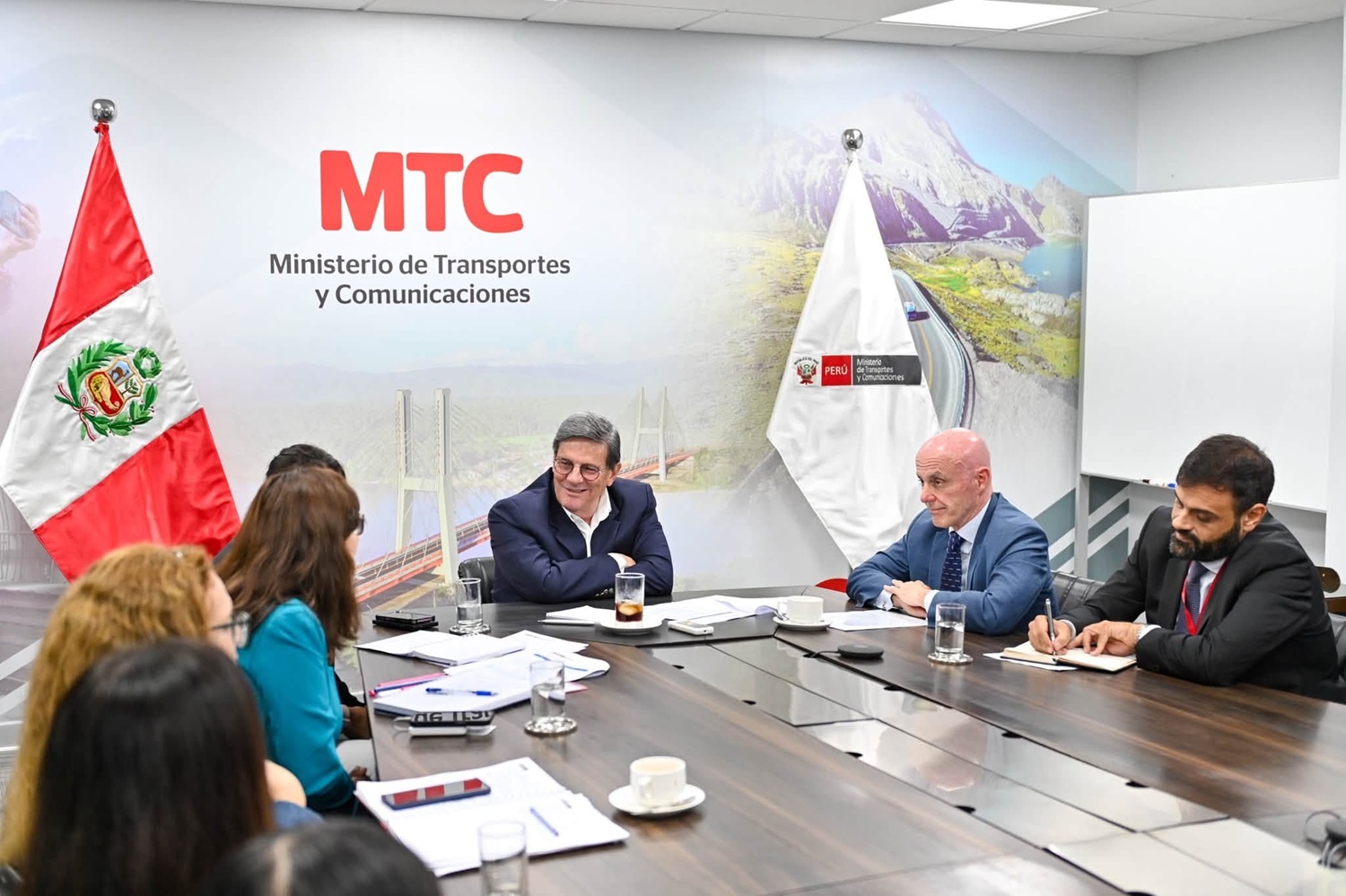
Agencia Peruana de Noticias PRENSAPERU.PE https://www.prensaperu.pe Twitter: @prensaperupe El ministro de Transportes y Comunicaciones, Rafael Rey Rey, sostuvo una reunión de trabajo con el embajador de España en el Perú, Alejandro Abellán García de Diego, con el propósito de fortalecer los lazos bilaterales e impulsar oportunidades de cooperación en materia de infraestructura, transporte ferroviario y telecomunicaciones. Durante el encuentro, el representante español ofreció el apoyo y la asistencia técnica de Indra, multinacional española líder en tecnologías de la información, sistemas de transporte y telecomunicaciones, para contribuir a la modernización del sector en el Perú.
Este acercamiento se produce en un momento clave: el Perú ha presentado recientemente su Plan Maestro de Desarrollo Ferroviario al 2050, que contempla una red de casi 7,500 kilómetros de vías férreas, una inversión de más de 89,000 millones de dólares y la conexión de la Costa, Sierra y Selva mediante diez corredores estratégicos. Asimismo, el país enfrenta el reto de llevar conectividad digital a todos los rincones de su territorio, condición indispensable para el desarrollo productivo y la igualdad de oportunidades.
TRANSPORTE PARA LIMA: LA OPORTUNIDAD DE UN SISTEMA FERROVIARIO MODERNO, LIMPIO Y EFICIENTE
Dentro de esta visión de modernización, la ciudad de Lima —una de las áreas metropolitanas con mayor congestión vehicular del continente— representa el desafío más urgente y también la mayor oportunidad. La cooperación técnica que ofrece España, aplicada con estándares ambientales rigurosos y criterios de competitividad mundial, podría hacer realidad un sistema de trenes urbanos y metropolitanos que conecte eficazmente los polos Norte, Sur y Este de la Gran Lima, descongestionando las avenidas, reduciendo la contaminación y mejorando drásticamente la calidad de vida de millones de personas.
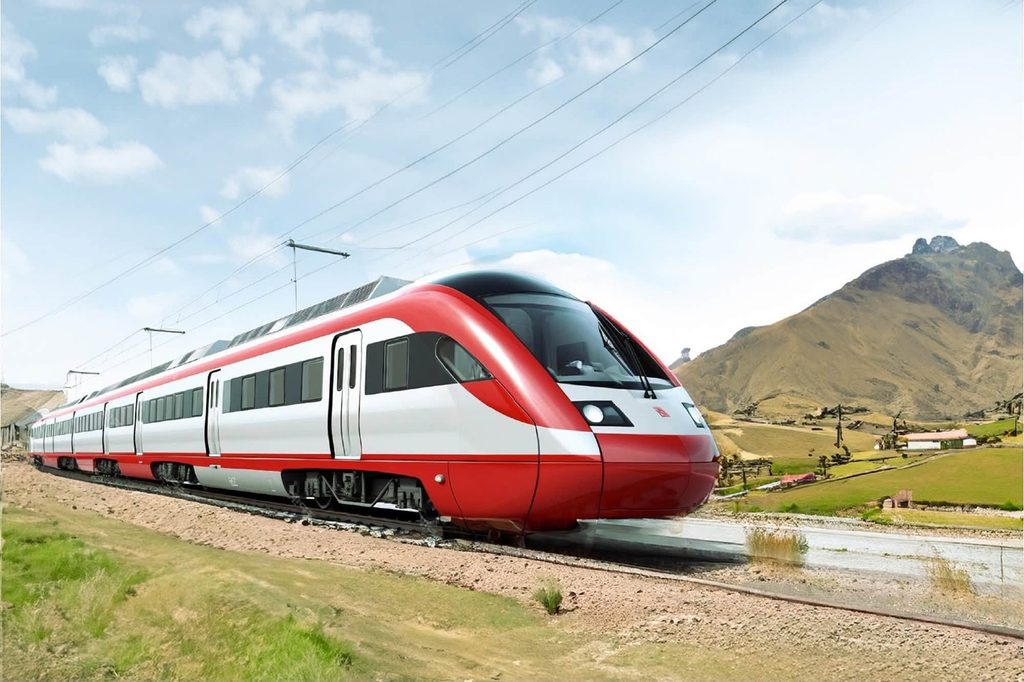
Frente a propuestas pasadas —como el fallido proyecto del tren impulsado durante la gestión de López Aliaga, conocido popularmente como el «tren chatarra»— que implicaba material obsoleto, altos niveles de contaminación, tecnología superada y una solución que no respondía a las necesidades reales de movilidad, esta nueva apertura permite apostar por lo contrario: trenes eléctricos, silenciosos, de alta capacidad, alineados con los estándares internacionales de sostenibilidad y eficiencia. No se trata de reutilizar equipo viejo que ningún otro país aceptaría, sino de construir desde cero un sistema ferroviario digno de una capital de millones: moderno, accesible, ecológico y que realmente traslade a la gente, no solo la promesa.
La diferencia es abismal: por un lado, soluciones improvisadas que contaminan, ocupan espacio y no resuelven el fondo del problema; por el otro, infraestructura de primera generación que desincentiva el uso del automóvil, reduce las emisiones de gases de efecto invernadero y une a los distritos más alejados con el centro en minutos. Lima no merece soluciones temporales ni desechos de otros países: merece transporte a la altura de lo que su gente necesita.
DATOS CONCEPTUALES
Infraestructura ferroviaria: Conjunto de vías, terminales, sistemas de señalización, comunicaciones y equipos que permiten el transporte de pasajeros y carga por ferrocarril. Es un factor determinante para reducir costos logísticos, integrar mercados y disminuir la huella de carbono del transporte.
Telecomunicaciones y conectividad digital: Capacidad de transmitir información a distancia mediante tecnologías cableadas, inalámbricas, satelitales y de fibra óptica. Constituye la infraestructura invisible sobre la que funciona la economía moderna, la educación, la salud y la gestión pública.
Asistencia técnica: Transferencia de conocimientos, metodologías, tecnologías y experiencia práctica de una entidad especializada a otra, para fortalecer sus capacidades y garantizar la correcta ejecución de proyectos.
Desarrollo territorial integrado: Estrategia que busca que el progreso no se concentre solo en las grandes ciudades, sino que se extienda a las tres regiones naturales —Costa, Sierra y Selva— reconociendo sus distintas realidades económicas, geográficas y sociales.
Transporte ferroviario urbano sostenible: Sistema de movilidad eléctrica o de bajas emisiones, diseñado para transportar gran volumen de pasajeros de forma rápida, segura y con mínimo impacto ambiental. Es la solución más eficaz para descongestionar grandes ciudades.
Indra: Multinacional española del sector tecnológico y de defensa, con presencia en más de 50 países y 60,000 empleados. Desarrolla soluciones en transporte, tráfico aéreo, energía, telecomunicaciones, ciberseguridad y administración pública.
INDRA: UNA EMPRESA CON EXPERIENCIA Y PROYECCIÓN
Indra Sistemas, S.A. es una de las principales empresas tecnológicas de Europa y América Latina, cotizada en el índice IBEX 35. En 2024 registró ingresos por 4,843 millones de euros y destina entre un 7% y 8% de sus ingresos a investigación y desarrollo.
Proyectos exitosos y presencia en el Perú:
Modernización del sistema de control de tráfico aéreo: Equipó los ocho centros de vigilancia aérea del Perú con radares digitales y sistemas ADS-B, mejorando la seguridad y eficiencia de los vuelos en todo el espacio aéreo nacional.
Centro de Excelencia en tecnología radar: En enero de 2026 consolidó en Lima un centro de capacitación y mantenimiento de radares de última generación, cuyos especialistas peruanos ya exportan ingeniería a otros países.
Ciberseguridad y centros de datos: Participa en el data center de Ica, operando el centro de ciberseguridad, y ha crecido en el país a tasas anuales del 15% al 20%.
Experiencia ferroviaria internacional: Ha gestionado sistemas de comunicaciones, señalización y ticketing en redes de transporte en Chile, Estados Unidos, Arabia Saudí, India y Malasia, entre otros países.
QUÉ PROYECTOS NECESITA EL PERÚ
La geografía peruana —dividida en tres regiones naturales por la cordillera de los Andes— hace que la conectividad sea el mayor desafío y la mayor oportunidad del país.
En la Costa: Mejorar y extender las redes ferroviarias a lo largo del litoral, conectando los principales puertos (Chancay, Callao, Matarani, Paita) con los centros de producción y consumo, y reducir la congestión de las carreteras panamericanas. El tren Lima–Ica y Lima–Barranca son los primeros tramos contemplados en el plan nacional.
En la Sierra: Construir corredores ferroviarios que conecten las zonas altoandinas con la costa, permitiendo bajar los minerales, productos agrícolas y artesanales a menor costo. Proyectos como Marcona–Andahuaylas, Chinchero–Cusco e Imata–Cotabambas facilitarían el transporte de carga minera y el turismo, atravesando zonas de difícil acceso por carretera.
En la Selva: El ferrocarril Chancay–Pucallpa (904 km) sería uno de los más transformadores, porque uniría el océano Pacífico con la cuenca amazónica, acercando los productos de la selva al mercado nacional e internacional y abriendo una nueva puerta al desarrollo de las regiones de Ucayali, Huánuco y Pasco.
En telecomunicaciones: Llevar internet de alta velocidad a las zonas rurales y remotas, mediante fibra óptica, redes satelitales y estaciones 5G. Sin conectividad, la educación digital, la telemedicina, el comercio electrónico y la gestión pública electrónica no pueden llegar a todos los peruanos.
CONCLUSIONES
1.- La reunión entre el ministro Rey y el embajador Abellán abre una vía de cooperación técnica de alto nivel, que va más allá de lo comercial: pone a disposición del Perú experiencia probada en infraestructura digital y de transporte.
2.- El Plan Maestro Ferroviario al 2050 del Perú requiere no solo recursos financieros, sino también tecnología, sistemas de señalización, comunicaciones y gestión operativa —áreas en las que Indra tiene experiencia global.
3.- Lima no puede esperar más: la congestión vehicular, la contaminación atmosférica y la pérdida de horas productivas exigen un sistema ferroviario urbano moderno, eléctrico y de alta capacidad que conecte los polos Norte, Sur y Este. Soluciones obsoletas o material chatarra no resuelven nada: solo trasladan el problema y lo agravan.
4.- La geografía del país exige soluciones diferenciadas: ferrocarriles que crucen los Andes, conectividad satelital en la selva y redes de fibra óptica en la sierra, para que el desarrollo no se detenga en las montañas ni en la llanura amazónica.
5.- La transformación del Perú no puede limitarse a construir vías y torres de comunicación; debe acompañarse de capacitación técnica local, para que los peruanos sean los protagonistas del mantenimiento y la evolución de sus propias infraestructuras.
6.- La cooperación internacional es una herramienta valiosa, pero su éxito depende de que el Estado peruano defina con claridad sus prioridades, agilice los procesos y mantenga la soberanía sobre las decisiones: elegir tecnología de primera o aceptar chatarra usada es una decisión política que marcará el futuro del país.
Fuente: Agencia Peruana de Noticias PRENSAPERU.PE https://www.prensaperu.pe Twitter: @prensaperupe
Translate
Minister Rafael Rey and the Ambassador of Spain to Peru Meet: Railways, Telecommunications, and Connectivity! Trains Yes — But World-Class. A Global Power with Global Quality Standards for All Peruvians.
Peruvian News Agency PRENSAPERU.PE https://www.prensaperu.pe Twitter: @prensaperupe Minister of Transport and Communications Rafael Rey Rey held a working meeting with the Ambassador of Spain to Peru, Alejandro Abellán García de Diego, with the purpose of strengthening bilateral ties and promoting cooperation opportunities in infrastructure, rail transport, and telecommunications. During the meeting, the Spanish representative offered the support and technical assistance of Indra, a leading Spanish multinational in information technology, transport systems, and telecommunications, to contribute to the modernization of the sector in Peru.
This rapprochement comes at a key moment: Peru has recently presented its 2050 Master Plan for Rail Development, which envisages a network of nearly 7,500 kilometers of railway tracks, investments exceeding 89 billion dollars, and the connection of the Coast, Highlands, and Jungle through ten strategic corridors. Likewise, the country faces the challenge of bringing digital connectivity to every corner of its territory, an essential condition for productive development and equal opportunity.
TRANSPORT FOR LIMA: THE OPPORTUNITY FOR A MODERN, CLEAN, AND EFFICIENT RAIL SYSTEM
Within this vision of modernization, the city of Lima —one of the metropolitan areas with the worst traffic congestion on the continent— represents the most urgent challenge and also the greatest opportunity. The technical cooperation offered by Spain, applied with rigorous environmental standards and global competitiveness criteria, could make a reality an urban and metropolitan train system effectively connecting the North, South, and East corridors of Greater Lima, decongesting avenues, reducing pollution, and drastically improving the quality of life for millions of people.
Against past proposals —such as the failed train project promoted during López Aliaga’s administration, popularly known as the “scrap train”— which involved obsolete material, high pollution levels, outdated technology, and a solution that did not respond to real mobility needs, this new opening allows betting on the opposite: electric, quiet, high-capacity trains aligned with international sustainability and efficiency standards. This is not about reusing old equipment no other country would accept, but building from scratch a rail system worthy of a capital city of millions: modern, accessible, eco-friendly, and that actually moves people —not just promises.
The difference is stark: on one hand, makeshift solutions that pollute, take up space, and do not solve the root of the problem; on the other, first-generation infrastructure that discourages car use, reduces greenhouse gas emissions, and connects the farthest districts to the center in minutes. Lima does not deserve temporary solutions or waste from other countries: it deserves transport at the level its people need.
CONCEPTS AND DEFINITIONS
Rail infrastructure: The set of tracks, terminals, signaling systems, communications, and equipment enabling the transport of passengers and goods by rail. It is a decisive factor in lowering logistics costs, integrating markets, and reducing the carbon footprint of transport.
Telecommunications and digital connectivity: The ability to transmit information over distances using wired, wireless, satellite, and fiber-optic technologies. It constitutes the invisible infrastructure upon which the modern economy, education, health, and public administration function.
Technical assistance: The transfer of knowledge, methodologies, technologies, and practical experience from one specialized entity to another, to strengthen capacities and ensure the proper implementation of projects.
Integrated territorial development: A strategy that seeks to ensure progress is not concentrated only in large cities, but extends across the three natural regions —Coast, Highlands, and Jungle— recognizing their distinct economic, geographic, and social realities.
Sustainable urban rail transport: An electric or low-emission mobility system designed to transport large volumes of passengers quickly, safely, and with minimal environmental impact. It is the most effective solution for decongesting large cities.
Indra: A Spanish multinational in the technology and defense sectors, present in more than 50 countries with 60,000 employees. It develops solutions in transport, air traffic management, energy, telecommunications, cybersecurity, and public administration.
INDRA: A COMPANY WITH EXPERIENCE AND VISION
Indra Sistemas, S.A. is one of the leading technology companies in Europe and Latin America, listed on the IBEX 35 index. In 2024, it reported revenues of 4.843 billion euros and invests between 7% and 8% of its income in research and development.
Successful projects and presence in Peru:
Air Traffic Control System Modernization: Equipped all eight air surveillance centers in Peru with digital radars and ADS-B systems, improving safety and efficiency of flights throughout the national airspace.
Radar Technology Excellence Center: In January 2026, established in Lima a training and maintenance hub for state-of-the-art radar technology, where Peruvian specialists already export engineering services to other countries.
Cybersecurity and Data Centers: Participates in the data center in Ica, operating its cybersecurity center, and has grown in the country at annual rates of 15% to 20%.
International Rail Experience: Has managed communications, signaling, and ticketing systems for transport networks in Chile, the United States, Saudi Arabia, India, and Malaysia, among other countries.
WHAT PROJECTS PERU NEEDS
Peru’s geography —divided into three natural regions by the Andes mountain range— makes connectivity the country’s greatest challenge and its greatest opportunity.
On the Coast: Improve and extend rail networks along the coastline, connecting major ports (Chancay, Callao, Matarani, Paita) with production and consumption centers, and reducing congestion on the Pan-American highways. The Lima–Ica and Lima–Barranca lines are the first sections contemplated in the national plan.
In the Highlands: Build rail corridors connecting high-Andean zones to the coast, enabling minerals, agricultural products, and crafts to be transported at lower cost. Projects such as Marcona–Andahuaylas, Chinchero–Cusco, and Imata–Cotabambas would facilitate mining cargo and tourism, crossing areas that are difficult to access by road.
In the Jungle: The Chancay–Pucallpa railway (904 km) would be one of the most transformative, as it would link the Pacific Ocean with the Amazon basin, bringing products from the jungle closer to national and international markets and opening a new path toward development in Ucayali, Huánuco, and Pasco regions.
In Telecommunications: Bring high-speed internet to rural and remote areas through fiber optics, satellite networks, and 5G stations. Without connectivity, digital education, telemedicine, e-commerce, and digital public administration cannot reach every Peruvian.
CONCLUSIONS
1.- The meeting between Minister Rey and Ambassador Abellán opens a high-level technical cooperation channel that goes beyond commerce: it makes available to Peru proven expertise in digital and transport infrastructure.
2.- Peru’s 2050 Master Rail Development Plan requires not only financial resources, but also technology, signaling systems, communications, and operational management —areas where Indra has global experience.
3.- Lima can wait no longer: traffic congestion, air pollution, and the loss of productive hours demand a modern, electric, high-capacity urban rail system connecting the North, South, and East corridors. Obsolete solutions or scrap material solve nothing: they only move the problem and make it worse.
4.- The country’s geography demands differentiated solutions: railways crossing the Andes, satellite connectivity in the jungle, and fiber-optic networks in the highlands, so that development does not stop at the mountains or the Amazon plains.
5.- Peru’s transformation cannot be limited to building roads and communication towers; it must be accompanied by local technical training, so that Peruvians become the protagonists in maintaining and evolving their own infrastructure.
6.- International cooperation is a valuable tool, but its success depends on the Peruvian State clearly defining its priorities, streamlining processes, and maintaining sovereignty over its decisions: choosing first-class technology or accepting second-hand equipment is a political decision that will shape the country’s future.
Source: Peruvian News Agency PRENSAPERU.PE https://www.prensaperu.pe Twitter: @prensaperupe