
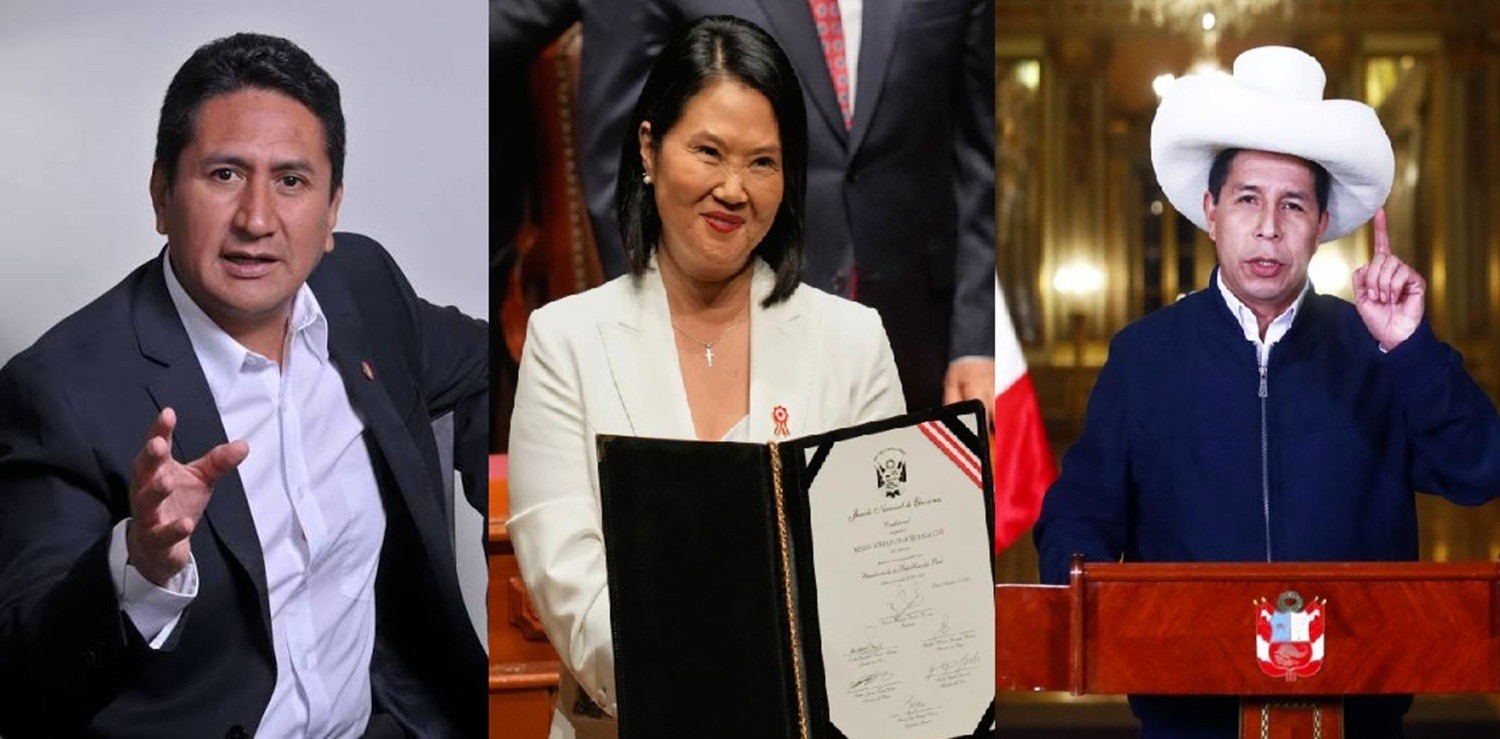
Agencia Peruana de Noticias PRENSAPERU.PE https://www.prensaperu.pe Twitter: @prensaperupe (Editorial del Director: Fernando Palomares Arévalo) El fallo del Tribunal Constitucional (TC) del 3 de julio —difundido el 21— anula la prisión preventiva de Vladimir Cerrón, permitiéndole salir de la clandestinidad bajo medidas restrictivas, pero sin cerrar los procesos judiciales en su contra. Este hecho ocurre en la recta final del gobierno de Perú Libre y reconfigura el mapa político justo cuando Keiko Fujimori asume el mando el 28 de julio. Lejos de representar un obstáculo, este escenario dibuja un panorama favorable para la nueva mandataria, al enfrentarse a una oposición visiblemente desgastada, fragmentada y sin liderazgo unificado.
EL RETORNO LIMITADO Y CUESTIONADO: ¿PUEDE CERRÓN LIDERAR RELMENTE?
Cerrón recupera su presencia física, pero ya no cuenta con un capital político:
Estigma y desgaste: La percepción ciudadana lo vincula a corrupción y daño al erario público; es una figura “políticamente tóxica”, con escasa legitimidad para convocar apoyo popular.
Oposición táctica, no frontal: Sabe que su libertad es frágil y depende de no cruzar líneas rojas ante el nuevo poder. No será un opositor complaciente, pero tampoco un rival capaz de desafiar al Estado; su prioridad será la supervivencia jurídica y el control orgánico del partido.
Vulnerabilidad ante el nuevo gobierno: Keiko Fujimori contará con todo el respaldo institucional y judicial, por lo que cualquier movimiento agresivo de Cerrón podría derivar en nuevas medidas cautelares. No tiene fuerza para confrontar.
EL VERDADERO PODER SIGUE TRAS UNA CELDA: PEDRO CATILLO TERRONES “EL SOMBRERO”
La estructura de poder no cambia:
Liderazgo legítimo encarcelado: A pesar de estar en Barbadillo, Pedro Castillo mantiene la lealtad de la base electoral. Es su figura la que arrastra votos y convoca emociones, no la de sus sucesores.
Figuras subordinadas: El respaldo obtenido por Roberto Sánchez u otros dirigentes no responde a méritos propios, sino a la “bendición” y aval político de Castillo. Cerrón manda en la estructura, pero no en el sentimiento popular.
¿LE CONVIENE ESTE ESCENARIO A KEIKO FUJIMORRI?
Definitivamente sí. Este contexto le ofrece ventajas estratégicas para su arranque:
Oposición sin fuste: Enfrentarse a Cerrón es ventajoso por su mala imagen pública; al mismo tiempo, la verdadera fuerza (Castillo) está privada de libertad y sin capacidad de movilización inmediata.
Margen de gobernabilidad: La falta de unidad en el bloque opositor permite a la nueva administración concentrarse en sus prioridades —seguridad, Junín, reconstrucción— sin bloqueos parlamentarios ni presiones callejeras masivas.
Autoridad moral: Keiko Fujimori puede presentarse como la jefa de Estado que respeta el debido proceso y las decisiones del TC, diferenciándose de las prácticas del pasado y reforzando su perfil institucional.
INICIO DE UN NUEVO GOBIERNO: EL ESCENARIO QUE KEIKO FUJIMORI QUIERE PARA EMPEZAR SU ADMINISTRACIÓN
EXISTEN CAPAIDADES
1.- Oposición fragmentada y debilitada: Sin liderazgo unificado ni convocatoria real; Cerrón llega desacreditado, Castillo está en prisión.
2.- Respaldo institucional: Cuenta con el apoyo del Poder Judicial y el TC, cuyas decisiones definen el rumbo de los procesos políticos sin interferencias.
3.- Legitimidad de origen: Triunfo electoral claro y proceso de transferencia ordenado, que le otorga autoridad para implementar cambios desde el primer día.
4.- Agenda enfocada: Puede centrarse en problemas concretos (sismo, seguridad, El Niño) sin distracciones provocadas por una oposición fuerte.
EXISTEN VULNERABILIDADES
1.- División histórica del país: Aún persisten brechas y polarización con el electorado que apoyó a Perú Libre, lo que requiere esfuerzos adicionales de diálogo.
2.- Presión mediática: Cualquier acción judicial contra Cerrón o Castillo será escrutinada, buscando señales de persecución política que deben ser desmentidas con transparencia.
SE GENERAN OPORTUNIDADES
1.- Consolidación democrática: Puede mostrar al país y al mundo que las instituciones funcionan —como en el fallo a favor de Cerrón— reforzando la independencia de poderes.
2.- Reconstrucción de confianza: Al no tener un enemigo político poderoso, tiene espacio para tender puentes y atraer incluso a sectores moderados del espectro político.
3.- Estabilidad para reformas: El escenario de baja tensión social permite avanzar en los primeros 100 días con rapidez, construyendo una base sólida para su mandato.
EVIDENTES RIESGOS
1.- Rebrote simbólico desde la cárcel: Aunque no actúe directamente, Castillo sigue siendo un referente que puede instrumentalizar redes sociales para generar descontento.
2.- Coyuntura externa e interna: Problemas estructurales (El Niño, crisis en Junín) podrían distraer, pero el vacío opositor ayuda a que esto no se convierta en arma política en su contra.
EL FACTOR TIEMPO LA ‘LUNA DE MIEL’ EL JUEGO DEL CONCEPTO DE PERCEPCIONES DE LA POLÍTICA PERUANA
Un elemento determinante en este inicio de mandato es el periodo de gracia —generalmente estimado entre 3 y 6 meses— conocido como “luna de miel”. Durante esta etapa, existe una pausa natural en la confrontación política máxima: es el momento donde se da el cruce de percepciones entre lo que el gobierno cree conocer del entorno y lo que realmente los demás ven de su administración; donde lo que la mandataria cree que oculta, en realidad ya está siendo observado, y donde ella aún no termina de descifrar todas las dinámicas ocultas de sus rivales.
Esta calma no es eterna: durante estos meses, las técnicas de presión y la dialéctica fuerte quedan en suspenso. La oposición opta por observar y acumular argumentos. Recién al finalizar este periodo, cuando el efecto novedad disminuya, comenzará la verdadera prueba de fuego y el despliegue total de estrategias.
DATOS
1.- Regreso sin poder real: Cerrón vuelve al escenario, pero no lidera la oposición; el liderazgo sigue preso y la base social no acompaña su figura.
2.- Ventaja estratégica para Keiko: El gobierno arranca con el terreno despejado: una oposición dividida y sin capacidad de obstaculizar su gestión.
3.- Instituciones por encima de todo: El fallo del TC reafirma el Estado de derecho, un activo que la mandataria puede capitalizar para proyectar serenidad y respeto a la ley.
4.- Gobernabilidad con estabilidad: El análisis confirma que el entorno actual maximiza sus fortalezas y minimiza riesgos, permitiendo un inicio de mandato sólido y con autoridad.
Fuente: Agencia Peruana de Noticias PRENSAPERU.PE https://www.prensaperu.pe Twitter: @prensaperupe

Translate
“Cerrón Returns, but Castillo Remains the Opposition Leader: The Honeymoon Keiko Builds to Launch Her Administration, and the Political Map Favoring Transient Stability for July 28”
Peruvian News Agency PRENSAPERU.PE https://www.prensaperu.pe Twitter: @prensaperupe (Editorial by the Director: Fernando Palomares Arévalo) The Constitutional Court (TC) ruling of July 3 —made public on the 21st— revokes the preventive detention order against Vladimir Cerrón, allowing him to emerge from hiding under restrictive measures, but without closing the judicial processes pending against him. This event takes place in the final stretch of the Peru Libre government and reconfigures the political landscape just as Keiko Fujimori assumes power on July 28. Far from representing an obstacle, this scenario outlines a favorable panorama for the new president, as she faces an opposition visibly worn down, fragmented, and lacking unified leadership.
THE LIMITED AND QUESTIONABLE RETURN: CAN CERRÓN TRULY LEAD?
Cerrón recovers his physical presence, but no longer possesses political capital:
Stigma and erosion: Public perception links him to corruption and harm to the public treasury; he is a “politically toxic” figure, with scarce legitimacy to summon popular support.
Tactical, not frontal opposition: He knows his freedom is fragile and depends on not crossing red lines before the new power. He will not be a compliant opponent, but neither will he be a rival capable of challenging the State; his priority will be legal survival and organic control of the party.
Vulnerability before the new government: Keiko Fujimori will have full institutional and judicial backing, so any aggressive move by Cerrón could result in new precautionary measures. He lacks the strength to confront.
THE TRUE POWER REMAINS BEHIND BARS: PEDRO CASTILLO TERRONES “EL SOMBRERO”
The power structure remains unchanged:
Legitimate leadership incarcerated: Despite being held in Barbadillo, Pedro Castillo maintains the loyalty of the electoral base. It is his figure that draws votes and stirs emotions, not that of his successors.
Subordinate figures: The backing obtained by Roberto Sánchez or other leaders does not respond to their own merits, but rather to Castillo’s “blessing” and political endorsement. Cerrón commands the structure, but not popular sentiment.
IS THIS SCENARIO BENEFICIAL TO KEIKO FUJIMORI?
Definitely yes. This context offers her strategic advantages for her launch:
Toothless opposition: Facing Cerrón is advantageous due to his poor public image; at the same time, the true force (Castillo) is deprived of liberty and lacks capacity for immediate mobilization.
Governance margin: The lack of unity within the opposition bloc allows the new administration to focus on its priorities —security, Junín, reconstruction— without parliamentary blockades or massive street pressures.
Moral authority: Keiko Fujimori can present herself as the Head of State who respects due process and TC rulings, distinguishing herself from past practices and reinforcing her institutional profile.
START OF A NEW GOVERNMENT: THE SCENARIO KEIKO FUJIMORI WISHES TO BEGIN HER ADMINISTRATION WITH
EXISTING CAPABILITIES
1.- Fragmented and weakened opposition: Without unified leadership or real powers of convocation; Cerrón arrives discredited, Castillo is in prison.
2.- Institutional backing: Counts on the support of the Judiciary and the TC, whose decisions define the course of political processes without interference.
3.- Legitimacy of origin: Clear electoral victory and orderly transfer process, granting her authority to implement changes from day one.
4.- Focused agenda: Can focus on specific problems (earthquake, security, El Niño) without distractions caused by a strong opposition.
EXISTING VULNERABILITIES
1.- Historical division of the country: Gaps and polarization persist with the electorate that supported Peru Libre, requiring additional dialogue efforts.
2.- Media pressure: Any judicial action against Cerrón or Castillo will be scrutinized, looking for signs of political persecution that must be disproved with transparency.
OPPORTUNITIES ARE GENERATED
1.- Democratic consolidation: Can show the country and the world that institutions function —as in the ruling in favor of Cerrón— reinforcing the separation of powers.
2.- Rebuilding trust: Without a powerful political enemy, there is space to build bridges and attract even moderate sectors of the political spectrum.
3.- Stability for reforms: The low social tension scenario allows moving forward rapidly during the first 100 days, building a solid foundation for her mandate.
EVIDENT RISKS
1.- Symbolic resurgence from prison: Although not acting directly, Castillo remains a benchmark who can instrumentalize social media to generate discontent.
2.- External and internal context: Structural problems (El Niño, crisis in Junín) could distract, but the opposition vacuum helps prevent this from becoming a political weapon against her.
THE TIME FACTOR: THE ‘HONEYMOON’ AND THE CONCEPTUAL GAME OF PERCEPTIONS IN PERUVIAN POLITICS
A determining element in this beginning of the mandate is the grace period —generally estimated between 3 and 6 months— known as the “honeymoon”. During this stage, there is a natural pause in maximum political confrontation: it is the moment where the crossroads of perceptions occur between what the government believes it knows about the environment and what others truly see of its administration; where what the president believes she is hiding is actually already being observed, and where she has not yet fully deciphered all the hidden dynamics of her rivals.
This calm is not eternal: during these months, pressure techniques and strong dialectic are suspended. The opposition chooses to observe and accumulate arguments. Only at the end of this period, when the novelty effect fades, will the true test begin and the full deployment of strategies.
DATA
1.- Return without real power: Cerrón returns to the scene, but does not lead the opposition; leadership remains imprisoned and the social base does not accompany his figure.
2.- Strategic advantage for Keiko: The government starts with the ground cleared: a divided opposition unable to hinder its management.
3.- Institutions above all: The TC ruling reaffirms the rule of law, an asset the president can capitalize on to project serenity and respect for the law.
4.- Governance with stability: The analysis confirms that the current environment maximizes its strengths and minimizes risks, allowing a solid start to the mandate with authority.
Source: Peruvian News Agency PRENSAPERU.PE https://www.prensaperu.pe Twitter: @prensaperupe